
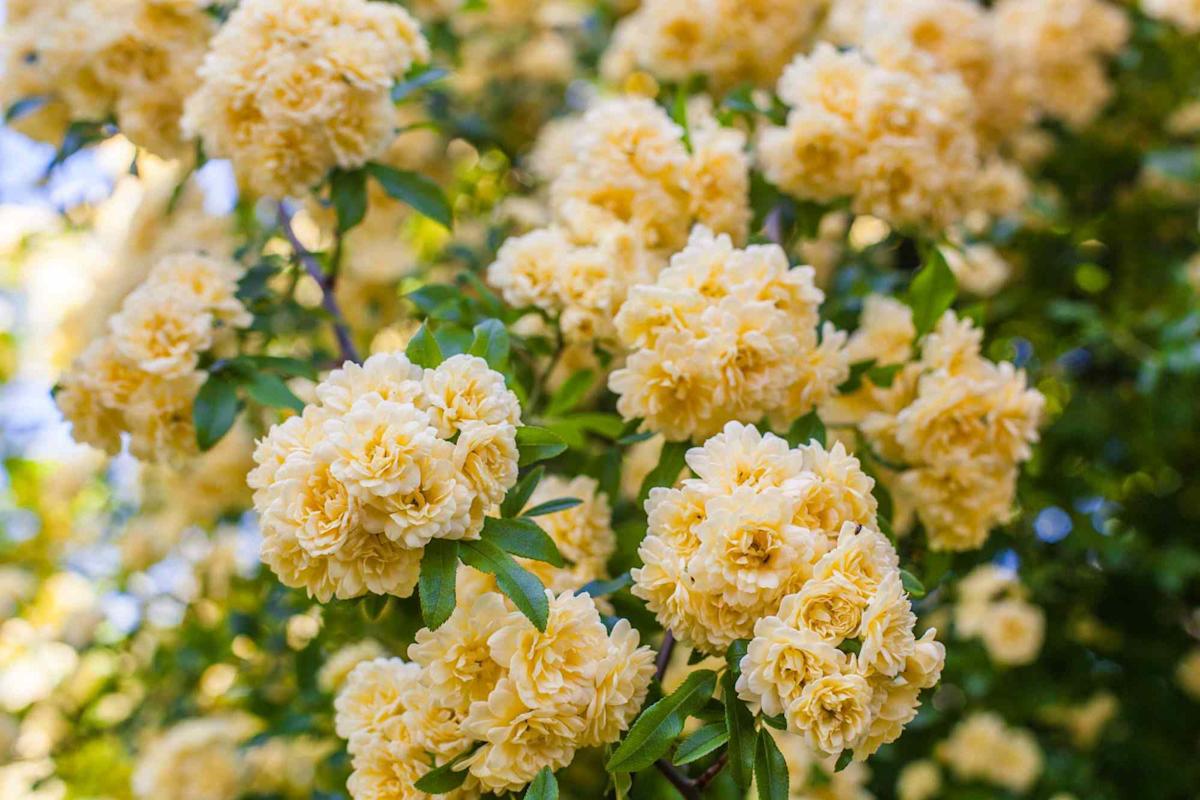
You don’t have to wait until May for April showers to bring beautiful flowers to your garden. For most Southern gardeners, April brings a floral showcase of bulbs, perennials, shrubs, and trees. Depending on your USDA hardiness zone, expect to see dogwoods, magnolias, azaleas, and irises in all of their finest glory.
If you don’t have these plants in place, plan for next year so you can enjoy these beautiful flowers that bloom in April.
01 of 11
Dogwoods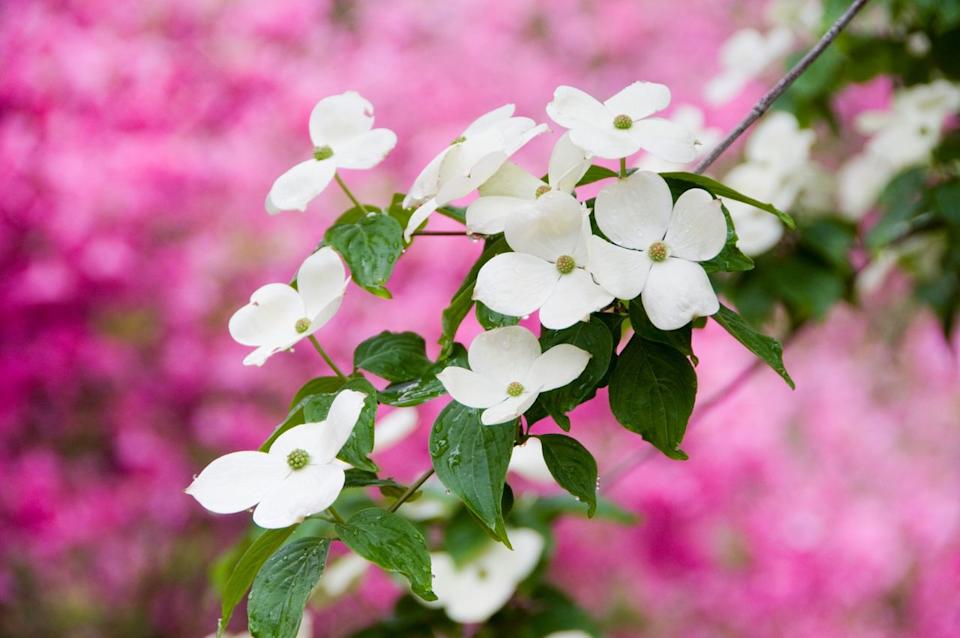
Credit: Getty Images
Other than my first out-of-college apartment, I’ve never lived in a home without a dogwood tree. Growing up in the mountains of North Carolina, I came to love the purity and legend behind the April blooms. There are 51 species of hardy, woody, perennial trees and shrubs in the genus and those with colorful bark (C. alba, C. sanguinea, C. sericea) offer outstanding color in a winter garden in addition to their springtime blooms.
Botanical Name: Cornus spp.
Sun Exposure: Dappled sunlight to full sun
Soil Type: Clay, loam, rocky
Soil pH: Acid (<6.0) to Neutral (6.0-8.0)
Learn More
02 of 11
Catmint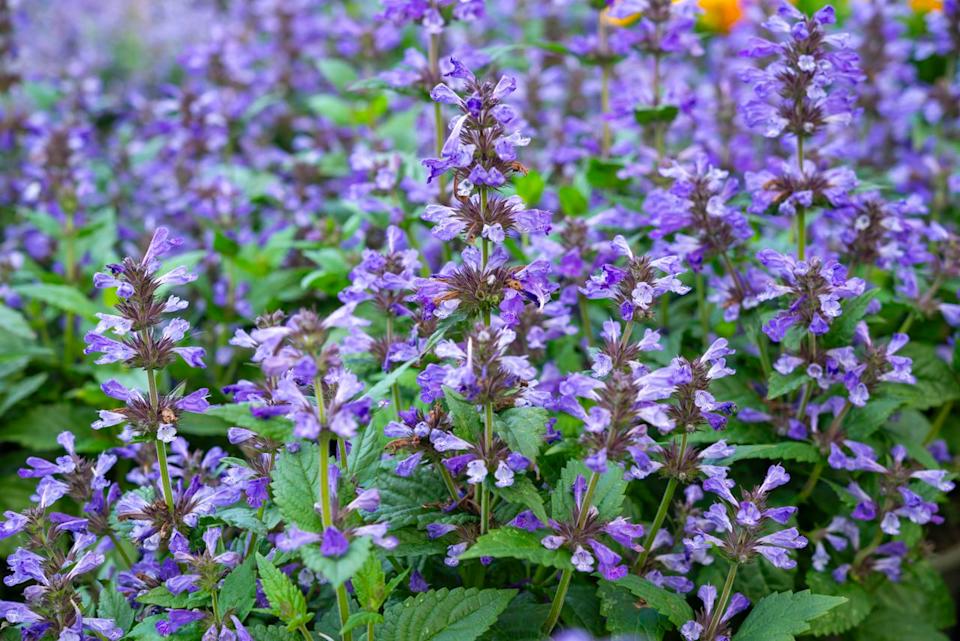
Credit: Getty Images
If you’re looking for a plant that will survive in poor soil, enjoys neglect, and turns the neighborhood cats into your best friend, choose catmint (often called catnip). This perennial sends up spikes of blue or lavender flowers in a spreading form. Ideal for naturalized areas, cottage gardens, and rock gardens, it also acts as a repellent for aphids and squash bugs.
Soil Type: Clay, loam, sand, rocky
Learn More
03 of 11
Foxglove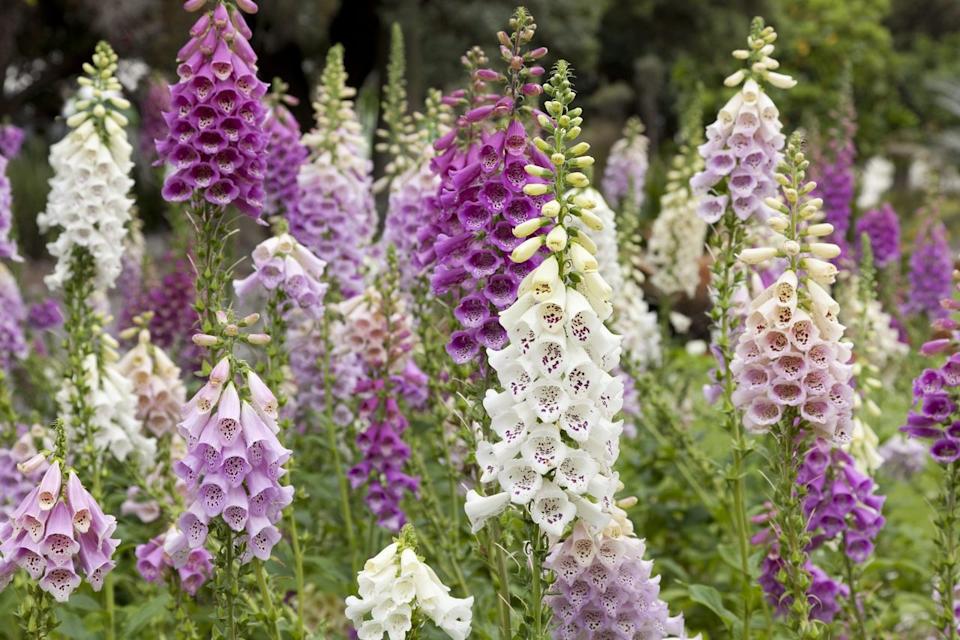
Credit: Picture Partners / Getty Images
Common foxglove’s tall, bold blooms appear in many colors in April. A biennial, you’ll have to wait until the second year after planting to get the showy flowers. Fortunately, you’ll get plenty of seedlings so you can grow it as a perennial. I love that it can thrive with a bit of shade and is perfect at the back of a flower bed. Don’t worry about other flowers hiding it, foxglove holds its own when planted in mass.
Botanical Name: Digitalis purpurea
Sun Exposure: Full sun to partial shade
Soil Type: Loamy, highly organic, and well-draining
Learn More
04 of 11
Japanese Snowball Viburnum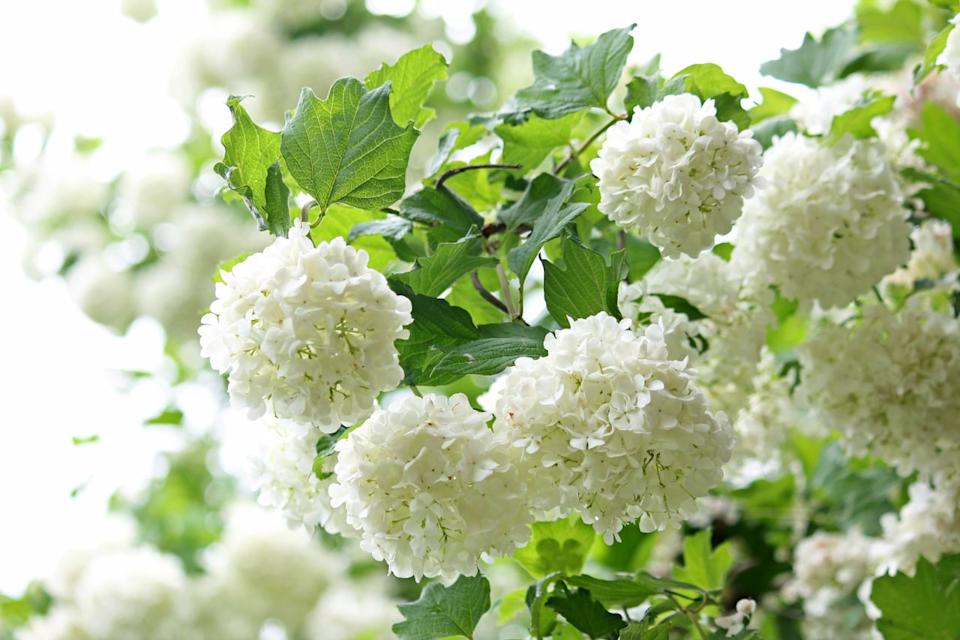
Credit: Zen Rial / Getty Images
A Japanese snowball is the April cheerleader with its large, showy white pom-pom flowers. The shrub can grow quite large and is listed as invasive in many parts of the U.S. Clearly, whoever let it loose didn’t tend to it well. For a better-behaved and still lovely shrub, choose the cultivar ‘Mary Milton’.
Botanical Name: Viburnum plicatum
Sun Exposure: Full sun, partial shade
Soil Type: Best in moist loam, but can be grown in clay or sand
Soil pH: Acid (<6.0) to Neutral (6.0-8.0)
Learn More
05 of 11
Azaleas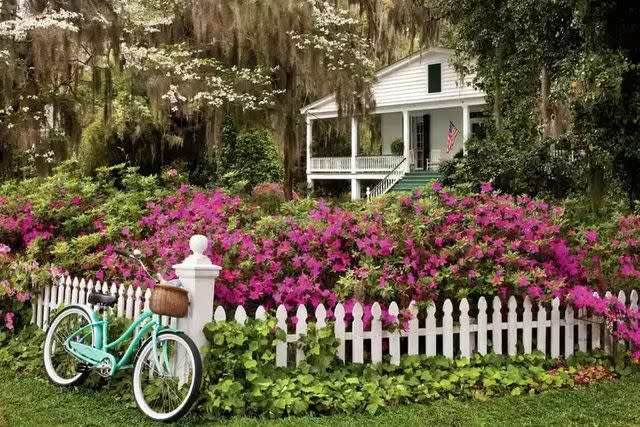
Credit: Ralph Anderson
Azaleas are an iconic Southern shrub. Whether you are fortunate enough to find a wild azalea flowering in piney woods or choose from the dozens of cultivars readily available at every garden center, you’re sure to find an azalea to love. April is the peak bloom time in every public and private Southern garden.
Botanical Name: Rhododendron spp.
Sun Exposure: Dappled sunlight to partial shade
Soil Type: High organic matter, loamy
Learn More
06 of 11
Louisiana Iris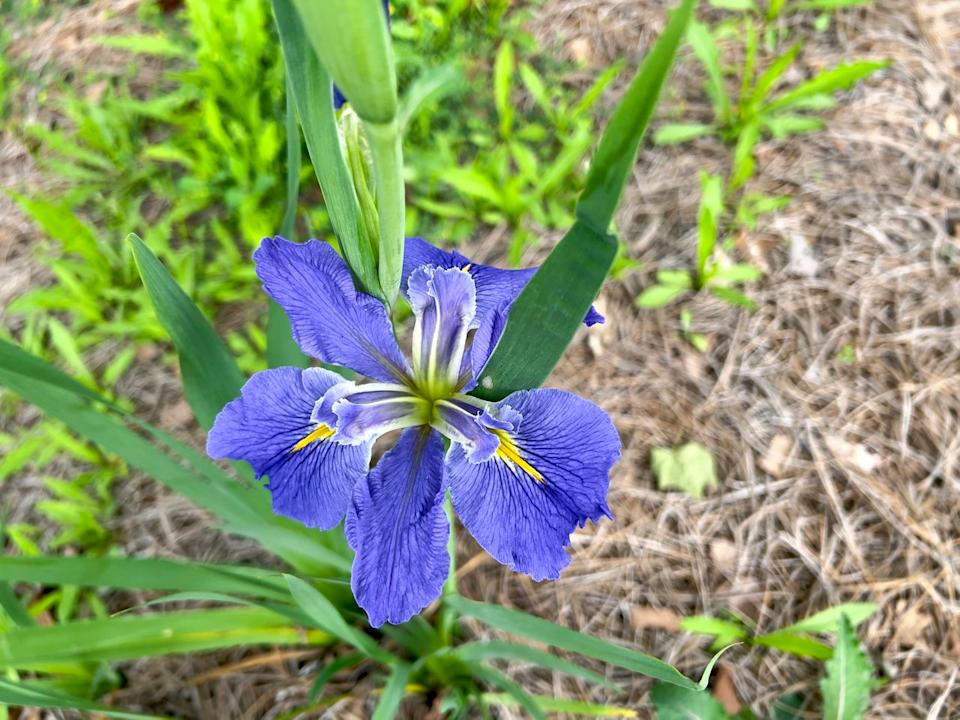
Credit: Getty Images
A native perennial, Louisiana or Dixie iris is found in wet, shallow, sunny, coastal areas from South Carolina to Louisiana. With blooms ranging from blue to lavender to the deep garnet of Black Gamecock, the flowers appear on 1 to 3-foot tall stems. Since they love wet feet, these plants can grow in low landscape spots that never drain well.
Botanical Name: Iris hexagona
Soil Type: Wet, and high in organic matter
07 of 11
Lady Banks Rose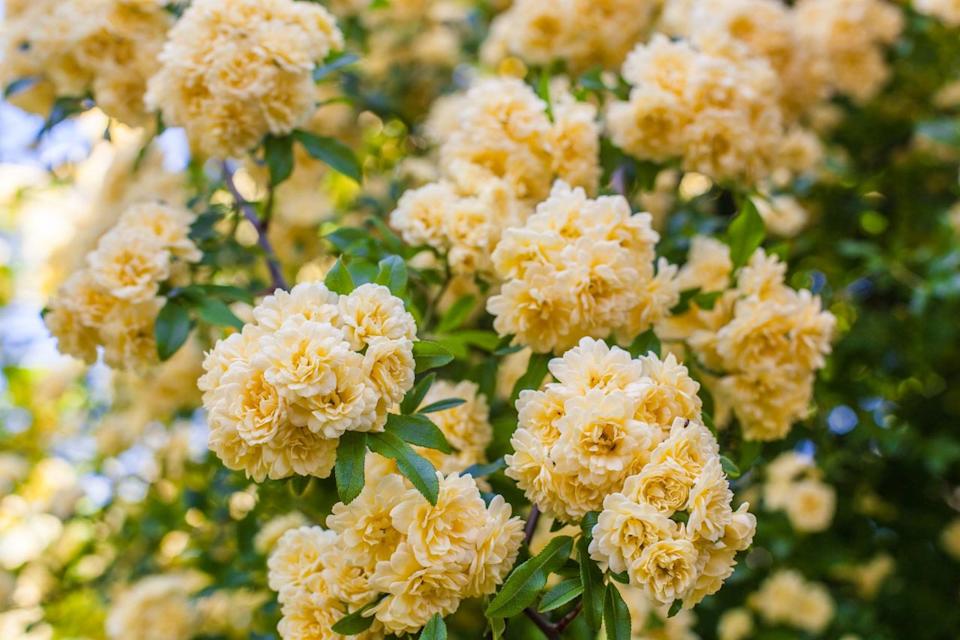
Credit: Getty Images
If you’re looking for the perfect April photo backdrop, stand in front of a sprawling Lady Banks Rose filled with white or yellow blooms. The rose grows rapidly with long, sweeping branches. There’s no pruning required unless you want to reduce the size. If you are going to prune, do it soon after the rose stops blooming to ensure plenty of flowers next April. You’ll be happy to note that there are no thorns!
Botanical Name: Rosa banksiae
Sun Exposure: Full sun, partial shade
Soil Type: Clay, loam, sand
Soil pH: Slightly acidic (6.0-7.0)
08 of 11
Magnolia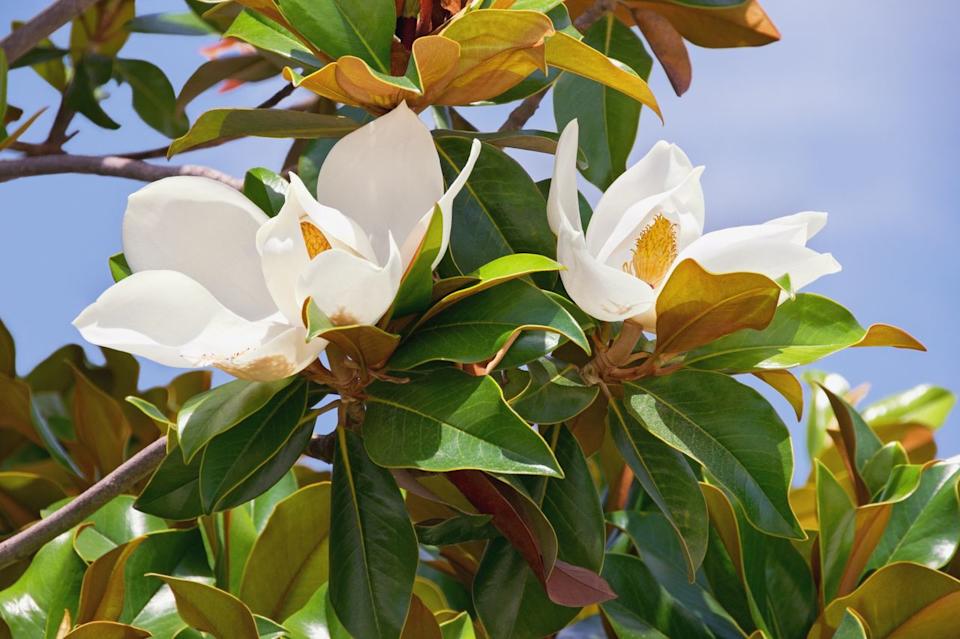
Credit: Getty Images
If azaleas are the iconic Southern shrub then magnolias hold the title as the iconic Southern tree. While we often picture the classic Magnolia grandiflora with glossy, evergreen leaves and saucer-shaped, milky-white blooms, there are more than 360 species of magnolia. Whether you choose a specimen for its fragrant pink, purple, white, or yellow flowers or its unique foliage, a magnolia belongs in your garden.
Botanical Name: Magnolia spp.
Sun Exposure: Dappled shade to full sun
Soil Type: Clay, loam, sand
Learn More
09 of 11
Oakleaf Hydrangea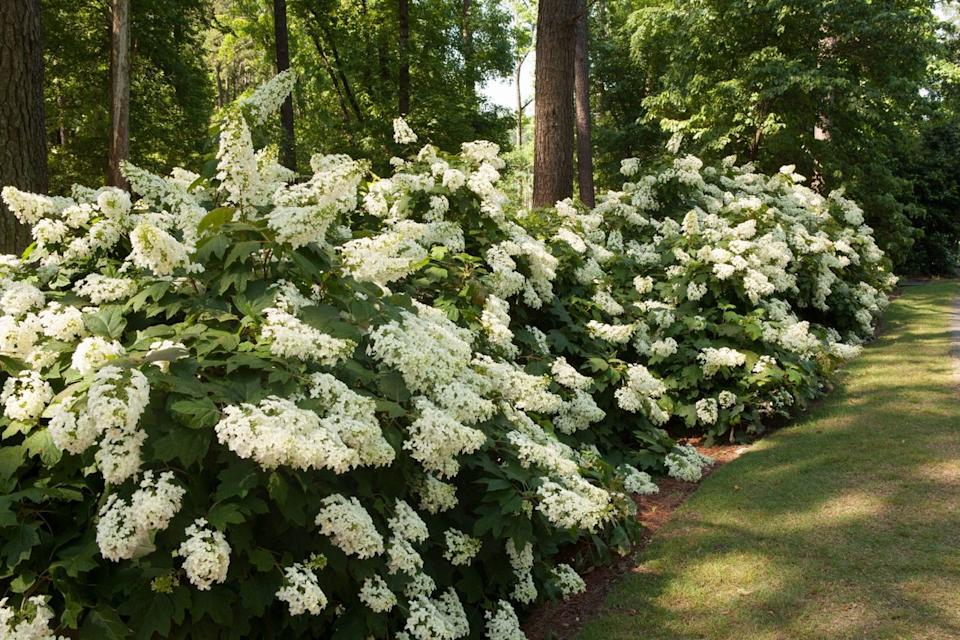
Credit: Ralph Lee Anderson
Oakleaf hydrangeas are a “twofer” shrub. You get both showy white pyramidal clusters of blooms and striking foliage. Native to North America, it can grow six to eight feet high but needs plenty of sun to bloom heavily. Popular cultivars include ‘Tara’ with thickly clustered blooms, ‘Ruby Slippers’ with white flowers that age to deep pink, and the dwarf ‘Pee Wee’ with foliage that turns bright red in the fall.
Botanical Name: Hydrangea quercifolia
Sun Exposure: Full sun to partial shade
10 of 11
Tulip Poplar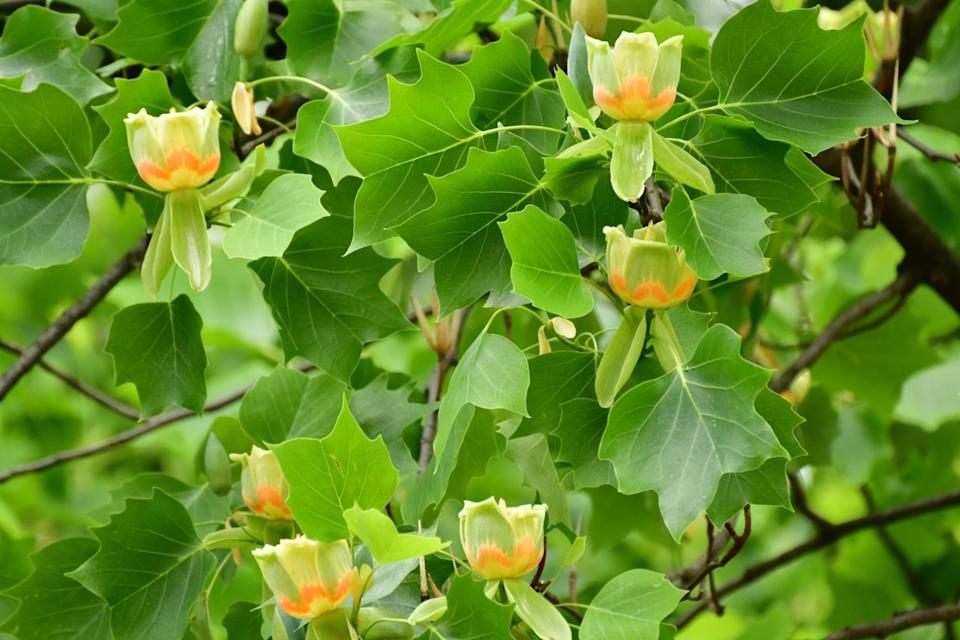
Credit: Photos / Getty Images
The Tulip poplar is one of the largest and most valuable hardwood trees in the United States. Growing 90 to 120 feet tall, it is filled with tulip-shaped blooms in April. The 2.5-inch flowers have yellow-green petals and an orange center. A stately tree suitable for large spaces, many smaller cultivars are perfect for suburban residential lots.
Botanical Name: Liriodendron tulipifera
11 of 11
Wisteria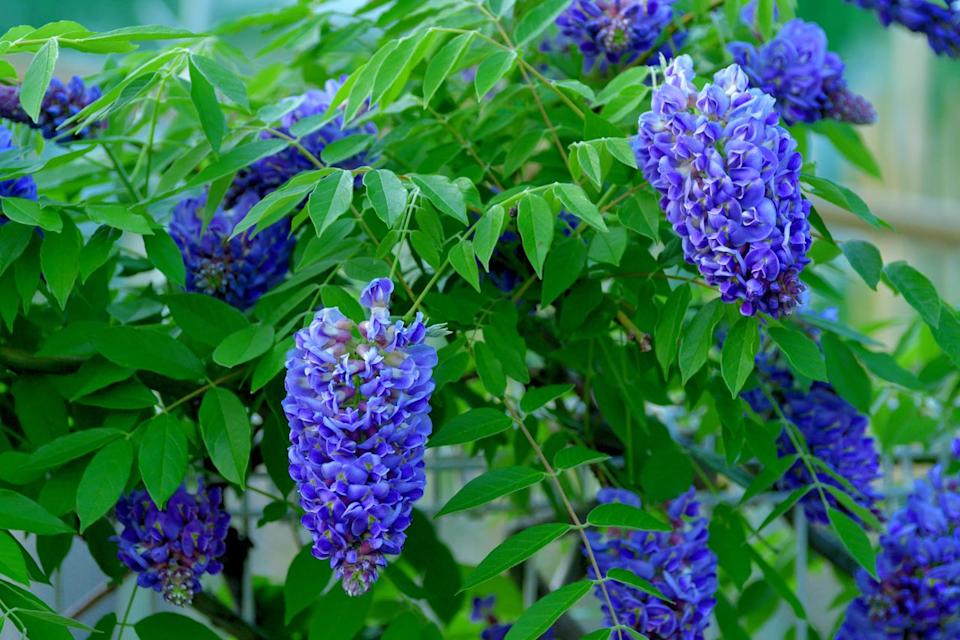
Credit: Getty Images
If you can tame Wisteria, you can love it. I have a fine growing over an arbor that my sons built for me one Mother’s Day. When those fragrant, drooping, purple clusters of blooms appear in April, the bees and I can’t get enough. The rest of the year, I visit the arbor often with pruning shears in hand to keep it under control. You can find wisteria cultivars that offer pink and white blooms and look for American wisteria (Wisteria frutescens) which is a much less aggressive grower than Asian varieties (Wisteria sinensis and Wisteria floribunda)
Botanical Name: Wisteria
Sun Exposure: Full sun to partial shade
Soil Type: Clay, loam, silt, sand
Learn More
Read the original article on Southern Living
Comments are closed.