
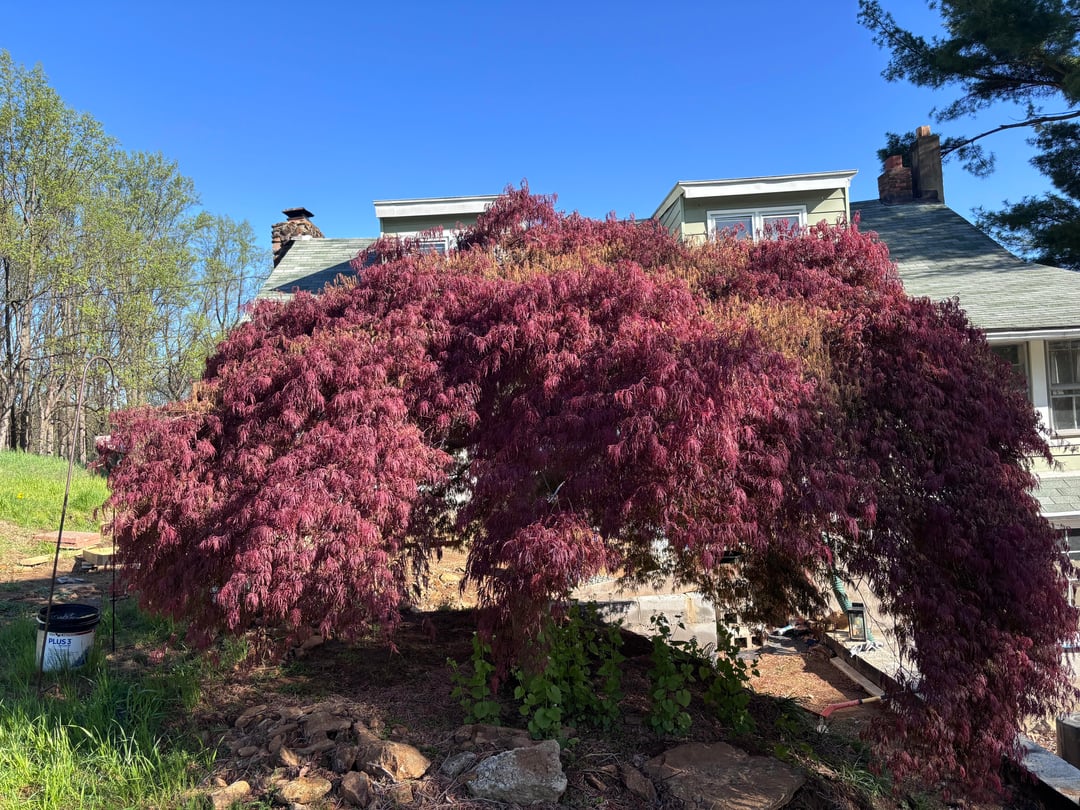
NW New Jersey here. Moved in just under 3 years ago, and I have a beautiful Japanese Maple (I think it’s lace-leafed?) that’s a focal point of the property. I had some work done at the house early last fall, and unfortunately the contractor hit the top of the tree with an excavator bucket, breaking off one of the canopy branches. That branch obviously died, but the tree didn’t show any other stress from the interaction over the following weeks before winter hit.
This past winter I trimmed the bottom branches to ensure air clearance, and removed any dead branches. I lightly pruned crossover branches (again, all at the bottom 1/2 of the tree). She definitely needs more shaping/pruning but it was my first time doing so and I was trying to heed warnings about over pruning and shocking the tree.
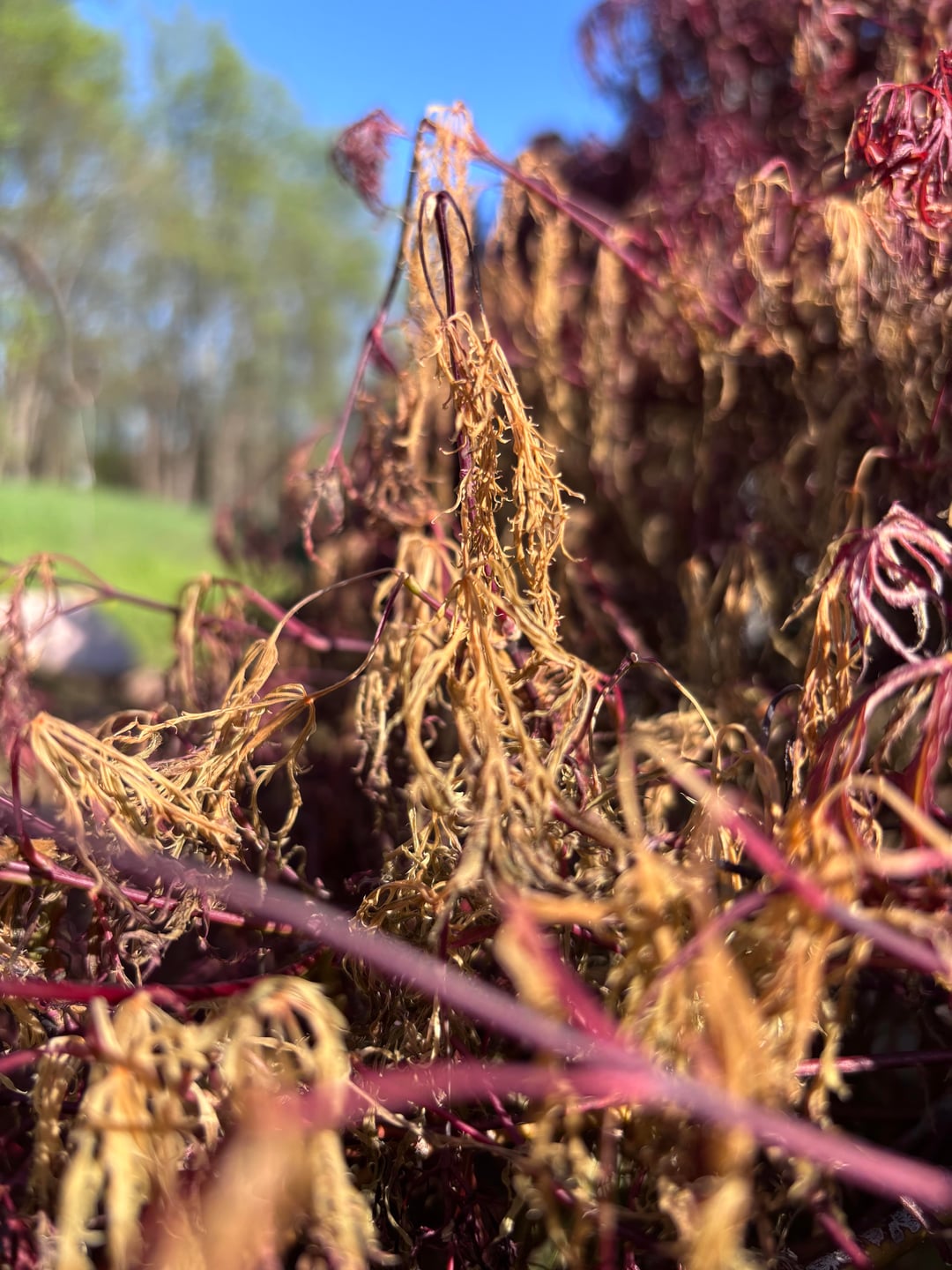
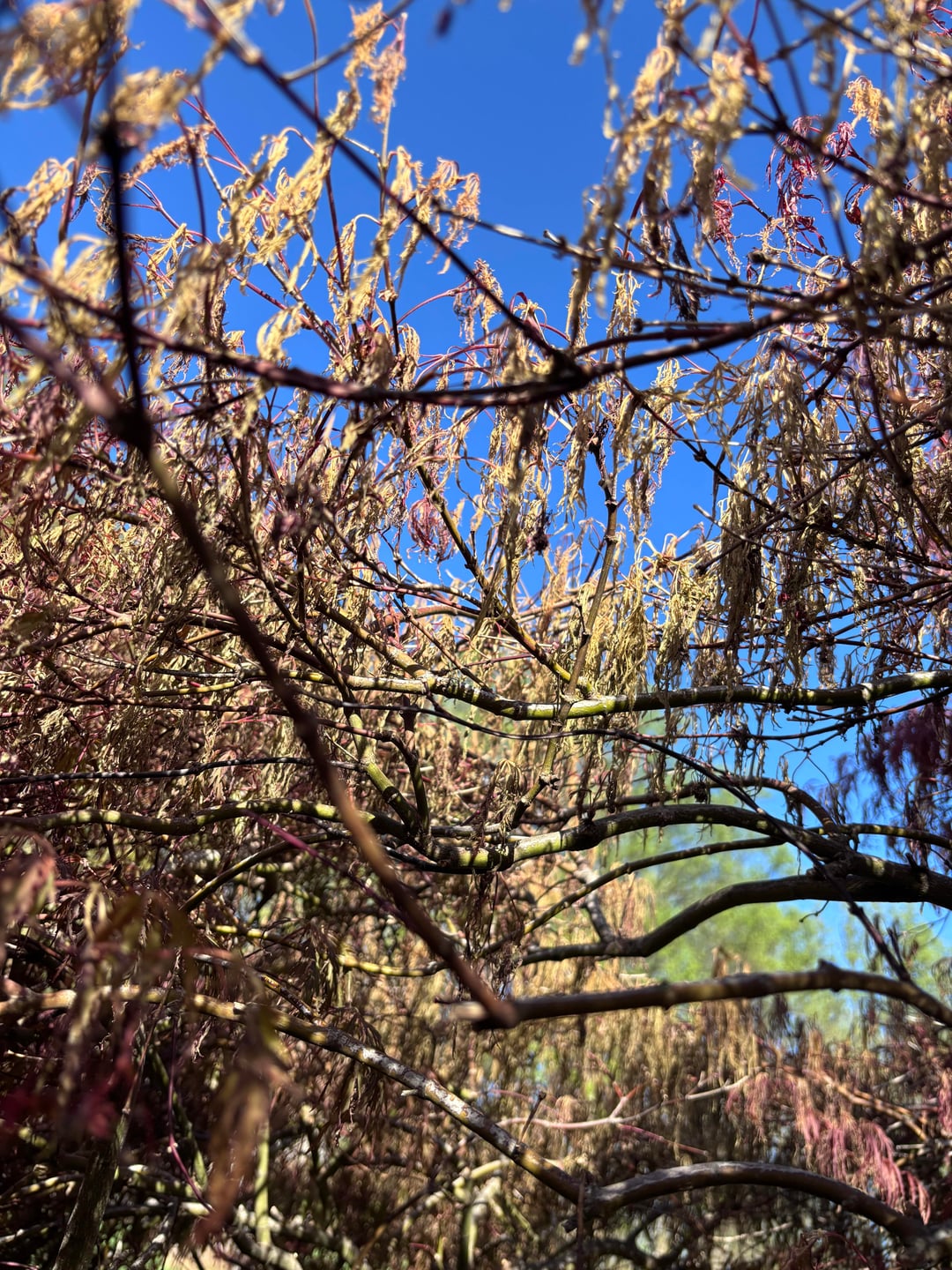
Once budbreak started, tree was looking great. Spring weather came in a little heavy this year, with temps reaching mid-80s very early on in the process of leaves coming out. Now I have this big brown spot at the top of the canopy, and in a couple of the branches on the south-facing side.
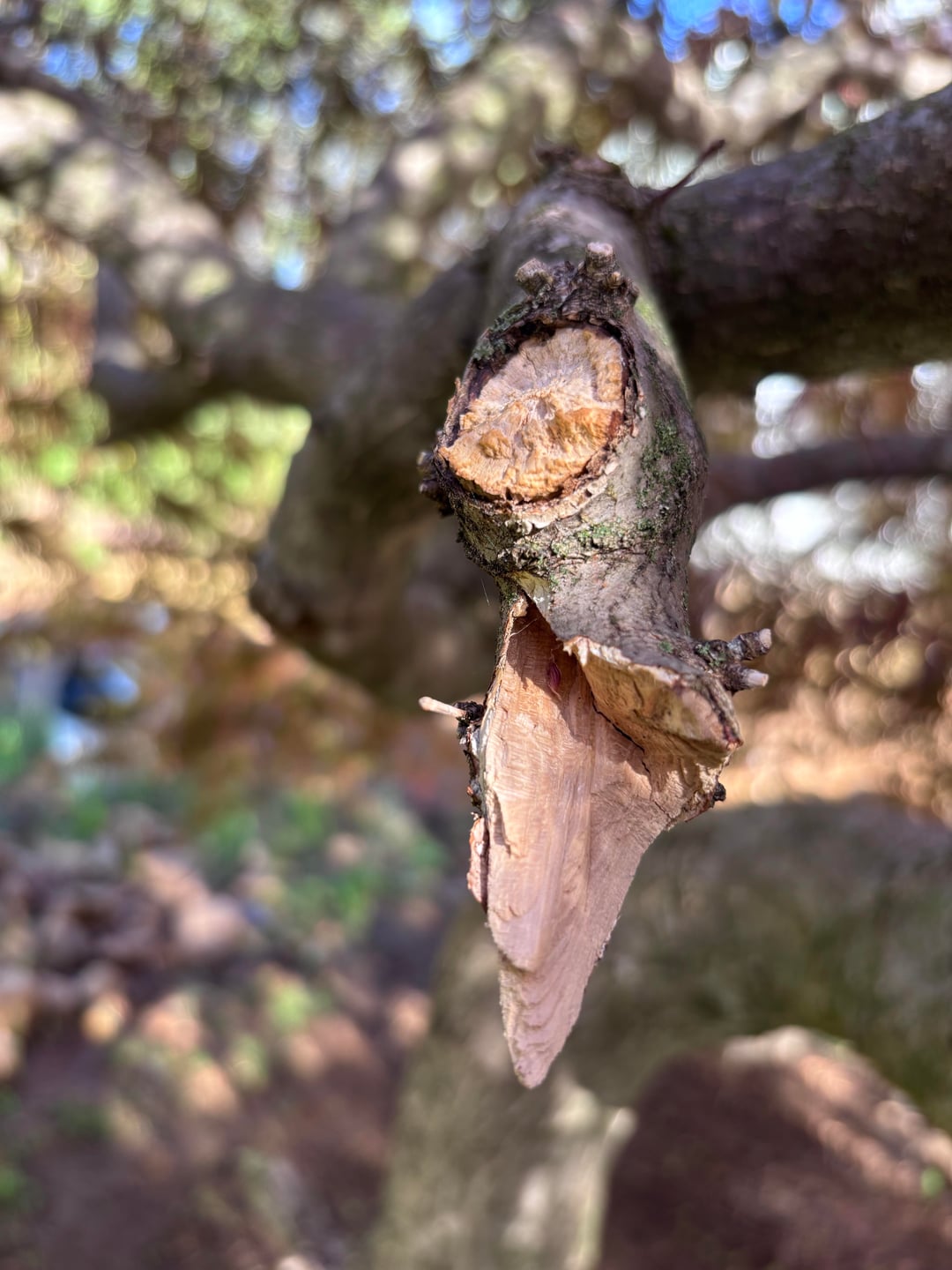
I feel pretty certain the leaves were scorched- it was very hot for the little baby leaves, and they were likely damaged as a result. But I can’t shake the “did this have to do with the excavator incident” feeling. I’m not really worried about the pruning because none of it was anywhere near the canopy and I was very deliberate about taking it easy this time. Is there a chance this is from the excavator, or even a disease? Including a picture of one of the lower branches that broke off in the last 2 years- the wood seems to look healthy.
by njstuntactivist
4 Comments
It looks like whole branches have died, which doesn’t really indicate leaf scorch.
Frost damage. Been seeing a lot of it lately. The tree will be fine in the long run.
Look for a plant disease diagnostic clinic near you (often at a university) and try to send in a sample from the base of the branch. I would be worried about the possibility of verticillium wilt, which should be diagnosed via a lab test.
This spring’s most common US east coast problem seems to be people somehow unaware they had a frost or freeze.