
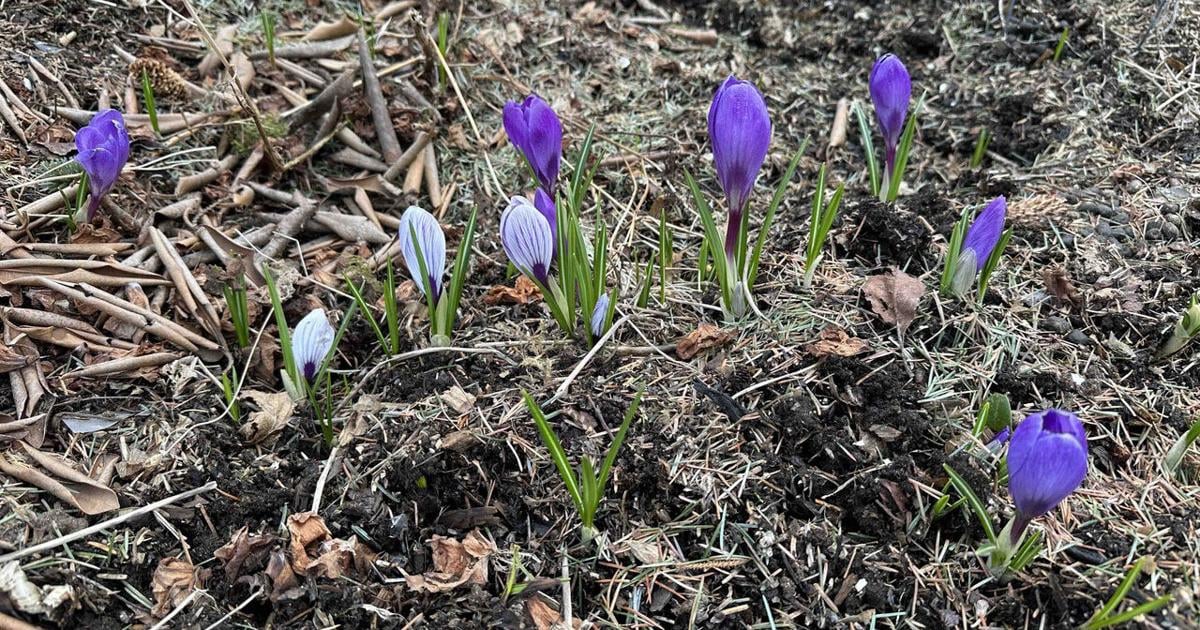
According to AccuWeather, April highs have been running between 40 and 45 degrees, with nighttime lows from 28 to 38 degrees. So far, the average high is just 42 degrees, with lows around 31 degrees.
In other words … still chilly.
So what’s a gardener to do?
Plenty. Cool spring weather gives you a window to get ahead. Tackle a few key jobs now, and when summer shows up (I promise), you’ll be ready: no getting caught with your plants down. Haha.
Monitor soil temperature:
A soil thermometer is one of my favorite go-to tools. I use it to monitor soil temperature before transplanting seedlings or sowing seeds. General rule of thumb: Soil temperature should be at least 43 degrees F.
Don’t walk on the soil:
According to garden writer Jeff Lowenfels, “You don’t want to walk on the soil if it’s wet.” Crushing the soil, be it your lawn or raised beds, smashes the air and water pockets that roots and the microbes of the soil food web depend on for transportation of nutrients.
Healthy soil is 50% water and air — the highways that transport nutrients throughout the root zone.
Use cold frames, mini-hoops or cloches:
These provide an extra layer of protection to your plants against cool weather and wind. They trap heat and humidity, while creating a microclimate that can protect tender seedlings.
Check on them periodically to make sure the soil doesn’t dry out. On rainy days, remove the cover to allow the rain to soak in, then cover it up again. Because it’s easy to forget, I often set a timer for an hour.
Plant cold-tolerant varieties:
There are many vegetables, herbs and flowers that are tolerant of cool weather. Spinach is at the top, followed by chives, radishes, broccoli, cabbage, Brussels sprouts and pansies are just a few of the plants that can handle cooler temperatures.
If cool weather continues and your seedlings are feeling the pinch in their roots, Midge Short will be the first to tell you that dealing with pot bound plants is easy compared to trying to part the clouds. “Bump them up into bigger pots,” she says. “Give them as much space as you can.”
Mulching can help to insulate the soil, protecting plant roots from fluctuations in temperature and maintaining moisture levels.
It’s never too late to ensure your garden has proper drainage. In fact, with Kodiak’s “butter clay” soil, make it an ongoing project. Mulch and compost helps with this. Constant wet, soggy conditions can lead to diseases and root rot. Raised beds are one of the best solutions for growing in overly wet soil.
When the time comes, gradually expose indoor-started seedlings to outdoor conditions before transplanting them into the ground. This process, known as “hardening off,” can help to prevent shock that might be caused by a sudden change in temperature, light, and wind.
In addition to cold frames and mini-hoops, you can add another layer of protection with row covers. They can be easily removed when the weather warms up. What about covering your beds with plastic? And which is better, black or clear plastic?
“That’s a real Alaska trick,” said Jeff Lowenfels in a recent podcast. If you use clear plastic, it warms the soil, I’m told, ten degrees warmer than black plastic.”
Utilize a greenhouse or high tunnel
If you have access to one, these provide a controlled environment that can help protect your plants from harsh outdoor conditions. Think wind, frost, horizontal rain.
High tunnels are such a win-win for Kodiak, some gardeners refer to them as hope houses. Now as temping as it is to shut doors and windows in an effort to keep cold out, air flow is more important. Keep a fan running 24/7 and crack the windows open just a touch to maintain good airflow.
Fertilize the right way:
Cool, wet soil makes it more difficult for plants to take up nutrients. Yes they are growing s-l-o-w-l-y, but they can’t take up nutrients. If you feel you have to feed them, give only very light feeds.
Keep an eye on the local weather forecasts. If a sudden cold snap or heavy rain is predicted, take steps to protect your plants.
Rake branches, dead leaves and twigs:
Gently now. Like I said before, lawns might still be heaved up (frozen) or too squishy to hold up against heavy foot traffic and ambitious raking.
Prune back weatherworn or winterkill bushes and trees. Raspberry bushes as especially vulnerable. Trim away brown (dead) branches until you reach viable green. And before the sap starts to flow, trim currants, gooseberries and any raspberry canes that bore fruit last year.
Note: Not all trees and shrubs should be pruned early, especially some of the flowering ones like rhododendrons, azaleas, lilacs, and flowering crabapples. Best to prune them after blooming. Why? Early spring bloomers set their flower buds the fall before.
It’s tempting to dive into the garden and de-winterize perennials by pulling back protective spruce branches and the like. Best to wait a little longer to avoid damaging new, tender shoots and inadvertently removing seeds that are waiting for the right post-winter conditions to germinate. (Clear signs of new growth is your go-ahead signal).
On the other hand, you don’t want to wait too long to lift them, because you delay the warming of the soil by blocking it from sunlight. Every garden’s microclimates are different. Take a daily stroll around your garden and decide what works best for your conditions.
Take action against weeds with some pro-active weeding. The sooner the better, folks. Weeds are survivors, and now is the best time to get ahead of the curve.
Divide perennials and donate them to the KMXT Spring Plant Sale, scheduled for May 9. Spring is the ideal time for dividing primroses, blue poppies, delphiniums, and rhubarb. Try to do this as soon as possible after the plant emerges in spring. Preferably before they bloom.
Speaking of primroses …
How to divide a primrose
First of all, how do you know if your primroses need dividing?
If the clumps resemble a donut (a tight ring of plants with a blank center) or a tight mound of green (think broccoli without a stem) they’re telling you, “Hey! My roots are too crowded!”
Use a shovel to split the clump straight down through the plants and roots. You might hear and feel a little crunching here. Divide the ring, or clump, into chunks. Separate the clumps and transplant them with more space between them or donate them to the plant sale. But, you’ll need to pot them up.
Of course, the roots are tangled like cold spaghetti. To release their grip on each other, set the clumps in a shallow tub of water. This encourages the soil clinging to the roots to loosen up, making it easier to tease the roots apart. Take your time. Don’t force it. It takes patience and finesse.
Then transplant them in pots filled with not-too-rich soil. They don’t like — nor do they require — nutrient-rich soil.
Vegetables: Sow seeds for Swiss chard, lettuce, mesclun (salad) mixes, cauliflower, cabbage, broccoli, kale, mustard spinach, cucumbers and zucchini squash (greenhouse only).
Herbs: Sow seeds for dill, coriander (cilantro), sage, arugula (garden rocket), savory.
Flowers: Sow seeds for calendula, marigolds, nasturtium, canary bird-vine
The Spring Plant Sale is set for May 9. Starts at noon at 1223 W Kouskov St. This is a community fundraiser where all proceeds go to KMXT. Meanwhile, we need stuff to sell!
We need: Rhubarb clumps, raspberry plants, currant cuttings, houseplants; flower, vegetable and herb seedlings. Drop off donations the week of May 4 at the address above. Thank you!
For organic gardening tips, fun recipes, and more find Marion at:
Comments are closed.