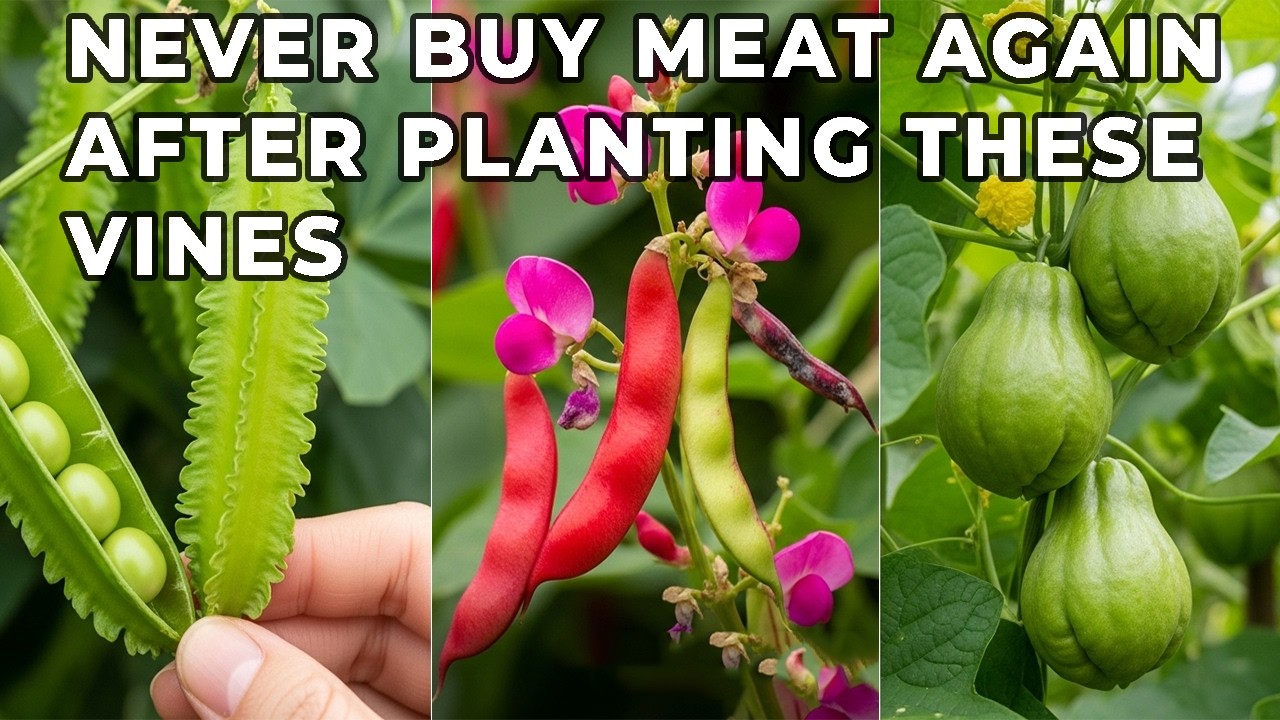
10 Perennial Vines That Produce More Protein Than Meat And Return Every Single Year 🌿 Your fence is doing absolutely nothing for you, and your bare walls are wasted space. But what if those vertical spaces could produce more protein per square foot than a butcher shop? In this video on BACKYARD CROPS, Adam Grove reveals the top 10 perennial climbing vines that return every single year on their own, require almost zero maintenance, and carry protein levels that rival beef, chicken, and eggs. 🌱 We dive deep into incredible, high-protein plants like the Sword Bean, which doubles as a massive nitrogen-fixing soil builder, and the Winged Bean, an entirely edible plant where nothing goes to waste. You will discover the drought-tolerant Wild Yam Bean, the beautiful but heavy-producing Lablab Bean, and the shockingly nutritious Morama Bean from the Kalahari Desert. We even rethink controversial plants like Kudzu and uncover the forgotten North American Groundnut Vine. 🍠 And wait until you see why Red-Stemmed Malabar Spinach takes the number one spot for relentless summer growth and insane harvest volumes. 🚀 By the time this video ends, you will never look at your growing space the same way again. We also cover the three golden rules for maximizing protein yields from every legume vine: inoculating with rhizobium bacteria, sticking to a strict harvest schedule, and prioritizing young growth for maximum nutrient density. 🥩 Stop starting over every spring and start building a self-sustaining food system that feeds you and your soil. If growing real food from a real garden is your ultimate goal, make sure to like this video, share it with a fellow serious gardener, and subscribe to BACKYARD CROPS for more deep dives into perennial agriculture, permaculture, and extreme food production. Drop a comment and let us know which of these 10 protein vines you are planting this season! 🌍
#BackyardCrops #Permaculture #HighProteinPlants #PerennialVegetables

10 Comments
I'm going to try several of these, but i have gound that i do not like the 'mouth-feel' of Malabar Spinach. Putting in an order for winged beans right away!
Do not plant kudzu. It's a forest killer.
It should be reported for terrorism to recommending kudzu.
I have an issue digesting mature legume seeds, i.e. beans. I am glad to discover proteinacious plant parts besides bean seeds are covered here. I have heard of half of these, and tried them accordingly, except groundnut which is hard to obtain. I have not had good luck growing hyacinth bean or winged bean in the Mississippi and Louisiana Gulf Coast areas, at least not when planted in the ground. I suppose that a large pot or raised bed might work, but not able to arrange for that at this time. Anyone have advice?
I have found winged bean growing wild in the Philippine Islands. I have raised other b eans but none of the others mentioned in this video. I look forward to test several of these.
Lablab Bean and Winged Bean are already on my list — but the Morama Bean from the Kalahari completely caught me off guard. Never heard of it before this video. This channel keeps delivering deep cuts that no one else covers. Subscribed and sharing this one! 💪🌿
swordbeans, wingedbeans karanansus, lab lab beans, morama beans, velvet bean not so good, wild yam beans, kudzu invasive,soybeans, groundnut beans,Malabar spinach,
Kudzu will come in through the windows and cracks in the floor and choke the kids. All kidding aside, it has about taken the south over, killing timber. Although it is edible in several ways, it does contain hormones that people need to be aware of when eating the leaves, especially. I have made Kudzu jelly, and it’s really good.
lablab, or hyacinth bean, has to be prepared properly before it can be eaten.
I don't have a fence, so nothing is doing absolutely nothing for me at all… lol… And I don't care what you do to vegies, it will never taste like meat.
The Top 10 Perennial Protein Vines:
1. Sword Bean (0:58): Robust nitrogen-fixer with protein-rich seeds (25–27%).
2. Winged Bean (2:20): An entirely edible plant; seeds contain 29–40% protein.
3. Lablab Bean (3:34): A dual-purpose ornamental and food crop with nitrogen-fixing capabilities.
4. Morama Bean (5:00): Highly drought-tolerant; seeds are rich in protein (35%) and healthy fats.
5. Velvet Bean (6:26): Powerful soil builder; note that it requires specific preparation to remove anti-nutrients.
6. Wild Yam Bean (8:06): A drought-tolerant staple with 21–29% protein, ideal for stews.
7. Kudzu (9:33): Often considered invasive, it is actually a highly productive food source with protein-rich leaves and edible, starchy roots.
8. Perennial Climbing Soybean (10:57): Emerging varieties that offer the benefits of soy with the longevity of a perennial.
9. Groundnut Vine (12:33): A native North American plant providing high-protein tubers (11–17%) and beans.
10. Malabar Spinach (14:07): The top pick for summer heat; it thrives where other greens wilt and offers high yield volumes.
Three Golden Rules for Maximizing Yields:
• Inoculation (16:18): Use rhizobium bacteria when planting legumes to ensure maximum nitrogen fixation.
• Consistent Harvesting (16:46): Regular harvesting signals the plant to continue producing rather than entering a dormant seed-set phase.
• Prioritize Young Growth (17:15): Young leaves and shoots offer higher concentrations of nutrients and protein compared to mature foliage.