
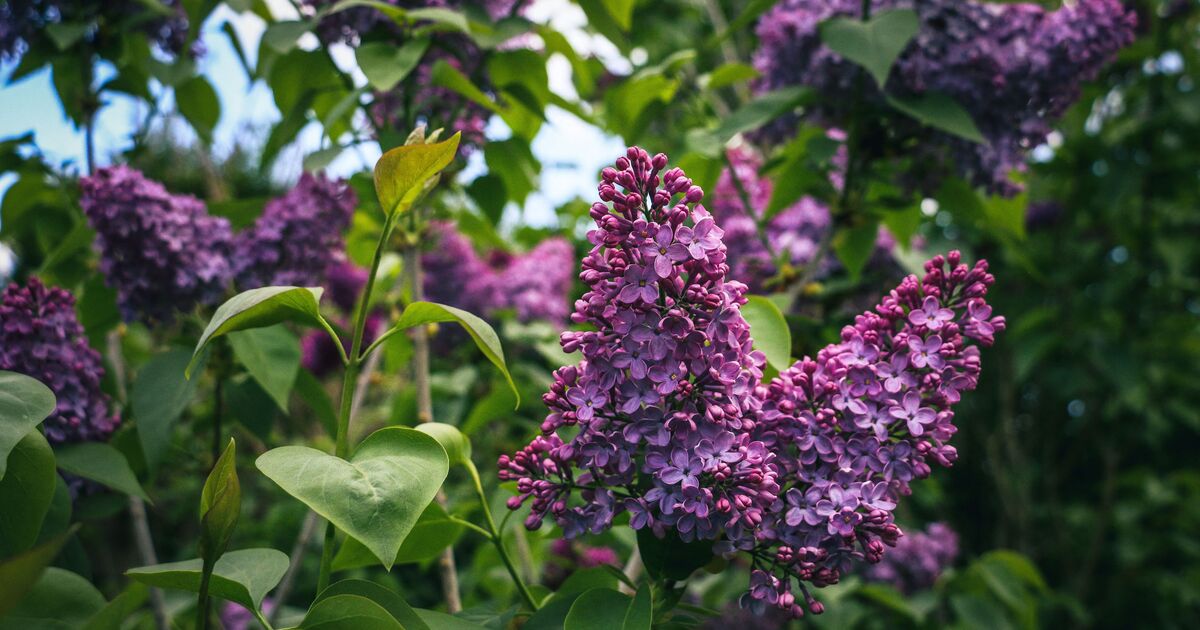
Gardening expert Joe Swift has shared a simple method to get your lilacs blooming again next year. A lilac is a type of flowering shrub (sometimes a small tree) known for its fragrant purple, pink, white, or blue blossoms that usually bloom in spring.
Reflecting on his many years of gardening, the Gardeners’ World presenter named the plant as one he favours.
“There is something rather wonderful about capturing a plant in all its brief glory, a precious week or two before it’s over for another year,” he shared.
“This is how I feel about lilacs, which tend to flower for about two to three weeks, although their backdrop-forming heart-shaped foliage is certainly an asset in the summer and autumn months.”
Sharing his advice on pruning a lilac, he wrote in The Times Weekend Magazine: “Once your lilac gets to about 6ft tall, prune it lightly every year after flowering to develop a nicely balanced framework of stems.
“Thin it out a little by taking off any weak twiggy growth, non-productive and rubbing stems and any suckers from the base. Cut long (what you think is too long, that is) and thin stems back to a pair of leaves so that you are left with branches about the thickness of a pencil, and it should flower nicely the next year.”
He also noted that lilacs “cope well” with extreme temperatures, grow in most types of soil (except very acidic ones), and are tolerant of pollution.
Listing the “nine fine lilacs”, he named: Syringa vulgaris ‘Andenken an Ludwig Späth’, ‘Bellicent’ (Syringa × josiflexa), ‘Charles Joly’ (Syringa vulgaris), ‘Madame Lemoine’ (Syringa vulgaris), ‘Firmament’ (Syringa vulgaris), Syringa microphylla subsp. pubescens ‘Superba’, ‘Red Pixie’ (Syringa hybrid group), Syringa meyeri ‘Palibin’ (Korean lilac), Syringa meyeri Flowerfesta series (White, Pink, Purple).
If one of your lilacs is old, misshapen, too large, overly dense, or no longer flowering well, Joe said it may need some “significant pruning”.
In such cases, he advises cutting the plant back to within 15–20cm (6–8in) of the ground in spring, though earlier in the season is preferable.
“Yes, you’ll lose flowers that year. This severe pruning will throw up many shoots. At roughly the same time next year, select and retain several strong, healthy shoots to form the new framework, prune back to pencil thickness and remove all the others at ground level,” he added.
Joe’s advice comes after Alan Titchmarsh shared his five top gardening jobs to prioritise before the end of April.
According to him, now is the perfect time to sort out the lawn, particularly as it may be affected by moss after winter.
He also recommends pricking out young seedlings, sowing seeds in the vegetable patch, planting hardy perennials, and adding cherry trees to the garden.
Comments are closed.