Looks like you have some volunteer peppers. These are *Capsicum* sp., not *Solanum* as the other poster said.
tamtheprogram
Pepper of some sort
Late_Quit_3410
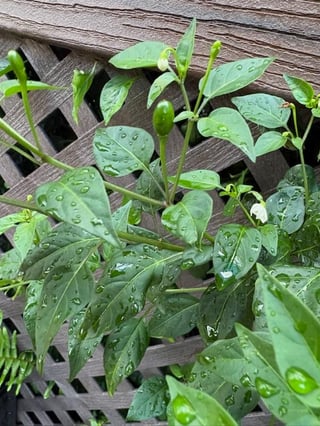
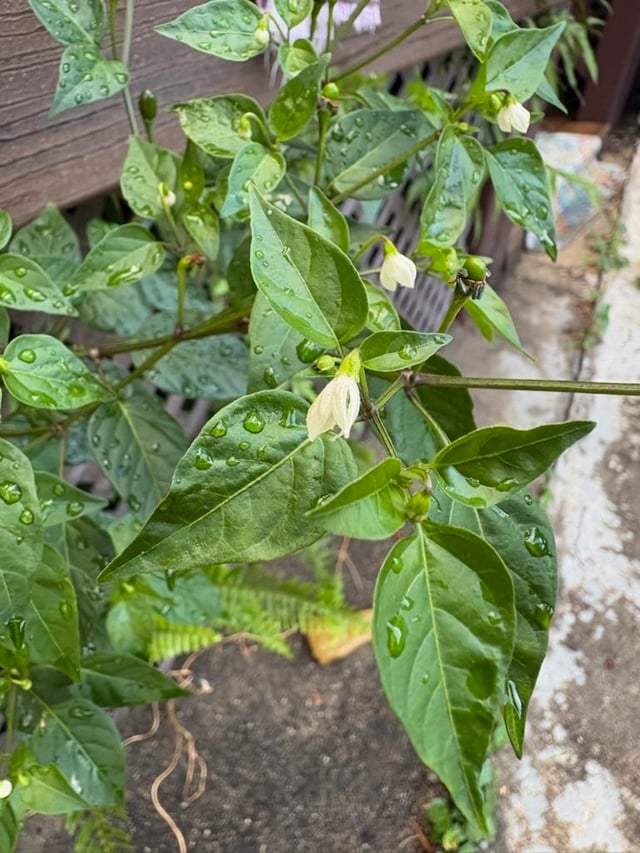
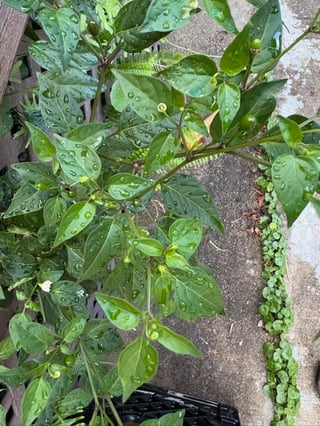
Judging from the calyx, I would say it is something in the capsicum annum species. Unfortunately, that doesn’t narrow it down much for a couple of reasons. First, capsicum annum has a number of varieties. This species includes bell peppers, jalapeños, cayenne, poblano, and many more. The other reason is that peppers are just very promiscuous in general. It is very easy to crossbreed them. My guess is that either a bird ate a pepper pooped out a seed near your deck, or maybe a seed from a store bought pepper was dropped. Either way, it could turn out to be a tasty pepper, or not. It might be spicy, or it might not. You can eat any pepper before it is ripe, but almost all peppers ripen to red. I would wait until the color starts to turn yellow and try one. Then, maybe wait until one turns red and give that a try.
OldschoolFRP
The chilis are pointing up, not down, which suggests chili péquin / chili petin / bird pepper, a wild Capsicum annum. It grows wild in the southern US, spread by mockingbirds and other birds that eat it, and is the official state native pepper of Texas. I’ve heard it is similar to the ancestral wild chili from which modern cultivar pepper varieties were bred
It does well in partial shade and is often found in wooded areas among understory shrubs. The peppers are very hot and make great salsas.
abbriggs22
I call them chili pequins. Add a bunch to a bottle when they are red, throw in some vinegar and salt, let them marinate. Add to tacos.
BreezyMcWeasel
Whoa are those chili pequins! I love chili pequins!
Grow wild in southern parts of Texas. Not sure about elsewhere. Birds love them. I make pepper sauce from them. They’re pretty spicy.
Confirm the ID before eating but that’s certainly what it looks like to me.
Elon_Bezos420
It’s a pepper plant, the white flowers and leaves shape gives it away, looks like a Annuum, do you by chance use dried chilies for cooking?

9 Comments
Solanum sp. Nightshade
Looks like you have some volunteer peppers. These are *Capsicum* sp., not *Solanum* as the other poster said.
Pepper of some sort
Judging from the calyx, I would say it is something in the capsicum annum species. Unfortunately, that doesn’t narrow it down much for a couple of reasons. First, capsicum annum has a number of varieties. This species includes bell peppers, jalapeños, cayenne, poblano, and many more. The other reason is that peppers are just very promiscuous in general. It is very easy to crossbreed them. My guess is that either a bird ate a pepper pooped out a seed near your deck, or maybe a seed from a store bought pepper was dropped. Either way, it could turn out to be a tasty pepper, or not. It might be spicy, or it might not. You can eat any pepper before it is ripe, but almost all peppers ripen to red. I would wait until the color starts to turn yellow and try one. Then, maybe wait until one turns red and give that a try.
The chilis are pointing up, not down, which suggests chili péquin / chili petin / bird pepper, a wild Capsicum annum. It grows wild in the southern US, spread by mockingbirds and other birds that eat it, and is the official state native pepper of Texas. I’ve heard it is similar to the ancestral wild chili from which modern cultivar pepper varieties were bred
It does well in partial shade and is often found in wooded areas among understory shrubs. The peppers are very hot and make great salsas.
I call them chili pequins. Add a bunch to a bottle when they are red, throw in some vinegar and salt, let them marinate. Add to tacos.
Whoa are those chili pequins! I love chili pequins!
Grow wild in southern parts of Texas. Not sure about elsewhere. Birds love them. I make pepper sauce from them. They’re pretty spicy.
Confirm the ID before eating but that’s certainly what it looks like to me.
It’s a pepper plant, the white flowers and leaves shape gives it away, looks like a Annuum, do you by chance use dried chilies for cooking?
https://www.foragingtexas.com/2011/09/chile-pequin.html