
Why Organic?
The first and most important choice we made was to go completely organic. Why? Because you can’t get more local, more nutritious, or more delicious than what you grow yourself, completely free of chemical pesticides and synthetic fertilizers. This approach isn’t just good for you; it’s fundamental to building a healthy, balanced garden that supports beneficial insects and pollinators, creating a truly regenerative space.
Organic Tips For Your Transformation:
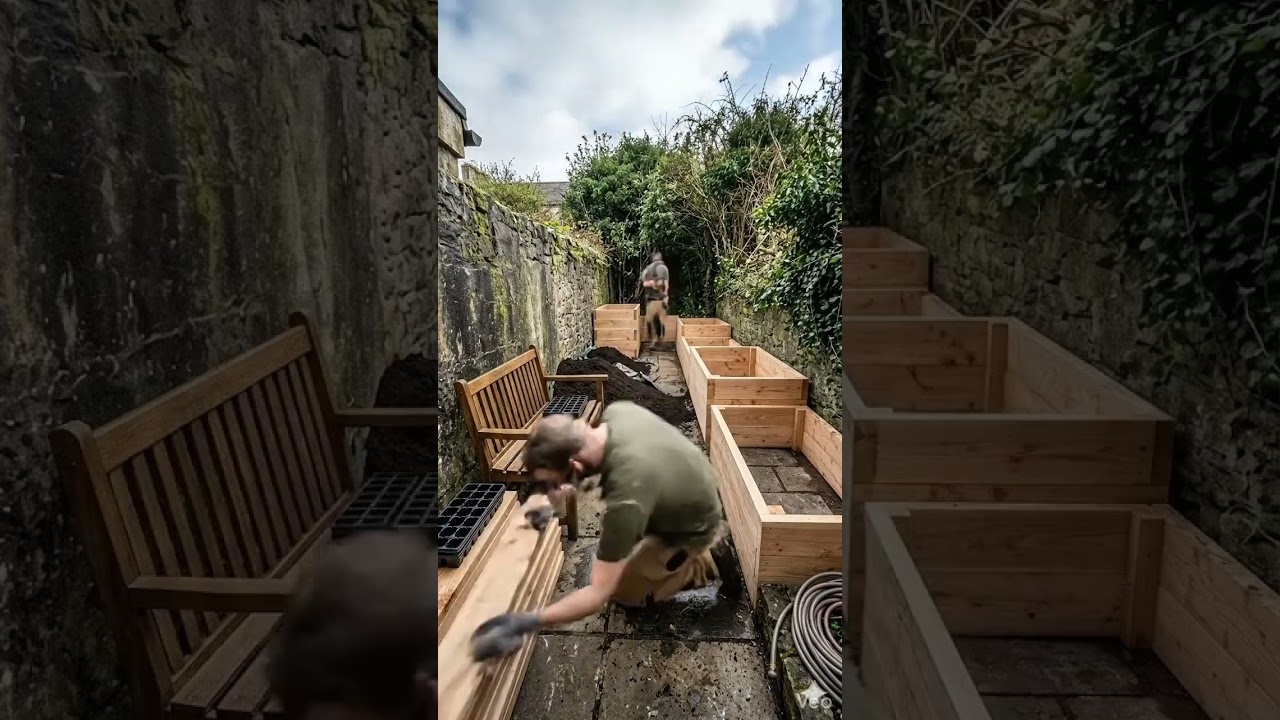
Prioritize Soil Health: Your garden is only as healthy as your soil. We started by building nutrient-rich, raised cedar beds. We filled them with a high-quality mix of organic compost, aged manure, and soil amendments. Key takeaway: Don’t skimp on the foundation – great soil is essential.
Choose Your Plants Wisely: In a small space, you need maximum impact. We picked versatile, high-yielding, and delicious options. Look at these raised beds: a vibrant mix of nutrient-dense kale and leafy greens (the ‘superfoods’ of the garden!), sweet cherry tomatoes that ripen on the vine, and stunning edible marigolds and lavender, which are not just beautiful but also natural pest repellents. Choosing plants that are both functional and gorgeous is a game-changer!
Optimize Every Inch (Vertical Gardening): No space left behind! Our biggest space-saving hack was vertical gardening. The rustic stone wall on the left was the perfect place for a stunning copper vertical herb garden. We packed it with culinary essentials like mint, rosemary, thyme, and oregano. Pro tip: Grow UP, not just out, for an efficient and visually arresting garden.
Create a Sanctuary (Ambiance counts too!): A garden is more than just food; it’s a retreat. We added comfortable teak seating, a small side table for tea, and beautiful stacked wicker baskets for harvesting. The finishing touch? Draping warm string lights across the courtyard for an enchanting, magical atmosphere that makes you want to linger and enjoy the fruits of your labor.
Water Smart: In a small space, it’s easy to overwater or let things dry out. We used drip irrigation (a subtle but essential addition!) to deliver water directly to the root zone, ensuring efficiency and conserving water.
Ready to start? What’s the first thing YOU want to grow in your organic garden? Let me know in the comments! 👇
Thanks for watching, and happy growing! 🌸🍋🍃
#organicgardening #gardenit #gardentransformation #smallspacegarden #urbangardening #verticalgardening #raisedbedgardening #vegetablegardening #sustainableliving #growyourownfood #permaculture #backyardgardening #cottagegarden #herbspiral #naturelovers #organiclife #shorts #homesteading
Comments are closed.