
 4 min read
You’ve probably heard that tomatoes are easy to grow. But there are actually a surprising number of missteps people often make when they’re growing these plants. If you’re looking to grow better tomatoes, pros say to avoid these common mistakes. Things like planting your seedlings at the wrong time, neglecting to follow the right care regimen for your plant, or choosing the wrong variety of plant can all result in tomatoes that aren’t quite right. Some of them might die early, some might never grow to the correct size, and some might just taste a little bland. And trust us — once you’ve had a truly delicious summer tomato from your own garden, a bland one simply won’t do.
The good news is that most of these tomato-growing mistakes are easily corrected. A little bit of research about the specific varieties that thrive in your area and a trip to the local garden store for the right supplies can resolve many of these tomato-growing woes. We also recommend chatting with other local gardeners to see if they have tips specific to your region’s climate and growing season.
Keep reading for expert tips that will help your tomatoes thrive all summer long.
Planting too early
The best time of year to plant tomatoes will depend on your weather and climate. Before you grow tomatoes outside, nighttime temperatures should be consistently above 50 degrees, with daytime temperatures 60 degrees or higher. Seedlings are very sensitive to frost and low temperatures, so planting them too early in the season might cause them to die or stunt their growth.
Failing to provide nutrients
Don’t forget to feed your tomatoes. “Especially once they start producing fruit, your tomatoes need a consistent supply of nutrients to keep them producing and happy,” says Brian Brigantti, founder of Redleaf Ranch and author of Gardening for Abundance. “When I first plant my tomatoes, I throw in a scoop of organic tomato fertilizer at the base of the hole before putting the plant in. Once my tomato starts to grow and produce fruit, I mix in fertilizer around the base of the plant every 3 to 4 weeks.”
Forgetting to prune
Pruning is essential to the overall health of tomato plants. Failing to prune suckers (shoots that appear at the base of the main stem and side branches) and lower leaves can create excessive foliage and limit fruit production. “With side shoots left on, you get too much air congestion and with that potential pests and diseases,” says Sarah Raven, English gardener and author. “People are scared to do it in case they pinch out the wrong bit, but you MUST.”
“Tomatoes are tough plants; they can handle a good snipping,” agrees Brigantti. “I’d also suggest pruning any leaves that make direct contact with the soil as those can fester soil-borne diseases. Don’t be afraid to prune any excess arms that your tomato plants produce. Every arm that grows takes energy from the plant, so if you want to redirect energy to more fruit production on the arms that are already producing, snip off any new arms.”
 Helin Loik-Tomson//Getty Images
Your fingers can be an easy way to remove small suckers.
Inconsistently watering
Tomato plants thrive in moist (not soggy) soil. Experts suggest giving tomato plants 1 to 1.5 inches of water each week, slightly more often during the height of summer.
Don’t trust yourself to consistently water your garden? Raven suggests, “Get an irrigation system on a timer so that you give the same watering for a month at a time, without having to think about it.” Remember to consider rainfall and adjust your schedule if there’s been excessive rain, since overwatering can lead to root rot.
Planting seedlings too close together
Tomato seedlings should be planted 18 to 24 inches apart. Without proper spacing, tomato seedlings won’t have enough circulation, which can increase the risk of pests, plus they’ll be competing for sunlight, water and nutrients if they’re planted too close together.
Not providing proper support
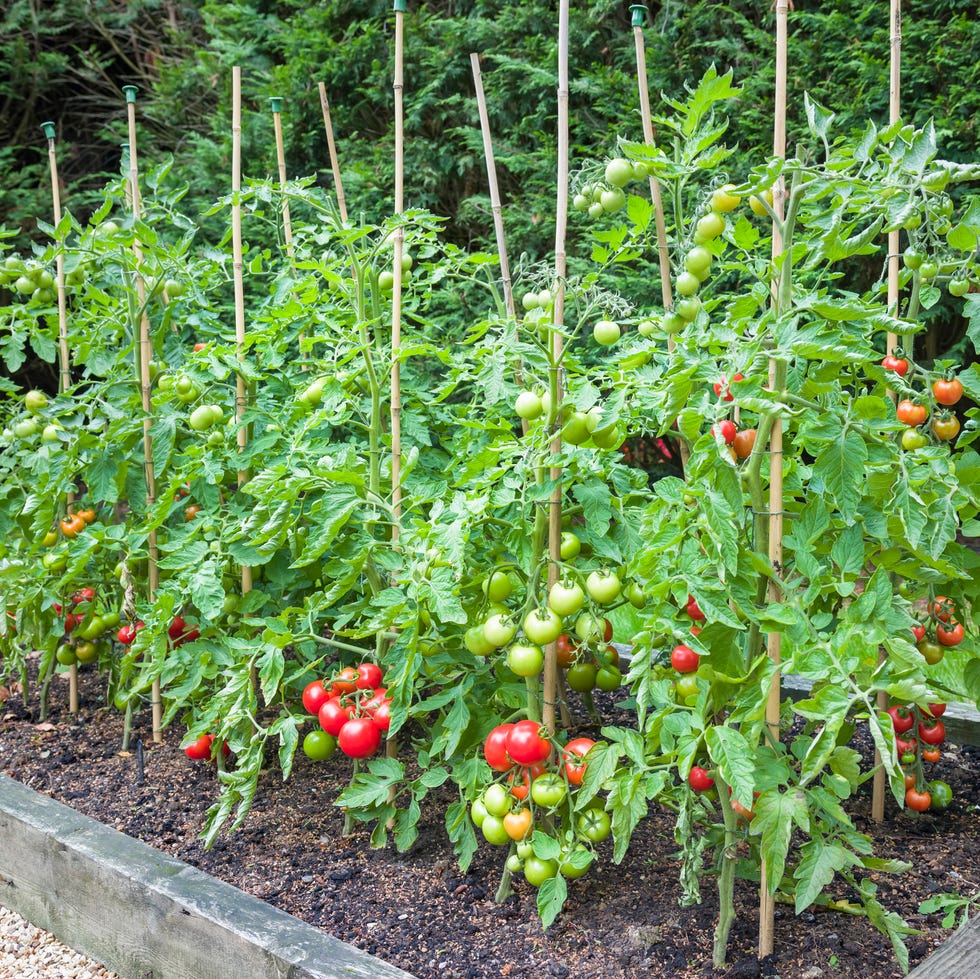
Whether you have a determinate or indeterminate variety, your tomato plant needs support — tomato cages, plant stakes or a more permanent structure, like a trellis, will do the job.
“Tomatoes have a habit of sending out an abundance of arms that’ll hold the fruit it produces,” says Brigantti. “Without proper support, the weight of the arm can become too much to bear and cause the arms to sag or even snap off.” The plant will continue to send out arms throughout the season, so you’ll need a tall, sturdy tall support system.
Pro tip: “My personal favorite ways of trellising unruly tomatoes are with cattle panels that you can mold to form an arch,” says Brigantti.
 PaulMaguire//Getty Images
Tomato plants require vertical support to thrive.
Harvesting at the wrong time
A failure to harvest tomatoes when they’re ripe can cause them to split or spoil, which attracts unwanted insects and pests to your garden. You can harvest tomatoes when they’re fully ripe or a few days prior to allow them to ripen indoors.
Choosing the wrong variety
From heirlooms tomatoes to tiny cherries, tomatoes come in many shapes and sizes. Consider the size of your space, and whether you want a determinate or indeterminate variety. Determinate tomatoes take up less space and grow like a bush, making them ideal for container gardening, but they typically only fruit over a two-week period. Indeterminate tomatoes grow longer vines up to 8 to 10-feet tall and tend to produce flavorful fruit all season long.
Raven says, “I always advise to go for an interesting, taste-packed variety” — likely an indeterminate like a big beef or cherry tomato. “I prefer to grow from seed instead of a seedling for the best result,” she adds. “Many available seedlings in stores can be not that much more interesting in taste than a supermarket tomato.”
More Expert Gardening Advice

Alyssa Gautieri (she/her) leads Good Housekeeping’s gift guide strategy. She writes and edits commerce content, where she analyzes lifestyle trends, shopping data, and works closely with the Good Housekeeping Institute to recommend top-tested products. Previously, she was the associate lifestyle editor for GH and wrote for publications including ELLE Decor, BobVila.com, and Unique Homes Magazine. When she’s not tracking down buzzy products, you can find her walking her dog, Skye, around Jersey City.
Comments are closed.