
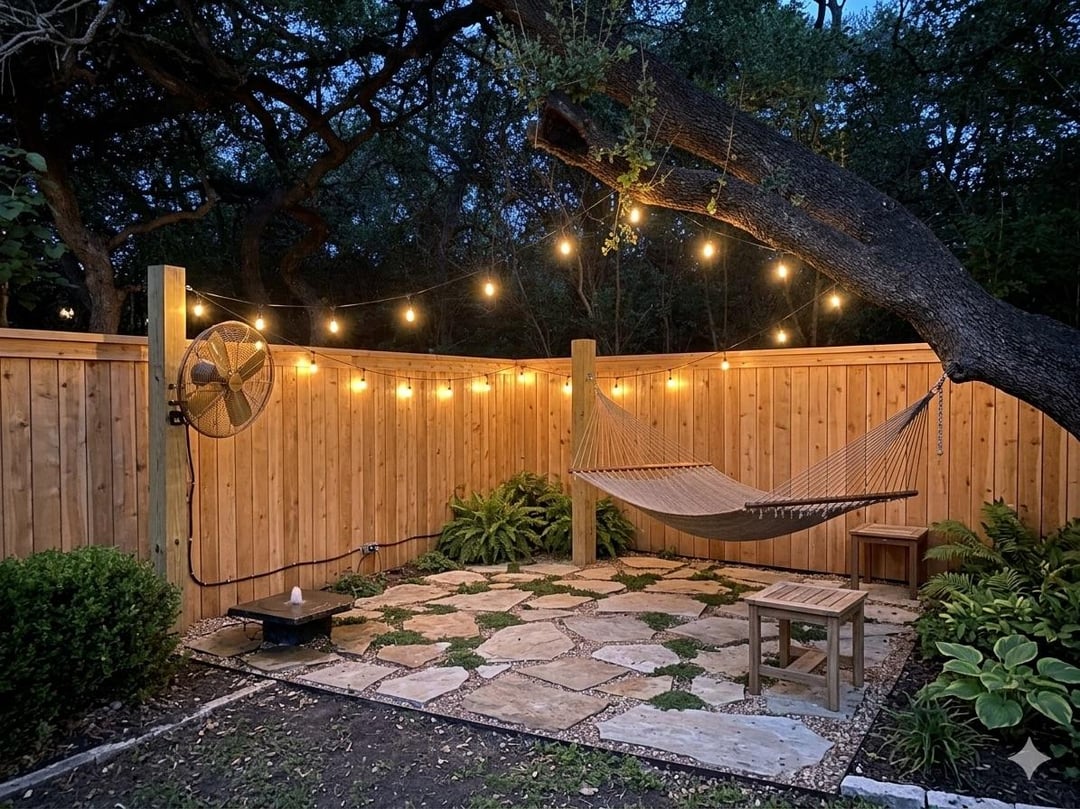
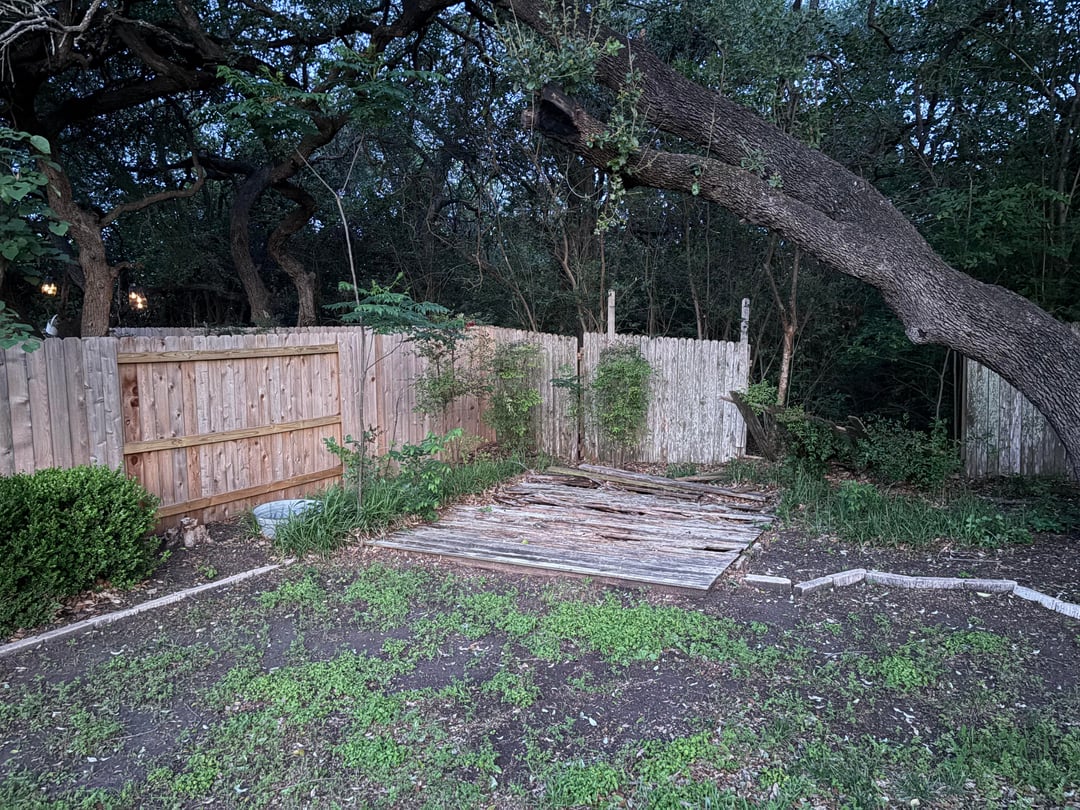
We’re getting our back fence replaced and the platform on the ground removed. I like the idea of having some kind of stone and gravel base instead. I will admit I hate following directions, however when it comes to making something like this actually level (and stay level over time) would this be super difficult to achieve?
One other question, I’m in central Texas and not sure about how deep I can put a post into the ground in order to make sure it’s strong enough for a hammock. Anyone in the general area have any idea?
by TheBayWeigh
29 Comments
Very much a diy job just watch videos and take your time with your leveling and compaction
Do not use pea gravel.
Def a diy job. Tons of videos on how to do this. And the post for the hammock can go 18″ to 24″ down in the ground to provide more than enough support. Concrete them in obviously, and keep the concrete above ground level a little to prevent the post from rotting.
Much better!!!
Make sure you excavate enough to compact the stone well, or the flagstone will move around and get wonky.
Weeds will grow between the stones so decide how you will manage that ahead of time. Are you willing to spray herbicide? Or do you promise to get out there with the flame weeder on a regular basis? Large weeds have roots that disturb the gravel and its a pain if you let them get too big
You are dealing with lateral pulling force which is totally different than vertical downward weight. A hammock will rip a standard fence post right out of the ground especially when that Texas clay gets wet. You need a six by six treated post buried at least three feet deep but four is better. Dig a hole at least twice as wide as the post and bell out the bottom so it looks like a mushroom shape. Fill that entire thing with concrete. If you skip this your post will permanently lean toward the middle within a month.
Throwing flagstone and gravel on top of raw dirt means it will sink and shift after the first heavy rain. To make a stone patio stay level you have to excavate about four inches. Add three inches of crushed limestone road base and tamp it down with a heavy plate compactor until it feels like solid concrete. Lay a thin layer of coarse sand to seat your stones and sweep your decorative gravel into the joints. You must install rigid metal or stone edging all the way around the perimeter or that loose gravel will migrate into your grass forever.
Doing all this digging in Central Texas usually means hitting solid rock and breaking your back. Before you rent a heavy auger and buy tons of stone you should run a photo of that corner through the GardenDream web app. It lets you overlay different patio dimensions and test exactly where those massive posts should sit. Getting a solid visual blueprint first will save you from digging up solid limestone twice.
What part of this has anything to do with your wife?
What is it you are hoping to prove?
Skip using the tree and dealing with a post and just get a nice freestanding Hammock. Then you can hang something different from the tree. This way you don’t have to deal with any of those issues. Follow everyone else’s advice on installing the pavers correctly. It’s critical.
Your wife is right. We have no idea what about, but trust us, she is right.
Is there an entire right half to that tree that we’re not seeing here? If the whole tree is leaning over at this angle, I wouldn’t expect it to stick around long at all, and would rather remove it before spending much on the fence or patio.
What was the wife’s idea/thought you wanted to disprove?
I appreciate that it added weeds for additional accuracy in the rendering
Hey OP, landscape designer in the Austin area here. We build permeable Flagstone paths and seating areas all the time. The one piece of input I’d add would be on the size of your individual stones – the larger they are, the more stable they will be. Larger pieces also mean there is less area between them, which makes it easier to place and move furniture and gives weeds less space to colonize.
Other comments are correct that you need a nice stable base. We use compacted decomposed granite which will still allow water to infiltrate, as opposed to something like road base which essentially turns the whole area into impervious cover. A couple of inches of compacted DG with large flagstones on top will be stable for a long time – we recently went back to a project that was completed well over 10 years ago to do some cleanup and reset a couple of stones, and there had been very minimal change/movement in that time.
Lmfao the wife is always right dude. That’s all I came to say
I suspect wifey says rock ain’t easy and it should be lumber. She’s right, unless you’re willing to be deliberate during install
The patio idea is great! With all the commenters giving advice about how hard it might be to dig three or four feet deep to install posts, maybe consider a freestanding hammock frame.
It wouldn’t take anything but a full day on a weekend to adjust any settling if done properly with the sand stone.
You can rent an Auger at Home Depot and hopefully with an extension. You would need to go down about 4 feet minimum for those posts. Depending on hight of the posts for the hammock.
Depending on if you are building the fence and what not, it would give you an excuse to buy some tools possibly. I have a standard 4” auger I bought years ago and then an extension. Then you use a narrow shovel once you get to depth and trim the side walls of the holes with the shovel and then I use a shop vac with the hose attached to a broom handle to suck the loose dirt and random rocks out of the hole. It definitely has helped save my back.
Just make sure you use a base gravel inside the holes to set your height and position the poles once your concrete is mixed and pour that around the posts to help prevent wood rot. Setting the posts on gravel before pouring the concrete keeps the concrete from forming an enclosed cup that holds water.
The sand stones should be easy, but I’d recommend crushed granite around the sand stone. Definitely dig it deep enough to lay sand and or pea gravel to about 2”. Level it and set your stones. Then fill the rest with crushed granite all around. You can build a perimeter edge with treated pine or cedar. I wouldn’t chance anything else. Termites do happen.
You may want to make sure you use more than a recommended allotment of concrete for the posts to be safe. It will help it from tilting with weight and knowing how Texas clay is. It will help balance and stabilize the hammock posts. It would cost much for an extra bag or two. Depending on the size of bags you buy.
This gotta be AI generated. That post won’t work for a hammock
Couldn’t pay me to lie in a hammock under a tree like that lol
Can we talk about not following directions and trying to prove your wife wrong? What’s going on here?
Never prove your wife wrong, sir.
Let me stress this again. DO NOT USE PEA GRAVEL.
I live near you. Get a hammock stand and plant low growing drought tolerant plants between your pavers. It will be low maintenance and beautiful. Our wooden hammock stand cost 70 bucks shipped, has lasted since 2018.
Metal hammock stands feel cheap and rust out.
Also, we love our Yucatán hammock, the American ones flip too much.
My one suggestion would be to add some kind of mosquito net to that baby. We use ours in a shady part of the yard all year even in the triple digits.
I might look for a hammock with its own base, rather than tie to a fence post and tree. I picked up a pretty nice hammock-chair, very comfy out here in east Texas
Help prove your wife wrong?…. dude, even if she’s wrong, you’re wife is never wrong. Learn it, live it, love it.
I’m in your area, and we did this basic backyard reno several years ago.
We dug down about 5 inches, laid weed barrier down after leveling the ground, put down a layer of paver sand,, and then laid paverbase tiles over. We then put paver sand over the paverbase tiles, so they wouldn’t be seen, and laid down the stone tiles over the sand. Between the stone tiles we used some kind of paver cement (it’s been over 10 years, and I cant quite remember this part). It’s held up all this time, but did take some heavy work.
For the hammock situation, we opted for a freestanding base that we loved and got that rather than using fench post or anything permanent/semi-permanent.
Edit to Add: I agree with skipping the pea gravel. With the heavy rains we get down here, that just washes all over the place becoming a nuisance. If you want stones, go for some medium river stones between the tiles. We have a French drain in the front, and those hold up pretty well.
Skip the post entirely and just get a hammock stand. You’re welcome.
If you hate following directions (I’m with you on that), then no, probably not. Don’t do gravel, that’s for sure