
I’m looking for plants to put in hanging baskets that will bloom all summer and provide lots of color. They will be in a location that gets sun for most of the day. What would you suggest? — Nancy
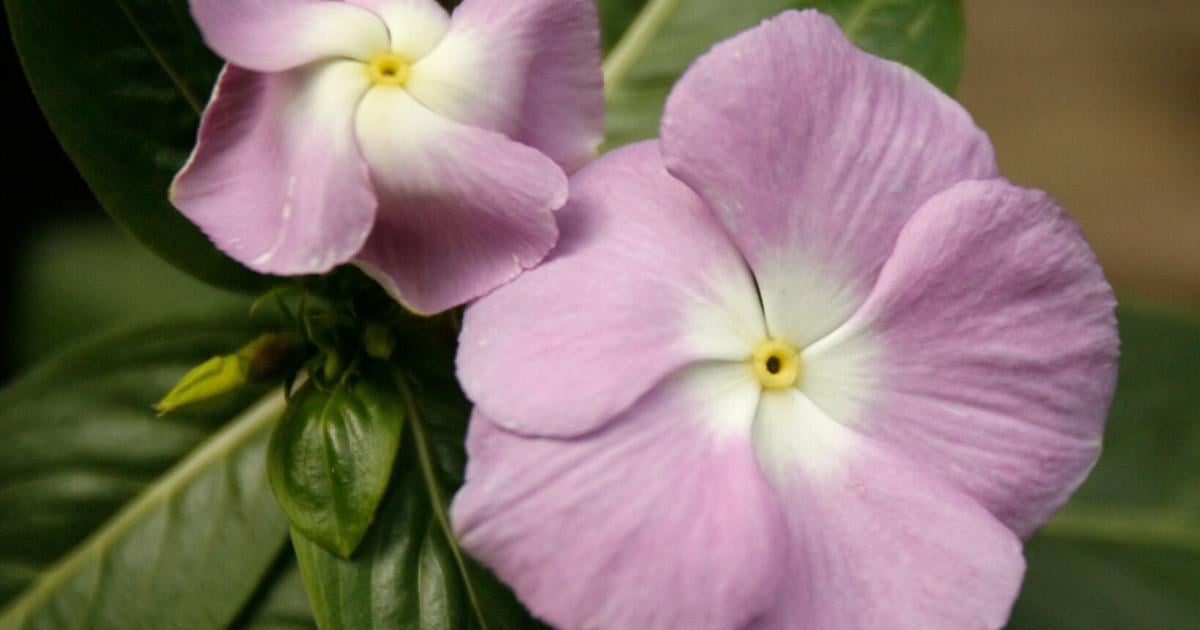
A sunny spot allows a wide variety of options. Consider: lantana (particularly trailing types like Bandana Trailing Gold), trailing periwinkle or vinca (such as the Cora Cascade series or Mediterranean series — outstanding performance and constant flowers), trailing angelonia (there are trailing types in the AngelMist series), ornamental sweet potato (many varieties with colorful foliage), trailing sun tolerant coleus (such as Trailing Rose or Garnet Robe), trailing torenia (such as the Summer Wave series or Catalina series), blue daze, purslane, narrow-leaf zinnia (Crystal series is usually available), Silver Fall dichondra (nice silver foliage) and scaevola.
A basket may be planted with more than one type of plant.
I have a gerbera daisy that looks sick. The leaves are turning grayish-white with a powdery material on them. What is this and what should I do? — Charles
This is a fungal disease called powdery mildew. It is a common problem in late spring when the weather is warm and dry. Gerbera daisies are especially prone to powdery mildew, but it will attack a wide variety of plants including crape myrtles and roses.
A variety of fungicides will control powdery mildew. Contact-protectant fungicides such as potassium bicarbonates, sulfur fungicides and neem oil are effective in preventing powdery mildew or during early and mild infections.
For more severe infections, such as what your gerbera daisy is experiencing, systemic fungicides work best, such as myclobutanil (Immunox and other brands) and propiconazole (Ferti-lome Systemic II Liquid Fungicide and other brands). Make several applications following label directions.
Because this is just one plant, evaluate the value of the plant when deciding if to treat. You may decide purchasing a fungicide that costs more than the plant did is not economical.
When should cucumbers be harvested? I think it’s better to pick homegrown cucumbers when they are about pickle-sized. My wife thinks it’s better to let them grow to the size of cucumbers at the supermarket. Can you tell us the correct way to harvest cucumbers? — Jim
Well, this is a trick question. How large the cucumber should be when you harvest it depends entirely on the type and variety of cucumber. Cucumbers harvested for gherkins are harvested when about 2 inches long. Pickling cucumber varieties are generally harvested about 4 inches long. (Think of whole dill pickles in a jar.) Slicing cucumber varieties may be harvested anywhere from 6 to 12 inches or more, depending on variety. So, the size when you harvest cucumbers should be guided by the variety and use.
That said, we harvest cucumbers in the immature stage, not when they are ripe (when they are ripe, they turn yellow, bitter and the seeds are firm). You really cannot harvest a cucumber too young. Young, small cucumbers are delicious. So, if someone wants to harvest cucumbers smaller than recommended for a variety, that is the gardener’s prerogative. But you sacrifice pounds of harvest by harvesting cucumbers small. Harvesting at the recommended size, based on the variety, maintains quality while maximizing pounds produced.
TIPS
GARDEN SHOW: The Northshore Garden & Plant Show at the St. Tammany Parish Fairgrounds began Friday and continues Saturday from 9 a.m. to 3 p.m. The annual spring show features a large selection of plants from regional growers along with outdoor furniture, unique garden art and tools for home gardeners. Admission is $5, free for people 17 and under.
MULCH ADO: Don’t forget to mulch newly planted beds of shrubs or bedding plants with a 2-inch layer of leaves, pine straw, pine bark or other materials to control weeds, conserve moisture and keep the soil from packing down.
LET US SPRAY?: If you need to spray an insecticide to control a pest problem, spray only those plants that are affected or are likely to be affected to minimize the impact on nontarget organisms such as beneficial insects. Use the least toxic insecticide that will do the job.
COLLECT SEEDS: Save seeds from your cool-season annuals to plant again in your garden this fall. This time of year, collect seeds from sweet peas, violas, nicotiana, poppies, calendulas and cosmos. Make sure the seed pods or seed heads are mature before harvesting.
DEEP TROUBLE: If you intend to put out soil fill this spring, remember that shade trees will not tolerate more than 2 inches of fill placed over their root systems. If spreading over a lawn, mow the grass before spreading the fill. Also, lawn grass will not grow through more than about 2 inches of fill. Avoid spillway sand as it is more likely to contain weeds.
GARDEN QUOTE
“Sweet flowers are slow and weeds make haste.” William Shakespeare
Comments are closed.