
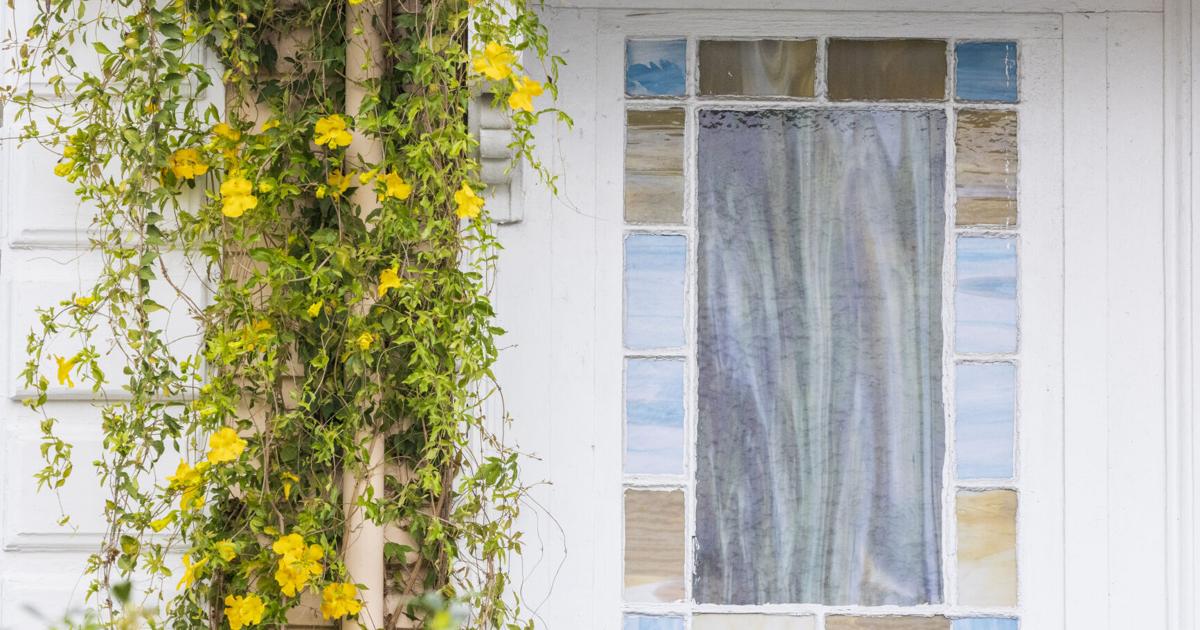
I always get lots of questions about controlling weedy vines in mid- to late summer. By then, vines have grown vigorously for months and often become major problems in the landscape.
Don’t wait! Now is the time to address weedy vines. Allowing the vines to grow unimpeded until later will only make it all that much harder to deal with them.
Vines do not have to put any energy or resources into building strong stems to hold the plant upright, as most other plants do. They use structures or other plants for support to grow upright or they lie on the ground.
As a result, they are among the fastest-growing plants. That means vines can quickly create major problems and rapidly recover from control efforts.
I’ve seen cat’s claw vine nearly swallow up an abandoned building. How many weeds do you know that can swallow a building?
Bush killer vine gets its common name due to its ability to rapidly grow over, cover and damage shrubs.
Don’t give up!
The worst situations with weedy vines occur when there is an extended period of lax maintenance.
This may happen in an out-of-sight area of your yard where you rarely go. You may purchase a home previously owned by someone who was unable or unwilling to keep up with the yard work. Vines that have had their way for years will not be easily controlled. They will fight you leaf and tendril until you seethe with frustration. Don’t give up.
Really, “don’t give up” should be the rallying cry for anyone dealing with weedy vines.
When controlling weedy vines, you must be prepared for a long, hard fight. This will require commitment. Once you begin your control efforts, you have to be persistent and frequent in what you do over whatever period of time it takes to gain control over or eradicate the vines.
There is no single best herbicide or best technique for controlling weedy vines. Every situation is different, and gardeners often must use a variety of methods for best results. How you control weedy vines will be greatly influenced by the situation.
There are, however, some basic methods that can be utilized, and they are generally effective for eradicating weedy vines in landscapes if used persistently over time.
Cut them back, dig them out
Physical control involves cutting back, hand pulling and digging out.
Pulling or digging up vines is best done when the soil is moist, and the goal is to remove as much of the below-ground roots, bulbs, tubers or rhizomes as possible.
Done regularly, this is a great way to deal with occasional seedlings and light infestations.
This method may also include cutting down and removing vines from buildings or fences to clean up a situation.
The roots and below-ground parts must then be dug up at that time.
You should never try to control weedy vines simply by cutting them back occasionally. That’s like jogging on a treadmill — lots of work but you don’t get anywhere.
Spray with herbicides
The second method is to carefully spray the foliage with a systemic herbicide.
This is only possible when the spray will not get on the foliage of desirable plants. If needed, nearby desirable plants can be covered with plastic sheets or plastic bags to protect them while you do the spraying.
Be sure to spray enough to wet the foliage of the vine thoroughly but avoid excessive application and runoff into the ground. You may spray the vine intact, or cut it back, let it resprout and spray the new growth — depending on the situation.
Systemic herbicides are absorbed by the foliage and enter the plant’s circulatory system, which sends the material into the vines’ roots, killing them as well. Glyphosate (Eraser, Killzall, and other brands) or triclopyr (Brush-B-Gon, Brush Killer and other brands) are commonly recommended for weedy vine control. Herbicides that contain combination of dicamba (banvel) and 2,4-D also work well.
Once the vine dies, it may be removed.
Treat cut stems
When larger established vines are growing up in trees or on buildings or intertwined in shrubs in the landscape, spraying the vine foliage is not practical.
The potential for the herbicide spray to injure desirable trees and surrounding landscape plants in these situations is too high. Weedy vine control in sensitive areas can best be achieved by the cut vine method.
Cut off the vine a few inches from the ground and immediately treat the fresh cut stump with undiluted triclopyr (such as Greenlight Cut Vine and Stump Killer, Brush Killer, Brush B Gon).
Applying the herbicide to the fresh cut is necessary to prevent the stump from resprouting.
You may have to crawl under a vine-infested shrub to do this. Once the stem is cut, the vine growing up the tree, telephone pole or shrub will die because it has no root system.
The treated stump will die because the herbicide gets absorbed by the freshly cut surface and is translocated to the roots. This method is very effective and may be used any time of the year.
Just keep at it
Getting weedy vines off your property will take many repeated efforts no matter what methods you use. Do not get discouraged if early efforts are not as effective as you hoped they would be. Keep at it.
If you make a major effort to get rid of a vine and then sit back and let it grow back before you try again, you will never make progress.
If you are trying to control a vine and don’t seem to be making any progress, it generally means you are not putting in the time and effort that is needed for effective control.
But if you are prompt, aggressive and frequent with your efforts, you will begin to see positive results.
You know you are doing a good job when controlling the vines becomes easier over time. Don’t give up.
Comments are closed.