
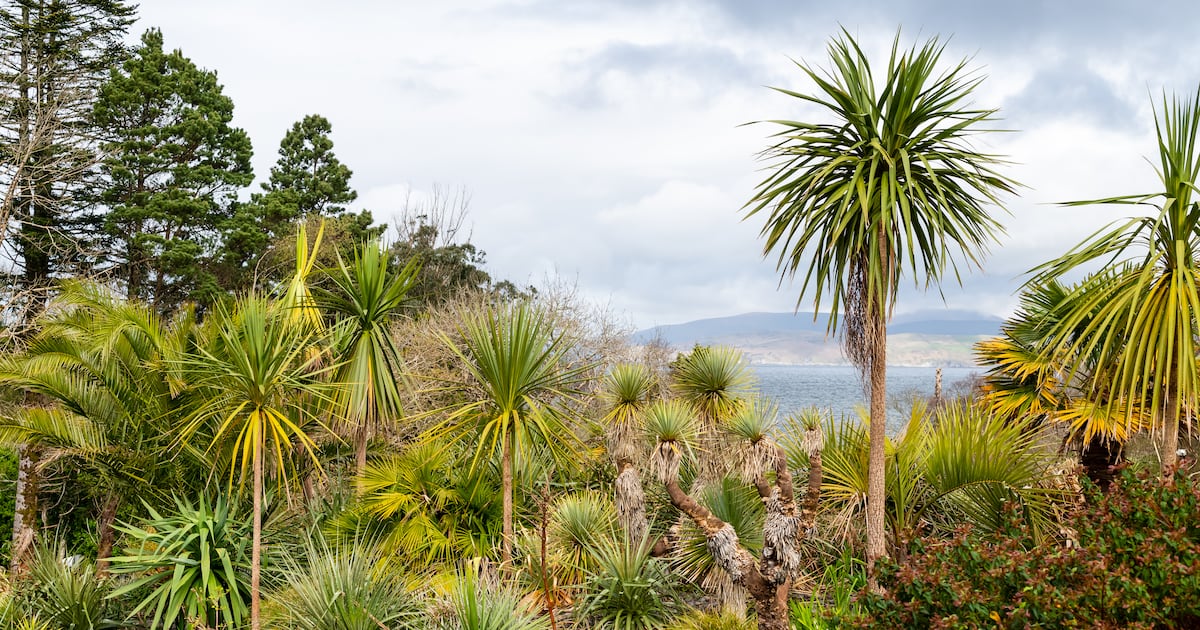
According to a variety of reliable sources, Ireland has somewhere between 3,200 and 7,500 kilometres of coastline, the higher of these two numbers accounting for the many smaller islands, inlets and bays. Perhaps not surprisingly given that statistic, 40 per cent of Irish people are estimated to live within a couple of kilometres of that same coastline.
And what’s not to like about gardening by the sea, you might think. After all, there’s much less risk of frost, higher light levels, and a growing season that’s significantly extended at both ends.
Yet the truth is that for those who do so, there are as many challenges and potential stumbling blocks as there are opportunities. Of the former, probably the most important thing to bear in mind is that growing conditions can vary hugely across the country – the only common denominator being that damagingly low winter temperatures are much less of a risk than they are for those gardening inland.
Some Irish seaside gardens, for example, enjoy an exceptionally sheltered microclimate, their exposure to salty, desiccating sea gales and destructive winds minimised by a happy combination of natural topography and wisely placed shelterbelts. But others less fortunate must cope with the kind of exposure to violent storms that can stunt growth, violently uproot plants, sear their leaves, and even defoliate them. Soils in these seaside gardens can also vary greatly, from thin, sandy and ultra-free-draining to damp and peaty.
The result is that the growing conditions of a south-facing Dublin seaside garden situated on Howth Hill with invaluable shelter from cold, salty winds are a universe away from those of a north-facing, rain-soaked seaside garden located on the coastline of Donegal with no shelterbelt to provide even the most basic protection. In the former, you might very well succeed in growing tender species such as angel’s trumpet, Canary Island echiums, bananas and proteas, as the late David Robinson, gardener extraordinaire, famously did at Earlscliffe. But in the latter, you might struggle to grow even the most humdrum of garden plants.
Different again are the kind of growing conditions found in some of the most sheltered coastal gardens of the southwest, such as Kells Bay or Derreen, both in Co Kerry. Here, exceptionally mild temperatures combined with extremely high levels of humidity and rainfall have created a microclimate akin to that of a temperate rainforest, where rare species of subtropical ferns will happily grow and even naturalise.
Still, if there’s one rule that does apply to all, it’s the essential need to create some sort of appropriate shelter for less resilient plants, choosing a range of ultra-tough, salt-tolerant, wind-tolerant, strong-rooted species to filter out the worst of harmful coastal gales. In very exposed coastal gardens, a series of staggered shelterbelts may even be required, using the very toughest of these species as an initial outer bulwark to take the brunt of the exposure.
Many of the plants most suitable for these kinds of shelterbelts are native to coastal parts of the southern hemisphere. Key to their impressive ability to survive are the various ingenious ways in which they’ve evolved to cope with these kinds of ultra-challenging growing conditions. An example is the evergreen New Zealand shrub known as Hebe x franciscana, whose tough, leathery leaves are covered with a thick waxy cuticle that protects them from salt damage and desiccation, while its dense, spreading root system firmly anchors the plant in coastal gales. It’s a similar story for the evergreen Griselinia littoralis, a native of New Zealand, and well as for Eleagnus ebbingei, and Olearia macrodonta, evergreen shrubs whose leaves are protected by a thick waxy cuticle as well as a dense, silver-grey layer of fine hairs.
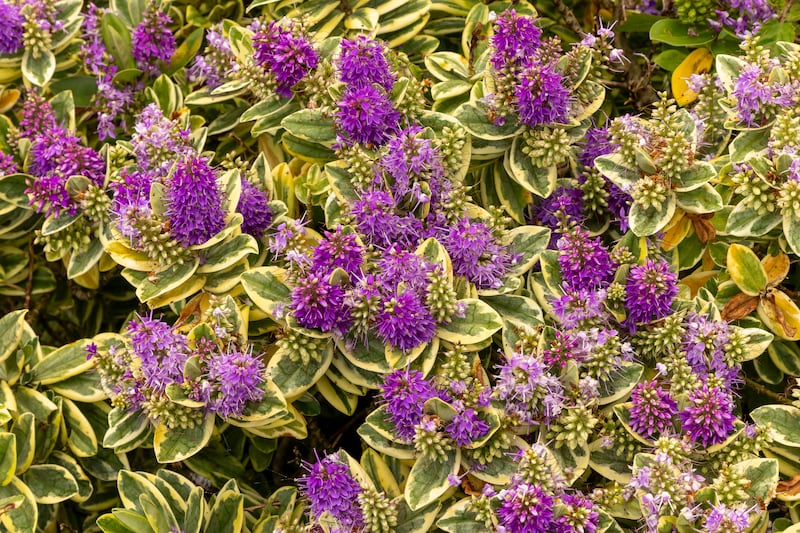 Veronica x franciscana’s leathery leaves have a waxy cuticle that prevents salt damage and water loss. Photograph: Getty Images
 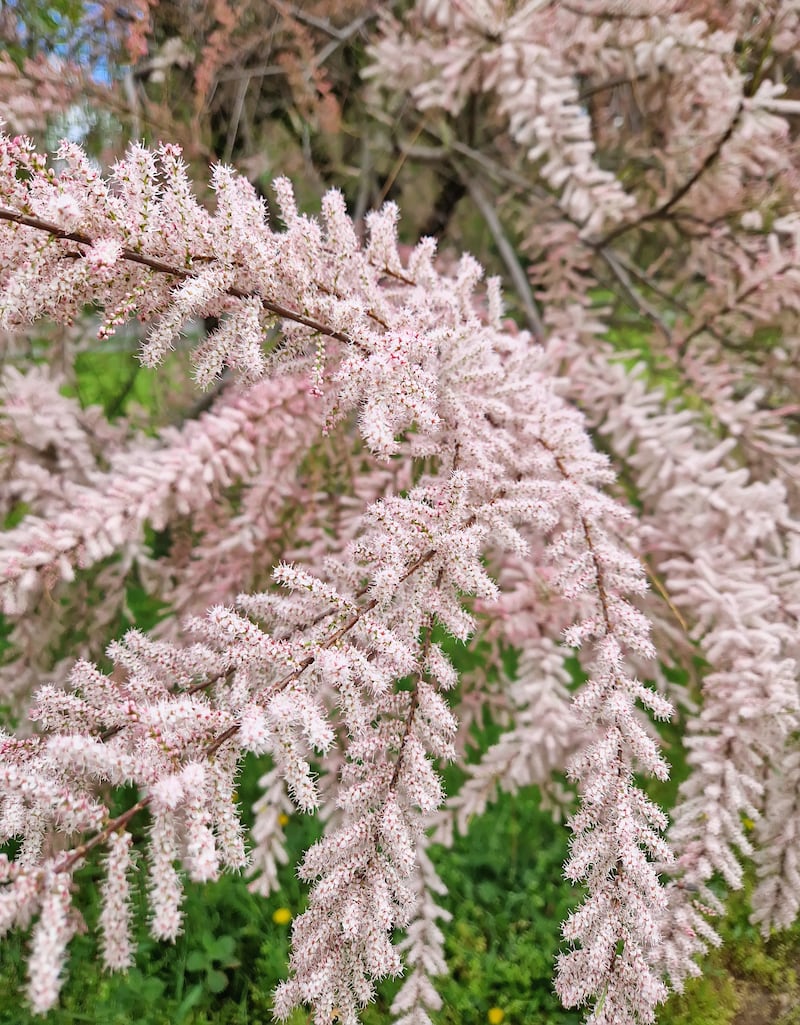 Tamarix tetrandra can filter salt from the soil and excrete it through its leaves. Photograph: Getty Images
 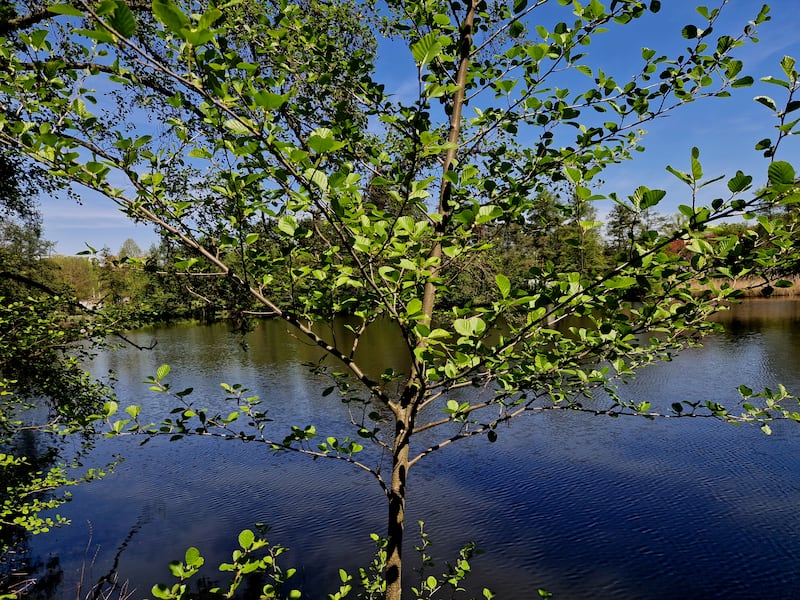 Sticky alder, Alnus glutinosa, has a sticky resin that protects against salty winds. Photograph: Getty Images
Native to southeast Europe, Tamarix tetrandra is another excellent candidate for seaside windbreaks. Known as a ‘recretohalophyte’, its specialty is being able to filter salt from the ground and then excrete it via its leaves, making it an excellent candidate for thin, sandy soils where little else will grow.
Similarly, the Latin name of our native alder tree, Alnus glutinosa, offers a clue as to how this resilient, deciduous native species resists damage from salty coastal winds, with its twigs and leaf buds protected by a sticky resin that allow it to be used as a frontline defence. Its leathery leaves are also protected by a waxy, salt-resistant cuticle, while its root system has evolved various ways to cope with thin, salty, sandy soils as well as the kinds of waterlogged conditions found in some Irish coastal gardens.
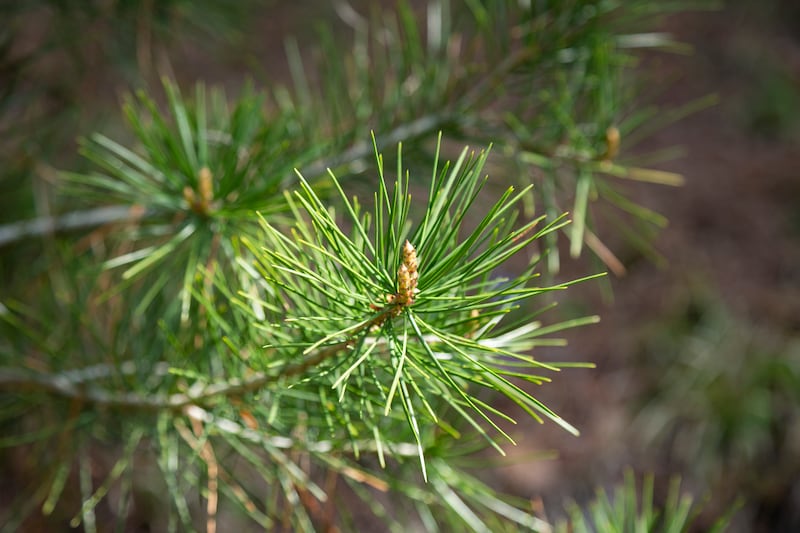 Pinus radiata, the Monterey pine, is ideal for shelterbelts. Photograph: Getty Images
 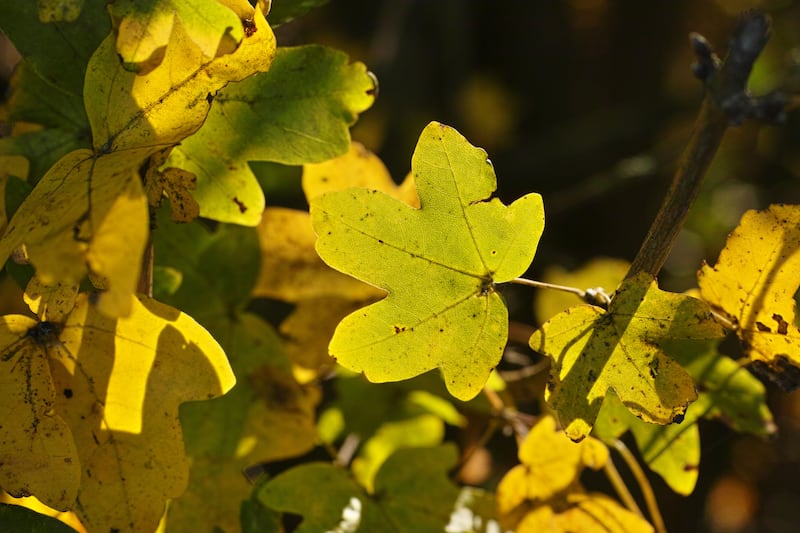 Acer campestre, field maple, is well suited to coastal gardens. Photograph: Getty Images
 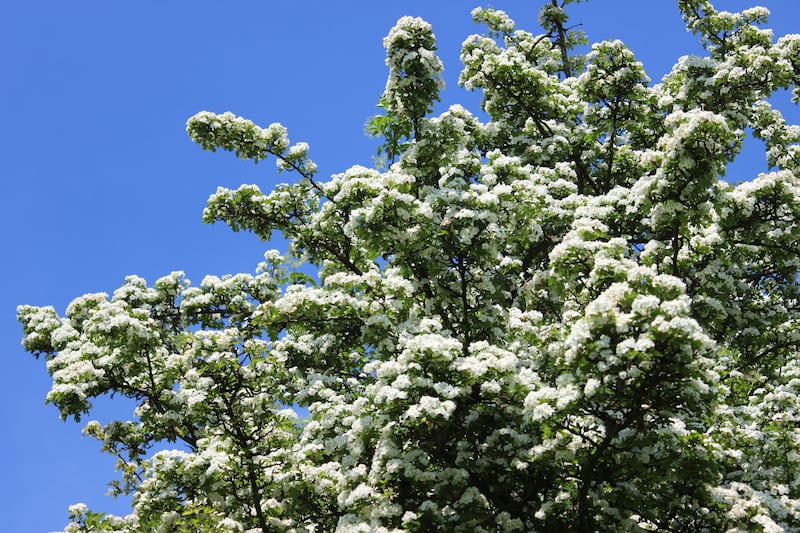 The common hawthorn, Crataegus monogyna, is a woody shrub native to Ireland. Photograph: Getty Images
 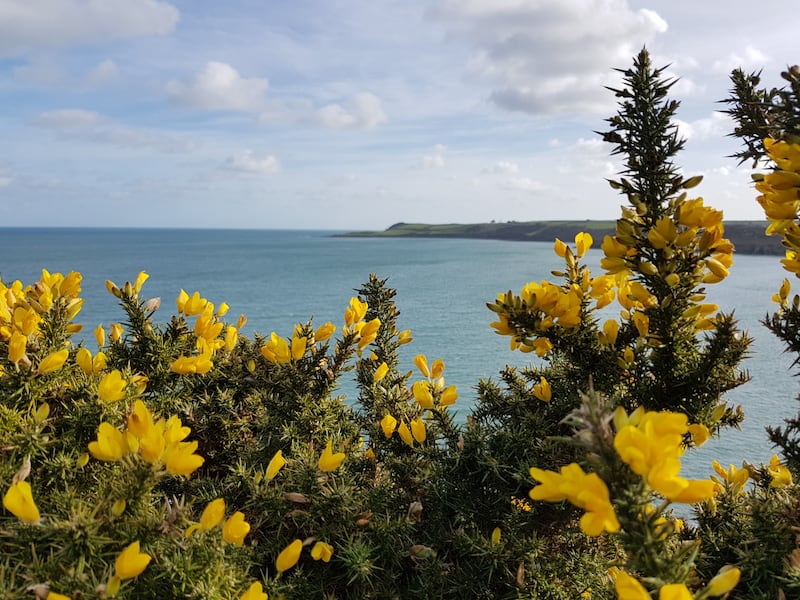 Gorse, Ulex europaeus, is ideal for exposed coastal gardens. Photograph: Getty Images
Other frontier species of woody trees and shrubs ideally suited for use in coastal garden shelterbelts include Monterey pine (Pinus radiata); our native Scots pine (Pinus sylvestris); dwarf mountain pine (Pinus mugo); Austrian black pine (Pinus nigra); evergreen holly oak (Quercus ilex); our native hawthorn (Crataegus monogyna); our native sycamore (Acer pseudoplatanus); evergreen spindle (Euonymus japonicus); field maple (Acer campestre); Olearia traversii; sea orache (Atriplex halimus); Escallonia macrantha (technically evergreen, this should be treated as deciduous); and our native gorse (Ulex europaeus).
[ Is cardboard safe to use as a weed suppressant in my garden?Opens in new window ]
Inevitably – and here’s the rub – such shelterbelts require the partial sacrifice of stunning sea views. They also need to be positioned skilfully – both to be effective and to avoid sacrificing natural light levels – ideally at a right angle to the prevailing winds, using two to three rows of plants and with the tallest species in the middle. Bear in mind also that the protection provided to the leeward side of a windbreak is equivalent to no more than 10 times its height.
For small coastal gardens, another important consideration is the growing space these windbreaks occupy, forcing gardeners to carefully negotiate how much of the latter they’re willing to concede. Get it right, however, and you can create the most amazingly sheltered microclimates for the kind of plants that would otherwise quickly give up the ghost.
This week in the garden
Use a sharp hoe and choose a dry, sunny day to cut back young or emerging weeds before they grow large enough to overwhelm plants in borders and vegetable beds.
Sow seed of fast-growing, heat-loving vegetables such as courgette, squash, pumpkin, French beans, runner beans and sweetcorn under cover in a warm, bright spot for pricking out and then transplanting into their final growing position outdoors at the end of May or early June.
Dates for your diary
Alpine Garden Society’s Annual Plant Sale, Cabinteely Community School, Dublin 18. Today, Saturday, April 25th (1.30pm-4pm); alpinegardensociety.ie
A Celebration of Woodland Plants with Jimi Blake and Jack Aldridge, Hunting Brook Gardens, Blessington, Co Wicklow. Monday, April 27th. Hands-on, one-day workshop combining illustrated talks with practical demonstrations and a guided tour of Hunting Brook’s extensive woodland plant collection. Tickets €150. Pre-booking essential; huntingbrookgardens.com
Festival of Gardens & Nature 2026, Ballintubbert House & Gardens, Co Laois. Saturday, May 2nd-Sunday, May 3rd. A weekend of talks, workshops, tours and music as well as specialist plant stalls, featuring a huge range of internationally known speakers and collaborators. Pre-booking recommended; festivalofgardensandnature.com; eventbrite.ie
Comments are closed.