
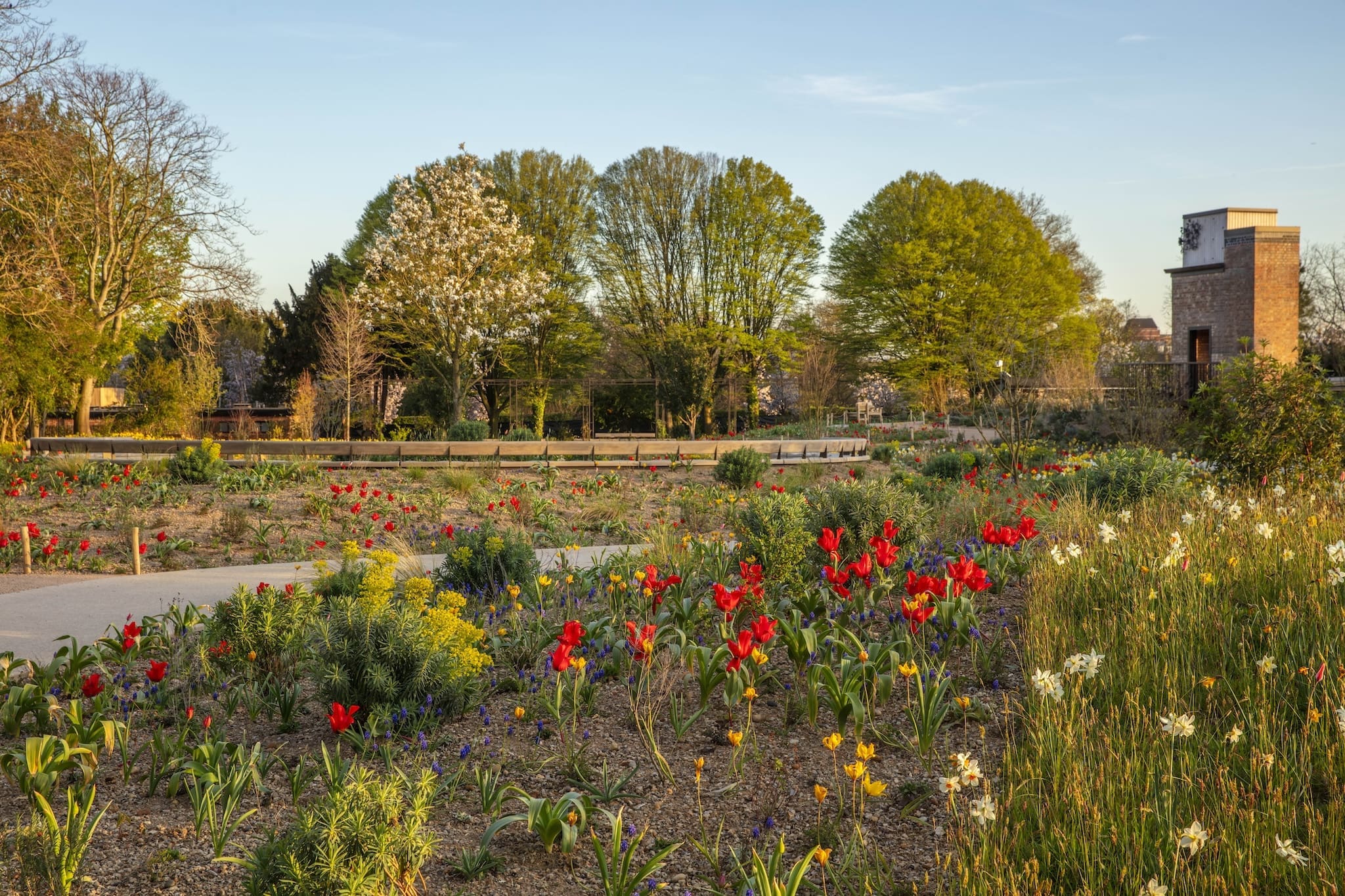
London does memorials well – grand, permanent, though often imposing. The Queen Elizabeth II Garden takes a quieter approach, favouring a grounded, living landscape that reflects her legacy through structure, movement and time, rather than monument.
Created by The Royal Parks with HTA Design, the two-acre site transforms what was once a store yard into an urban model of integrated environmental and social sustainability.
Designed as a fully accessible, climate-resilient landscape, it resists the idea of an instant landscape. Instead, it embraces the idea of a slow garden, one that will establish and mature gradually, following a natural rhythm where plants settle, shift and grow into place over time.
That ecological ambition is measurable as well as visual. The garden has been designed with naturalistic, climate-resilient planting and is projected to achieve a 184% net gain in biodiversity. It also pioneers material reuse at scale: crushed concrete from the former glasshouse foundations has been repurposed as an innovative growing medium. Regent’s Park is the first known public park in the UK to use crushed concrete in this way on such a scale.
At a time when urban wildlife faces unprecedented pressure, the garden not only offers a respite from the busy city but also serves as a vital conservation effort. This radical approach to a public park looks ahead, designed to adapt alongside a changing climate, ensuring that future generations can continue to enjoy London’s natural beauty and biodiversity.
©TRP/Clive Nichols
©TRP/Clive Nichols
©TRP/Clive Nichols
James Lord, Head of Landscape at HTA Design, said: “Designing The Queen Elizabeth II Garden for The Royal Parks has been a rare privilege and a significant responsibility. HTA’s ambition has been to create a living landscape rather than a grand memorial, through its layout, planting and crafted details, with sustainability informing every stage of the design. We hope the garden offers a place of quiet reflection and enjoyment, growing in meaning and character for generations to come.”
Planting for a changing climate
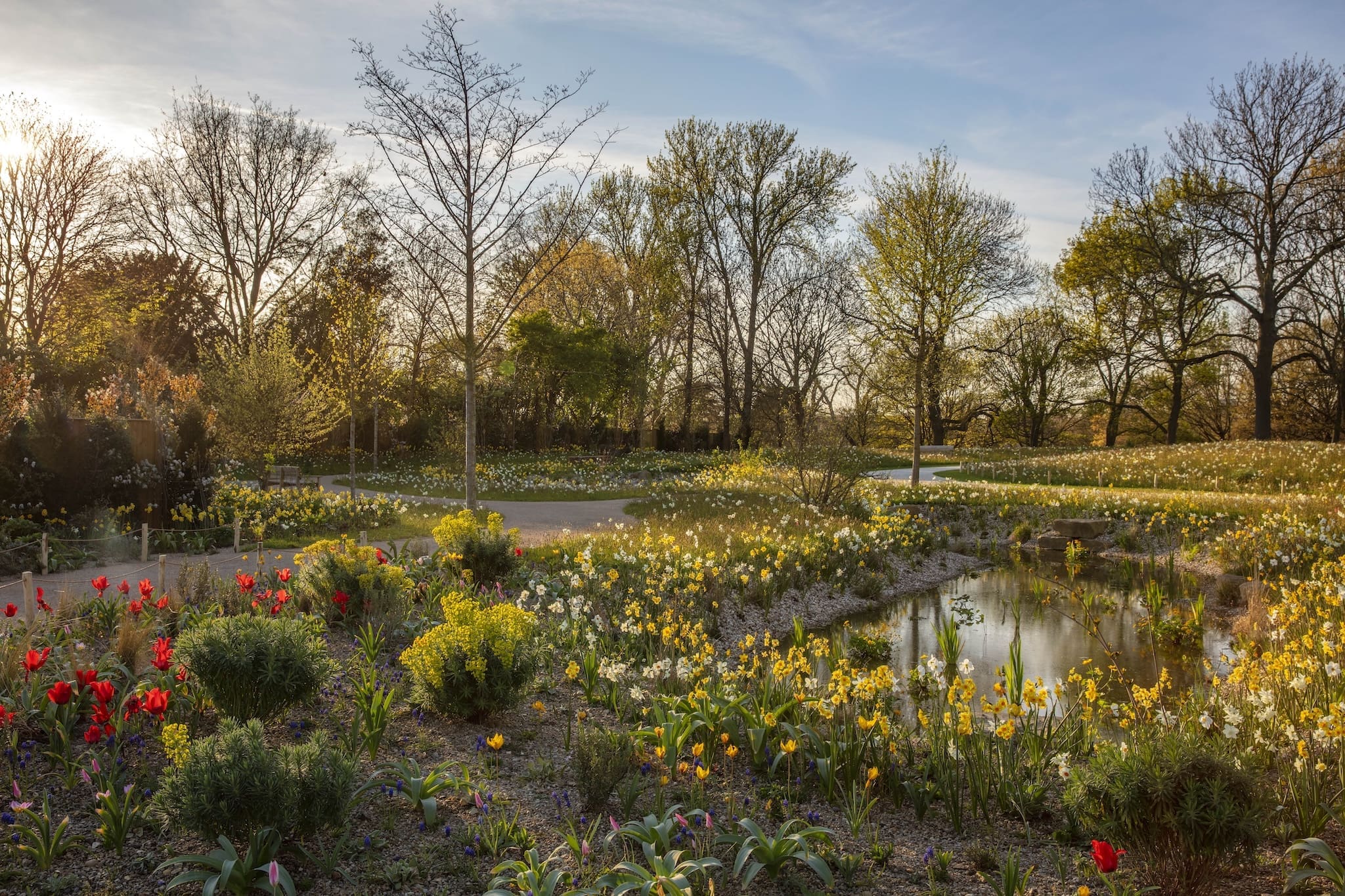
The planting design, led by horticulturist Dr Noel Kingsbury in close collaboration with HTA and The Royal Parks, underpins the entire experience. More than 60 tree species, including the signature Magnolia salicifolia ‘Wada’s Memory’, sit within a richly layered system of around 37,000 perennials, over 200,000 bulbs, more than 3,500m² of wildflower meadow, and extensive aquatic, marginal and wetland planting. The Royal Parks’ nursery at Hyde Park has also made a major contribution, supplying over 7,000 plants. Together, these create a landscape of strong seasonal rhythm and continuous ecological change.
Accessibility, comfort and strong narrative
The garden has all the qualities of an effective urban public space: accessibility, activity, comfort and sociability. Its layout is deliberately fluid, moving between pond, meadow and more formal garden rooms.
Seating is integrated throughout in a wide range of forms, from fallen logs, Yorkstone blocks to modern park benches, offering both sociable gathering points and quieter, more private places of rest. At the centre, sits the roundel, an impressively large circular bench encircling a carved stone inscription taken from Queen Elizabeth II’s 2013 Christmas Broadcast: “We all need to get the balance right between action and reflection. With so many distractions, it is easy to forget to pause and take stock.”
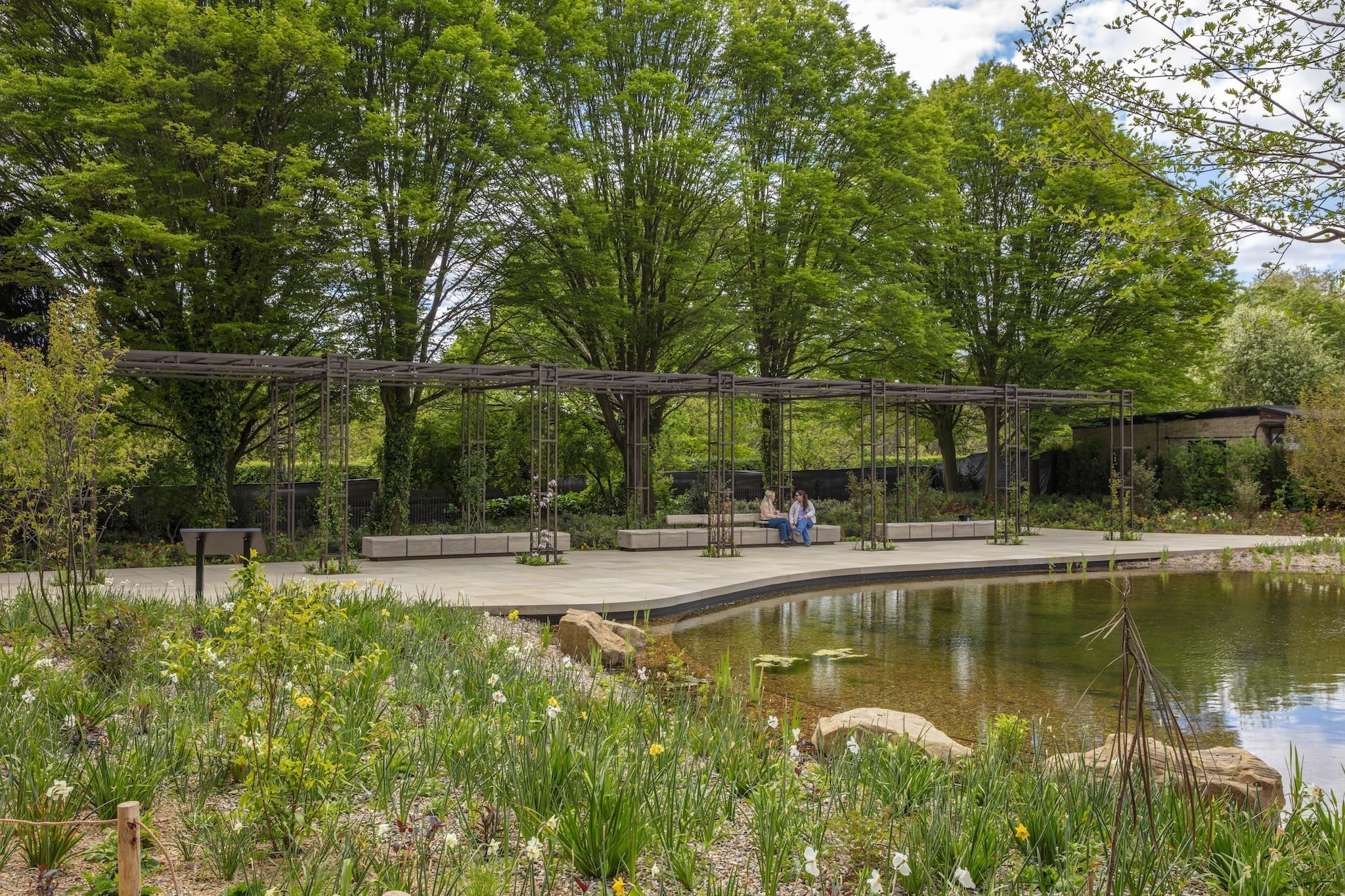
The design carries a clear narrative of Queen Elizabeth II herself. On entering, visitors are met by a generous circular pond. From this point, a long, straight path draws the eye forward, leading directly to the roundel anchored by Magnolia salicifolia ‘Wada’s Memory’. That unwavering, linear route is a deliberate gesture by the designers, reflecting her constancy and lifelong sense of duty. It is formal, direct and unbroken.
Along this axis sits the pergola, offering shade in the summer months. Its 56 uprights represent the member countries of the Commonwealth, while its upward-reaching form suggests unity, continuity and shared growth. More than a functional structure, it becomes a quiet architectural expression of strength through connection, extending the narrative of service and international stewardship that shaped the Queen’s reign.
©TRP/Clive Nichols

©TRP
Infrastructure reimagined
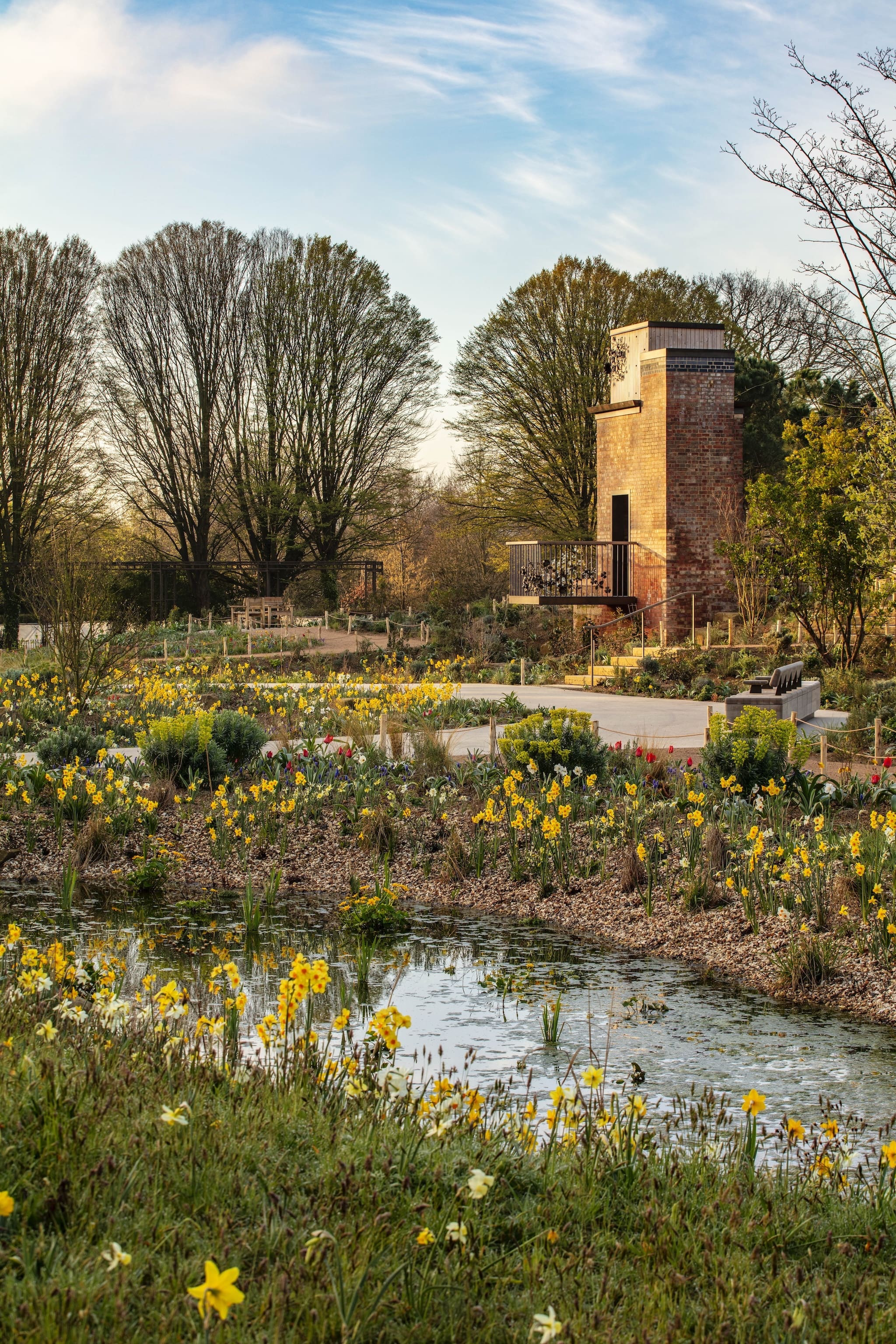
On its far side, a reimagined former water tower creates a strong visual focus as well as preserving the memory of the site’s earlier life as a nursery and store yard, anchoring the new landscape in what once grew here. Beneath it, a tank stores run-off water, transforming former infrastructure into active environmental management. Its metalwork, crafted by blacksmiths from the four nations under Ian Thackray, adds another layer of craft and symbolism, while swift and bat boxes integrated into the structure extend its ecological role.
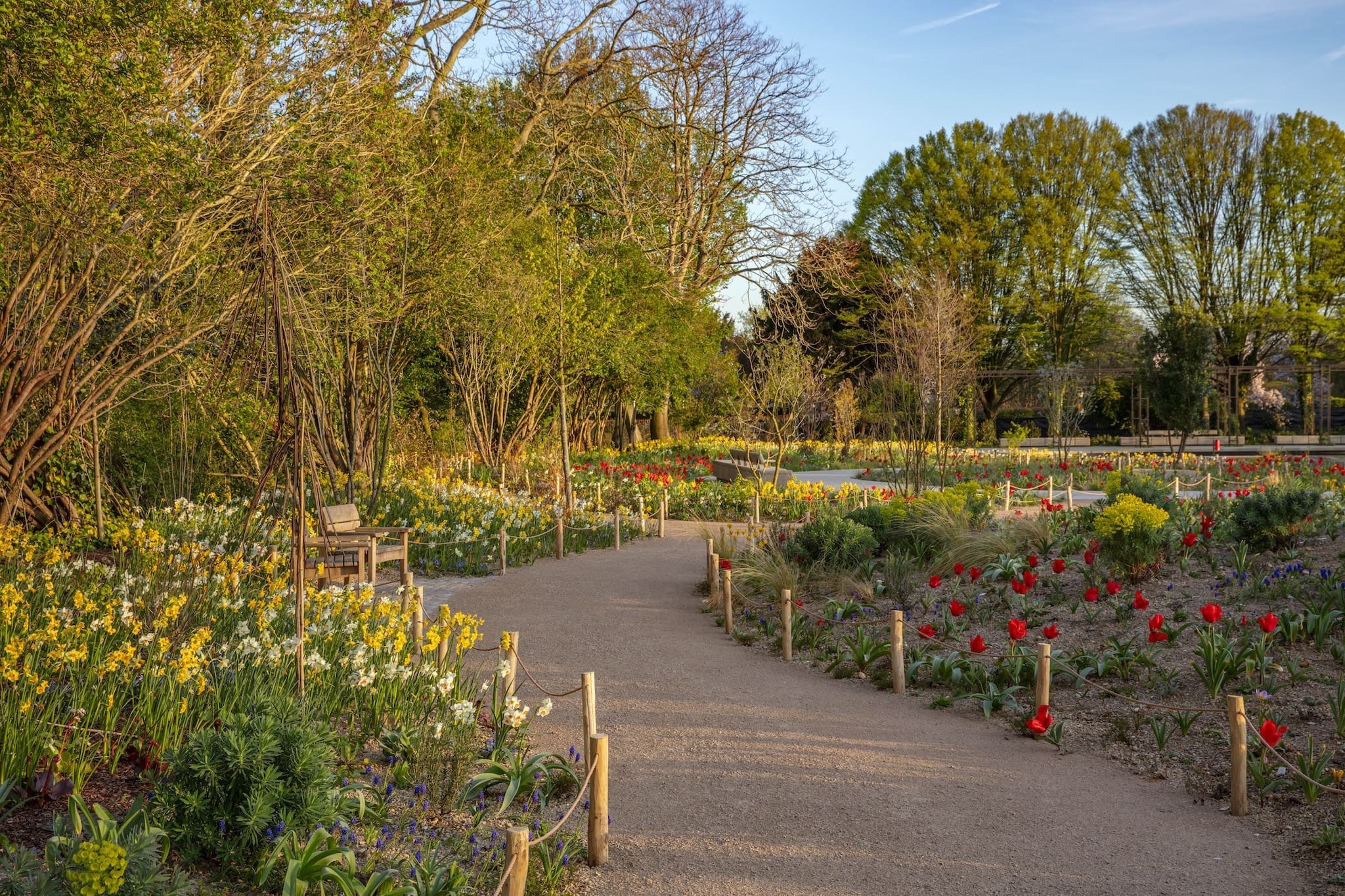
Elsewhere, the garden loosens. Meandering paths branch away, their changing materials offering subtle shifts in texture underfoot and reinforcing the idea of a life unfolding in chapters. Swales are integrated into the form of the landscape to manage rainwater and reduce flood risk. Water provides both habitat and calm focus, while meadow planting and a relaxed wildlife corridor along the fringes reconnect the space to the wider park ecology.
Matthew Halsall and Amanda-Jayne Doherty, joint senior landscape architects at The Royal Parks said: “From the very beginning, our aim was to create a garden designed to respond to climate change, with sustainability at its very heart. The Queen Elizabeth II Garden is a place we hope will be cherished by Londoners and visitors in perpetuity. It has been created with care and ambition – a beautiful garden that honours an extraordinary life and opens a new chapter in the long horticultural story of The Regent’s Park.”
Material reuse underpins the entire project. The pergola is constructed from recycled elements of the former greenhouse, and salvaged steel and reclaimed gravel are embedded throughout. The result is a garden built as much from what was there before as from what has been newly made.
Fully accessible, welcoming and quietly experimental in its use of recycled materials, the garden offers something immediate while clearly being designed for the long term. It reads less as a fixed tribute and more as an evolving landscape – where duty is expressed through structure, sustainability is embedded in material and design, and everything else is allowed to grow into itself over time.
Officially opened on 21 April to mark what would have been the Queen’s 100th birthday, the garden will open to the public on the 27th of April, 2026.
The design team
Lead Designer, Landscape Architect, Sustainably and Principal Designer: HTA Design
Planting Design: Dr Noel Kingsbury
Landscape Construction: Blakedown Landscapes
Soil Scientist: Tim O’Hare Associates
Architect: Tate + Co Architects
Civil and Structural Engineer: Price and Myers
Programme Manager and QS: Fulkers Bailey Russell
Lead Blacksmith and Alumnus of The King’s Foundation: Ian Thackray
Comments are closed.