
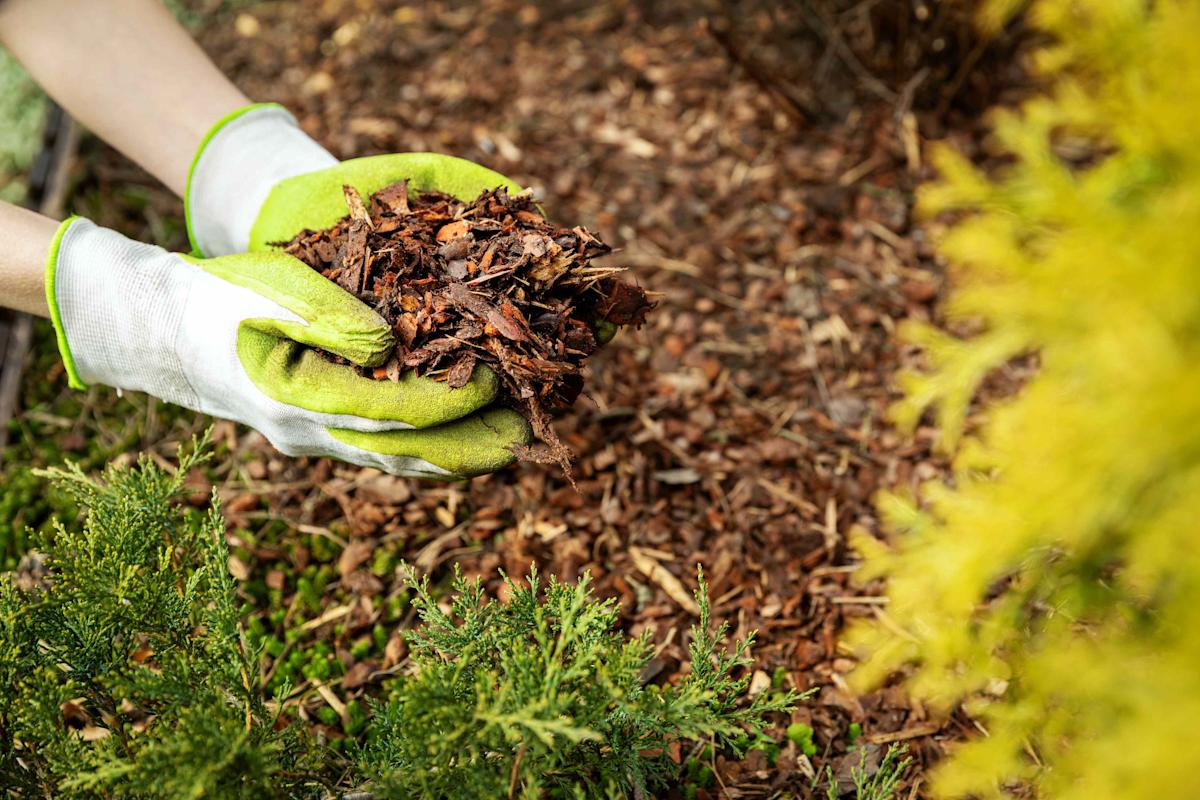
Everyone wants a healthy garden, and mulch is a vital tool for maintaining one. Mulch helps soil retain moisture, suppresses weed growth, and protects roots from temperature fluctuations. But what should you do when the mulch in your garden loses its luster? Should you leave it in your garden, repurpose it, or discard it?
While there are instances when old mulch should be tossed, often it can be refreshed or used in other ways. The biggest consideration is whether the mulch was exposed to pathogens. For example, if your tomatoes were heavily affected by late blight, gray mold, or similar infections, the spores can remain viable in mulch for over three years, and should be discarded.
If your mulch is old but healthy, there are ways to repurpose it. Ahead, gardening experts share clever ways to reuse old mulch to enrich garden beds and protect plants.
Meet the Experts
Maksim Kazakou, resident botany expert at Plantum, an app that helps identify plants and improve plant care
Brandy Hall, founder and CEO of Shades of Green Permaculture and the author of The Complete Guide to Home Permaculture
Related: 13 Types of Mulch—and How to Choose the Right One for Your Yard
Work It Into the Soil
As mulch breaks down, it acts as a slow-release fertilizer, helping improve soil structure and fertility, says Maksim Kazakou, resident botany expert at Plantum. To speed up the process, you can work the old mulch into the soil as you would fertilizer, she says. While mulch enriches the soil in this way, it can also alter soil pH levels, so keep this in mind when growing plants sensitive to pH.
Compost It
Old undyed mulch can be added to your compost pile to produce high-quality fertilizer for your garden, says Kazakou. Compost requires a balance of green to brown material to support the microbial activity that drives decomposition. Mulch can be used as a brown, carbon-rich material, which microorganisms use as fuel to break down waste.
Refresh Garden Beds
Over time, organic mulch breaks down and becomes less effective at retaining moisture, suppressing weeds, and protecting roots from temperature fluctuations. When this happens, Brandy Hall, founder and CEO of Shades of Green Permaculture, recommends simply topping off your beds with a fresh mulch layer and leaving the old mulch. “My top tip is to leave old mulch in place and simply add a fresh layer on top. This helps retain moisture, suppress weeds, and gradually build organic matter in your soil over time,” she says.
Add Mulch to Tree Roots
Old mulch from annual vegetable or flower beds can be applied around the bases of trees and shrubs in winter, says Kazakou. This is a great method for protecting your trees and shrubs from temperature swings in colder regions, Hall adds. “Here, old mulch is simply another step in the nutrient cycle, supporting soil health, conserving water, and helping plants thrive for the long term,” she says.
Warm Raised Garden Beds
You can also use old mulch to warm raised garden beds during winter. Because of their elevated position, raised garden beds freeze more easily than in-ground gardens, where the surrounding soil acts as a natural insulator. “But if you practice building raised beds with internal heat generation, old mulch works well as a middle or bottom layer,” says Kazakou. And because it’s winter when plants aren’t growing, it doesn’t matter if the mulch is too old to add nutrients to plants.
Read the original article on Martha Stewart
Comments are closed.