
When Cypress Elementary School Kitchen Operator Jennifer Woodall set out to rehabilitate the school garden, she aimed to create a space where students could learn about the impact and importance of agriculture and food waste. Months of her own labor, combined with robust community and partner support, took the garden from an unusable lot of rotting wood and weeds to a haven where she said many edible plants and wildlife can thrive.
“It was kind of like if you had a nursery that you left on the side of the road for the last 15 years — everything was dilapidated and the wood was rotted and eaten and falling apart,” Woodall said. “We wanted to make it into an inclusive place for the kids to get outside in nature and learn about where food comes from — but also be a safe place for them.
“I love how it looks now — it turned out amazing.”
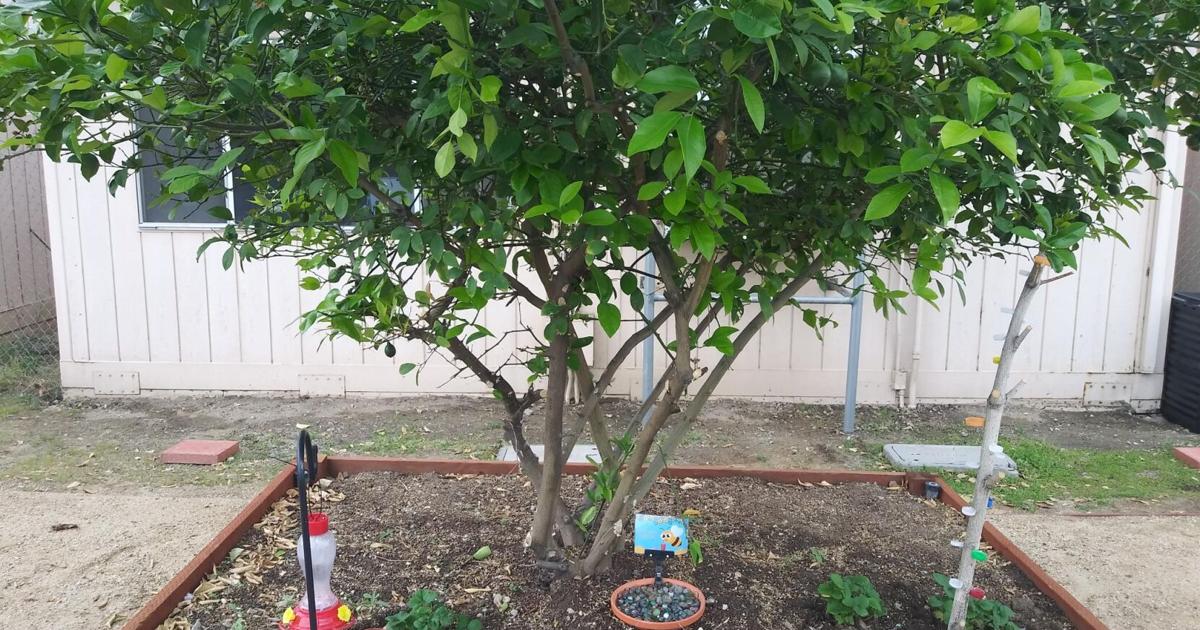
Cypress Elementary School is hosting a ribbon-cutting ceremony for its newly revitalized Community Garden at 9 a.m. on Wednesday, April 22. The new garden, Woodall said, stands at around 150-feet in length and approximately 25-feet-wide. The Community Garden will be home to various berries, including strawberries, blueberries, grapes, boysenberries and blackberries, alongside various fruit-bearing trees — apricot, pear, nectarine, peach, plum, or- ange and lemon. The kitchen operator and garden leader referred to the lem- on tree as a “grandmother lemon tree,” noting that it has stood in the garden for many years.
Herbs and sensory plants — such as spearmint and chocolate mint, lemon balm and pineapple sage — will also be found in the garden, alongside common table ingredients, including tomatoes, onions, garlic, cilantro and peppers.
One of the major goals of the Community Garden is to educate students about the impact of food waste, as well as the time, energy, labor and resources that go into producing food.
“A lot of them don’t realize where their food comes from or how much work goes into it,” she said. “If they can grow it themselves, they understand it a lot better.”
Another major purpose for the Community Garden, Woodall said, will be as an educational space for students. The kitchen operator added that the city of Fontana will partner with the school to offer Healthy Fontana workshops, in which kids learn how to make healthy food with the items grown in their gardens. According to Woodall, many of the children who have been excited about working in the garden and have offered their support throughout the process have been the special education students in the Eco Green Rams Club. She said they are always thrilled to find something to help with — even if it’s the routine maintenance of simply picking up trash.
Beyond a place to grow and learn about food, Woodall said that it will also be a space that supports wildlife. Milkweed and other pollinator plants as well as a hydration station made from reusable material will encourage visits from hummingbirds, butterflies, bees and other wildlife that are beneficial to the garden’s health. The potential inclusion of water lilies, she explained, might also attract dragonflies, who would further strengthen the ecosystem.
In her free time, Woodall is an avid gardener who also owns and cares for tortoises. Prior to undertaking the project to revamp the garden, she said it remained in “disarray” for 10 years. With the state of the area, she said she was not optimistic that her dreams for the garden would become a reality.
“I thought maybe we would just have weeds pulled out of the boxes and then plant in there — I never thought that we would get the funding so quickly, I thought it would take years,” she said.
The first step in transforming the space, Woodall explained, was to roll up her sleeves and remove as many weeds as she could. The district-funded contractors followed, building much of the infrastructure necessary to facilitate the garden’s success. Afterward, Woodall and the Eco Green Rams Club students worked together to outfit the garden with the plants it would need to thrive.
For the garden’s future, Woodall’s ultimate hope is that the space becomes student-led, with students taking care of the plant life and deciding what grows there and how to use those resources. She said that when they walk through the gates on ribbon-cutting day, she wants them to understand that the garden belongs to them.
“Stay excited about it, try to grow something you’ve never tasted before — try something new,” Woodall said. “I want them to continue to be excited about food and continue to try to be more eco-friendly and limit food waste.
“I want them to make the garden theirs and be proud of it — and we definitely are proud of it.”
Comments are closed.