
 5 min read
When I moved into my home in Birmingham, Alabama, a butterfly bush was the first plant I bought to add to my landscape. “Butterflies just love it. They really do,” I remember a plant nursery worker telling me.
Fast-forward 12 years, several droughts, and late-season cold snaps later. I’ve lost a lot of fixtures in my garden and landscaping, including that butterfly bush. Sometimes I still feel like I’m back at square one, but the truth is I’ve learned a lot.
When I count my garden and landscaping wins that have lasted, it’s clear that many of them are native ones. Gradually, that’s where my gardening passion has turned, too. So when garden expert Elise Howard’s new book, Plant This, Not That: Over 200 Native Plant Swaps for a More Sustainable, Pollinator-Friendly Garden, landed on my desk, suffice it to say I was intrigued.
The book draws from a wide variety of native plant resources, some of which I was already familiar with, like the Lady Bird Johnson Wildflower Center. Others were new to me, like the state- and county-level maps of native plant ranges from the Biota of North America Program (BONAP for short; I’ve used and linked to these maps throughout this article).
But where Plant This, Not That really shines is in helping gardeners connect the dots between native plant resources and traditional garden design principles.
 Nancybelle Gonzaga Villarroya//Getty Images
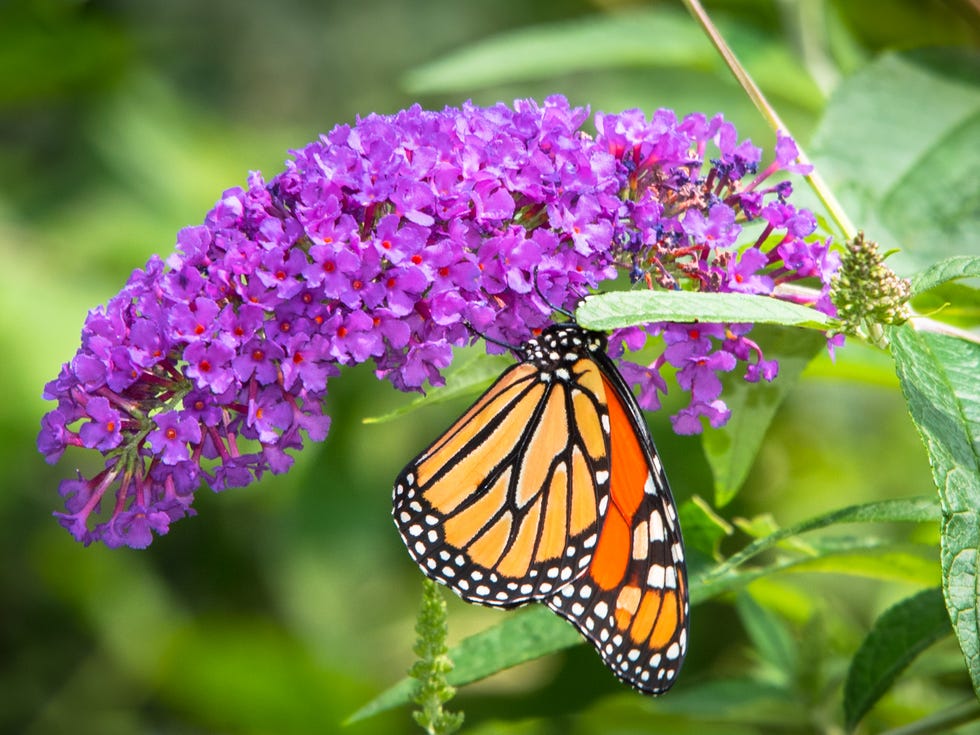
What can replace my nonnative butterfly bush? We’re going to find out.
Back to that butterfly bush. It’s not native to the U.S. In fact, in some states, it’s either classified as invasive or on a watchlist. Sterile cultivars are available, but they don’t act as host plants for caterpillars, and their nectar value to pollinators is questionable. If I wanted to replace it, what could I plant that draws butterflies in the same way, fills the same aesthetic role in an entrance or mixed border garden, and is practical—while also truly supporting native pollinators at all stages of their life cycle?
Plant This, Not That has plenty of ideas for me—and for you, too, depending on where you live.
Most of the Contiguous U.S.: Joe-Pye Weed (Eutrochium spp.) for Late-Summer Color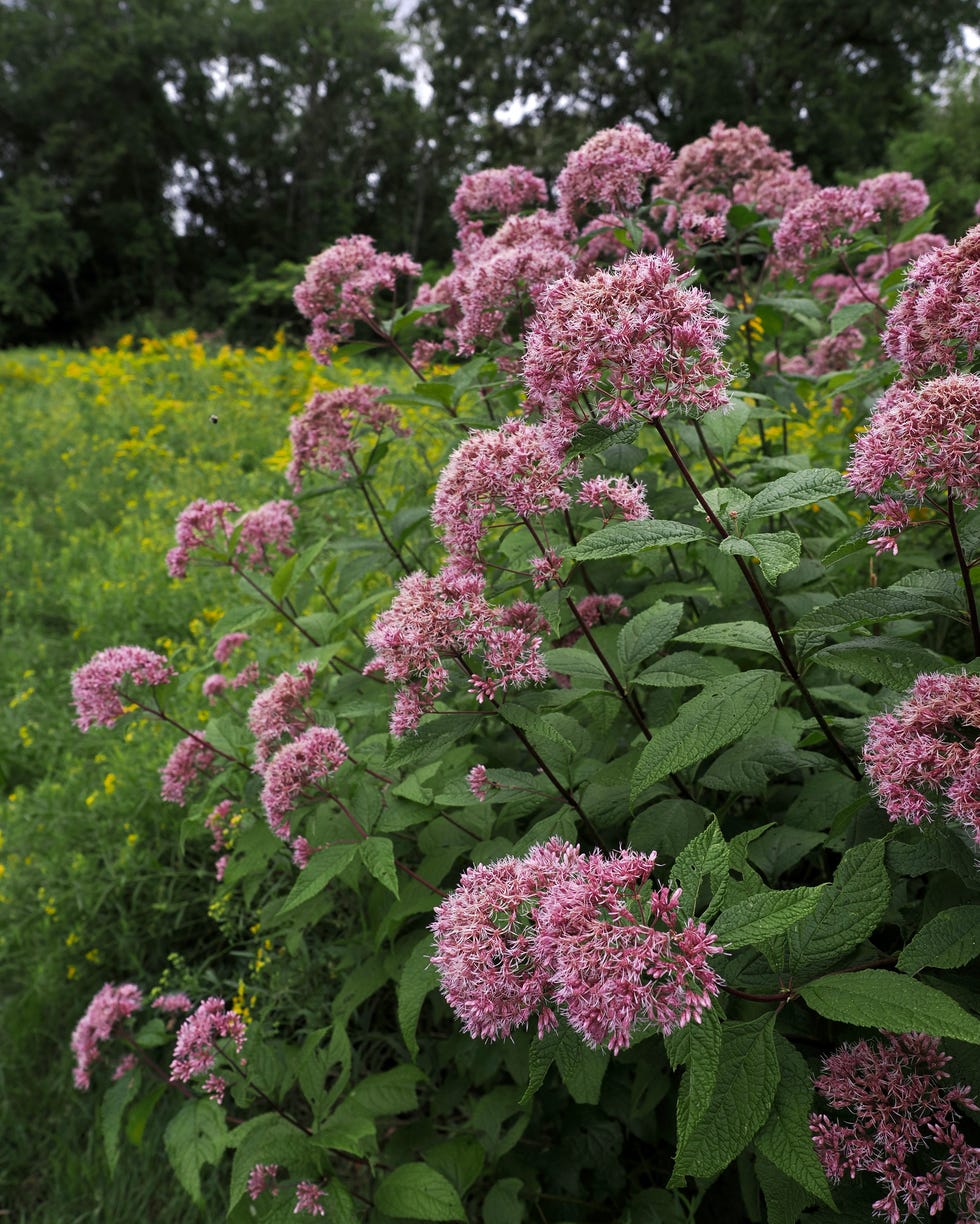 Christopher Laszlo Bonis / 500px//Getty Images
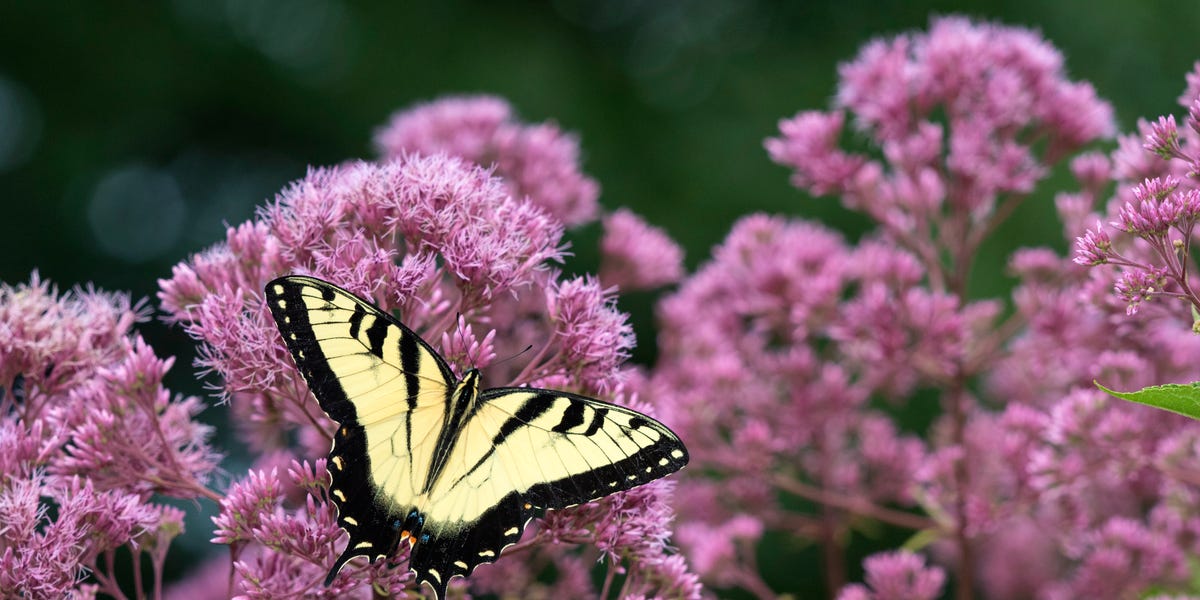
Joe-pye weed provides nectar for native bees, butterflies, and other insects and is a host for moth caterpillars—plus, it’s deer-resistant. This flower is also featured at the top of this story, where it’s visited by an Eastern tiger swallowtail.
With its showy pink or mauve flowers that bloom from late summer into early fall, joe-pye weed is a tall, herbaceous perennial that “will attract swarms of pollinators and butterflies when other flowers are mostly through,” Howard writes. Plant it in sun to part shade and wet to moist, acidic soil, in a spot where you won’t mind its towering height—up to 8 feet.
Two of the most common species—tall joe-pye weed (Eutrochium fistulosum) and spotted joe-pye weed (Eutrochium maculatum)—are featured in the book, but any type of Eutrochium native to your area is a good choice.
The genus is widespread across much of the Eastern and Central U.S., with spotted joe-pye weed extending farther into the Plains and Mountain West. Nearly every state in the lower 48 has at least one native joe-pye weed, with California, Nevada, and Oregon as the exceptions.
Gulf and East Coast: Summersweet (Clethra alnifolia) for Fragrant Late-Summer Blooms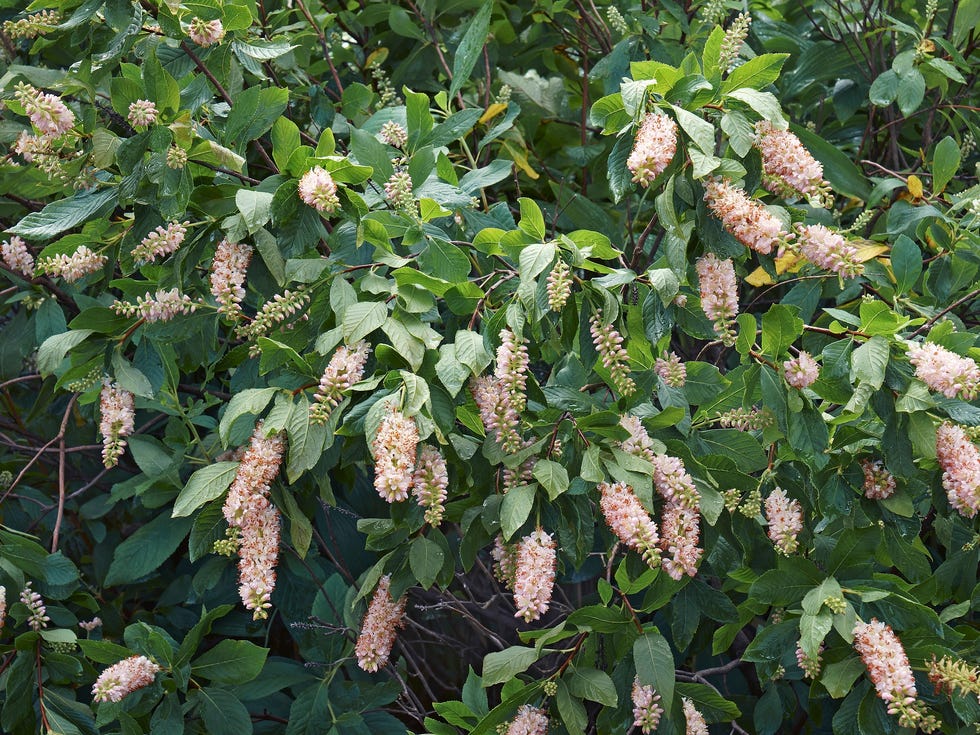 nickkurzenko//Getty Images
Summersweet provides nectar for bees, butterflies, and other insects and is a host for moth caterpillars.
Also called sweet pepperbush, summersweet grows along the Gulf and Atlantic coasts—from Texas to Maine—and extends inland as far west as Tennessee, Pennsylvania, and Vermont. Plant it in sun to part shade and wet to moist, acidic soil, and get ready to enjoy its fragrant, white to pink bottlebrush-like blooms mid to late summer. This mid-sized shrub (3–6 feet tall) is deciduous, so it loses its glossy green foliage over winter. But its seed heads remain, offering seasonal interest and a food source for songbirds.
Eastern and Southeastern U.S.: Virginia Sweetspire (Itea virginica) for Brilliant Fall Color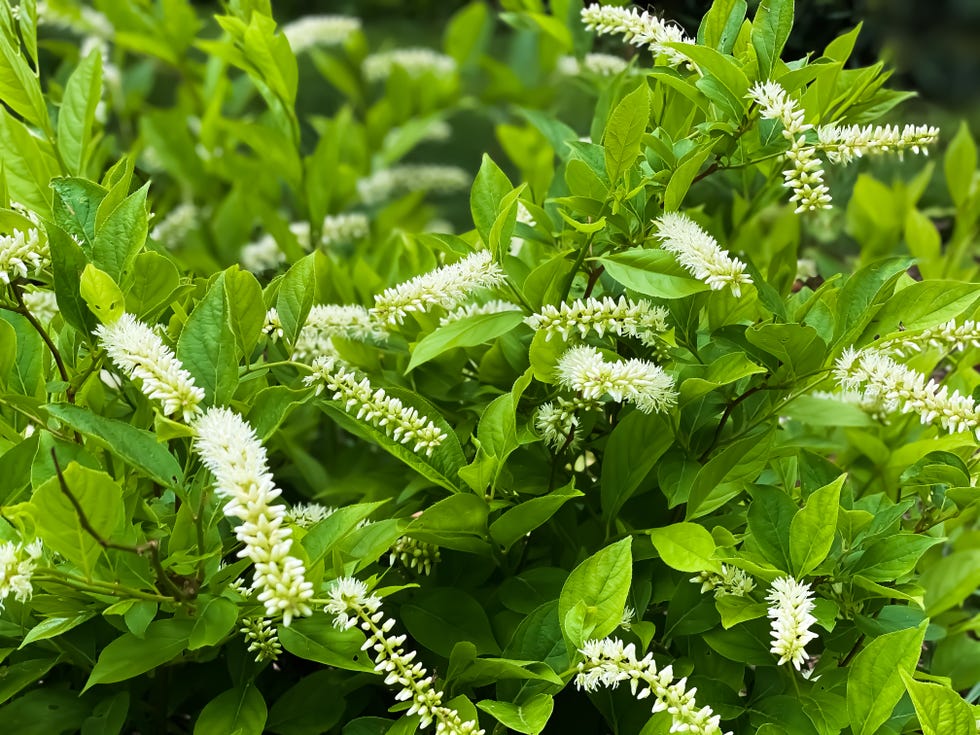 Catherine McQueen//Getty Images
Virginia sweetspire is a spring- to early summer nectar source for native bees and butterflies.
An adaptable native shrub, Virginia sweetspire grows along the Gulf and Atlantic coasts—from Texas to New Jersey—and extends inland across much of the Southeast and into parts of the Midwest. It thrives in sun to part shade and moist, slightly acidic soil, though it can tolerate wetter conditions and some shade. In late spring to early summer, it produces arching clusters of fragrant white flowers that attract pollinators, followed by rich green foliage that turns brilliant shades of red and purple in fall. Even in winter, its graceful branching adds subtle structure to the landscape.
The Contiguous U.S.: Locally Native Milkweed (Asclepias spp.) for Monarch Caterpillars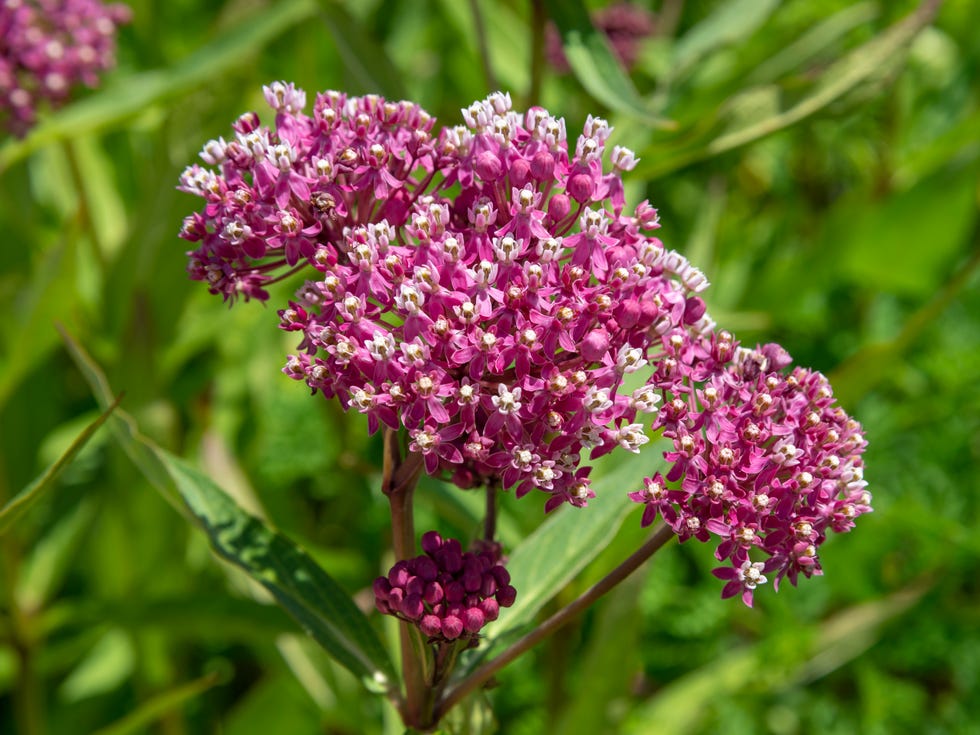 Photos by R A Kearton//Getty Images
Locally native milkweed draws native bees, butterflies, and other insects, and is a host for butterfly and moth caterpillars.
Milkweed provides beautiful flowers and plenty of nectar for pollinators—and it’s the only type of plant on which monarch butterflies lay their eggs. Because it takes multiple generations of migrating monarchs to complete their northward journey in spring and summer, milkweed is crucial to keeping this great migration going.
But there’s a major caveat: You should only plant milkweed species that are native to your specific area—native to North America does not necessarily mean native to you. Beyond their locally native ranges, Howard writes, some milkweed species can become aggressive and disrupt ecosystems.
She spotlights two commonly native options in Plant This, Not That—swamp or pink milkweed (Asclepias incarnata) and showy milkweed (Asclepias speciosa)—which are less likely to take over your garden like some milkweeds will. Still, it’s important to research which of the many North American milkweed species is best suited to your location. As a reminder, when you look at BONAP’s maps for different milkweed species, look for dark or bright green, yellow, or orange overlapping your area (blue indicates the plant is present but not native).
Central U.S.: Leadplant (Amorpha canescens) for Prairie-Friendly Planting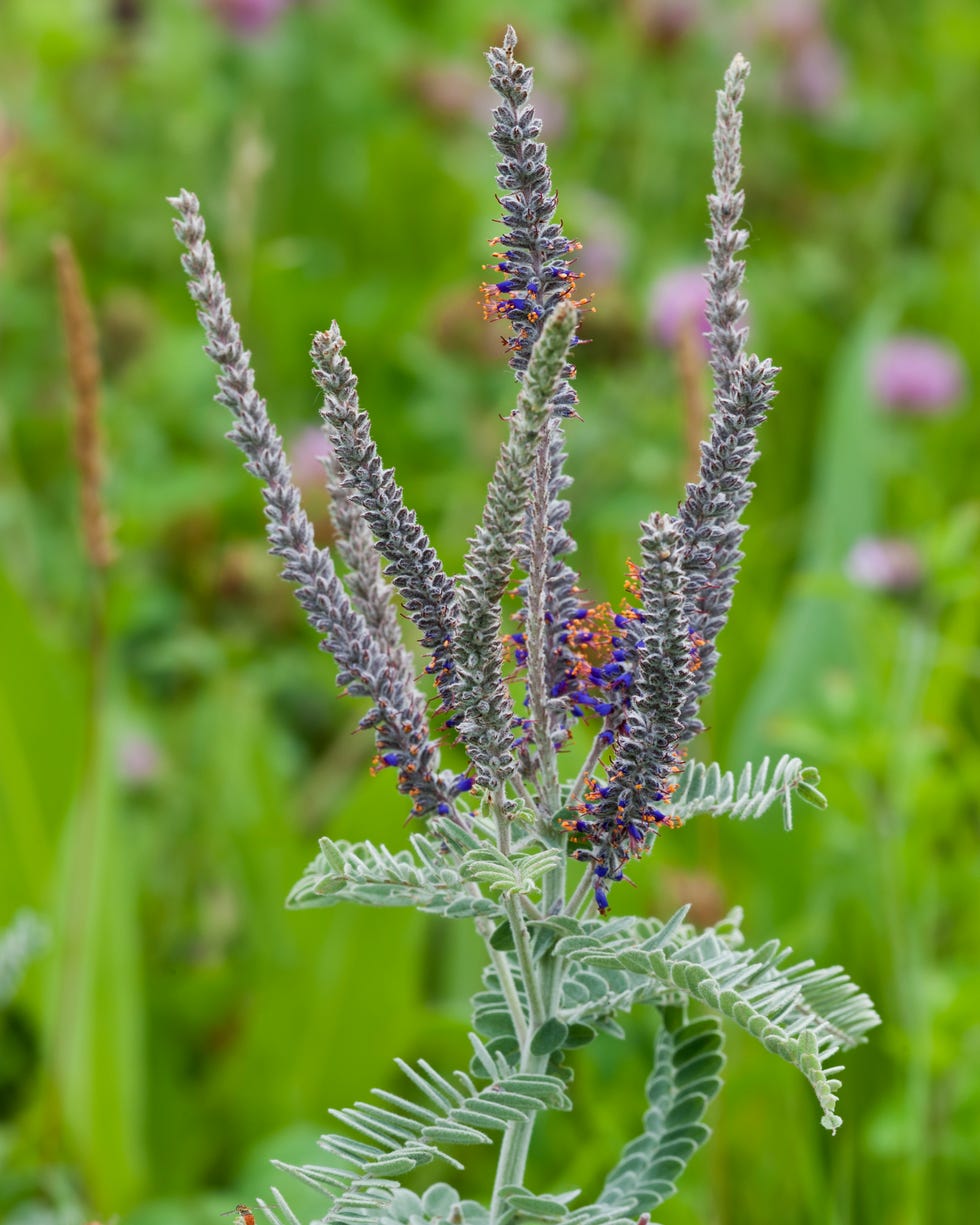 Ed Reschke//Getty Images
Leadplant provides nectar for bees, butterflies, and other insects and is a host for moth caterpillars.
Leadplant grows in 18 states, across the Midwest and Great Plains. Its native habitat includes well-drained prairies, rocky bluffs, and open woodlands, according to the Lady Bird Johnson Wildflower Center. It’s a showstopper, with dramatic, bottlebrush-like purple blooms, contrasting orange stamens, and unique foliage. While it’s slow-growing and tops out at about 3 feet tall, beware that it has a deep taproot. It’s ideal for borders, Howard writes, but avoid placing it near foundations, underground plumbing, or other utilities below the surface.
Most of the Contiguous U.S.: Ceanothus (Ceanothus spp.) for a Summer Crowd-Pleaser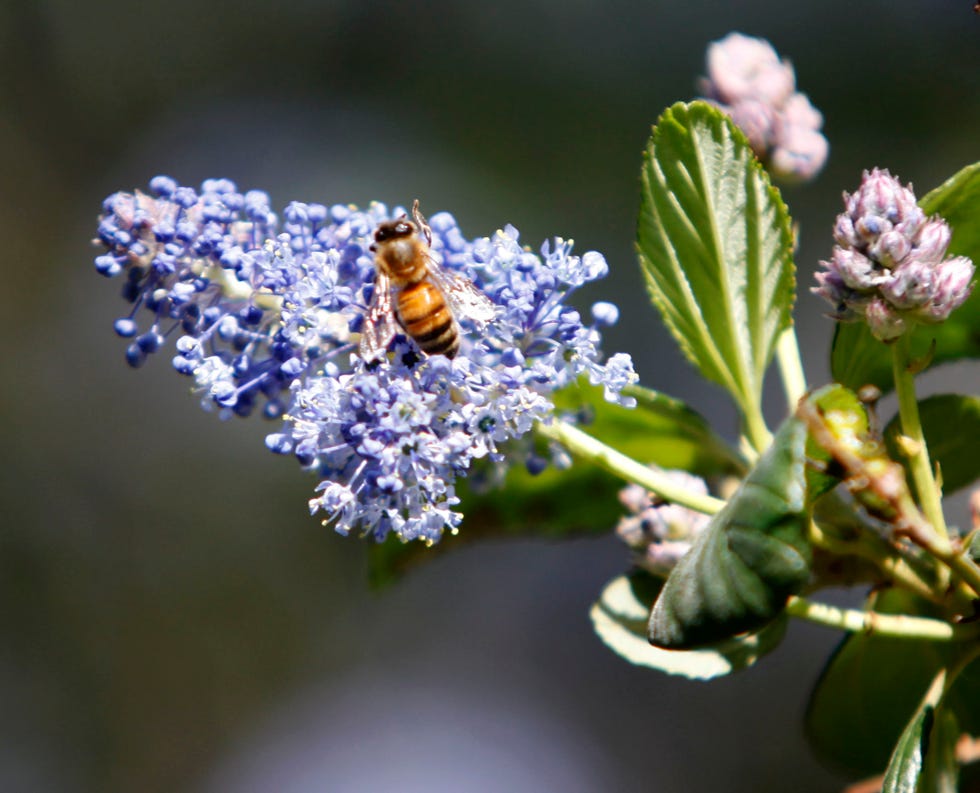 San Francisco Chronicle/Hearst Newspapers//Getty Images
Ceanothus is beloved by hummingbirds and other pollinators, and it’s a host for moth and butterfly caterpillars.
Sometimes called redroot, the flowering shrub genus known as Ceanothus is native to every state in the lower 48 except one (sorry, North Dakota). Some states have only one species; others have more. California is a treasure trove, with more than 50 species. (In the Golden State, you might see it referred to as California lilac, though it’s unrelated to the lilacs you’re probably familiar with.)
Across the eastern half of the country, the deciduous New Jersey tea shrub (Ceanothus americanus) is a common native that boasts white to pale pink flower clusters in the summer. In the West, the evergreen Snowbrush Ceanothus (Ceanothus velutinus) grows from California to Washington, and as far east as Montana, Wyoming, and Colorado, plus part of South Dakota. Its long flower clusters may be white or blue. Browse other Ceanothus species’ ranges here, including options for Arizona and New Mexico.
The Southeast and South-Central U.S.: American Beautyberry (Callicarpa americana) for Eye-Catching Berries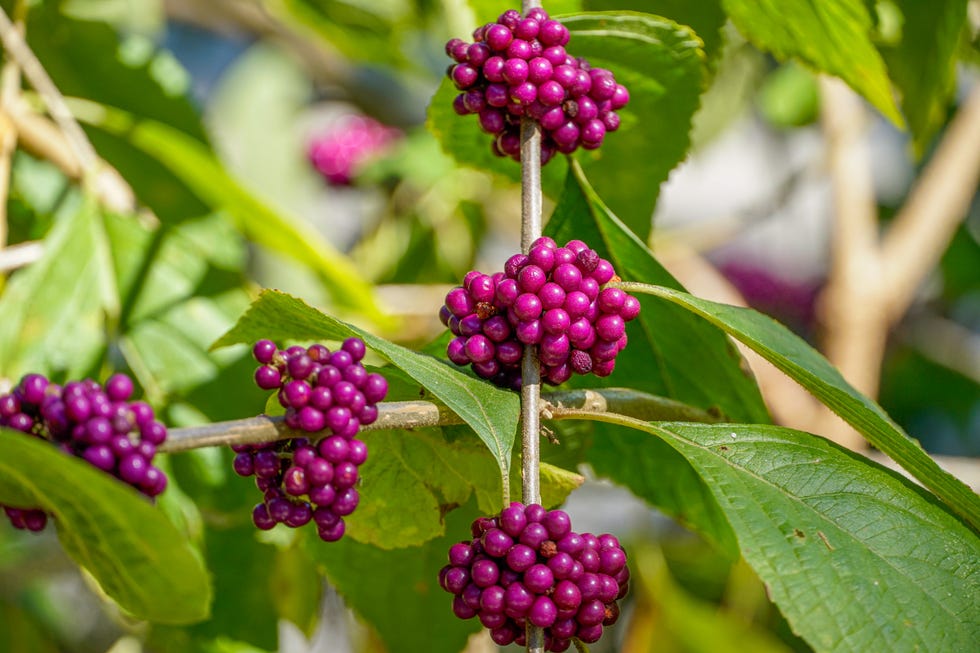 Penny Arceneaux / 500px//Getty Images
A nectar source for pollinators, a host for moth caterpillars, and a food source for birds and small mammals, American beautyberry is a triple threat—in the best way.
American beautyberry’s native range spans much of the Southeast and south-central U.S.—Alabama, Arkansas, Florida, Georgia, Louisiana, Maryland, Mississippi, Missouri, North Carolina, Oklahoma, South Carolina, Tennessee, Texas, and Virginia. A host plant for moth caterpillars, this shrub flowers in spring, drawing native bees and butterflies. Its eye-catching, bright purple berries arrive in late summer and fall, providing food for birds and small mammals.
Take care not to confuse it with the nonnative but very similar-looking Callicarpa japonica. The imposter does have a tell: “That plant’s berries hang away from the stem, rather than wrapping around it as the native version does,” Howard writes.
Comments are closed.