
This is Everyday Science with Clare Wilson, a subscriber-only newsletter from The i Paper. If you’d like to get this direct to your inbox every week, you can sign up here.
Hello, and welcome back to Everyday Science.
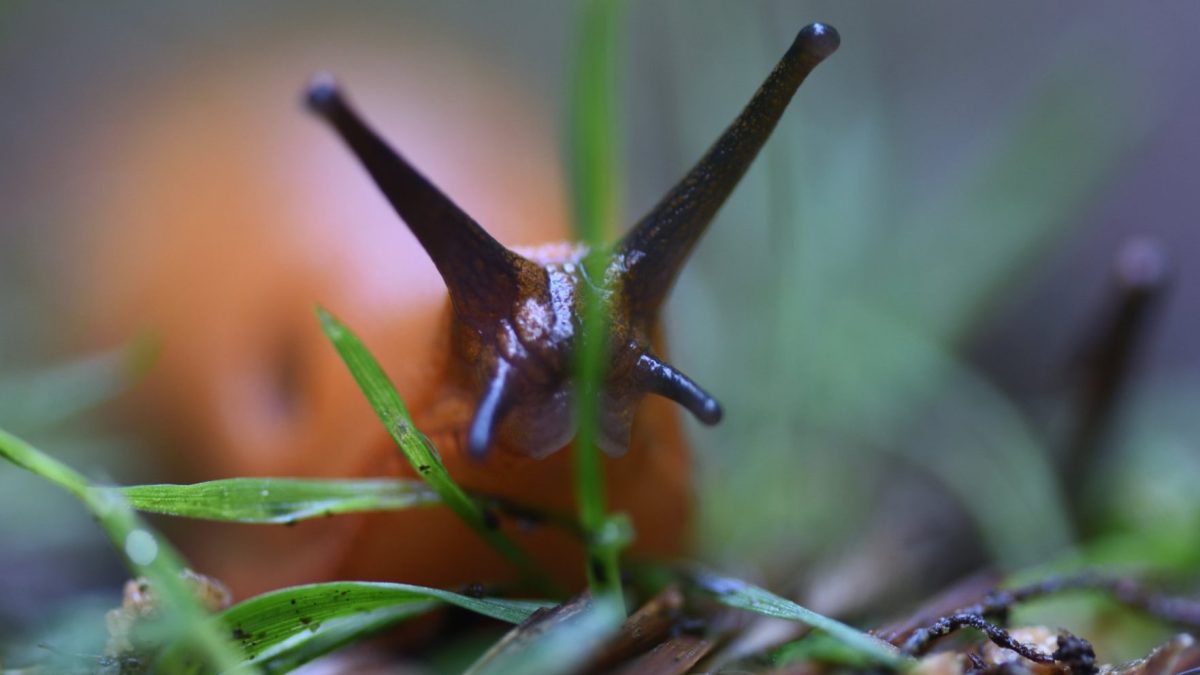
With the recent sunny weather where I live, it has been exciting watching the first shoots poke through the soil of my allotment. But as usual, some are getting munched by my most hated garden pest: slugs.
I am not alone. Slugs are also the number one problem asked about by people contacting the Royal Horticultural Society (RHS) for help.
Shorts – Quick stories
Scroll to previous short
Scroll to next short

Cancer cases at record high in Britain
Rates of the disease are being driven up by obesity and an
ageing population, it has been reported.

Cancer rates in Britain
403,000
The number of people a year being diagnosed with cancer, according to analysis by Cancer Research UK.
This is an increase from 285,000 people 20 years ago and 345,000 people 10 years ago.
15%
There has been a 15 per cent increase in the chance of diagnosis since the 90s.
What’s causing the increase?
Obesity levels have doubled since the 90s. This is the second-biggest cause of cancer after smoking.
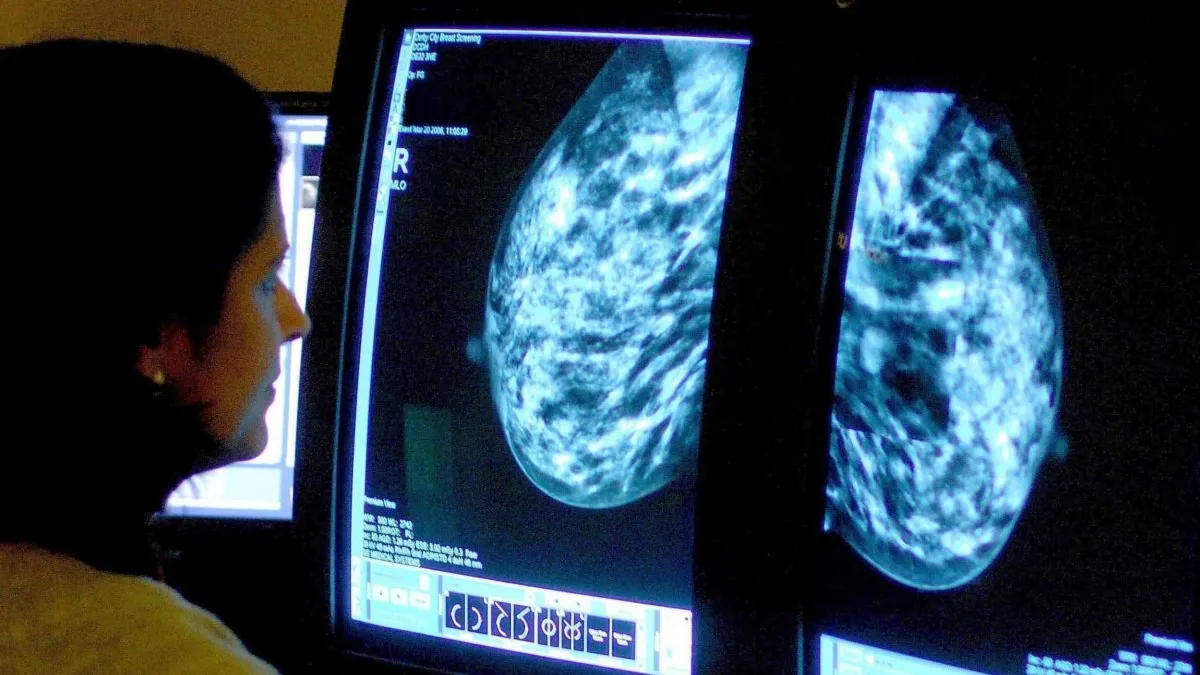
Improvements in detection, such as NHS screening programmes for breast and bowel cancer, have also caused a rise in diagnoses.

LIFESTYLE
7 min read
What about survival rates?
Golden age
Survival rates for cancer have doubled over the past 50 years due to a “golden age” of treatment.

Stalled progress
Cancer Research UK’s report said long NHS waiting times were holding back improvements in survival rates.
Waiting times
The report revealed that 107,000 patients had to wait too long to begin treatment last year.

More to be done
Michelle Mitchell, chief executive of Cancer Research UK, said that the Government’s National Cancer Plan “could make a big difference, but only if it turns into improvements for cancer patients”.

LIFESTYLE
7 min read
NEWS
The global number of billionaires could hit 4,000 in five years’ time

This figure comes as the class of super-rich around the world is increasing at a rising pace.
Number of super-rich is rising
There are currently 3,110 billionaires globally, analysis by estate agent Knight Frank has revealed.
This is predicted to rise by 25 per cent in the next five years, reaching a total of 3,915.


The multimillionaire class is also growing significantly, as the number of individuals worth at least $30m (£22m) has increased by 300 per cent since 2021 to 713,626.
New technology is increasing opportunities to get rich
The ability to scale a business has never been higher. That ha fed into the ability to make big fortunes quickly, superchargec by tech and Al.
LIAM BAILEY, HEAD OF RESEARCH AT
KNIGHT FRANK

Inequality widens…
The gap between the world’s richest and poorest continues to widen.
The World Inequality report revealed that 0.001 per cent of the world’s population control three times as much wealth as the entirety of the poorest half.
Calls for global leaders to increase taxes on the super-rich have increased, as concern rises that the wealthy are buying political influence.

Exclusive
6 min read
NEWS
Six-year-old’s sight restored after breakthrough therapy
 Caption: EMBARGOED TO 1930 WEDNESDAY APRIL 22
Undated handout photo issued by Great Ormond Street Hospital of Saffie Sandford, with her parents Lisa and Tam. The six-year-old has had her sight restored thanks to a life-changing eye gene therapy on the NHS. Saffie, from Stevenage in Hertfordshire, has the rare condition Leber’s Congenital Amaurosis (LCA) which prevents cells in the eye from making a specific protein needed for normal vision. Moorfields Eye Hospital in London carried out tests on Saffie and then she was transferred to Great Ormond Street Hospital (Gosh) to have the eye gene therapy, Luxturna. This treatment is the first of its kind for one of the genetic causes of LCA. Issue date: Wednesday April 22, 2026. PA Photo. Photo credit should read: Family handout/PA Wire
NOTE TO EDITORS: This handout photo may only be used in for editorial reporting purposes for the contemporaneous illustration of events, things or the people in the image or facts mentioned in the caption. Reuse of the picture may require further permission from the copyright holder.
Photographer: Family handout
Provider: Family handout/PA Wire
Source: PA
Saffie Sandford, aged six, regained her sight after life-changing eye gene therapy on the NHS for a rare condition.
Saffie is at risk of complete eyesight loss
Saffie was diagnosed with a rare inherited condition called Leber’s Congenital Amaurosis (LCA) when she was five.
This prevents cells in the eye producing a specific protein that is required for normal vision.
Babies and children with LCA have low vision in daylight and no vision in low light.
They can also lose their sight entirely in adulthood.
A landmark treatment
Saffie was transferred to the Great Ormand Street Hospital to have the eye gene therapy, Luxturna.
 Caption: EMBARGOED TO 1930 WEDNESDAY APRIL 22
Undated handout photo issued by Great Ormond Street Hospital of six-year-old Saffie Sandford who has had her sight restored thanks to a life-changing eye gene therapy on the NHS. Saffie Sandford, from Stevenage in Hertfordshire, has the rare condition Leber???s Congenital Amaurosis (LCA) which prevents cells in the eye from making a specific protein needed for normal vision.
. Issue date: Wednesday April 22, 2026. PA Photo. Photo credit should read: /PA Wire
NOTE TO EDITORS: This handout photo may only be used in for editorial reporting purposes for the contemporaneous illustration of events, things or the people in the image or facts mentioned in the caption. Reuse of the picture may require further permission from the copyright holder.
Provider: /PA Wire
Source: PA
 Caption: EMBARGOED TO 1930 WEDNESDAY APRIL 22
Undated handout photo issued by Great Ormond Street Hospital of six-year-old Saffie Sandford who has had her sight restored thanks to a life-changing eye gene therapy on the NHS. Saffie, from Stevenage in Hertfordshire, has the rare condition Leber’s Congenital Amaurosis (LCA) which prevents cells in the eye from making a specific protein needed for normal vision. Moorfields Eye Hospital in London carried out tests on Saffie and then she was transferred to Great Ormond Street Hospital (Gosh) to have the eye gene therapy, Luxturna. This treatment is the first of its kind for one of the genetic causes of LCA. Issue date: Wednesday April 22, 2026. PA Photo. Photo credit should read: Family handout/PA Wire
NOTE TO EDITORS: This handout photo may only be used in for editorial reporting purposes for the contemporaneous illustration of events, things or the people in the image or facts mentioned in the caption. Reuse of the picture may require further permission from the copyright holder.
Photographer: Family handout
Provider: Family handout/PA Wire
Source: PA
The one-off therapy contains a healthy copy of the gene which is directly injected into the patient’s eye.
Saffie underwent the therapy in her first eye in April 2025 and her second in September.
‘Life-changing’ treatment
‘It’s like someone waved a magic wand’
 Caption: EMBARGOED TO 1930 WEDNESDAY APRIL 22
Undated handout photo issued by Great Ormond Street Hospital of six-year-old Saffie Sandford who has had her sight restored thanks to a life-changing eye gene therapy on the NHS. Saffie, from Stevenage in Hertfordshire, has the rare condition Leber’s Congenital Amaurosis (LCA) which prevents cells in the eye from making a specific protein needed for normal vision. Moorfields Eye Hospital in London carried out tests on Saffie and then she was transferred to Great Ormond Street Hospital (Gosh) to have the eye gene therapy, Luxturna. This treatment is the first of its kind for one of the genetic causes of LCA. Issue date: Wednesday April 22, 2026. PA Photo. Photo credit should read: Family handout/PA Wire
NOTE TO EDITORS: This handout photo may only be used in for editorial reporting purposes for the contemporaneous illustration of events, things or the people in the image or facts mentioned in the caption. Reuse of the picture may require further permission from the copyright holder.
Photographer: Family handout
Provider: Family handout/PA Wire
Source: PA
Saffie’s mother, Lisa, said she is “eternally grateful” for the treatment which means she can see in the dark and helped improve her performance at school

NEWS
9 min read
Harry makes surprise return to Ukraine
Prince Harry made a return to Ukraine urging the world not to lose sight of what the country is
up against.
 Caption:
Prince Harry, Duke of Sussex and Founder of the
@WeAreInvictus
, has arrived in Ukraine at the invitation of the #KyivSecurityForum. He will attend the 18th annual #KSF, address the forum?s participants, and take part in a panel discussion featuring Ukrainian veterans.
Kyiv Security Forum
@ksfopenukraine
‘Good to be back’
The Prince arrived at Kyiv rail station on Thursday following an overnight train from Poland.
He told ITV News he wanted “to remind people back home and around the world what Ukraine is up against and to support the people” in their fight.
 Caption:
Grabs from ITV NEws
Exclusive: Watch as Prince Harry arrives for a surprise visit in Ukraine.
ITV News’ Royal Editor
@chrisshipitv
joined the Duke of Sussex as he arrived in Kyiv this morning.
Image: ITV News
@itvnews

OPINION
3 min read
NEWS
Ukraine war about ‘values’ not just land

Harry praised Ukraine as “a country bravely and successfully defending Europe’s eastern flank” and said “it matters that we don’t lose sight of the significance of that”.
He also warned the world not to become “numb” to the Ukraine war. “This is a war about values, not just territory”, the Prince added.
UK and France agree new £662m small
boats deal
Riot-trained police will be sent to French beaches to stop illegal migrants crossing the Channel.

What does the deal involve?
The three-year deal includes a condition that £100m could be redirected or withdrawn if no progress is made after a year.


The agreement includes at least 50 police officers trained in “riot and crowd control tactics” bought in to tackle violence and “hostile crowds”.
France will deploy millions of pounds worth of drones, two new helicopters and a new camera system.


Reactions to the deal
This landmark deal will stop illegal migrants making the perilous journey and put people smugglers behind bars.
The Conservatives accused the government of giving away “half a billion pounds of our money with no conditions at all”, while Reform UK said it was “a system that has already failed”.
Current figures
41,472
The number of people who arrived in a small boat in 2025
6,000
On Saturday, 602 migrants arrived in Dover on nine boats,
The total number of arrivals in 2026 is over 6,000.
go deeper on this topic
Riot police armed with tear gas will be deployed

Riot police armed with tear gas and rubber bullets will be deployed to stop small boats reaching Britain across the Channel.
Read the full story
NEWS
Older siblings more successful due to childhood illness

Eldest children typically tend to perform better than their younger siblings in intelligence tests, exams and salaries later in life.
A new economics paper from researchers at the University of Copenhagen found this may be to do with childhood germs.
Illness at an early age
A study from the University of Copenhagen found younger siblings were two to three times more likely to be hospitalised with respiratory illnesses in their first year.
This is likely because firstborn toddlers pick up viruses at nurseries and playgrounds, then bring them home to infant siblings.
Children who faced more illness at this early age later earned less and achieved less educationally.

MONEY
4 min read
How big is the difference?
Using decades of Danish data, researchers found that second children earned an average of 1.9 per cent less than firstborn siblings by age 30.


They calculated early-life illness could account for half of this wage gap between siblings.
Other explanations?
Firstborns often receive more one-to-one attention in their formative years, but may consolidate their learning by teaching their siblings.
A University of Essex study found that firstborns were 7 per cent more likely to aim for university.


BOOKS
4 min read
NEWS
Trump declares ‘no time frame’ for ending Iran war

The US President’s announcement comes after he extended the ceasefire with Iran that was set to finish on Wednesday.
What’s the latest?
Preparations for peace talks between Iran and the US are continuing in Pakistan, but there is currently no confirmation that delegations from either country will attend.


Iranian President Masoud Pezeshkian said Tehran is open to talks, but the US “breach of commitments, blockade and threats are main obstacles to genuine negotiations”.
Vice-President JD Vance, expected to lead the US delegation, remains in the US.
Tensions continue…

White House Press Secretary Karoline Leavitt said the extension of the ceasefire was open-ended and there was no new deadline.
Iran’s chief negotiator said it is “not possible” for the Strait of Hormuz t opened due to “blatant violations of ceasefire” by the US and Israel.
Lorem ipsum dolor sit amet
Lorem ipsum dolor sit amet
Oil prices continue to rise
Oil prices increased on Thursday following reports that three vessels were attacked in the Strait of Hormuz by Iranian forces.
Brent, the global benchmark for crude rose to above $100 on Thursday, while crude oil rose above $94.

WORLD
7 min read

Analysis
5 min read
Yet people may be disappointed with the advice they hear. In recent years, the RHS and other horticultural experts have started frowning on putting down pellets to kill slugs – even the less toxic kind. What is the rationale for the new thinking about slugs – and if we are now supposed to avoid all pellets, what can we do instead?
Perhaps it shouldn’t be surprising that British gardeners are so troubled by the voracious molluscs – our weather is ideal for them. The slimy beasts love temperate climates with mild temperatures and plenty of rain to keep their bodies moist. Their chief risk, other than from predators like birds and hedgehogs, is drying out.
Spring and autumn are the times when slug activity peaks. Summer is usually too dry for them, while winter is too cold, so they survive over winter either as eggs, or the adults enter a semi-hibernating state.
Once temperatures warm up, eggs hatch and adults wake up again – ready to destroy tender tips of spring shoots. On my allotment, they have been making short work of the asparagus and peas, and in the garden have been nibbling on my precious hostas.
For a long time, gardeners had three kinds of pellets they could put down to kill slugs. But the two most effective ones, methiocarb and metaldehyde, were banned in 2014 and 2022 respectively, because they were bad for animals such as insects, hedgehogs and birds.
The remaining chemical control consists of pellets of iron phosphate, which are thought to be much less harmful to wildlife.
Some slugs are beneficial
But these are still not ideal, says Dr Hayley Jones, the RHS’s expert on slugs. For one thing, there are more than 40 different kinds of slug, and most are beneficial for the garden, feeding on dead and decaying organic matter, and so recycling nutrients into the soil.
Only about nine species eat live plants, with most of the rest consuming dead organic matter. A few are carnivorous and prey on other slugs. If we put down pellets, they kill all slugs, adds Jones.
The iron pellets may also be eaten by other beneficial creatures, such as earthworms and tiny invertebrates called springtails. “They are not specific,” she says.
I ask what we are supposed to do instead. “If you want there to be fewer slugs, it’s much better to work on building up the habitat for natural predators so that you can reach a balance.”
Jones advises measures to encourage slug predators, such as putting up bird boxes, and leaving dead plants for as long as possible rather than keeping your garden very tidy. We should also have a diverse range of trees, shrubs, grasses and flowers, to encourage animals like hedgehogs – as well as ground beetles, one of the slug’s main predators.
“It’s not a sustainable solution to rely on pesticides,” she said. “It’s better to reach a balance that’s more self-sustaining, instead of having to have pesticide inputs.”
These ideas, which are the official RHS advice on slugs, chime with the wider movement for less use of man-made chemicals and more biodiversity in our green spaces. That can mean putting up with less-than-perfect gardens, and tolerating some damage from pests. It’s why the RHS also discourages use of many other pesticides, and weed and moss killers.
I have been going along with this new outlook to some extent, especially in my garden at home. But at the allotment it’s harder to make the place biodiverse; plants tend to do better if I get rid of weeds and grow things in neat rows, with bare earth between them.
When I have previously planted out courgette and squash seedlings in a scruffy patch that still had some weeds and grass hanging around, they were quickly eaten alive because the slugs had somewhere to hide.
I love growing my own fruit and veg but sometimes it is hard work – and it is soul-destroying if I have been weeding my prized asparagus beds all year, only to find that when the first spears poke up they get half-eaten.
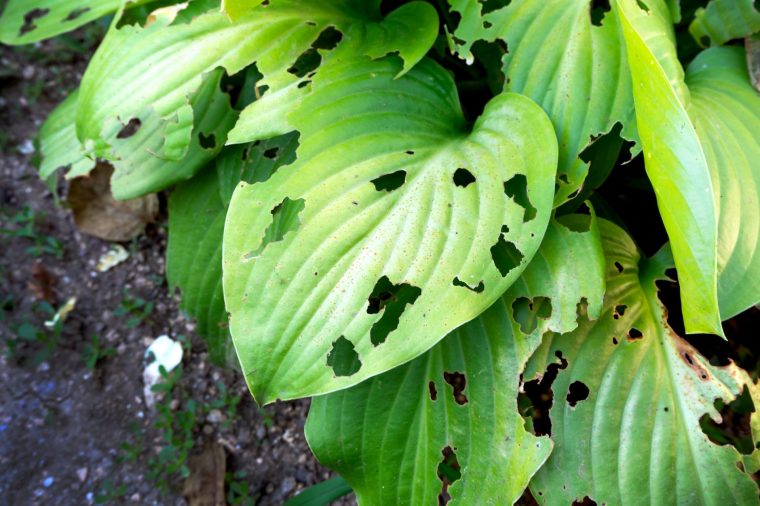 Slugs and snails love hostas (Photo: Svetlana Glazkova/Getty/iStockphoto)
Dr Ian Bedford, former head of entomology at the John Innes Centre, said more active approaches against slugs include things such as beer traps, where beer is left in a saucer on the ground. Slugs love the smell of yeast and may drown in there. But it is not clear that beer traps are that effective – they may even attract more slugs to the area.
Bedford also recommends physically hunting them down, either at dusk and dawn when they are active, or leaving out tempting hiding places for them in the day, like a sheet of cardboard over damp soil – and then dispatching them.
These methods seem very labour-intensive, though, and I don’t have time to go slug hunting at my allotment every day. I can’t be the only one to think like this, as many people are still buying iron-based slug pellets, judging by the amount on sale at garden centres.
There may be a way to compromise, though. Even just reducing the amount of pellets we use would be beneficial, says Professor Keith Walters, pest expert at Harper Adams University in Shropshire.
So, instead of putting down pellets automatically because that is what we have always done in spring, for instance, we could do so only if we see slugs on plants or definite signs of slug-munching. And perhaps we should tolerate small amounts of damage.
“If you put treatment on only if you think the damage is getting beyond what you want to tolerate, then you’ll be probably okay,” says Walters.
I’ve also written
Some NHS bodies recommend low-carb high-fat diets, for weight loss or type-2 diabetes. But a few people respond with a surge in their cholesterol levels. Here’s how it affected one person, and why she isn’t worried.
I’ve been reading
One of my all-time favourite books is Pride and Prejudice by Jane Austen, so I was firmly against the very idea of The Other Bennet Sister, which is both a parallel story and sequel to the original classic. The 2020 novel has just been adapted into a BBC series too.
But. I was browsing in a book shop, and out of curiosity picked up the sacrilegious interloper. I started flicking through it, and couldn’t put it down. Reader, I loved it.
Just like Elizabeth Bennet, I have learned that first impressions should not lead to unwarranted pride and prejudice.
Comments are closed.