

This creates the perfect wildlife haven to attract feathered visitors all year-round
Home Bargains is selling the item online and in stores(Image: Google StreetView)
Those looking to welcome local wildlife into their garden can make a £15 purchase to turn their outdoor spaces and patios into an ideal “birdwatcher’s haven”. Experts have suggested that these vital resources are increasingly needed to maintain thriving UK wild bird populations, particularly when regularly maintained and cleaned.
Describing the £14.99 item online, Home Bargains said: “Make your garden a bird’s favourite spot with the Jardin Deluxe Bird Feeder. Standing 6ft tall, this all-in-one feeder includes a mesh feeder, water dish, and three hanging feeders.
“It’s perfect for offering a mix of peanuts, seeds, water, fat balls, and mealworms all at once. Easy to assemble and ideal for attracting a variety of birds.”
The stand provides multiple perching areas for a quick bite and room for a water dish for drinking or cleaning off. The discount retailer suggests this feeder will transform gardens into a “birdwatcher’s haven,” as creatures are drawn in throughout the year to a reliable food source, reports the Mirror.
Home Bargains stocks a range of garden products designed to enhance the appearance of outdoor areas, while also giving something back to the wildlife that inhabit your garden. View the complete range of items here.
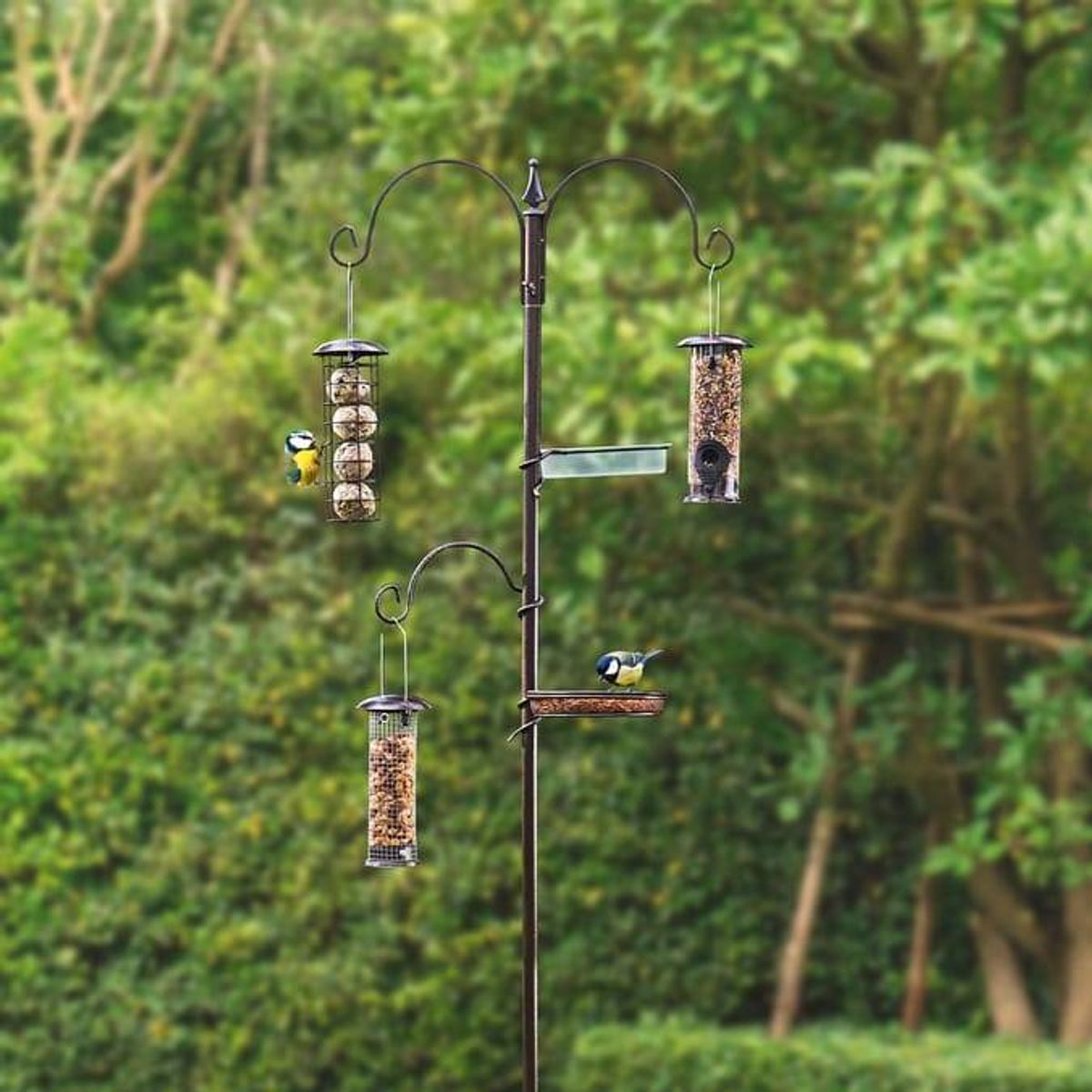
Gardens will become ‘a bird’s favourite spot’ with this feeder installed(Image: Home Bargains)
What should I put in my bird feeder?
Setting up a bird feeder in gardens makes a significant difference to local wildlife, according to the Royal Society for the Protection of Birds (RSPB). These feeders provide year-round support for bird populations by supplementing food sources, especially during severe weather and breeding seasons.
The charity suggested on its website that “high-protein foods” such as mealworms soaked in water are an excellent option during the spring and summer months. These insects are particularly popular with birds, including blackbirds, starlings, thrushes and robins.
Suet, or other fat-based food bars, slot neatly into hanging food baskets. These are “excellent high-energy giving foods and popular with a wide range of birds”, according to the RSPB. Officials advise against putting out seeds or peanuts between May and November, following a scientific review by the charity that found this practice increases the risk of disease transmission.
Fresh alternatives alongside mealworms and suet are worth trying for added variety. A spokesperson said: “You can also put out leftover dried fruit, or fruit such as apples and pears, but don’t use anything mouldy or salty. Soak dried fruit in water first, and make sure to only put out a small amount that gets eaten quickly.”
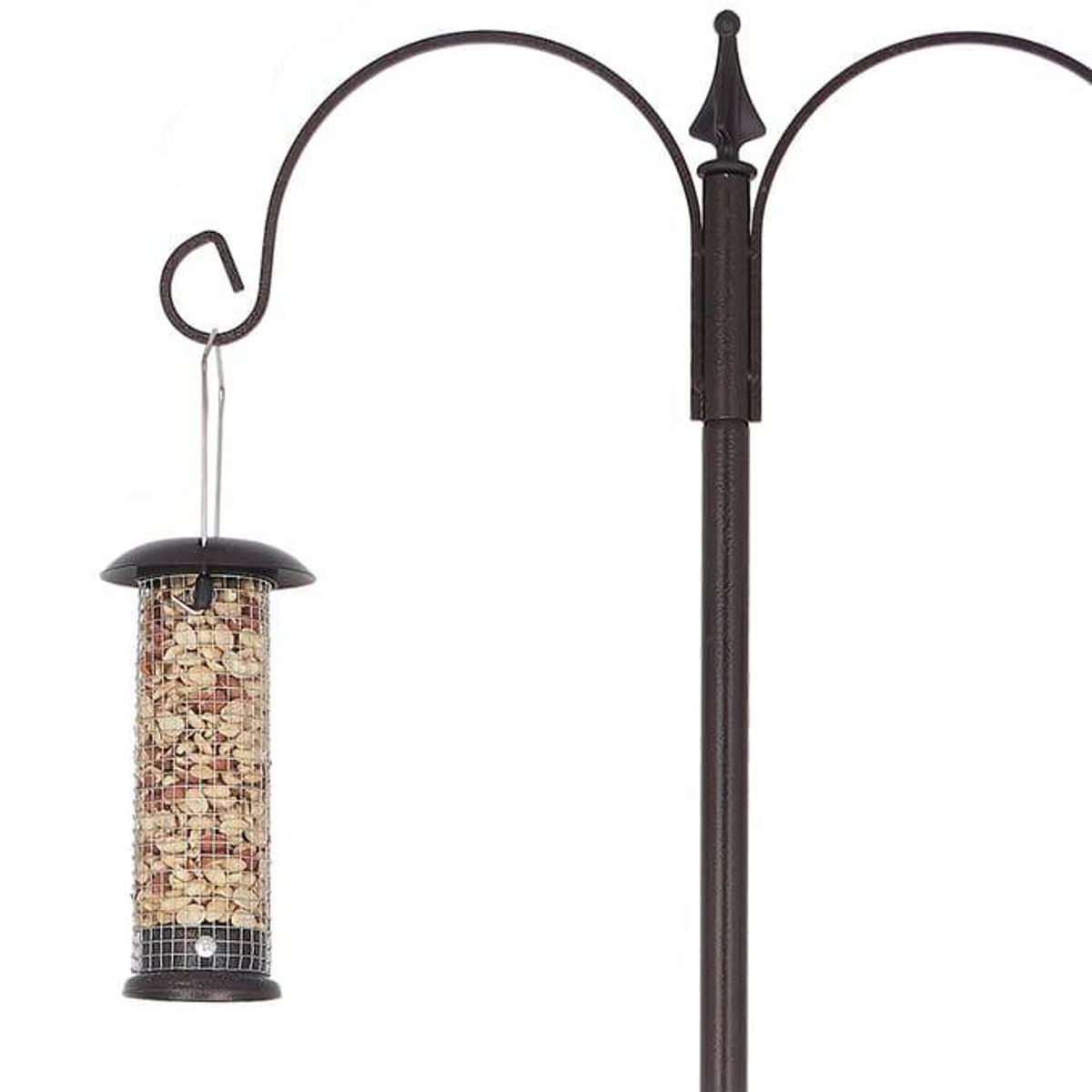
The six-foot feeder has three hanging feeders and two spots of dishes of food or water(Image: Home Bargains)
Experts also highlight the importance of maintaining a regular supply of fresh, clean water for birds. Filling the dish that comes with the Home Bargains feeder gives birds somewhere to drink and bathe – particularly during months when natural water sources may be scarce.
People should put their new bird feeder in a prime spot that will help meet the needs of passing birds. The RSPB suggested somewhere in the garden that is “quiet” and not too close to bushes, where predators could hide.
A spokesperson said: “Wherever you place your feeder, make sure you can see it when you’re indoors so you can get the most pleasure from it! Bear in mind, it can take a little bit of time for the birds to get used to a new feeder, so don’t be disappointed if not many birds visit at first.”
Regular cleaning of bird feeders is essential to stop the transmission of serious illnesses such as Salmonella, Trichomonosis, and Avian Pox. By properly cleaning, we can prevent the accumulation of mouldy, bacteria-laden, or rotten food, ensuring the feeders remain safe, making them less appealing to pests, and helping prevent fatal infections. Feeders should be cleaned every one to two weeks, or more frequently if conditions are damp.
Comments are closed.