
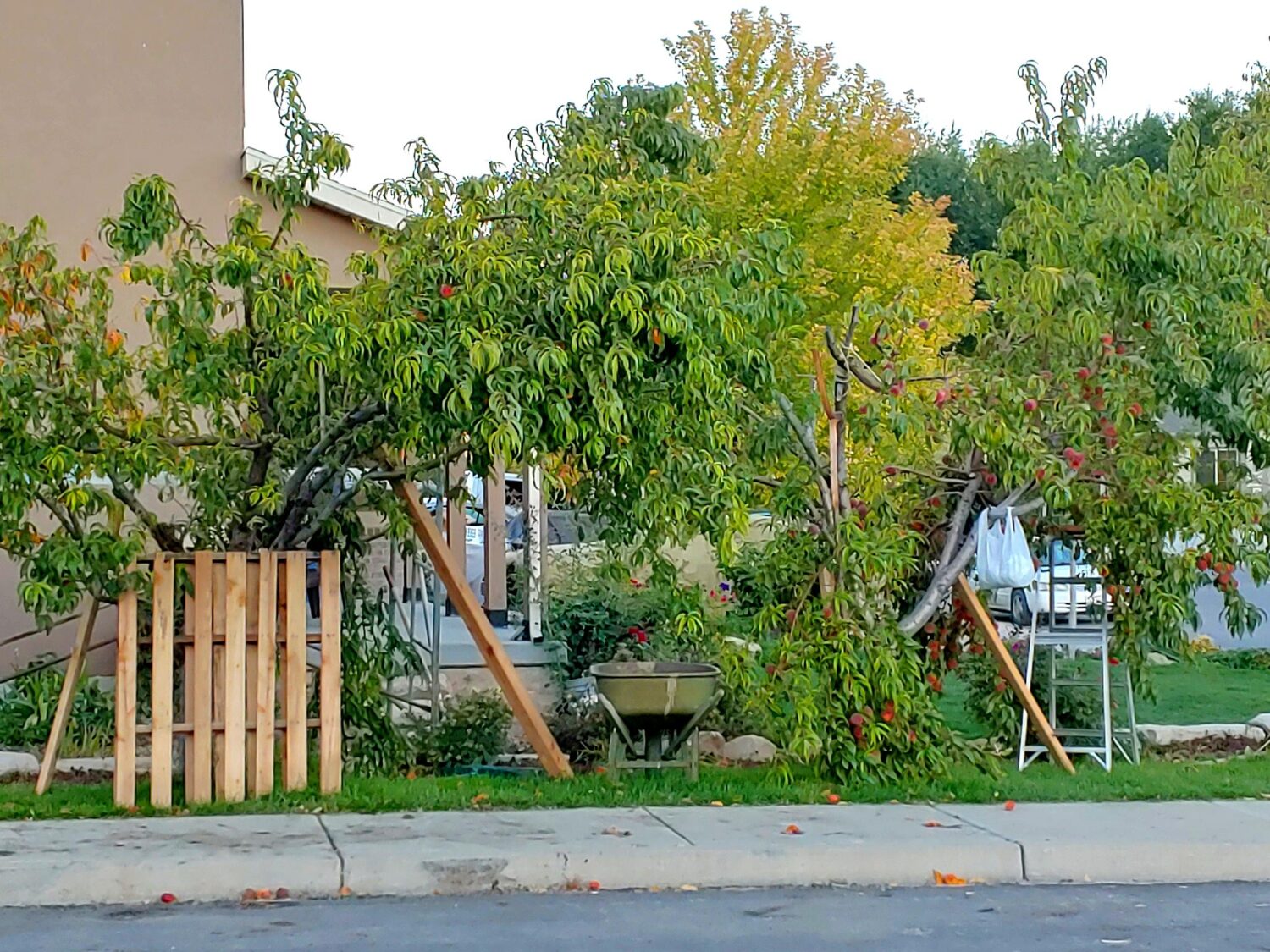
SALT LAKE CITY – After a hard frost swept across northern and central Utah over the weekend, gardeners are now checking their yards for signs of damage, and many may not know what to look for.
First symptoms of frost damage appear quickly. According to Taun Beddes, host of KSL’s Greenhouse Show, leaves hit by frost can be a clear sign.
Beddes said that if the frost is severe enough, the leaves will turn brown or black within 24 to 72 hours.
“The leaves will turn kind of a translucent green because the cells inside froze and the water in the cells burst out,” Beddes said. “And then within a day or two, the leaves start to turn brown or black.”
Despite the appearance, Beddes tells homeowners to not take action right away.
“The plants have secondary buds,” Beddes said. “I have rows of Sharon that got a lot of frost damage, and they look pretty ugly right now. But a month down the road, they will send out new buds and they’ll send out new growth. And a lot of that frost damage will be masked.”
Fruit trees
Fruit trees show similar symptoms, but the stakes are higher. Leaves scorch, and blossoms may turn brown and fall off prematurely.
Gardners can check blossoms by slicing one open and comparing the inside to examples they can find online.
“Even though the petals are still intact, inside there’s an ovary that will turn brown, almost black sometimes if it was hit by frost,” he said.
If the inside is black or if the entire blossom falls off the tree, the fruit is most likely gone for the season.
This year, gardeners along the Wasatch Front, especially those north of Ogden and south of Spanish Fork, are reporting significant losses.
“Those areas are generally three or four degrees colder with some exceptions,” Beddes said. “So those areas are really where we’ve taken a lot of fruit damage.”
Valley floors, where cold air settles, were hit the hardest.
“One grower told me he figures he’s had about a 90% loss,” the expert said. “Apples, peaches, tart cherries, sweet cherries, nectarines, pluots — all of them at lower elevations took a lot of damage.”
But orchards on benches fared far better. Just a few hundred feet of elevation made the difference between near-total loss and healthy trees, Beddes said.
Silver lining
For some growers, the frost might actually help.
“If you only took moderate damage … Mother Nature did you a big favor,” Beddes said.
Apples and peach trees often need to be thinned, so by losing blossoms, growers can reduce labor later in the season.
Commercial growers sometimes welcome a light frost for the same reason, as long as it’s the only one.
Critical temperatures for fruit trees are lower than many assume, according to Beddes. A mild freeze at 32 degrees causes little harm, but at 28 degrees, growers can expect 10% to 20% damage. At 26 degrees, losses can reach 90%.
With more cold nights still possible in April, gardeners are hoping the worst is behind them.
“Keeping our fingers crossed.”
Related: Farmers assess damage after another spring freeze
We want to hear from you.
Have a story idea or tip? Send it to the KSL NewsRadio team here.


Comments are closed.