
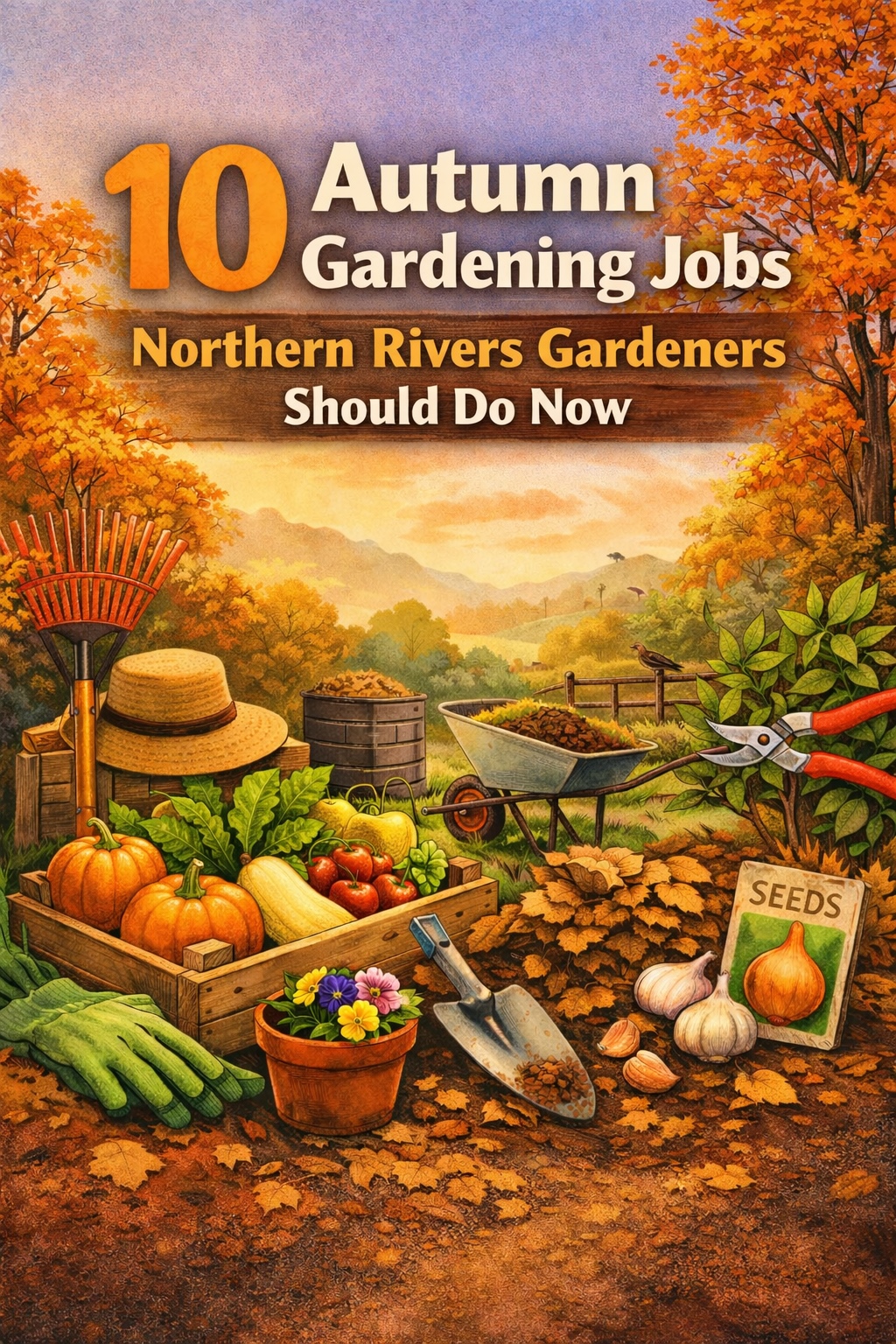
Autumn is one of the most important seasons for gardeners across the Northern Rivers. After the heat and heavy storms of summer, cooler days arrive while the soil still holds warmth. These conditions create the perfect window to prepare gardens for the productive winter months ahead.
Whether you grow vegetables, flowers or a few herbs near the kitchen door, a few simple jobs during autumn can dramatically improve the health and productivity of your garden.
Clean Up Summer Crops
The first task is clearing out tired summer vegetables such as tomatoes, cucumbers, zucchini and beans. Once these plants stop producing, remove them and place healthy material in the compost bin. This clears space for cool-season crops and prevents pests or disease from lingering in the garden.
Improve the Soil
Northern Rivers soils often become depleted after a busy summer growing season. Digging in compost, aged manure or organic fertiliser restores nutrients and improves soil structure. Healthy soil retains moisture better and allows plants to develop strong root systems.
Start a Compost Pile
Autumn leaves, vegetable scraps and garden trimmings make excellent compost material. Starting a compost pile now means you will have rich organic fertiliser ready for spring planting. Layer green materials with dry leaves or straw to keep the compost balanced.
Plant Cool-Season Vegetables
Autumn is the prime time to plant vegetables suited to cooler weather. Broccoli, cabbage, cauliflower, lettuce, spinach, peas, carrots and beetroot all grow well in the Northern Rivers during autumn and winter. These crops prefer the milder conditions and can produce abundant harvests.
Add Mulch to Garden Beds
Mulching is one of the most valuable tasks for any garden. A thick layer of sugar cane mulch, straw or leaf litter helps keep moisture in the soil and suppress weeds. Mulch also protects soil from heavy rainfall and gradually breaks down to feed plants.
Divide and Replant Herbs
Herbs such as chives, mint and oregano often become crowded after summer growth. Autumn is the ideal time to divide these plants and replant them around the garden. This encourages stronger growth and ensures a steady supply of fresh herbs for cooking.
Plant Native Flowers for Wildlife
Many Australian native plants thrive when planted in autumn. Grevilleas, bottlebrush and native daisies establish well while the soil remains warm. These plants attract birds, bees and pollinators, helping support local biodiversity.
Check for Garden Pests
As temperatures cool, some pests begin searching for shelter in garden beds. Inspect plants for caterpillars, aphids and snails. Early control using natural methods such as hand removal or organic sprays can prevent larger infestations later.
Repair Garden Structures
Autumn is a good time to repair trellises, garden beds and fences before winter weather arrives. Supporting structures are essential for climbing vegetables such as peas and beans, and fixing them now saves time later in the season.
Plan Your Winter Garden
Finally, take time to plan what you would like to grow over the coming months. Rotating crops and planning bed layouts helps reduce disease and keeps soil productive. Many experienced gardeners sketch simple planting plans for the season ahead.
With cooler temperatures, fewer pests and warm soil, autumn offers some of the best gardening conditions of the year in the Northern Rivers. A little work now can set the stage for a healthy, productive garden throughout winter and into spring.
From the Northern Rivers Times News Desk
Comments are closed.