
Spring has sprung. At least we hope so.
Just when we thought we were in the clear a blizzard with high winds arrived on our doorstep on March 15. And we had already started Minnesota’s fifth season two weeks earlier — “mud” season.
For gardeners this is the time of year when there are so many things to do, it’s impossible to know what to do first. Hopefully this column will give you some ideas.

It’s not only the gardener that is excited and anxious about spring — so are the crocus, tulips, daffodils and other spring flowering bulbs that were planted last fall. It seems like a miracle to see those first wonderful greens poking their heads through the winter debris.
By the end of April, most all of the perennial flowers have been heard from, except for hibiscus and a few other late emerging flowers.
Once the lawn feels firm under foot, rake it gently to remove dead plants as well as stones and other debris that could prove hazardous later when you mow. Raking is also the preferred treatment for breaking up and controlling fungal mats caused by snow mold.
By now you should have removed tree wrap from young trees. Leaving this wrap on the trees will trap moisture next to the trunk.
Remove winter mulch from strawberry beds as soon as new growth begins but keep it nearby in case of frost. By now your roses should be uncovered.
If you use Minnesota tip, they should be lifted by this time. They can take frost now but mums and other frost tender perennials could benefit by a light cover on cold evenings.
Spring is the biggest enemy for mum plants overwintered in the garden, as the alternate freezing/thawing causes them to heave their roots out of the ground and die. They are shallow-rooted plants and this causes them to dry out. They start out looking green and great and then die later on.
April/early May is a good time to divide your perennials before they get much growth to them. Hosta, mums, sedum and most perennials transplant well in spring.
Dividing rejuvenates the plants. If you divide hosta when they first pop out of the ground, they will leaf out better than if divided later in the year. It’s a good idea to get the mum roots a little deeper in the soil if they are several years old and might have heaved out of the ground and if the middle of the plant has died out.
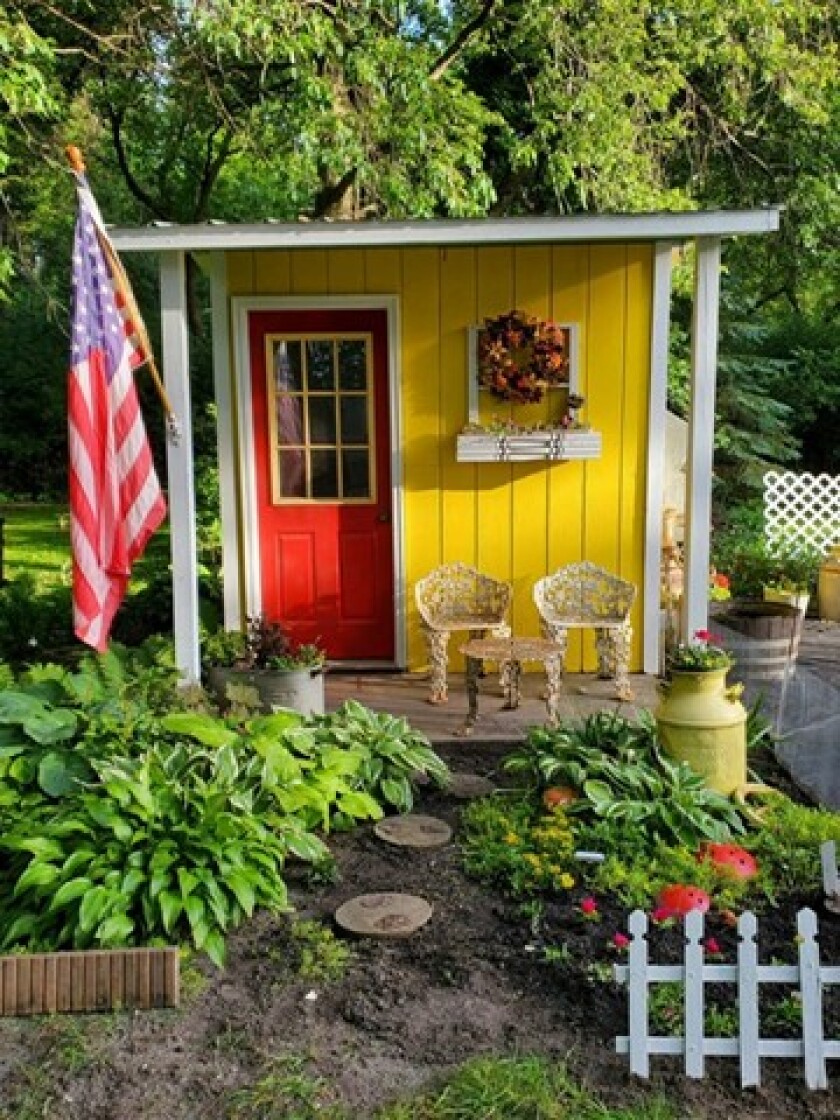
A garden shed stands in the garden of Master Gardener Bonnie Swenson.
Contributed / Master Gardener Bonnie Swenson
Gardeners with a micro-climate in secluded areas and with south facing slopes and good drainage can start planting their vegetable gardens the later part of April. Vegetables that may be started early include: potatoes, radish, peas, parsnips, carrots, beets and cole crops.
A word about planting seeds. A good rule of thumb is to sow seeds when the ground is dry and set plants out when the ground is wet.
A way to test if the soil is dry enough to work is to form the soil into a ball and drop it from about waist high. If it falls apart — it is ready to be worked, and if the ball doesn’t crumble, go have coffee and wait for another day.
Another vegetable that can be planted now are onions. You can purchase sets, seeds or plants. Onion sets are onions which were grown as plants the year before. They were grown very close together so they remained small and then harvested and kept over winter to be sold the next spring.
Since they are second-year plants, they will not keep as well in storage and will send up seed heads during the growing season. Remove these seed heads promptly. These are the onions in the little bags that you see in every store each spring and are the most readily obtainable.
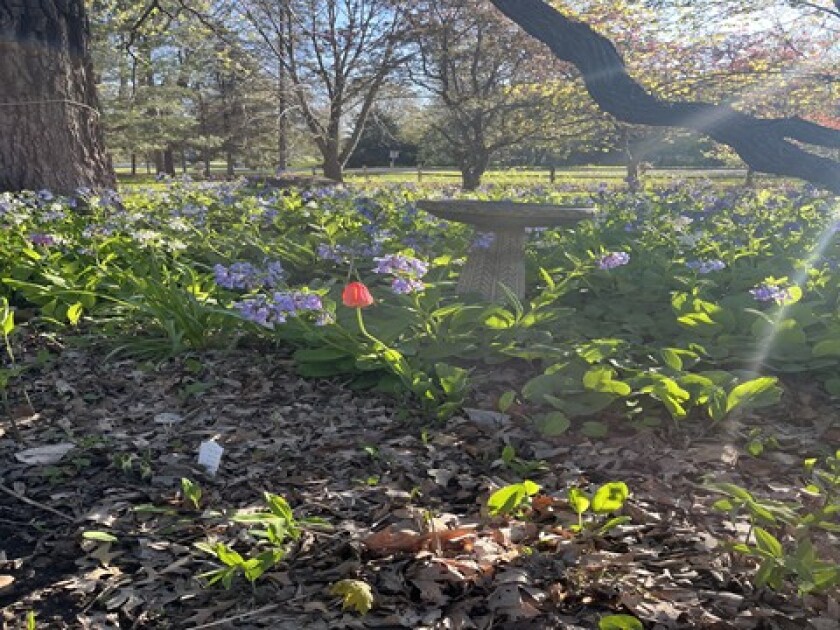
Virginia bluebells, a perennial found throughout Minnesota, bloom in April or May
Contributed / Master Gardener Laura Molenaar
Onion plants are baby onions pulled when they are actively growing and shipped to the grower. These will keep well in storage and have very few if any seed heads.
This is the easiest way to grow onions. If these onions are planted close together, they may be thinned using them as green onions, thus allowing those remaining in the garden to have adequate space to grow.
Onion seeds can be sowed directly in the garden as soon as the ground can be worked. Sow quarter-inch deep in rows 12 inches apart.
Seed can also be started indoors about eight weeks before the last frost. Keep them moist, lightly fertilized and keep the tops cut back to a height of from 4 to 5 inches. (These tops are great snipped into salads, potatoes or cottage cheese.)
The onion seeds and plants keep the longest in storage and are usually less disease prone and are of a better quality.
Onions differ in the day length required to form bulbs. In Minnesota we have longer days than the people in the southern states. Short-day onions do better in the southern states. We need to purchase seed listed as long-day or day-neutral.
Some long-day onions are: yellow and white Spanish and Ailsa Craig. Walla Walla is a day-neutral variety. There are a few varieties with “keeper” in their name and these will be the last to sprout. Onions which will not do well in our area include: Yellow Granex, Vidalia, Sweet Georgia Brown and Spartan Banner.
Onions do best in a loose, rich humus. They need 1 inch of rain per week and are heavy feeders. Keep the soil loose when bulbs are forming.
Some people will scratch some of the soil away so the onion is almost on top of the ground, thus enabling more vigorous growth.
When bulbs have formed and the tops begin to fall over, pull the onions and allow them to sun cure for at least a week. Then place in a well-ventilated area to finish curing.
Can you stand one more hint about growing green onions? To get green onions with a lot of white and little top, make a trench 5 inches deep. Place the onion sets or plants in the bottom and gradually fill in the soil as the onion grows.
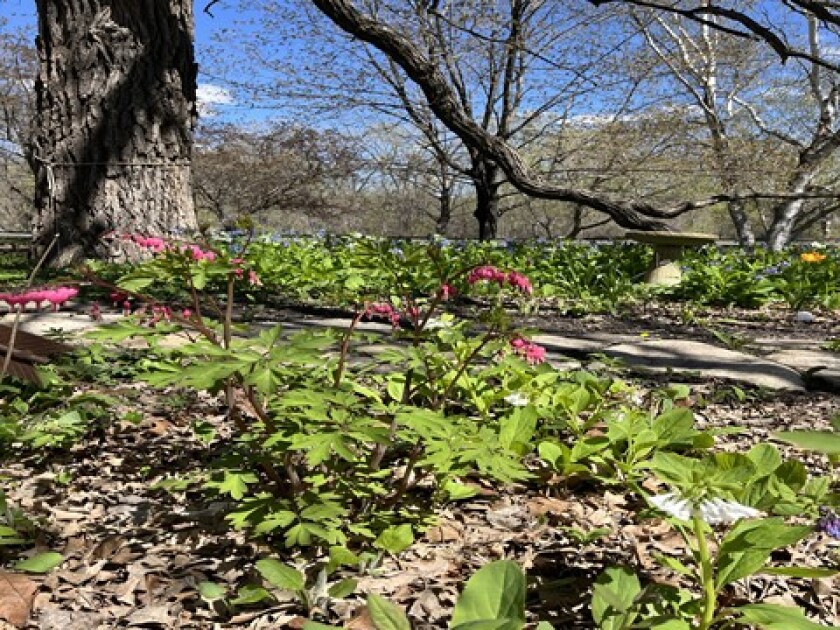
Bleeding heart stand tall in a flower bed beneath a tree that provides the partial shade the perennial plant needs to thrive.
Contributed / Master Gardener Laura Molenaar
When the trench is filled, dig out the onion and use. You will have 5 inches of bleached onion below the green tops.
For earlier-blooming begonias, caladium and dahlias, they may be started indoors about this time. You can plant them in flats, fairly close together using a minimum of potting mixture.
Be careful not to overwater. They need a light source but window light is sufficient.
Caladium will need a temperature of at least 70 degrees to keep them viable. Begonias and dahlias aren’t as fussy.
Plant outdoors after all danger of frost. You should probably harden them off slowly if they have much growth.
It is best to use new potting soil each year when potting up your container garden. There is a tremendous amount of nutrients used during the growing season as well as carryover of any disease. This is most important in growing geraniums.
I have had success taking out some of last year’s potting soil from the top and mixing in new when I plant elephant ears and voodoo lilies. They grow in huge pots and the bulbs stay near the top of the soil. They seem to be disease free so no problem there.
Regular fertilization with half-strength fertilizer for pots is also a good idea. This is because fertilizer can leach out with daily watering. When fertilizing with water-soluble fertilizer, water with plain water first and then add the mix.
Tips I recently found in old notes: Polymers can bind up salts in fertilizer. The less flowering time for perennials, the longer they live as they don’t use as much food in the roots. Species tulips live longer than hybrid. Darwin tulips last as long as any. If glads don’t flower, it is a viral problem
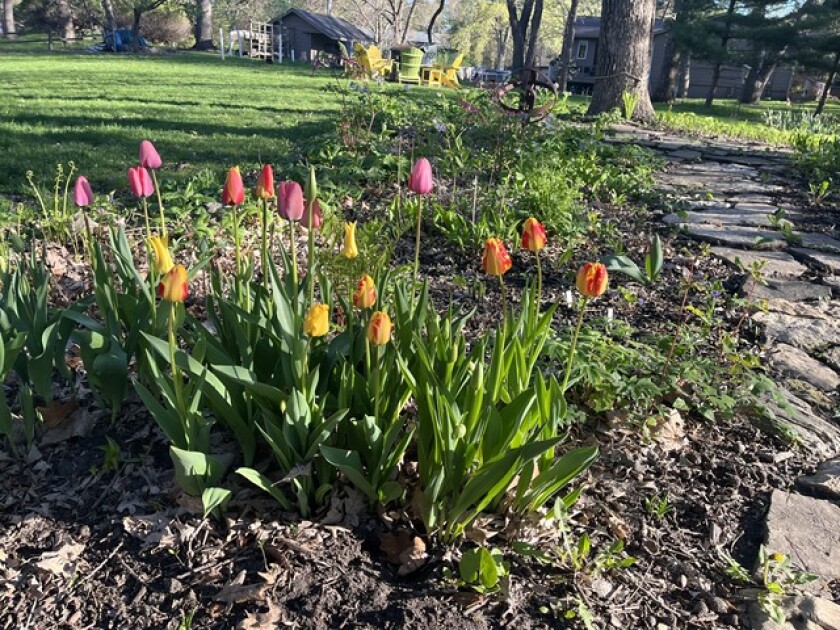
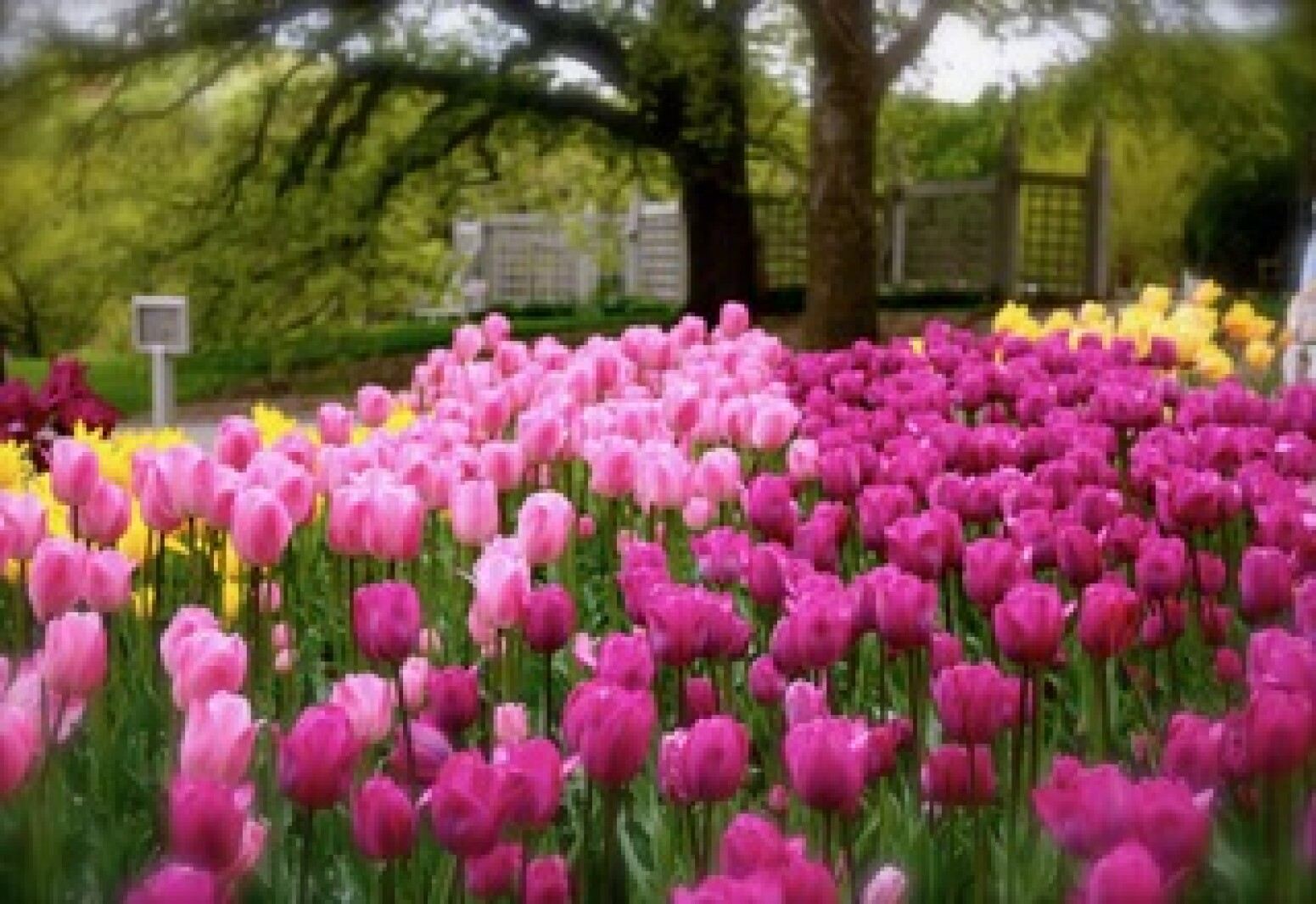
Tulips in multiple colors are in bloom on a sunny spring day. Tulips are a hardy bulb planted in the fall that blooms in the spring year after year.
Contributed / Master Gardener Laura Molenaar
Comments are closed.