

“Some British gardens are almost as diverse as tropical rainforests,” says Sir David Attenborough in his latest show-stopping series. It sounds… a big claim. Especially if you live in a typical terrace, where front gardens have been paved to park cars, and even grass feels like an endangered species as its replaced with luminous artificial turf.
Still. According to the nation’s hero: “Across the British Isles, there are magical places, our gardens. Each is home to a cast of remarkable animals.” It’s these gardens that he has chosen as the subject of a landmark BBC1 series. Secret Gardens features five different gardens in five very different locations across the UK, and forms part of Attenborough’s upcoming 100th birthday celebrations, falling on 8 May.
In it, we meet pine martins in the Highlands and otters in Oxfordshire, as well as the gardeners who have created oases in which this wildlife can thrive without sacrificing their own outdoor enjoyment.
Because whether you have a mini allotment or massive acreage, your outdoor space can make a huge difference to Britain’s biodiversity. There are, after all, 25 million gardeners in the UK. Eighty per cent of us have access to some outdoor space. In fact, says Attenborough: “our gardens cover a greater area than all of our national nature reserves combined.” So what low-effort but high-impact steps could you take this weekend to help nature and make Attenborough proud?
Nikola Tomasic/Unsplash
Make no-now-May more permanent
Thinking about signing up for No Mow May? Why wait? The opening episode of Secret Gardens shows a vole attempting to dodge the movements of a robotic lawnmower. Meanwhile, in the garden of their thousand-year-old Oxfordshire mill house, Henry and Sarah have let much of the land grow wild, creating a haven for otters and kingfishers as well as mallards.
Leaving a just a small section of your own lawn unmown (around 20 metres square) can more than double the number of bees, butterflies and other pollinators that visit your garden.
And they will be profoundly grateful. Ninety-seven per cent of the UK’s wildflower meadows have been lost over the last 80 years, a devastating decimation of natural habitats.
Make a mini-pond from a pot
In Bristol, Secret Gardens introduces us to artist Lou, whose tiny urban garden has become a refuge for frogs, dragonflies and more thanks to her small pond. Britain has lost half its rural ponds in half a century, so garden ponds are an even more vital resource for amphibians that need them in order to breed (common toads, for example, are thought to have declined by 41% between 1985 and 2021).
Does digging a pong sound like rather a big job for a Sunday afternoon? Well, maybe not. According to the experts at the Royal Horticultural Society: ‘ponds don’t have to be large, even a mini pond in a pot will benefit wildlife’. Three things to bear in mind. One: make sure at least one side of your pond has a shallow slope to allow easy access in and out (‘if you’re making a container pond that isn’t sunk into the ground, add a ramp on the outside and the inside’ they suggest). Two: place it somewhere it will get both shade and sun. Three: ‘help wildlife move between these areas by letting grass grow along one edge of the pond and growing some denser plants nearby’.
Don’t have space even for a small pond? Consider a bird bath.
Pull down a fence panel
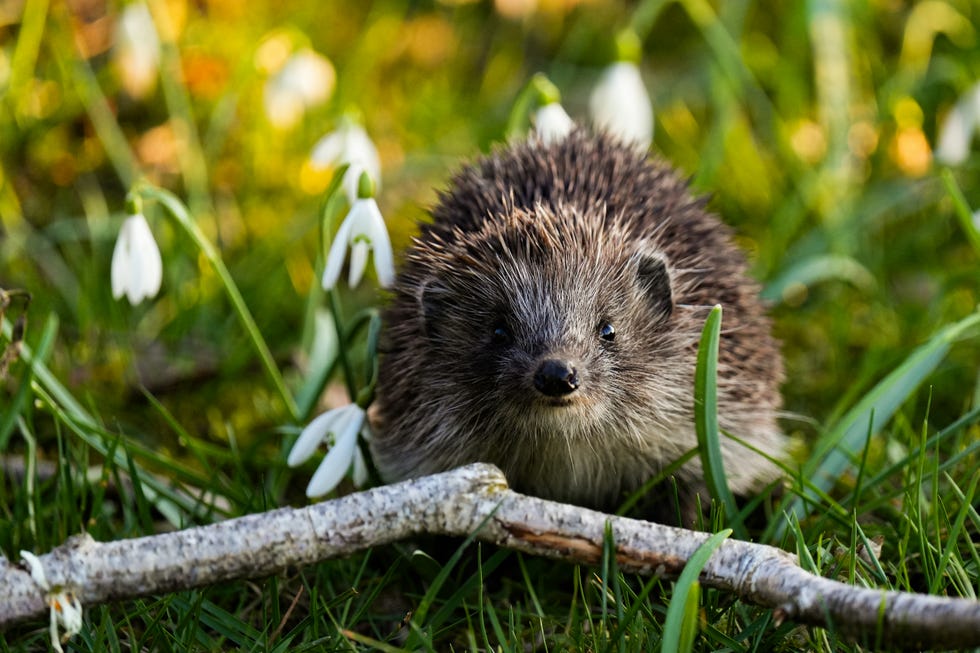
Lou’s lovely garden also features a hedgehog highway, which plays a role in the survival of four healthy hoglets (that’s baby hedgehogs).
The average hedgehog roams 2 kilometers a night, looking for food, mates and nesting sites. Garden fences, though, get in the way and hedgehogs have declined from over 30 million in the 1950s to under 1 million today.
There’s an easy fix. The Wildlife Trusts suggest you consider making a 13cm x 13cm hole at the base of your fence, digging a channel beneath garden boundaries or simply remove a fence panel (if your neighbours are happy with that. Then pass it on (encourage your neighbours to do the same).
Re-hang your bird feeder
The 9.5 pet cats in Britain are estimated to catch and kill 55 million birds a year. Hanging bird feeders higher up (out of the reach of prowling pets) is recommended.
According to Attenborough, there’s another even simpler solution available: a bell on the collar “reduces pet cats’ hunting success by a third.” So consider putting a bell on yours this weekend. Then sit back and enjoy your wildlife haven.
MORE ON GARDENS
Comments are closed.