
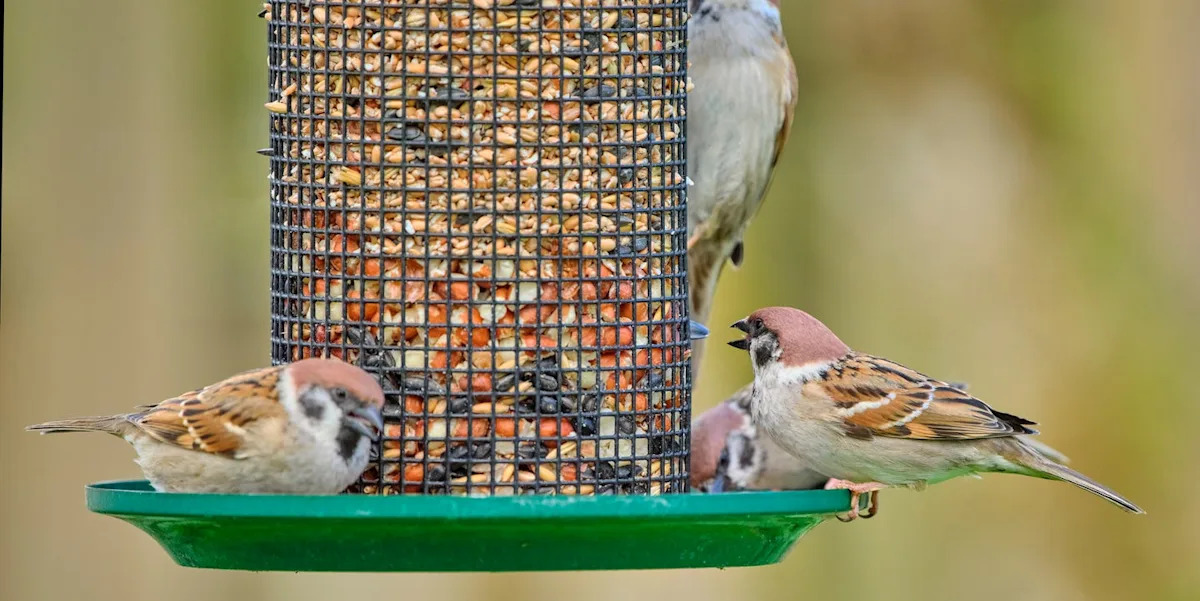
Countless people across the UK attract small birds to their gardens and balconies with well-stocked feeders. But new summer guidance from the Royal Society for the Protection of Birds (RSPB) warns that flat feeders — a common choice for many households — should no longer be used at all.
Each year, the RSPB runs the Big Garden Birdwatch (BGBW), a large-scale wildlife survey that invites households across the UK to record bird sightings over a single weekend. The results help build a clearer picture of how Britain’s garden birds are faring.
In 2026, more than 650,000 people took part, counting over nine million birds across more than 80 species, from magpies and blue tits to starlings. Yet the latest results paint a worrying picture: many species have declined sharply since the survey began in 1979.
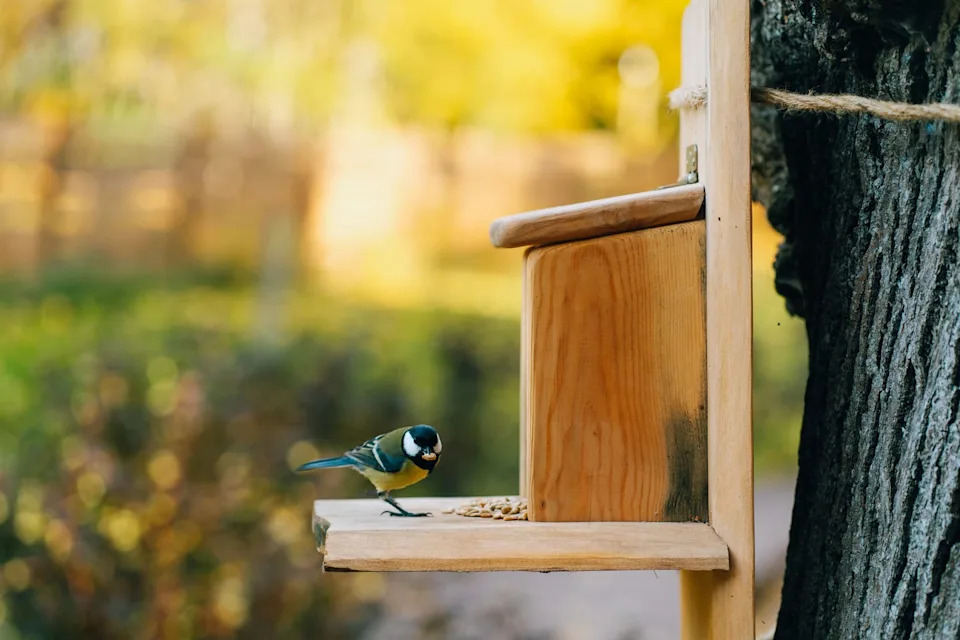
Olga Rolenko – Getty Images
Among them is the greenfinch, whose sightings have fallen by 67.2 per cent since the first BGBW. The RSPB attributes much of this decline to trichomonosis – a deadly disease in garden birds that is closely linked to feeding stations.
‘Feeding birds is something millions of us love and value, but the science shows us that birds such as Greenfinches have been affected by the spread of disease at feeders,’ says the RSPB’s chief executive, Beccy Speight.
What’s the new bird feeding guidance as of 2026?
Trichomonosis spreads where birds congregate. Flat-tray feeders – where food, dirt and droppings can quickly accumulate – are particularly high risk. As a result, the RSPB is urging households to stop using flat feeders, including bird tables.
The charity has also updated its broader feeding advice for the warmer months. From 1st May to 31st October, it recommends pausing the use of seed and peanuts to reduce crowding around feeders. Those who wish to continue feeding can instead offer small amounts of mealworms, fat balls and suet.
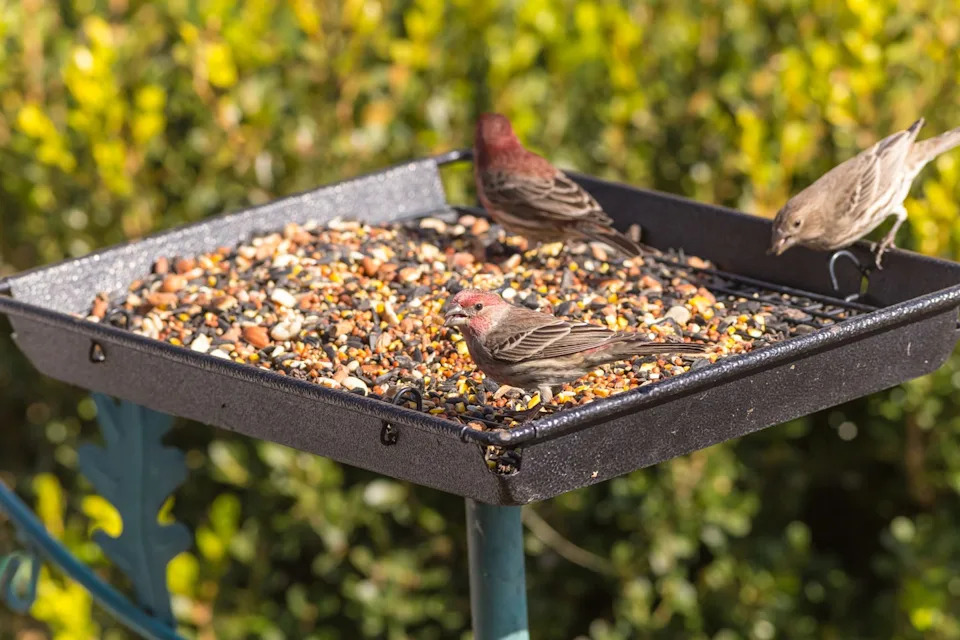
Warren Price – Getty Images
Keeping garden birds healthy is largely a matter of hygiene. Feeding should be done carefully, with responsibility for keeping the area clean. The RSPB advises:
Clean and move feeders weekly: Wash feeders thoroughly at least once a week and, where possible, reposition them after cleaning to prevent contaminated debris building up underneath.
Change water daily: Only provide water if you can commit to refreshing it every day, using tap water only. Bird baths should also be cleaned weekly.
‘We’re not asking people to stop feeding, just to feed in a way that protects birds’ long-term health,’ Beccy adds. ‘By making small changes together, we can ensure garden feeding continues to be a positive force for nature.’
Follow House Beautiful on Instagram, TikTok and Pinterest
Comments are closed.