
Martin Duncan, Head Gardener and Landscape Designer at Arundel Castle in West Sussex, will retire at the end of July after 17 years of ambitious planting schemes, landscape restoration, and increased public engagement in the estate’s 40-acre gardens.
Since joining in 2009, Martin Duncan has reshaped the horticultural identity of Arundel Castle, drawing on an international career that has spanned Africa, the Middle East, the Caribbean, and the UK. His work has been recognised, including one of the highest accolades in horticulture the Kew Guild Medal in 2018.
Born and raised in Zimbabwe, Duncan first developed his interest in Flora and fauna during national service with when he worked for the country’s National Parks Service. He went on to study horticulture at Greenmount College in Northern Ireland before returning to Zimbabwe as an agricultural advisor, in the production of crops such as coffee. Further training in landscape design at the Welsh College of Horticulture led to senior roles abroad, including Head Gardener to King Hussein of Jordan and later promoted to Landscape Designer for the Royal Hashemite Court. His career portfolio also includes senior positions at Audley End House and Garden in Essex and the Department of Parks in Bermuda.
At Arundel Castle, Duncan and his team have delivered a series of significant interventions, combining bold design changes with long-term planting strategies. Early works included the introduction of tropical planting into the Earl’s Garden, the creation of botanical stumperies. “When I arrived, I added more tropical plants to the Earl’s Garden and later designed and built two botanical stumperies,” says Duncan. “The garden needed changes so I stripped all the herbaceous borders, took out the box hedging and replanted.”
A key milestone was the restoration of the monastic fishponds. “Once I gained the trust of the Duke and Duchess new projects were given the green light. As I was able to show them my ideas as drawings it was easier to get projects agreed, such as the restoration of the monastic fishponds,” he explained.

Martin Duncan
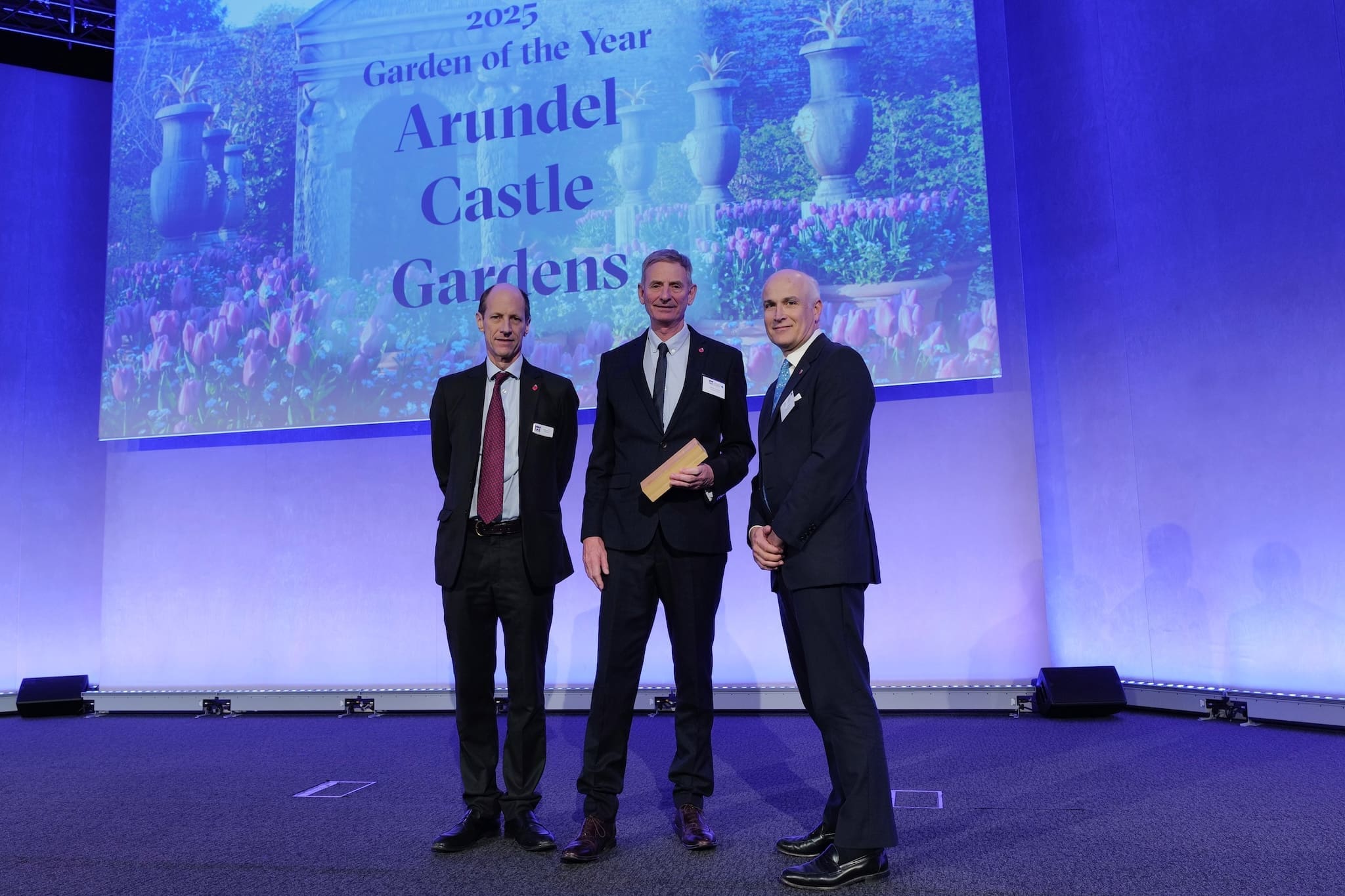
Historic Houses AGM 2025. Historic Homes and Gardens Exhibition 2025.
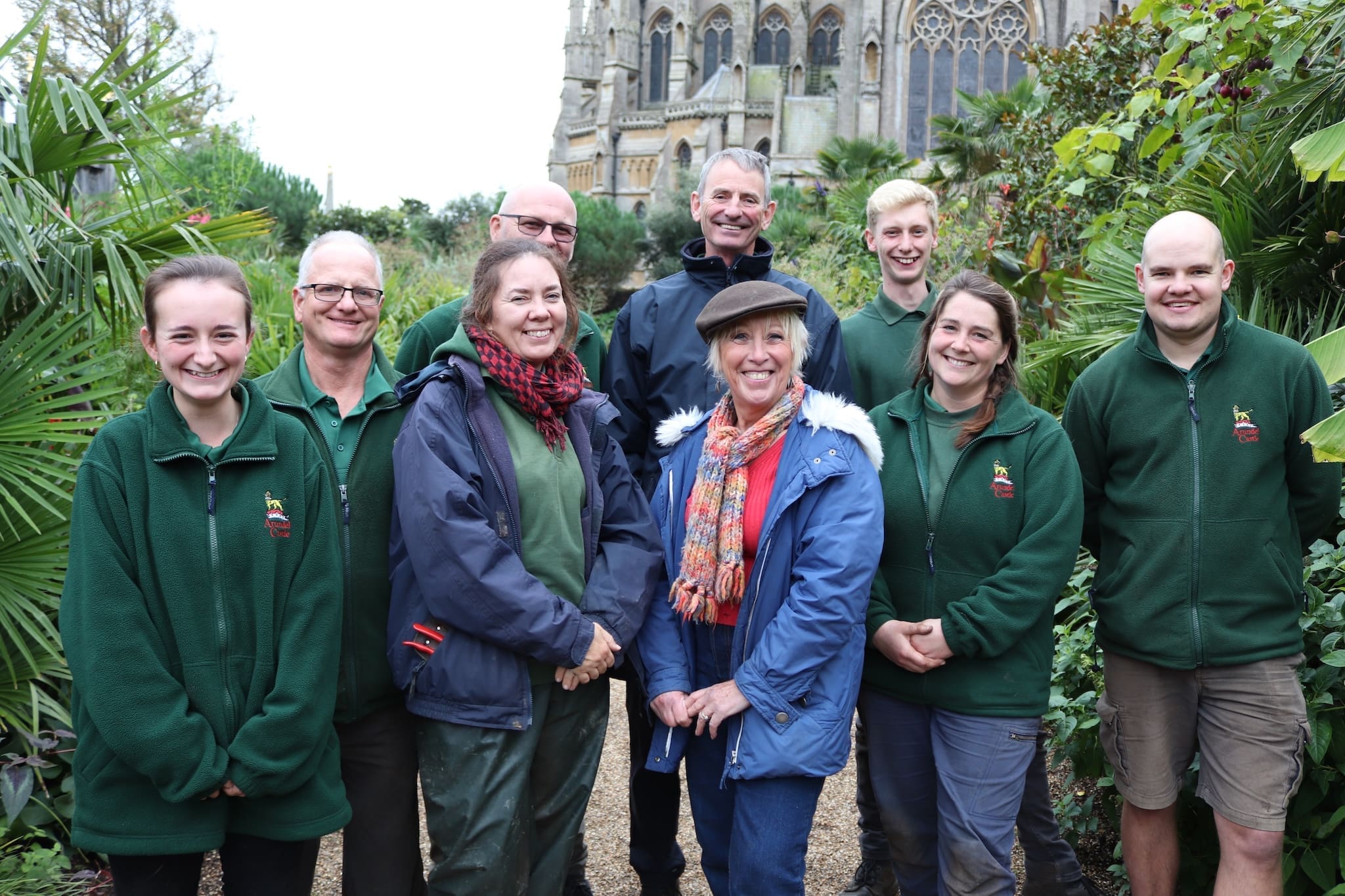
Arundel Castle Garden Team with Carol Klein
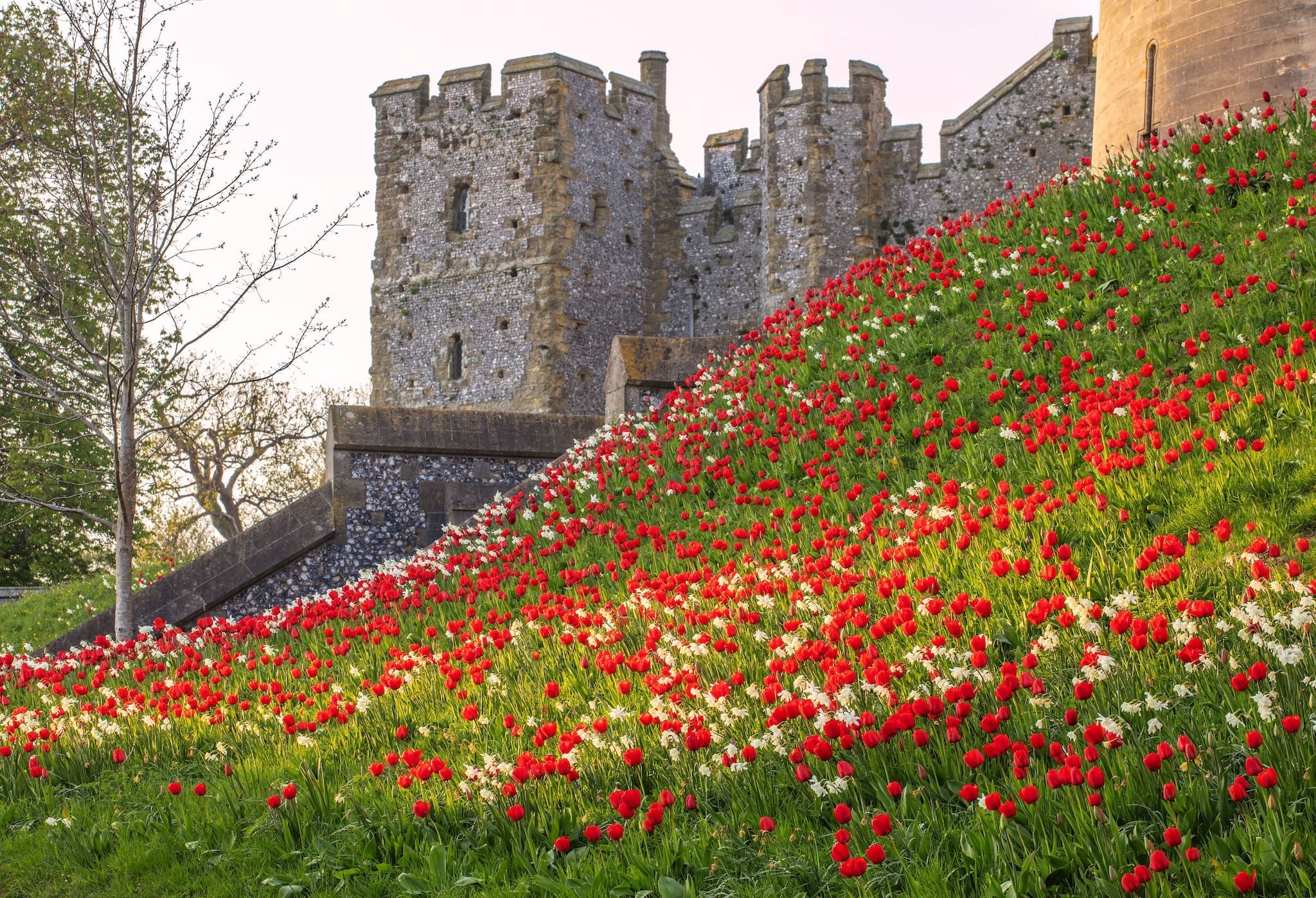
Perhaps his most widely recognised legacy is the introduction of the annual tulip festival, established 12 years ago to extend seasonal visitation into April. The initiative now attracts around a quarter of the estate’s annual visitors during its peak month and features 170 named tulip varieties. Over the past decade, more than 1.5 million bulbs have been planted. “People love the fact that we design with tulips and don’t just plant them in rows. The huge task is well worth it as It’s quite common for a visitor to thank the gardener for their work here and there is no higher praise than that,” he says.
Some of the tulips in pots are lifted and sold for charity after the event but a large amount are left in the ground. “Most tulips will keep coming up for 30-40 years if they are planted at 4in deep. ‘Olympic Flame’ and ‘Appledoorn’ are very successful when left in the ground,” says Duncan. The scale of the operation relies on a combined workforce of eight permanent staff, four seasonal workers, and 22 volunteers. Duncan has also prioritised training and development, encouraging career changers and students to pursue horticulture professionally.
Following the tulips, the team has planted 36,000 camassias in 2022 – now naturalised into an estimated 100,000 plants, as well as the restoration of wildflower meadows. More recently, the cutting garden has been redesigned in a French-inspired style incorporating yew cones and topiary forms.
Duncan attributes his long tenure to the creative autonomy afforded by Arundel Castle and its guiding ethos. “The reason why I have stayed so long is that I have had freedom to develop ideas and the ethos of Arundel is to make history whilst respecting the past. We are giving people ideas and moving forward,” he explains. “This year we have made changes to the cutting garden transforming it into more of a French style garden with yew cones and balls.”
Duncan was meant to retire 5 years ago but put it off until now. He is now preparing to relocate to Ireland following retirement, while remaining open to consultancy work within the sector. Reflecting on his succession, Duncan will sit on the panel appointing his replacement. His advice to the incoming Head Gardener is rooted in team development and leadership continuity. “My advice to the new Head Gardener would be to get to know the team and find out what their passions are. Find their strengths. I couldn’t have won so many awards without such a good team,” says Duncan.
As a team, Arundel Castle has received multiple accolades, including South & South East in Bloom Heritage Garden & Park of the Year (three consecutive years), Champion of Champions status in 2025, the Sussex Heritage Award for Conservation Project of the Year (2020), and the Historic Houses Garden of the Year Award (2025), determined by public vote.
The Arundel Head Gardener position is currently open, closing date for applications is the 14th of May 2026.
Comments are closed.