
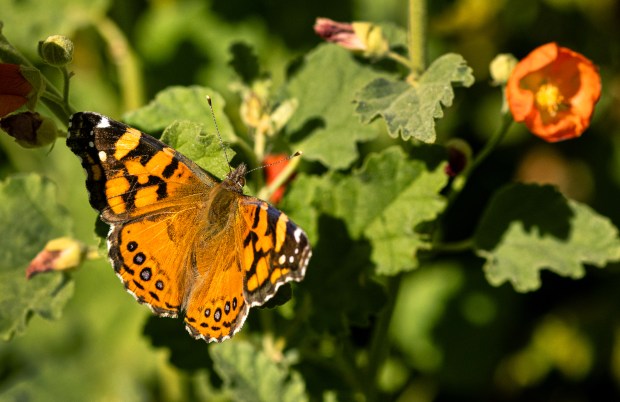
 A Vanessa annabella butterfly lands on a Sphaeralcea ambigua, ‘Desert globemallow’ in Kim Nielsen-Glynn’s Petaluma home garden, part of the Sonoma County Water Authority’s Eco-Friendly Garden Tour on May 9th, 2026. Photo taken Wednesday, April 8, 2026 in Petaluma. (John Burgess/The Press Democrat)
Sometimes the best source of inspiration is exploration.
This is basically the idea behind the 16th annual Eco-Friendly Garden Tour that comprises more than two dozen gardens across the region on Saturday, May 9.
The free event, sponsored by the Sonoma-Marin Saving Water Partnership, is a public outreach and education program that promotes sustainable landscaping practices by showcasing inspiring gardens throughout Sonoma and Marin counties.
The tour is self-guided, meaning garden-lovers seeking inspiration can hit as many or as few gardens as they wish between 10 a.m. and 4 p.m. A look at the official map on the partnership’s website indicates that most of the 26 participating gardens are in Sonoma County.
Chad Singleton, programs specialist for Sonoma Water, said the tour highlights Russian River-friendly and Bay-friendly landscaping best practices —practices that do not require much water. He added that most of the gardens feature native plants.
“There’s more and more interest in eco-friendly gardens with native or California-adaptive plants, which are low maintenance,” he said. “[The tour] is a way to see what’s possible.”
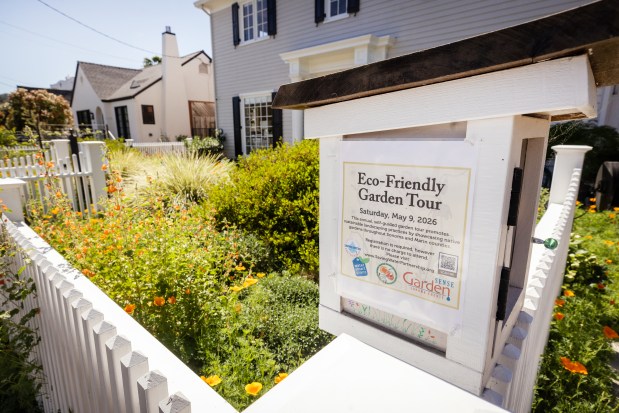 Pick up seeds from last year’s plants in Kim Nielsen-Glynn’s little seed library in front of her Petaluma home. The water-wise garden is part of the Sonoma County Water Authority’s Eco-Friendly Garden Tour on May 9th, 2026. Photo taken Wednesday, April 8, 2026 in Petaluma. (John Burgess/The Press Democrat)
What to expect
Participating gardens vary in size and nature — some are at private homes in Sonoma and Marin counties, while others are at commercial businesses. Many of the gardens were designed by professionals with Qualified Water Efficient Landscaper certifications, or by gardening zealots who have achieved Garden Master certification through the Sonoma-Marin Saving Water Partnership’s “Garden Sense” program.
According to Singleton, 20 of the 26 registered gardens are new to the program, which means garden-lovers who have participated in previous Eco-Friendly Garden Tours will be in for a slew of new approaches.
Roughly 4,000 garden-lovers are expected to take the tour, which means each garden should see 150-200 visitors over the course of the day.
Most participating gardens will feature signage about the tour; others will have sponsor tables at which guests can learn about specific plants, local landscaping companies, or regional, state, and federal programs that provide the foundation for each garden’s design. Some gardeners will even offer refreshments.
“It’s a full-day experience,” said Singleton. “We want people to leave feeling inspired.”
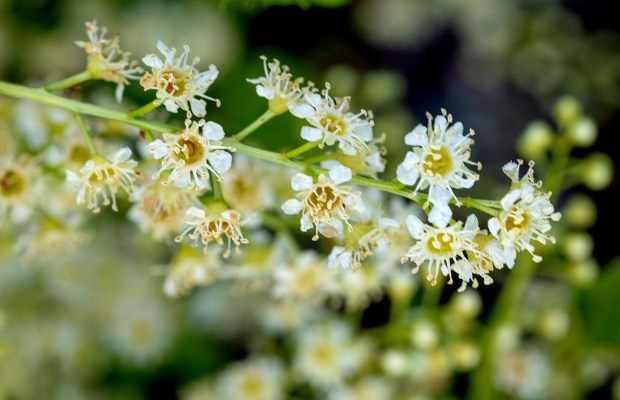 Flowering Prunus illicifolia in Kim Nielsen-Glynn’s Petaluma home garden, part of the Sonoma County Water Authority’s Eco-Friendly Garden Tour on May 9th, 2026. Photo taken Wednesday, April 8, 2026 in Petaluma. (John Burgess/The Press Democrat)
Going greenway
Of course, the biggest inspiration comes from bearing witness to beautiful landscapes and the people behind them.
One of the best spots in Sonoma County to do this: The 5th Street Greenway in Petaluma.
This project, designated in 2024, spans Fifth Street between Western and Mountain View avenues and is both a traffic-slowing initiative and a push to beautify the neighborhood. Three of the homes along the Greenway are participating in the 2026 Garden Tour.
Kathryn Shedrick owns one of those Greenway homes, and her front and back gardens are a testament to eco-consciousness. The front yard is exploding with color from native and drought tolerant grasses and perennials. In the back, there is a cornucopia of fruit trees — three different kinds of apples and six different kinds of citrus — as well as berry bushes, and artichokes.
“The goal was to create a food forest that could create all this produce we can eat,” Shedrick explained. “What we don’t consume ourselves we share with friends and neighbors or donate to those in need.”
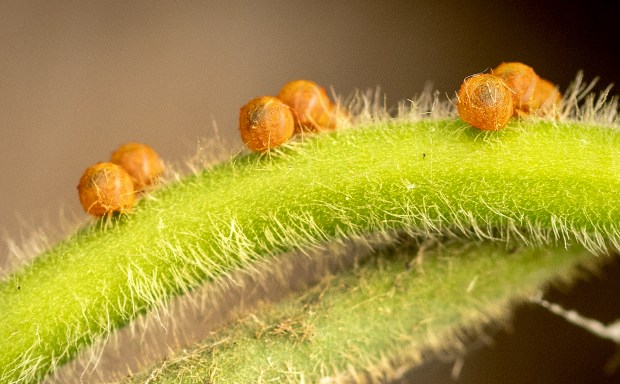 The California Pipeline Swallowtail butterfly lays their eggs exclusively on the California pipevine, Aristolochia californica, grown in Kim Nielsen-Glynn’s Petaluma home garden Wednesday, April 8, 2026 in Petaluma. (John Burgess/The Press Democrat)
Making gardens interesting
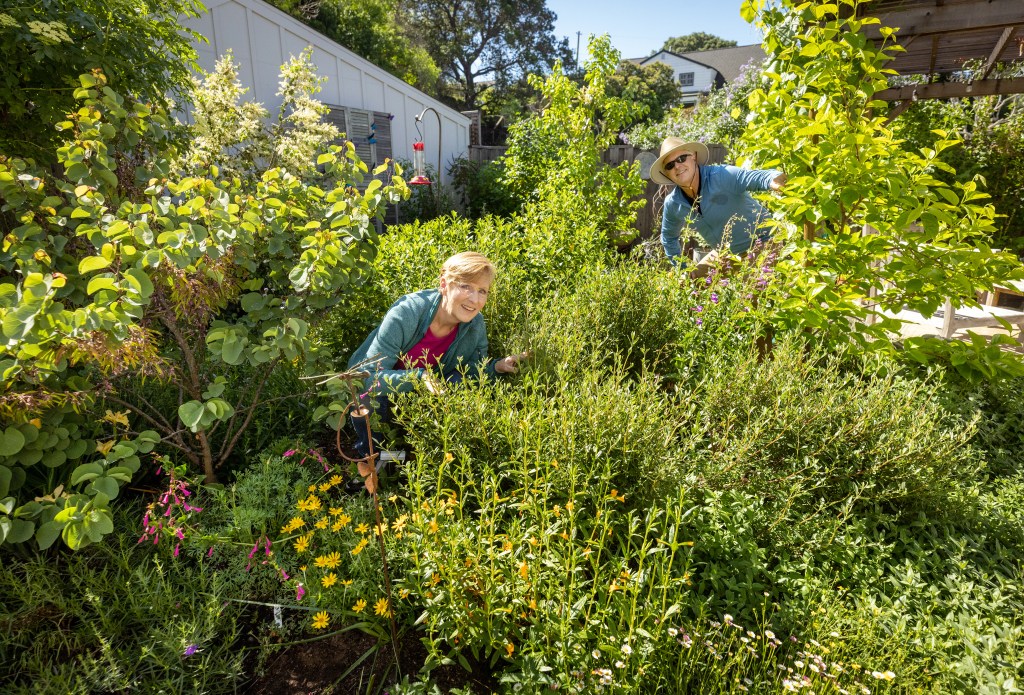
Caterpillars are a big part of the garden at the home of Kim Nielsen-Glynn and Brian Glynn, just down the Greenway in downtown Petaluma. The duo planted pipevine and other native plants in their backyard garden specifically to attract what Nielsen-Glynn called “big, chunky caterpillars.” After a few years, their plan worked.
“[Kim] knows exactly how many caterpillars there are in the garden at all times,” Glynn said.
The rest of the garden at the Glynn house comprises barrels that capture rainwater for irrigation, and composting bins with worms.
Nielsen-Glynn and Glynn also recently have started collecting seeds from the garden and sharing them in a little seed library out front. The seed packets are free for anyone who wants one.
“One of the points of this tour is to see the options out there,” said Nielsen-Glynn. “While the goal is making gardens eco-friendly, we also try to use things like the seed library and meandering pathways and [the composting program] to bring some interest into the garden and make it something special.”
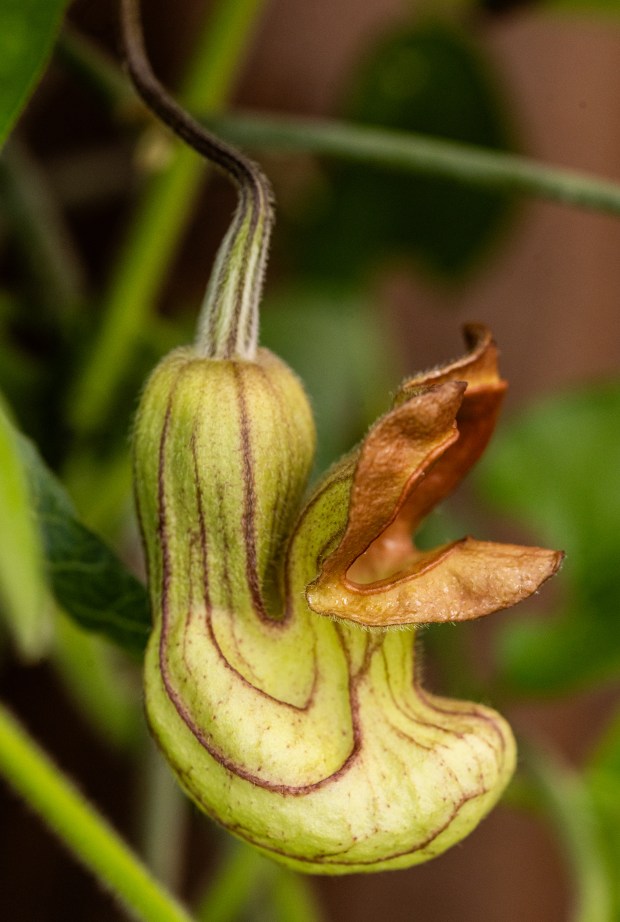 The California Pipeline Swallowtail butterfly lay their eggs exclusively on the California pipevine, Aristolochia californica, grown in Kim Nielsen-Glynn’s Petaluma home garden Wednesday, April 8, 2026 in Petaluma. The plant is named after the Holmes’-like pipe shape of the flowers. (John Burgess/The Press Democrat)
Evolution of a garden
In Santa Rosa, near Montgomery Village, garden-lovers can witness wisdom in full bloom at the home of Natasha Granoff.
There, her small urban garden comprises front and back yards dotted with native shrubs such as manzanita, lilac, coffee berry, and red flowering current, as well as perennial flowering natives such as yarrow, wooly sunflower, buckwheat, and seaside daisies.
The garden comprises several native grasses, too.
As Granoff explained it, except for her vegetable beds, the garden is not irrigated at all. Instead, she uses rainwater collected from the roof into tanks. Granoff said her current approach to gardening represents a perspective on landscaping that has evolved over 25 years.
“I began with more non-natives than natives in the yard, but as I learned more about the declining habitat and intimately entwined ecosystems of plants, insects, and animals, I wanted to create a small piece of urban habitat,” she wrote in a recent email. “If the garden inspires others, I feel I’m doing a small part to increase and support biodiversity.”
Where to learn more
The Eco-Friendly Garden Tour takes place from 10 a.m. to 4 p.m. Saturday, May 9. To learn more, visit the tour’s website: https://www.savingwaterpartnership.org/eco-friendly-garden-tour.

The California Pipeline Swallowtail caterpillar eat away the leaves of the the California pipevine, Aristolochia californica, grown in Kim Nielsen-Glynn’s Petaluma home garden Wednesday, April 8, 2026. (John Burgess/The Press Democrat)

Douglas iris in Kim Nielsen-Glynn’s Petaluma home garden, part of the Sonoma County Water Authority’s Eco-Friendly Garden Tour on May 9th, 2026. Photo taken Wednesday, April 8, 2026 in Petaluma. (John Burgess/The Press Democrat)

The California Pipeline Swallowtail butterfly lays their eggs exclusively on the California pipevine, Aristolochia californica, grown in Kim Nielsen-Glynn’s Petaluma home garden Wednesday, April 8, 2026 in Petaluma. (John Burgess/The Press Democrat)

Flowering Sambucas mexicana in Kim Nielsen-Glynn’s Petaluma home garden, part of the Sonoma County Water Authority’s Eco-Friendly Garden Tour on May 9th, 2026. Photo taken Wednesday, April 8, 2026 in Petaluma. (John Burgess/The Press Democrat)

Three different varieties of California poppy in Kim Nielsen-Glynn’s Petaluma home garden, part of the Sonoma County Water Authority’s Eco-Friendly Garden Tour on May 9th, 2026. Photo taken Wednesday, April 8, 2026 in Petaluma. (John Burgess/The Press Democrat)
Show Caption
1 of 5
The California Pipeline Swallowtail caterpillar eat away the leaves of the the California pipevine, Aristolochia californica, grown in Kim Nielsen-Glynn’s Petaluma home garden Wednesday, April 8, 2026. (John Burgess/The Press Democrat)
Expand
Comments are closed.