👉 Join the Garden Guru Membership for the complete edible weed guide, wild food cultivation guides, and premium growing content: https://www.youtube.com/channel/UCHrgPLU1vk4dR3DVKuEoLqg/join
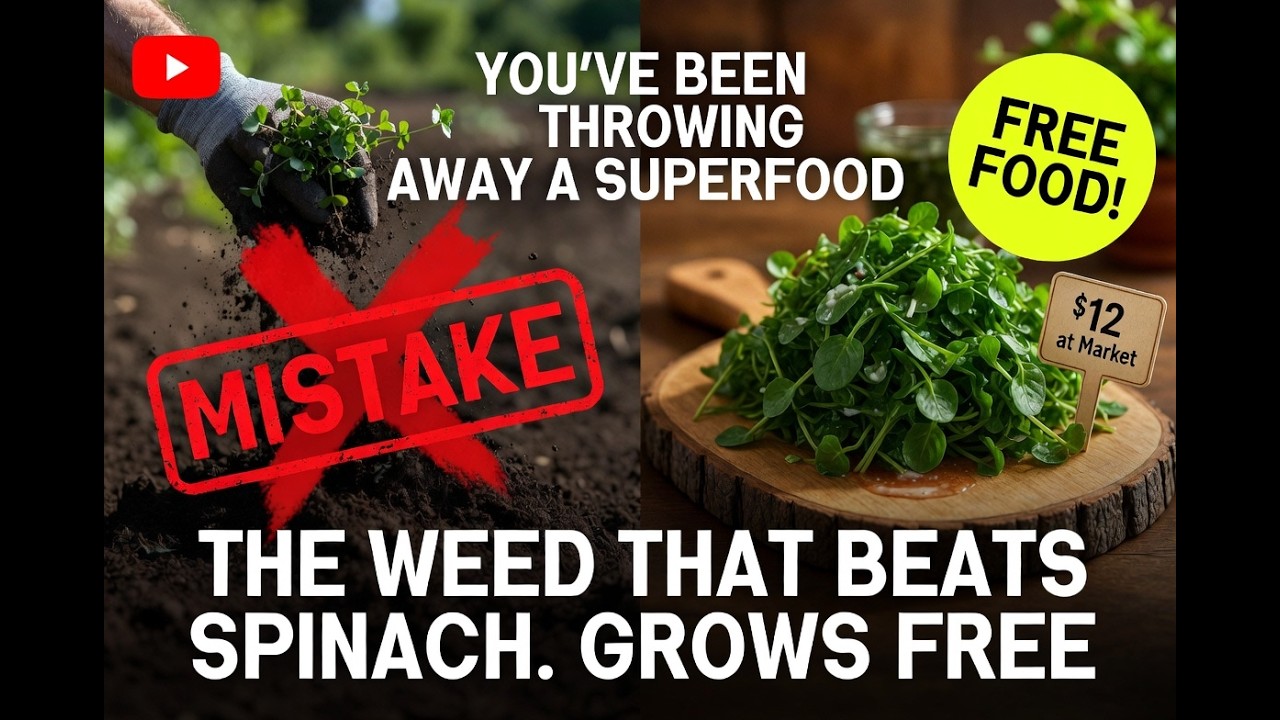
The plant you pull from your garden beds through autumn and winter and add to the compost pile is one of the most nutritionally complete salad plants available in the temperate food garden — providing vitamin C comparable to spinach, meaningful iron, calcium, magnesium, zinc, folic acid, and anti-inflammatory flavonoid compounds. It grows without being planted, produces through winter when other salad crops require heated structures, and its mild, slightly succulent flavor works raw in salads or lightly cooked as a pot green. You have been composting it. The food industry classified it as a weed because it cannot be packaged and sold.
In this video: chickweed’s full nutritional profile against commercial salad crops, the historical documentation of its use as a food and medicinal plant in European herbals from the medieval period through the seventeenth century, the managed cultivation system that produces reliable winter harvests rather than depending on random garden appearances, cut-and-come-again harvesting technique for continuous production, the living mulch function that protects soil surface while remaining harvestable, and the broader lesson about the commercial reclassification of freely available nutritious plants as weeds.
#chickweed #edibleweeds #gardeningguru #freefood #wintersalad #forageablegarden #wildedibles #nutritioussuperfood

Comments are closed.