
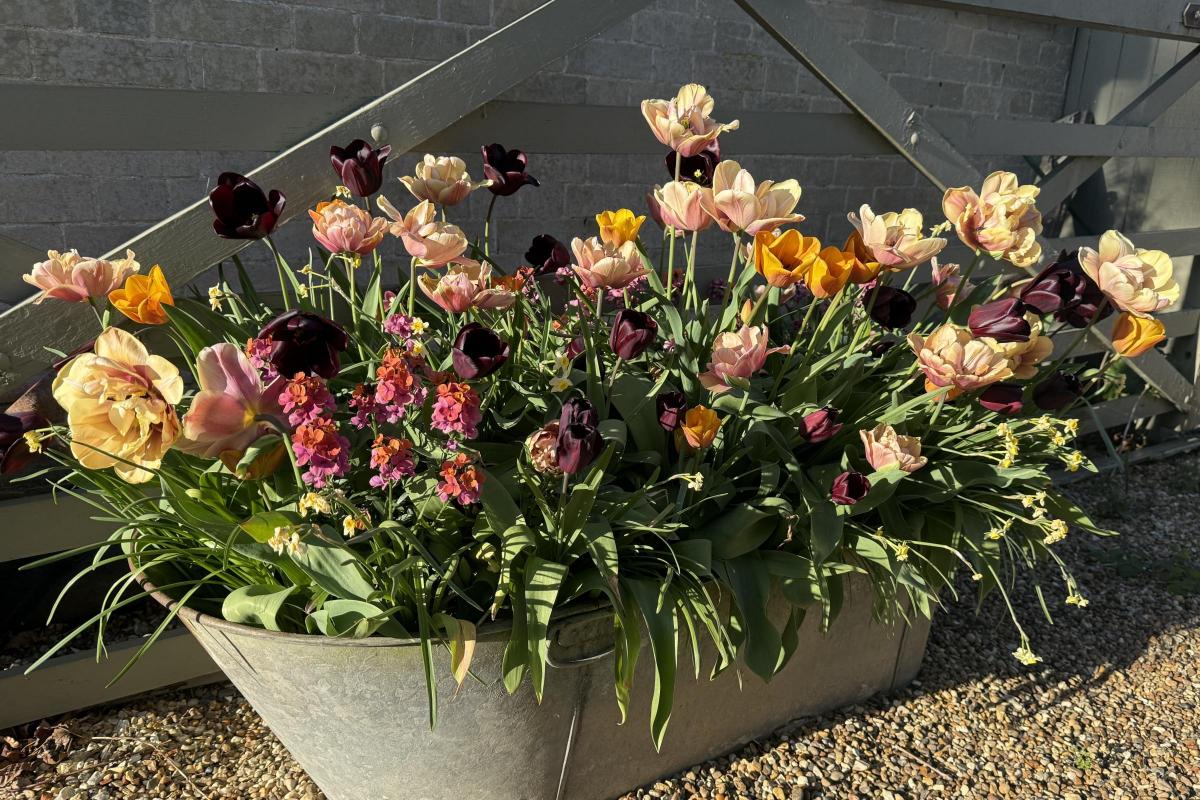
The slow, wet start to spring has given way to some really warm weather and everything seems to be rushing to flower all at once.
Peonies are not only up out of the ground, some of them are in bud. Crab apples are in full blossom, the later flowering narcissi are suddenly ready cut and the first magnolias have a carpet of spent flowers at their feet while the late ones are looking fabulous.
The constant rain of the early months of the year has disappeared and if you have bulbs and other plants in pots you are probably watering them regularly now.
Our greenhouse water butts, which were overflowing a couple of weeks ago, are now half empty and we are hoping this dry weather does not presage the kind of drought we had last year.
In the meantime, we have taken every opportunity to get out into the garden and get on with the growing number of jobs at this time of year.
Beech hedge and cherry blossom (Image: Ruth Darrah)
Annual, ephemeral, weeds such as shepherd’s purse and hairy bittercress have been growing like, well, weeds. They are already in flower and in some cases have set seed.
This is the moment to remove them (gently, in case the seed heads are about to explode) and prevent them spreading further through your beds and paths.
This week we planted up a couple of alpine troughs. They are old, shallow Belfast sinks, which are ideal for alpine plants which don’t like sitting in damp soil.
Some of the plants are ones we have grown, but we have added some new ones and placed the troughs on a brick base which was built by students on a Basic Bricklaying course last year.
We’re hoping they will be back soon to see their work being put to such great use.
For the moment there is no frost in the forecast, and seedlings are growing well in the greenhouses.
My home office floor is slightly less full of seed trays and pots as the weeks go by, and the first annuals have been planted out.
We sowed sweet peas back in the autumn and they grew well, forming really good root structure as well as lots of foliage.
We had pinched them out a couple of times and were looking forward to lots of highly scented, colourful flowers in a few months’ time.
Sadly disaster struck during the spell of hot weather some weeks back. Some of the plants were on a shelf in the greenhouse with no shade from the blinds and they were scorched.
We lost almost half our plants and are having to start again from scratch. The upside will be a longer flowering period, we hope.
There are some excellent courses coming up which still have spaces. Let us know if you’d like to join one of these:
Sustainable Cutting Garden – April 22
Basic Bricklaying – April 30
Gardening Under Glass – May 6
Advanced Practical Gardening – May 7
Sustainable Cutting Garden – June 3
Plant of the Week:
Pyrus salicifolia ‘Pendula’, the weeping pear, is a graceful ornamental tree native to the Middle East.
It is prized for its elegant, arching branches and narrow, silvery-grey leaves that give a soft, shimmering effect in the garden.
In spring, clusters of small white flowers appear, followed by small, hard pears which are generally considered inedible.
Slow-growing and typically reaching around 4–7 metres, it makes an excellent specimen tree for lawns or large borders. Grow in full sun and well-drained soil.
Drought tolerant once established, it requires little maintenance—simply remove any dead or crossing branches to maintain its shape.
Contact us via www.norfolkschoolofgardening.co.uk or follow us on Instagram or Facebook.
Comments are closed.