
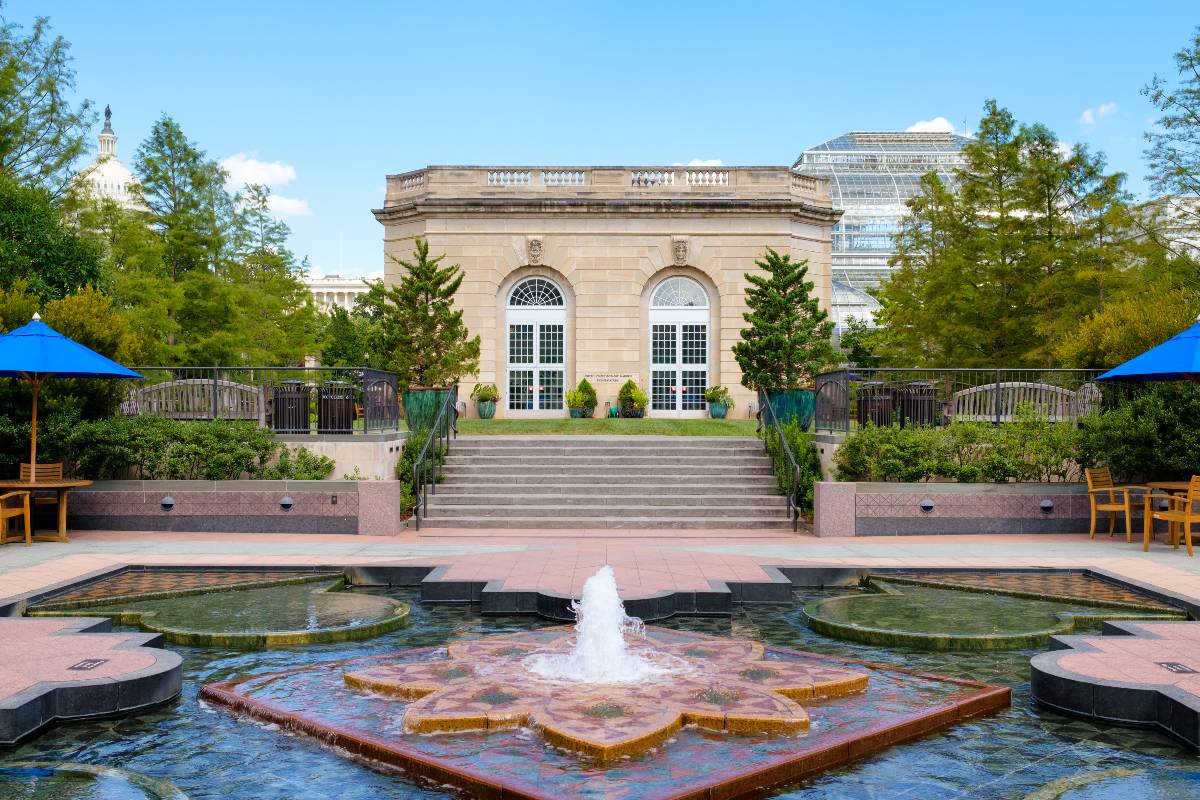

In honor of America’s birthday this year, with the nation officially celebrating its 250th birthday, the U.S. Botanic Garden has opened a celebratory exhibit that displays the official flowers from all U.S. states and territories.
The exhibit, which formally opened on Friday, April 10th, will be on display for several months before concluding on Monday, October 12th.
You’ll be able to see the official flowers of each state and territory throughout the Botanic Garden’s property for free, along with “living plants, artistic displays, botanical illustrations, and herbarium specimens”.
What are the official flowers of all U.S. states and inhabited territories?
In total, there are 56 official flowers included in the display; there are 50 flowers that each officially represent one of the states, and there are 6 flowers that officially represent the United States’ 5 inhabited territories and the District of Columbia.
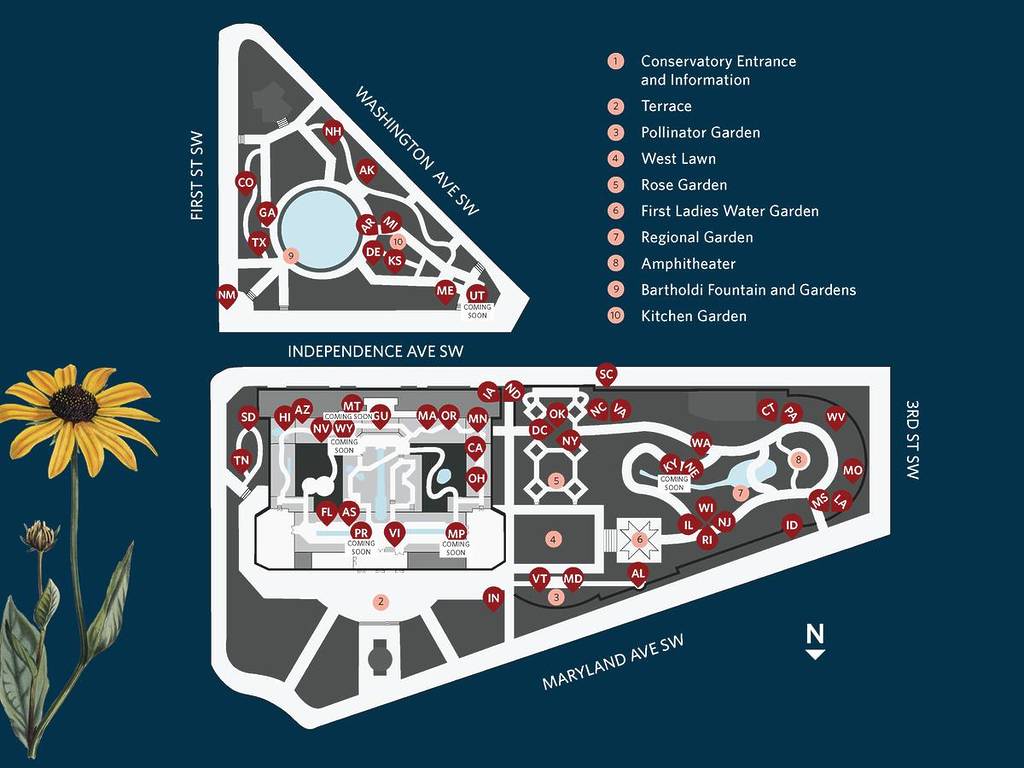 Via The U.S. Botanic Garden
Here are the flowers that represent each state:
Alabama – camellia (Camellia japonica)
Alaska – forget-me-nots (Myosotis asiatica)
Arizona – saguaro (Carnegiea gigantea)
Arkansas – apple blossom (Malus spp.)
California – California poppy (Eschscholzia californica)
Colorado – columbine (Aquilegia coerulea)
Connecticut – mountain laurel (Kalmia latifolia)
Delaware – peach blossom (Prunus persica)
Florida – orange blossom (Citrus)
Georgia – sweetbay magnolia (Magnolia virginiana)
Hawaii – ma‘o hau hele (Hibiscus brackenridgei)
Idaho – syringa (Philadelphus lewisii)
Illinois – violet (Viola spp.) Indiana – peony (Peonia)
Iowa – wild rose (Rosa sp.)
Kansas – sunflower (Helianthus annuus)
Kentucky – goldenrod (Solidago spp.)
Louisiana – magnolia (Magnolia grandiflora)
Maine – white pine cone and tassel (Pinus strobus)
Maryland – black-eyed Susan (Rudbeckia hirta)
Massachusetts – mayflower (Epigaea repens)
Michigan – apple blossom (Malus spp.)
Minnesota – pink and white lady’s slipper orchid (Cypripedium reginae)
Mississippi – magnolia (Magnolia grandiflora)
Missouri – hawthorn (Crataegus spp.)
Montana – bitterroot (Lewisia rediviva)
Nebraska – goldenrod (Solidago spp.)
Nevada – sagebrush (Artemisia tridentata and A. trifida)
New Hampshire – purple lilac (Syringa vulgaris)
New Jersey – violet (Viola spp.)
New Mexico – yucca (Yucca spp.)
New York – rose (Rosa spp.)
North Carolina – American dogwood (Cornus florida)
North Dakota – wild prairie rose (Rosa spp.)
Ohio – scarlet carnation (Dianthus caryophyllus)
Oklahoma – Oklahoma rose (Rosa ‘Oklahoma’)
Oregon – Oregon grape (Berberis aquifolium)
Pennsylvania – mountain laurel (Kalmia latifolia)
Rhode Island – violet (Viola spp.)
South Carolina – yellow jasmine (Gelsemium sempervirens)
South Dakota – pasqueflower (Pulsatilla spp.)
Tennessee – iris (Iris spp.)
Texas – bluebonnet (Lupinus spp.)
Utah – sego lily (Calochortus nuttallii)
Vermont – red clover (Trifolium pratense)
Virginia – American dogwood (Cornus florida)
Washington – coast rhododendron (Rhododendron macrophyllum)
West Virginia – rhododendron (Rhododendron maximum)
Wisconsin – violet (Viola spp.)
Wyoming – Indian paintbrush (Castilleja linariifolia)
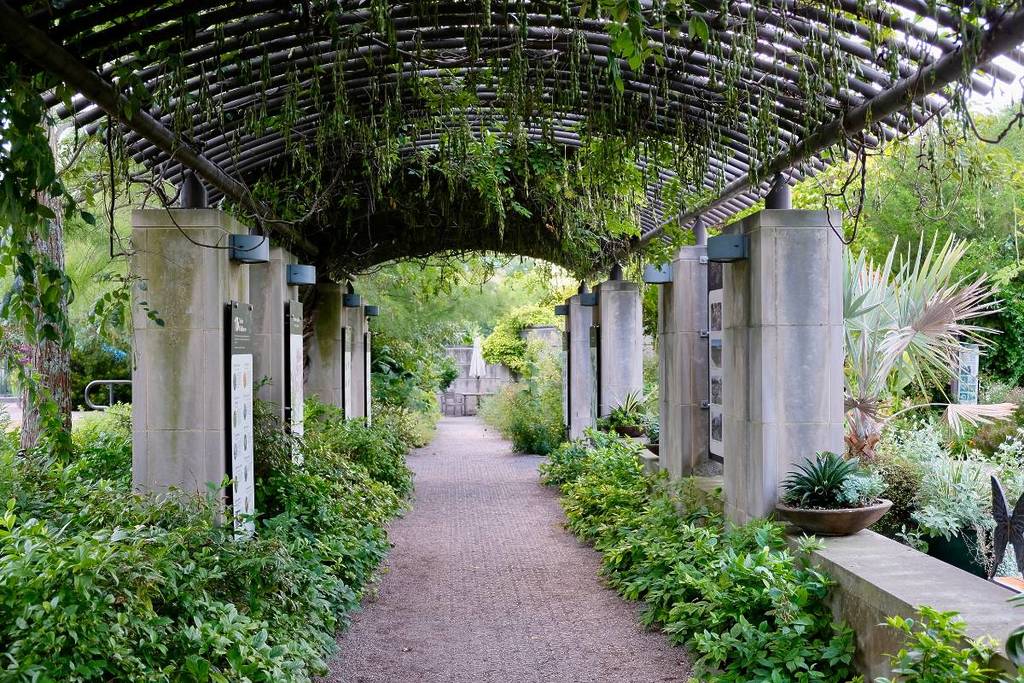 Sara Cottle / Unsplash
Here are the flowers that represent each inhabited U.S. territory + the District of Columbia
District of Columbia – rose (Rosa ‘American Beauty’)
American Samoa – paogo (Pandanus tectorius)
Guam – puti tai nobio (Bougainvillea spp.)
Northern Mariana Islands – flores mayo (Plumeria spp.)
Puerto Rico – flor de maga (Thespesia grandiflora)
US Virgin Islands – yellow elder (Tecoma stans)
When is the best time to visit the U.S. Botanic Garden?
There is not necessarily a bad time to visit the exhibit, but the U.S. Botanic Gardens certainly draws larger crowds on the weekends, particularly in the afternoon, which means that the best time to visit if you want to avoid crowds is either during the week or early in the morning.
While there are no explicitly scheduled no/low stimulation hours for visitors who struggle with sensory sensitivities, there are sensory bags and resources available in the Conservatory Lobby for those who need them.
Comments are closed.