
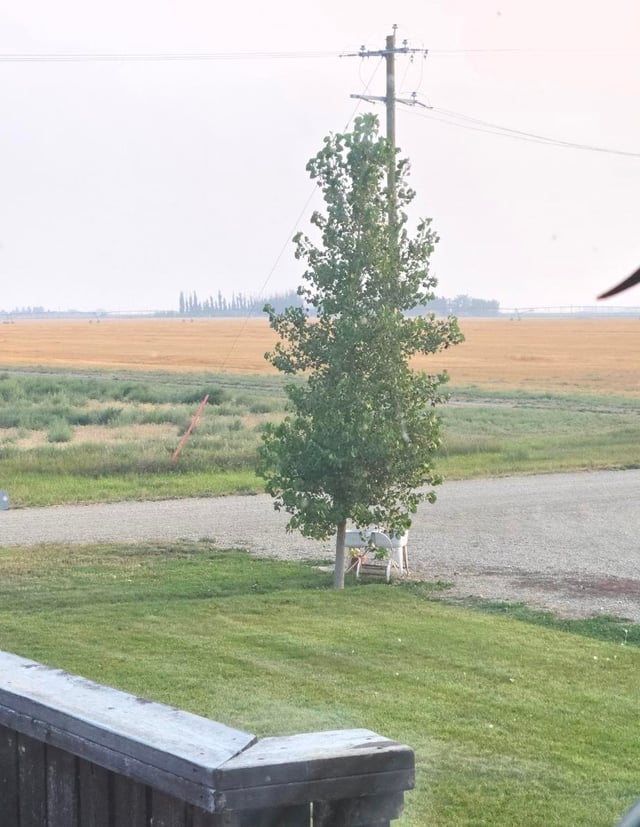
We moved to an acreage in the fall (from in town) and have found that we are located in a significantly windier area then previously thought. I guess we were spoiled in town by other buildings and trees and never noticed it as much lol. The trees on the north, west, and south perimeter were all planted approximately 10-12 years ago and are the same height. On the west side they are approx 60 ft from the house. Not entirely sure on what they are, maybe an elm, I attached a picture of one for reference.
Located in Southern Alberta, surrounded by farm fields and only a couple kilometers to the west of a large amount of hills that I think just funnels the wind right at us, growing zone 4b.
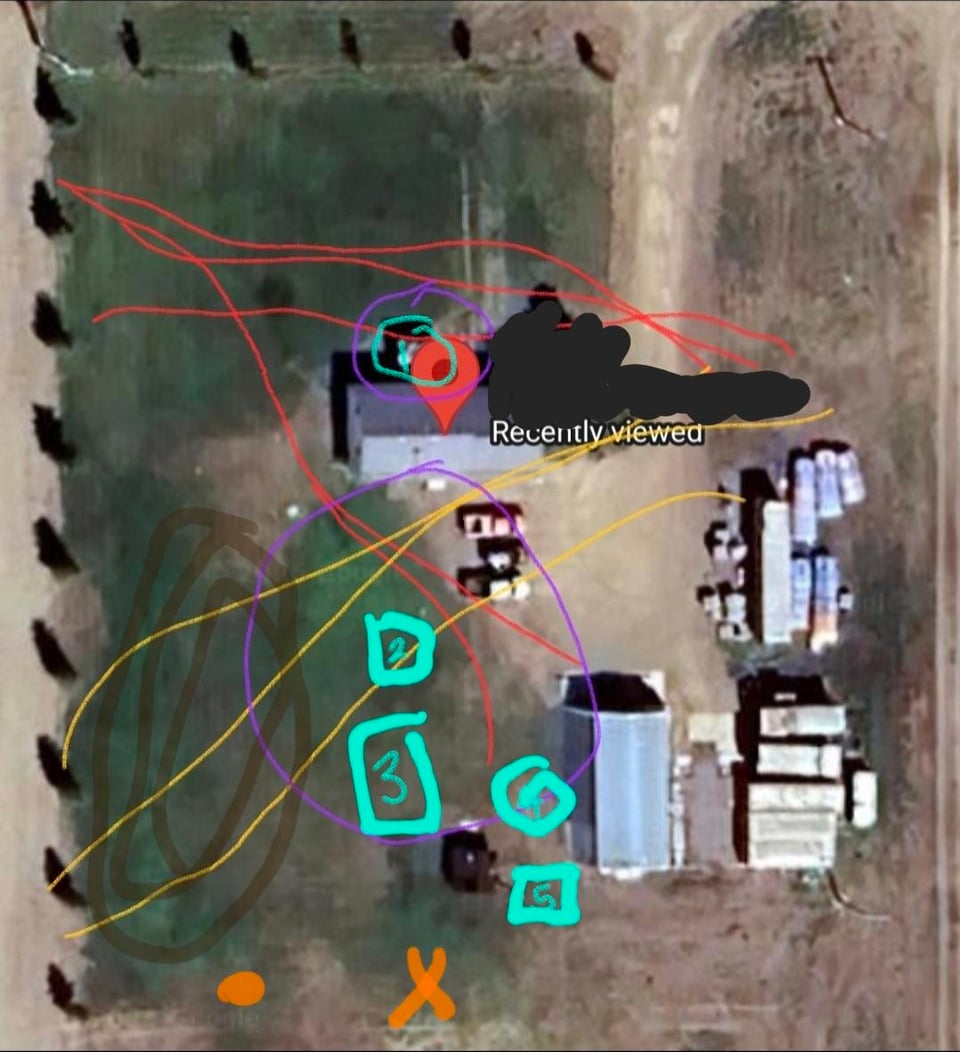
Red lines – Our main wind comes from the N/NW
Yellow lines – Second worst wind direction usually comes from the S/SW
Brown swirly area – septic field (white circle is septic tank access)
Orange circle is a tree, orange x is a tree that blew over in our crazy winds this winter and gone.
Purple circles – the main living areas in the yard. Which basically are where all the worst wind is or converges together.
Teal circles –
1 (top) large front deck area where our actual front door is and we bbq.
2 where we would like to put our firepit area.
3 where im building a large raised/enclosed garden (16'x16'). I do plan on putting a privacy screen type thing around the perimeter which should help protect some of the garden from the wind)
4 our above ground pool.
5 where a metal shed will be placed (hopefully? If not then an old camper will be parked there. Something to block the pool from south weather)
We plan on planting trees this year and next, its a rental but we have freedom to plant whatever. And we dont ever plan on moving again if we dont have to (nor does the landlord want to go through the process of finding new tenants again. We basically agreed we will all grow old together lol). So we are planning for long term.
I do want to put some fruit trees in (at least 2 apple for sure). Was thinking along the south tree line to fill in where the tree is gone, with better wind protection until the roots really take hold. I think we need to plant a tree or something in the northwest corner somewhere maybe, like halfway between the house and current tree line? Maybe some lilacs somewhere. In the back I'm not really sure what to plant/where to help mitigate some of the wind for the firepit area, and back of the house in general to make it more enjoyable. We do plan on putting a fence along the line separating the grass from driveway parking area for a wind and snow break for where we park.
We are looking for any other suggestions or maybe experience from others who live in super windy areas of types of trees to plant that are wind and winter hardy. Fast growing preferably. We dont really want something with berries that will be messy to clean up (because we already will have the apple trees to deal with). What have you found that worked or didnt and what to avoid?
by thatgirl555
6 Comments
For winter winds you really want conifers. Two rows on alternating 16′ centres. If you want fast growing go with hybrid poplars or willows but you won’t get the winter wind protection. Siberian pea shrub is a prairie classic for a reason. It will fill in any gaps and make a solid hedge.
Unfortunately there’s not great options for productive fast growing windbreaks. Maybe mulberry or little leaf linden but they don’t really fit your context. If you really want to long game it plant korean nut pine and have a nurse tree windbreak until those fill in (it should only take 30-40 years)
Looks like you have hybrid poplars. Fast growing but short lived. Typically used to establish shelter as quickly as possible while the better trees establish behind them. The classic layout is a row of caragana then a row of poplars and a row of spruce behind them, but given your limited space I’d think your best option would be alternating spruce between the poplars, would’ve been a good plan 10-12 years ago but whatever. You need to plan spacing for their mature width but you can always plant denser now then thin them out later to allow them to fill out properly. The poplars are already well spaced for the future. It’s hard to tell from the photo but it looks like you might have space to plant 2 spruces per gap.
If you’re against spruce for whatever reason then alternating shelterbelt willow species like golden, acute, or silver willows between the poplars would be a good bet, they’re quite wide and bushy and quick growing, they’d fill in the gaps between the poplar trunks and make a solid screen lower down while the poplars will eventually join crowns and form a solid screen way up high, they compliment each others architecture nicely.
The good ol reliable workhorse spruce species on the prairies are white spruce, colorado blue spruce, Norway spruce (my personal fav for aesthetics). You can do pines too depending on your soil but they’re much thinner and more permeable to wind. There’s of course room to experiment with more interesting species but these should be your meat and potatoes if you want to be successful.
Juniper make good windbreaker, drought tolerant. Deer dont touch em. Tough as nails
If you want just a tree, common spruce seeded close to each other should be good option. In my place they are used to protect roads from the blown snow from the field. If you want a bush then sea-buckthorn should be suitable.
Thuja is also popular in my place for the wind protection, but it doesn’t grow fast, same as source.
Where do the roosters go?
My property is really windy, too and what I’ve learned over the last 5 years is to first think small, then think big. Start with creating small, strategic wind protected areas (just for the garden or just for the orchard) by making three layered “hedgerows” first layer is a mid sized medium dense hedge. Second layer is a 6 foot fence with a strong vine. Third layer is a medium dense fruiting hedge. I’m not in your zone but how I did it for my orchard is banana, grape, feijoa/loquat. For my garden it’s olive/mulberry, grape. It’s taken a while but now that it’s filled in it’s perfect. You want some filtered wind to come through, but not much. When I plant a tree I build a pallet box around it. As the tree grows the wind stress through the pallet boards is not too much but forces the tree to root and grow a thicker trunk. By the time it’s taller than the box it’s ready for the box to be removed.
I have found that ChatGPT is really good for helping with this kind of planning and can help you with plant selection and design. I had already built mine when I asked ChatGPT about it but it gave me some tips and suggestions that were super helpful. Like where to plant additional trees.