
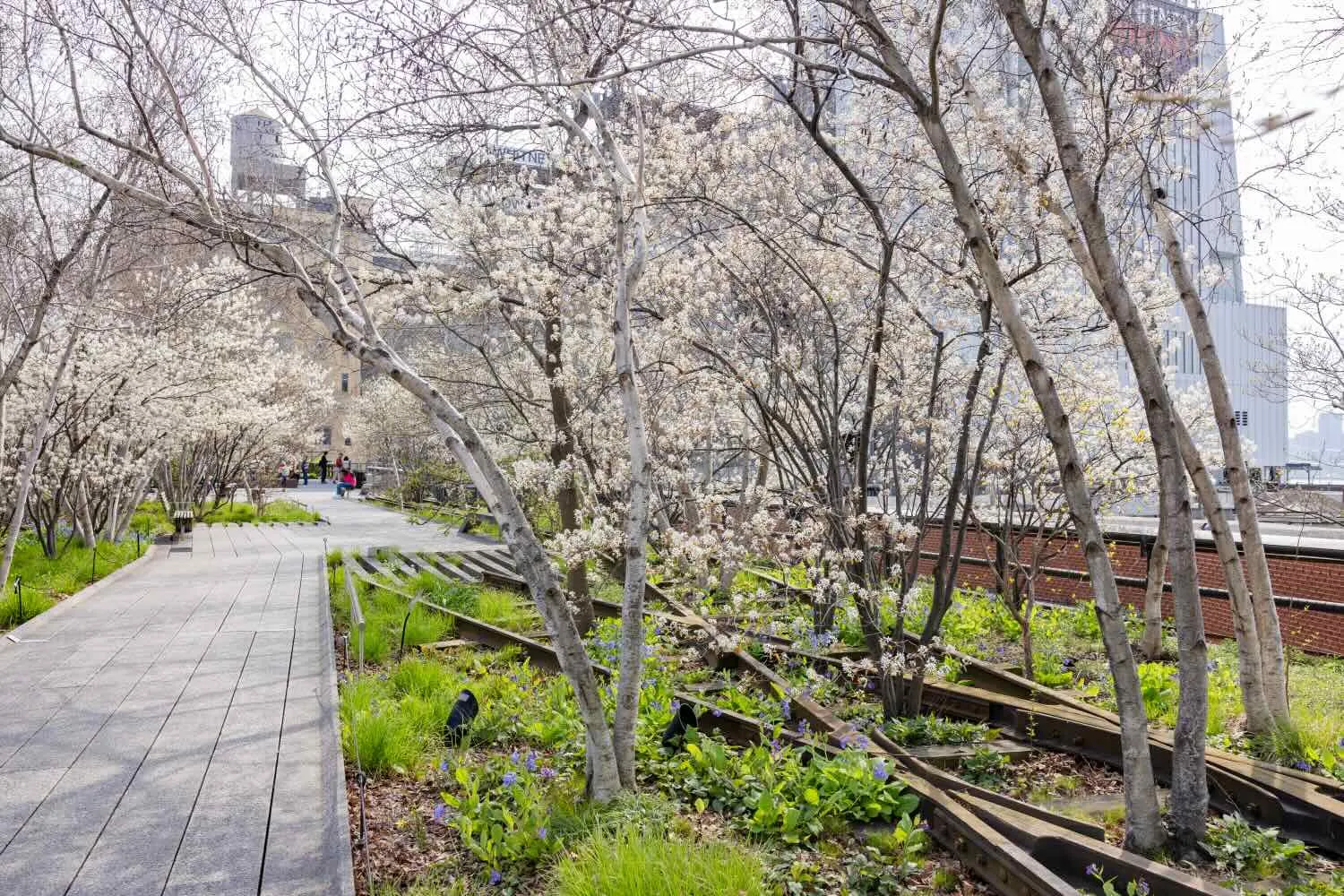
 BOTH GARDENERS and their plants have to be more resilient than ever these days in our changing climate it seems. At the High Line in New York City, one of the best-known naturalistic gardens anywhere, that’s especially so, since it’s built on the preposterous site of a former rail line, 30 feet above street level, meaning a plant must be an exceptional performer to make the grade.
Richard Hayden, the High Line’s Senior Director of Horticulture, talked to me about the plants that excel in different extremes of moisture, for instance, or in shade, or offer the most ecologically, and about how the team is using certain species to create weed-suppressing living green mulch, and also shifting their thinking about gardens as ecological communities rather than a collection of plants.
Richard joined the High Line four years ago to lead the team that manages the mile-and-a-half-long stretch of gardens, with two new areas set to open this year.
Also: On Saturday, May 30, the High Line is holding its first-ever plant sale with 39 different species the team has propagated from the garden—some of those top performers, and the roles they play in making the High Line work aesthetically and ecologically.
Read along as you listen to the April 20, 2026 edition of my public-radio show and podcast using the player below. You can subscribe to all future editions on Apple Podcasts (iTunes) or Spotify (and browse my archive of podcasts here).
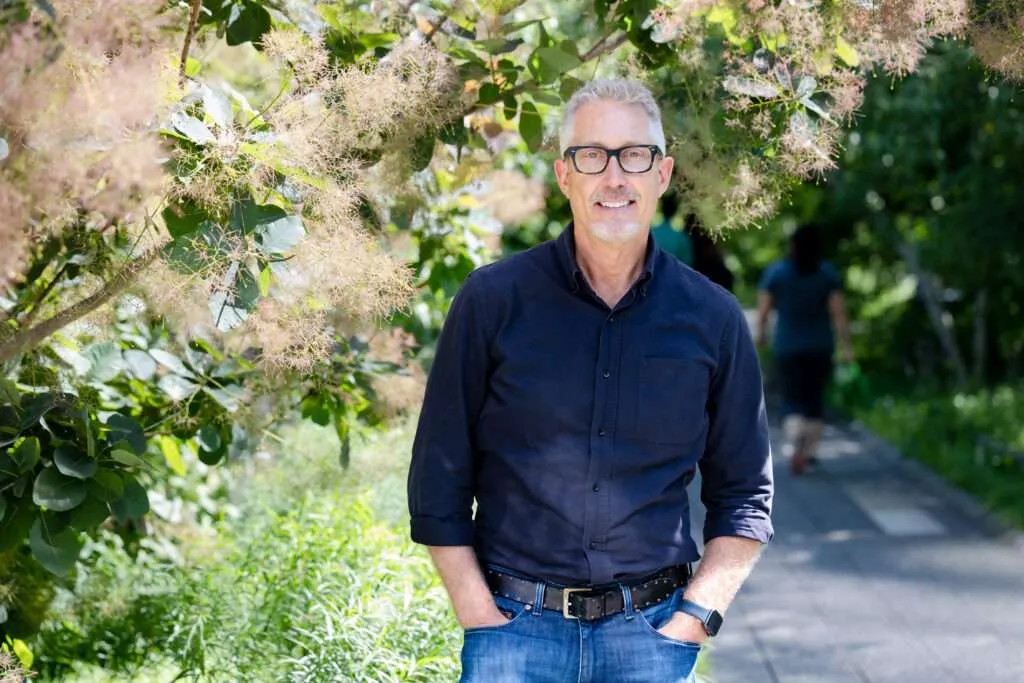
(Photos above of Amelanchier in bloom at the High Line, and below of Richard Hayden, by Liz Ligon.)
 star plants of the high line, with richard hayden
Download file | Play in new window | Duration: 00:26:35
Subscribe: Apple Podcasts | Spotify
Margaret Roach: Happy spring, or is it summer this week? I kind of have whiplash [laughter].
Richard Hayden: Oh my gosh. We’ve got four days this week above 80 degrees in New York City. So we went from winter, two days of spring, and now we’re into full-blown summer. So we’re scrambling to getting everything ready for the upcoming year.
Margaret: Yeah. As I said in the introduction, I know you’ve told me that you and the High Line horticulture team are thinking about gardens as ecological communities rather than a collection of plants. So can we talk about that just a little to get started? Because I think that’s an interesting mindset. And how does that mindset shift affect you guys and the place?
Richard: Well, the interesting thing is that when they were first designing the High Line and the gardens, Piet Oudolf, our garden designer, worked with the design team, and they came up with this framework of using ecological habitats as a design framework. So we have woodlands, we have grasslands, we have woodland edge, and we have a wetland.
And so by using those as a framework, obviously you can create this episodic journey that gives you a different emotional experience as you come out of the woodland, into the grassland, and seeing the wetland with the Hudson in the background. It’s just a way to tell the story, but it’s also a really good way of building a garden that will support each other; all the plants have cultural needs. And so it just makes, I think, for a much more evocative experience.
Margaret: And so when you’re looking at an area or you have a new area that you’re going to plant—I know you have a couple of new portions of the place of the park opening this year—I mean, is that part of the thinking? Do you all talk about that? Do you know what I mean? Do you talk about the plant communities; do you do homework [laughter] on the plant communities?
Richard: Well, we do. And of course, we’re not 100 percent native. Piet likes to say that gardens are for people, and so he wants to use the best combination of plants that he can put together that fit within that ecological habitat. So we have a couple of new gardens coming, since you mentioned that. At 17th Street, we had a big construction project going on for nine years, and those gardens kind of went fallow, because we can’t garden in those beds because there’s buildings going on next door that could basically drop a window or something on you.
So after nine years, we finally had a chance to renovate that particular section. And I asked Piet to do a brand new design for us. And so that’s kind of based on a grassland. He’s using a new grass for us, which is Sporobolus airoides, alkali sacaton—it’s actually a West Coast species—as a kind of matrix. So that’ll be a new kind of grassland. And we’re getting 15 brand new brand new plants for the High Line in that design.
And then up at 34th Street, where it’s the very north end of the park, we’re getting a new walkway in the western railyard section, which if people know is the original kind of self-seeded landscape; it’s not one of the design landscapes.
But at the very north end where people come in, we kind of felt like it needed to be more special, because people come to the High Line—they look on Google Maps or something and they see entrance to the High Line, and they come in up at 34th Street. And frankly, it’s just a little bleak. So Piet has done a brand new garden for us there. And because we want to block out the street and the bus stop and the parking lot, he’s designed that as kind of a woodland-edge kind of thicket. So lots of shrubs, lots of flowering spring shrubs, lots of viburnums, redbuds. Actually, I think it’ll be a great bird garden because there’s going to be-
Margaret: I was just going to say, the birds miss the shrubs; the shrub layer is what we’ve really gotten rid of in so much of our world, and that’s so important for them, not just for … It’s both for places to hide, places to nest, stuff to eat, pollinators then use it and the birds go after the bugs that are going after the flowers. So the shrubs are so important.
Richard: And lots of fall berries.
Margaret: Exactly.
Richard: Because Piet is all about the seasonal look. So we’ll have lots of great-looking fall berries—many natives, by the way—which will provide that nutritious seed for that migrating bird to fatten up and be able to make it south.
Margaret: Well, when you were talking a minute ago about the West Coast grass species that you said you were using it as a matrix, so let’s just dip into that. Because that’s another word that I think people hear lately: matrix plantings. And it’s sort of like, what is that? And obviously not in the advanced landscape architect’s description from the textbook, but to you, what’s a matrix? What is that?
 Richard: Sure. So I think the way Piet Oudolf uses the term, it’s designing in drifts and designing in layers. So often—and it works both in woodlands and in grasslands—we’ll have a couple of groundcover species that become what we call the matrix, and they’re repeated and they play well with others. They’re not super-competitive, but they just create what we like to call a green mulch. They cover the ground, they provide some interest, but they really provide kind of a stage for these other perennials to come up through and perform and do their thing, and then maybe recede.
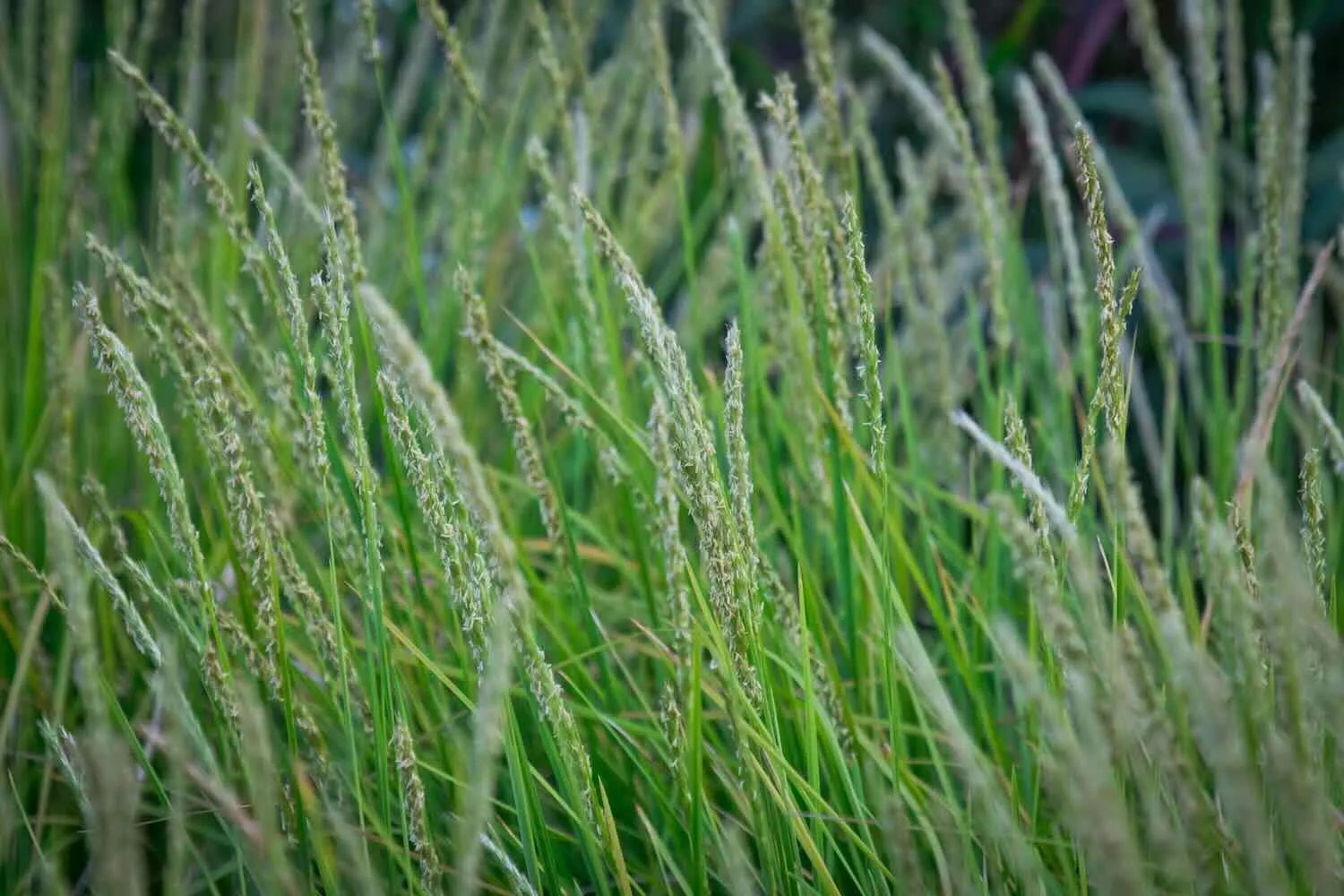
The matrix works really well, for instance, with spring bulbs, because for instance, right now, let’s say we’ve got some little species tulips and some little tender Narcissus out in the garden. And as the matrix comes up, which in many cases can be things like autumn moor glass, Sesleria autumnalis [above, photo from the High Line] or it could be Calamintha; there’s a sterile species that we use. And as those come up, then the bulb foliage gets to wither down inside and you’re not aware of that withering bulbs.
So it’s just a way of thinking about covering the ground. Mother nature, we know, abhors a vacuum. So anytime that there’s an opportunity for weed seed to get in, it will. So we like to cover it with plants that we like.
Margaret: I think it was in a book maybe with Noel Kingsbury, I think Piet and Noel, I think they made the analogy of that the matrix is the fruitcake and the showier plants are the pieces of fruit and nuts that are mixed into the batter or something like that [laughter]. I don’t think I made that up. I think that was from a book they did. Didn’t they collaborate on a book?
Richard: They did. Yeah.
Margaret: So I think it was from that book, a fruitcake analogy. So there’s the batter, there’s the main, the foundation, but there’s also these yummy bits that show off here and there.
And I remember years ago being told by Claudia West of Phyto Design, she said, “Margaret, plants are the mulch; plants are the mulch.” And so that’s that green mulch idea. And besides, as you were just explaining, that it hides some things, it can conceal some things that are going out of bloom and so on and so forth, it also minimizes some maintenance if it’s well executed, doesn’t it? I mean, doesn’t it help weed suppression and other things?
Richard: Yeah, and it will actually help conserve moisture in some situations, too. Sesleria, the autumn moor grass, is a good example. It doesn’t really seed around for us. It just creates this beautiful kind of 8- to 12- to 15-inch-tall, green, feathery understory. Blooms in the fall, kind of looks beautiful; has a beautiful kind of limey-green… Because Piet’s very much about leaf texture and leaf color, and flowers are just one small aspect of the way he designs. So when you’ve got these just great bulwark plants that always are going to look good, it just gives a really nice opportunity for everything else to emerge up out of it.
 Margaret: So in the introduction, I was speaking about how all of us, wherever we’re gardening, it’s getting a little crazier by the minute [laughter]. And plants are being put to the test and things that might’ve worked at a certain point if you’ve been gardening a long time in a space don’t perform exactly the same way and so forth. But you’ve identified some plants that are really working well for you despite your extra-challenging site; really a very exposed site.
And some of those are going to be featured in your plant sale on May 30; I can give all the links how people can find out about that special day. And I know you’re going to have some garden talks, some plant talks and a Q&A booth or whatever, like a table with some of your expert gardeners are going to help answer people’s questions and lots of good stuff.
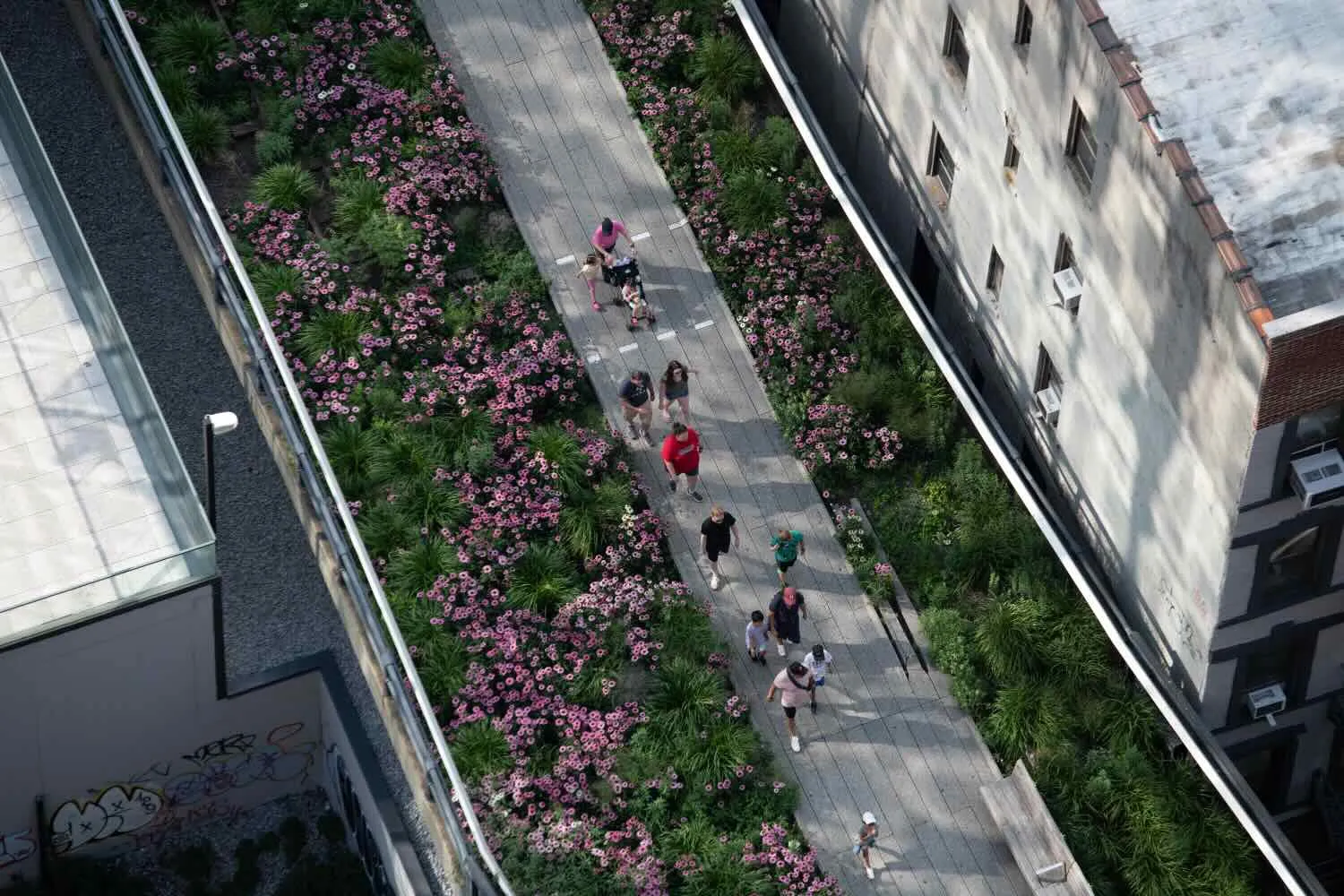
But I think the categories you have are like, there are habitat plants, the ones that really are super performers ecologically, and shade plants that put up with the low-light conditions, and wetland and rain-garden plants, and drought and climate-resilient plants. And so you kind of have learned which ones work in those niches, so to speak. [Photo above by Timothy Schenck.]
Richard: Right. This idea of resilient plants really came out of this educational exhibit that we’ve been doing called Nature in the City, which is also on the website. The whole idea is that the High Line is so much more than just a pretty walk in the park. We are a really provider of ecological services here in the city. And so we are a habitat.
We just did a bird walk, our first bird walk with the New York City Bird Alliance yesterday. We saw palm warblers, just a lot of new things coming in. So it’s an exciting park, but we’re also climate-resilient. I like to say that if you want to know what you should be planting in the face of climate chaos—and we know we’re getting longer droughts, we’re getting stronger rainstorms—you look to the plants that are growing happily 30 feet in the air with less than 18 inches of soil.
We get really these incredible wind tunnels that get formed by different buildings around us. We get reflected scorch off of glass high rises. At certain times of the year, you’ll just see a whole garden will just kind of brown out because the reflection from the sun is just hitting it just right.
So if you’re a plant on the High Line, chances are really able to resist a lot of these different aspects. And so that’s where we came up with this idea of being able to actually propagate plants from the High Line. We’ve got over 2,000 plants that are going to be ready for sale on the 30th, and featuring the plants that we really felt put the best faced forward for the iconic High Line plants that Piet uses frequently, but also the ones that are really able to withstand a lot of these different conditions.
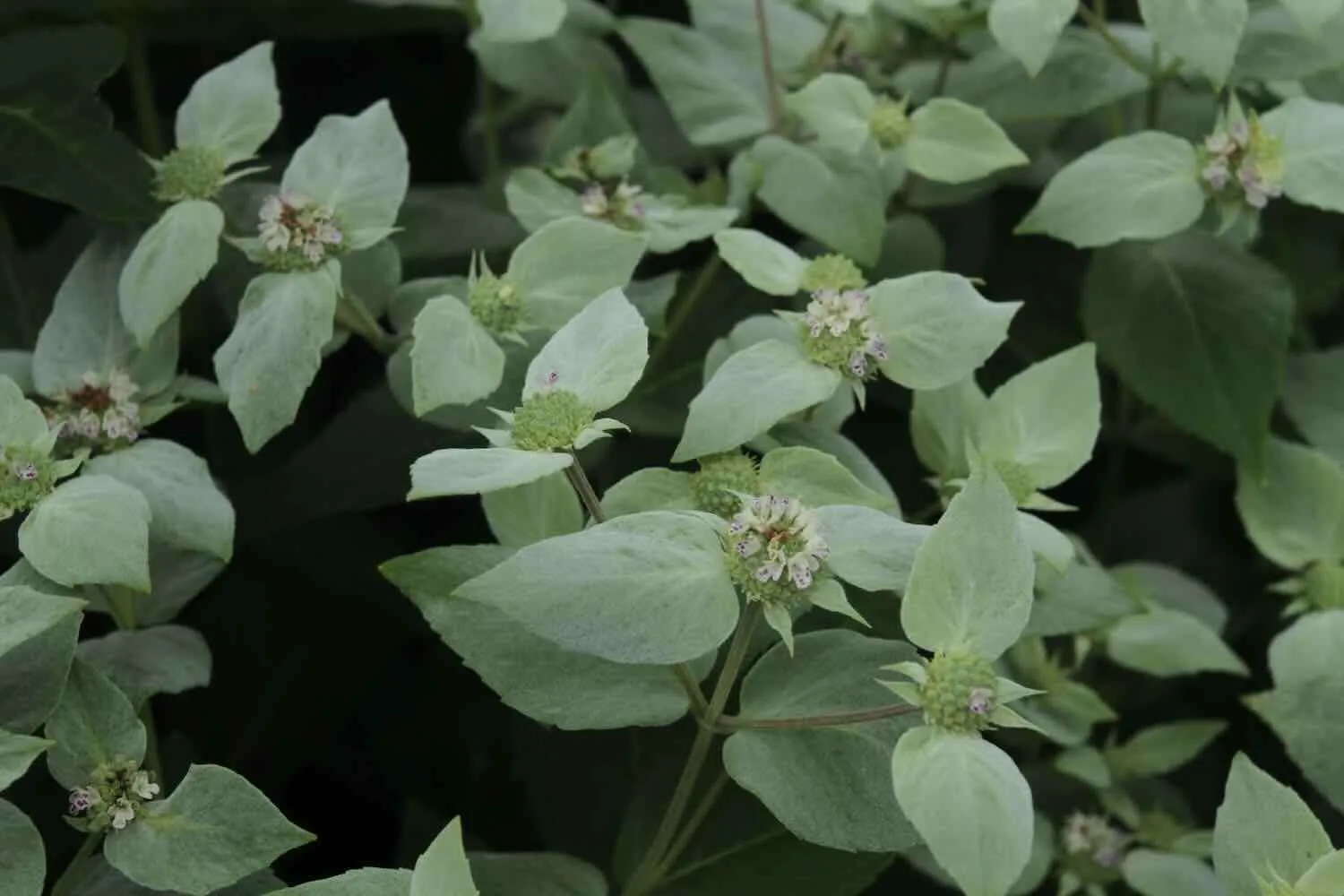 Margaret: Well, in the habitat plant list, the anusis, the columbine, Echinacea purpurea, the Monarda fistulosa, the various Pycnanthemum, which is a super-pollinator. I mean, it’s like that thing’s abuzz; that little plant’s abuzz.
Richard: We’ve got three different Pycnanthemum we’re offering actually, three different mountain mints. So we’re really excited to be able to feature those. They’re such great plants. [P. incanum, above, by Maeve Turner.]
Margaret: And you have the Vernonia mentioned and obviously the Asclepias. So again, it’s not only met the test, it’s met your test because it’s the extra layer of pressure, I guess. And yeah, you’re welcoming in a very difficult environment, you’re welcoming this wildlife, all this activity. And you’re seeing, as you just pointed out, warblers are visiting right now, and there’s all kinds of interesting insects and etc.
And you’ve identified things that do in the shade for you because you have a lot of trees. I mean, even though you only have what, 18 inches of soil depth, or some crazy thing that trees are growing up there, and underneath them Tiarella and sedges and all kinds of great things.
Richard: Yeah. And we have our shade asters that do really well for us. One of our favorite shade groundcovers is the Japanese forest grass, Hakonechloa, which has such a great texture and has such great winter interest. The other thing, of course, that you have to be on the High Line is you have to have some sort of seasonal interest. And the Japanese forest grass turns this beautiful kind of tawny caramel color, stays up in these big drifts, moves. The other thing I think that’s underrated in plants is the way they move in the wind, and that gives us that kind of fourth-dimensional experience. And so that’s a good one.
Margaret: And that’s one where, as you pointed out earlier, Piet, some of his plants are not native and that’s one that’s not, but it’s also not aggressive, invasive, whatever. I’ve had that plant leading up to the door, kind of along pieces of the path, for decades. And it stays put. I mean, the clumps get a little bigger, but it’s not like a crazy plant; it’s not a troublesome plant. And it’s so beautiful. And as you point out, it has that almost four-season interest.
Richard: And it takes some deep shade.
Margaret: It really does. It really does. And I mean, I have a gold cultivar, and so it just screams [laughter]; even in the shade, it’s just so bright and so happy and beautiful. So yeah, so that’s one of the exceptions to the largely native… there’s a lot of natives in the palette as well.
You have another plant that I love that’s not a native. Now I’m going to have to remember—Phlomis, right? It’s like a mint relative, I guess. Phlomis russeliana.
Richard: Yes.
Margaret: A crazy little herby kind of thing.
Richard: Kind of a Mediterranean plant. It’s funny, I came to horticulture from doing it in Los Angeles, and there were very few plants that I knew from my time in Los Angeles that actually translated to the High Line, but Phlomis russeliana is one of them. It has this big leaf texture and then has these flower stalks that grow up about 18 to 24 inches above, with kind of a pale yellow, which one more time make a beautiful seed head and just really create really good winter interest as well. The texture is so great with that plant.
Margaret: Yeah. And again, I discovered it first many, many years ago in an herb nursery or something. It was this oddball, and I was fascinated by it. And yeah, so there are exceptions to the native thing.
So other tough spots that there have been … Are there kind of signature plants do you feel like that are developing for the High Line? Do you know what I mean? It’s been now what, 17 years; is that how many years it is? How many years?
Richard: Seventeen since the first section opened, yes.
Margaret: So do you feel like there are plants that are synonymous with … Because that kind of happens where you say, “Oh, I’m going to go to see the blah-blahs at such-and-such garden.” Do you know what I mean? [Laughter.]
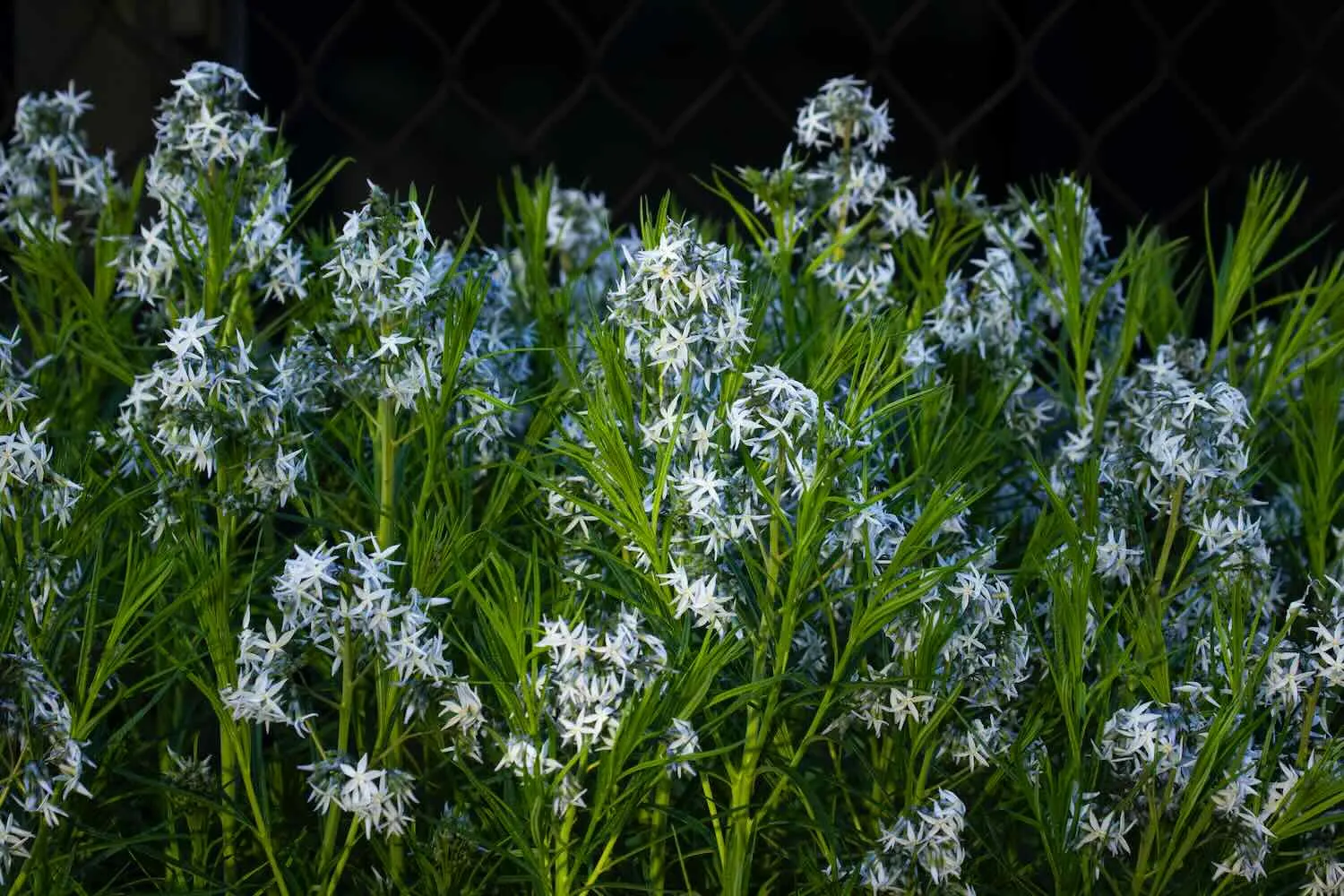 Richard: Absolutely. So I think probably one of the most … I feel one of the most iconic High Line plants and Piet loves as well is threadleaf bluestar, Amsonia hubrichtii, which I think it’s only native to Arkansas and Oklahoma in floodplains. Anytime you hear floodplain, you think that’s a tenacious plant because it can hold on. [Amsonia, above by Ayinde Listhrop.]
Margaret: It doesn’t drown. [Laughter.]
Richard: Yeah, deluges of water, and then that spot may dry out later on. But it gets about, what, 4 or 5 feet tall, ferny, ferny foliage, bright green, blue flowers in May or so, which are lovely. But then, the real shine happens in the fall because it just turns this russet gold caramel. I don’t know what color you call it, really.
Margaret: All of the above, Richard.
 Richard: Yeah, it’s true. It’s true. And with that texture, it’s just such a showy fall addition, and it holds up pretty well for the winter, too. The leaves will fall, but it still holds a nice kind of dome structure. So it’s a great one.
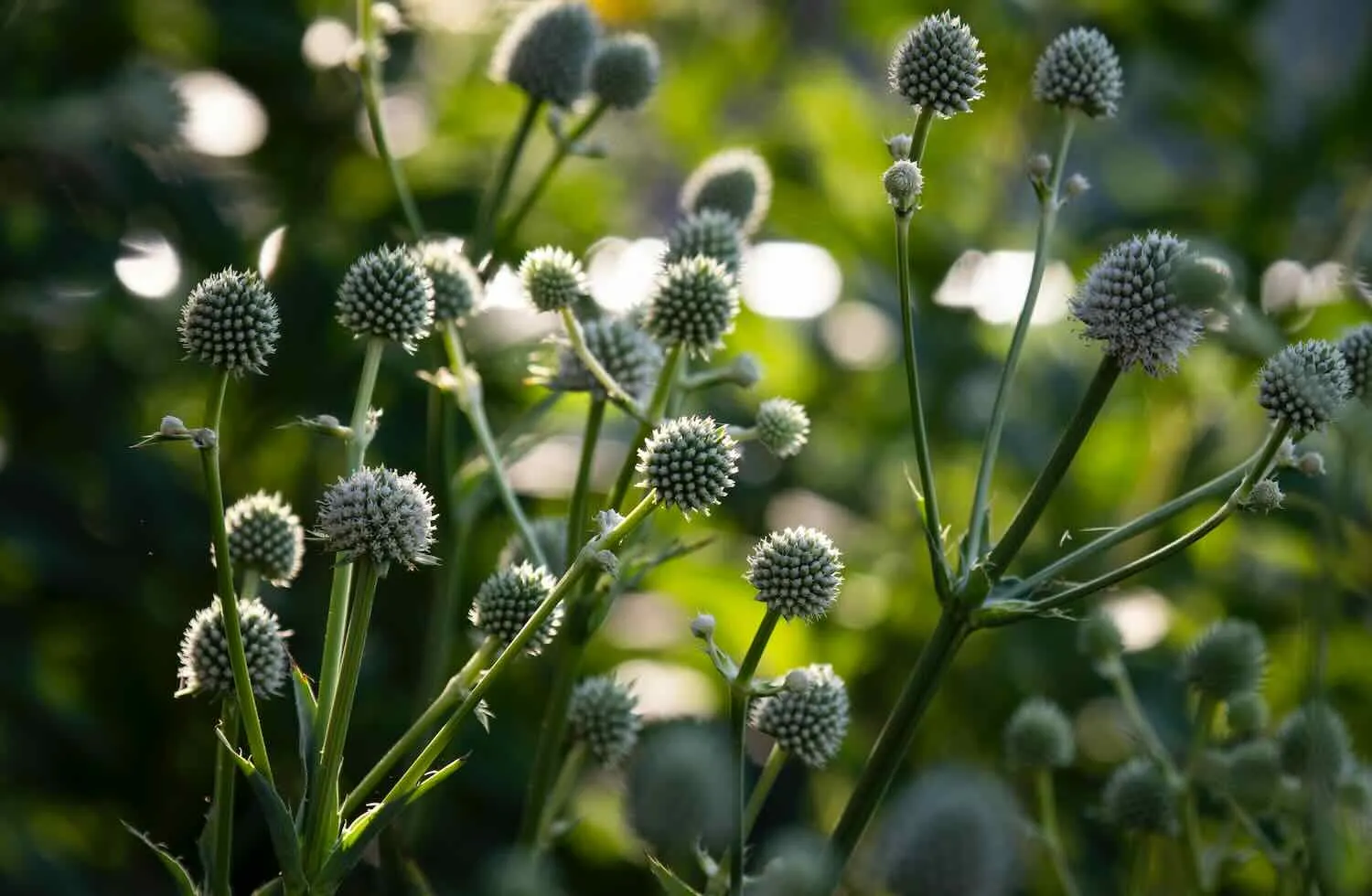
The rattlesnake master, another, I think a great High Line iconic plant, Eryngium yuccifolium. It’s tall spikes, if you will. It’s really unusual looking. And it’s a prairie plant, North American prairie plant. And I think it got its name because the native people would break off one of the stalks and then shake it as they walked through the prairie to keep the rattlesnakes from the pathway. But it has this really tall kind of globe-shaped, small globe-shaped flowers, which are pollinator magnets. We see all sorts of fun pollinators all over them. And then one more time just has that beautiful winter structure because it holds up really well. [Photo above of rattlesnake master by Ayinde Listhrop.]
Margaret: Is it kind of silvery, yes?
Richard: Yeah. A little silvery-gray foliage. Yuccifolium means looking a little like a yucca kind of sword-shape.
Margaret: Yeah. And I mean, for a plant of that stature, the silver-ish, grayish kind of thing, it feels a little unusual. So it’s really a high-drama plant, I think.
Richard: Yeah.
Margaret: I think it’s beautiful.
Richard: That’s a nice way of putting it. I’m going to steal that high-drama plant.
Margaret: O.K. That’s a drama queen [laughter]. So those are a couple. Anything else that sort of comes to mind for-
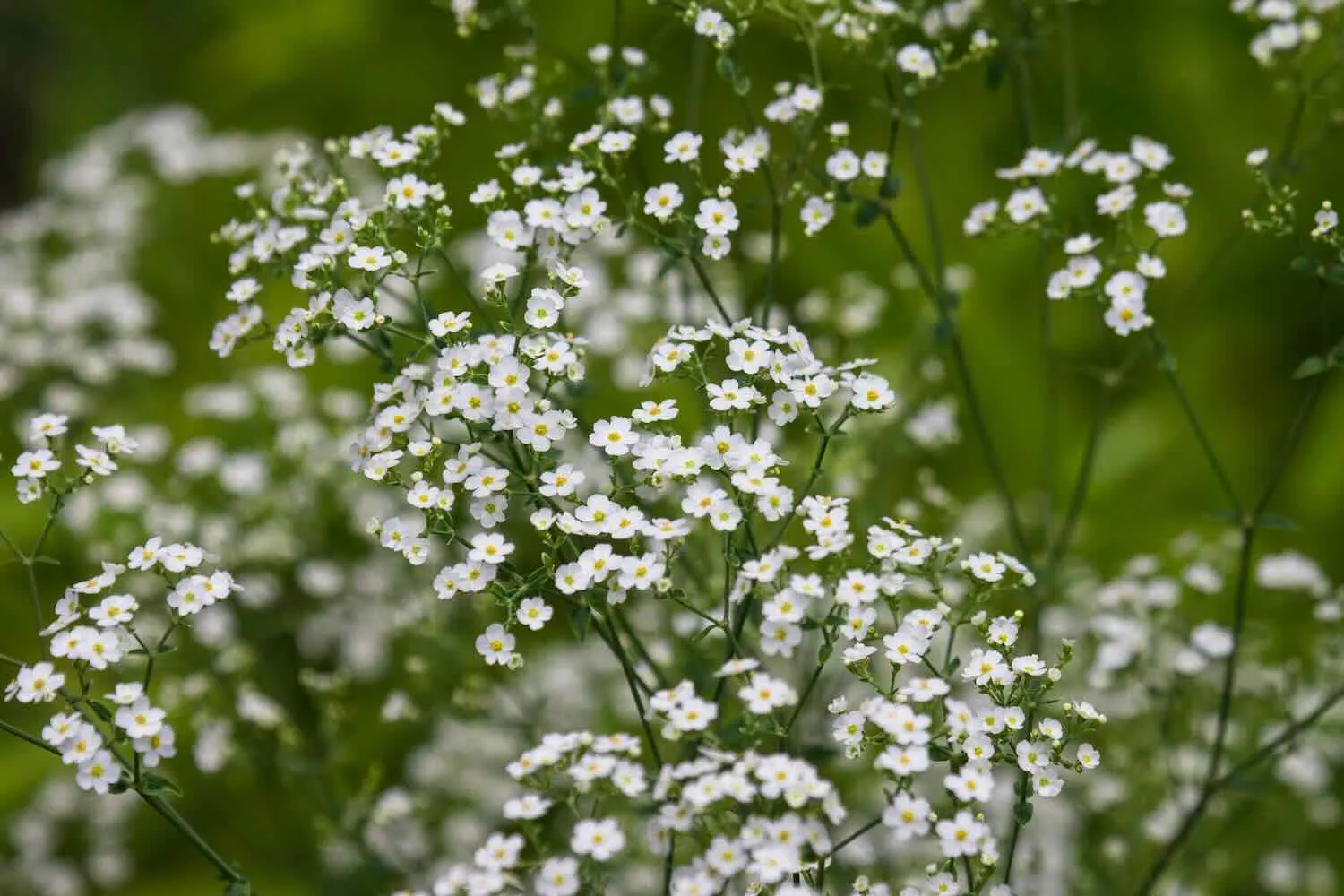 Richard: So I have to put in a pitch for Euphorbia corollata, flowering spurge. It’s one of our native euphorbias. It is the fine-textured version of the rattlesnake master, because they combine really well together. It’s kind of upright, very, very tiny white flowers in umbels, kind of round umbels. And it reseeds for us a bit, but it’s not too opportunistic, which gives you this nice kind of dynamic feeling when it suddenly shows up over there and you think, “Oh, it looks good with that plant.” But it’s also a pollinator powerhouse and it has structure, has a fine texture, but it also has structure at the same time and just really looks good with grasses. [Euphorbia corollata, above, by Ayinde Listhrop.]
Margaret: So when we’re planting with ecology in mind and creating plant communities and so forth, we’re not doing onesies, right? We’re not putting one of this and one of that. Is that another thing that you … Because you’ve had such success attracting, again, creatures—all these native creatures who wouldn’t necessarily be there otherwise. Do you use a lot of, as you said, drifts or masses and repeating things so that they can kind of find it, that there’s enough mass to attract them as opposed to-
Richard: Absolutely. I think one of the reasons that we’re so biodiverse, and even Dr. Doug Tallamy has called us an important connector between wild places, with our so far 33 species of bees that are using the High Line for food or shelter, it’s the massing. We have 560 taxa, so different species and cultivars, and they are massed.
He’s got some great ways that he talks about the way it’s rhythm, it’s sequence, it’s texture, but it’s repetition is the big one. And so when it repeats, just like in nature, you look to nature and you say, “Oh, there’s 15 of that over there and then six here,” and it kind of looks like it maybe got spread by a wind pattern or something, feels natural. But it’s giving you enough biomass that, for instance, if you just had one milkweed, I don’t think the monarchs would find it. But when you can put 15 or 20 in a certain section of the garden, then it becomes a critical mass. There’s enough, whatever the milkweed is giving off, that the butterfly can find, then you get that symbiosis.
And so it just creates … And then the diversity of all of the plants, especially in the grasslands that we have, the diversity of flowering plants, the continual bloom of something going basically from now until October, November, just makes it even that much more an attractive habitat because we’ll have something for everybody.
Margaret: Right. And the other great thing about the massing or repeating, as you said, is that it helps the design aesthetically hang together, too. So for people’s enjoyment visually, do you know what I mean? It’s like as opposed to the onesies thing. So it’s good for everybody, all creatures great and small as they say [laughter].
Richard: Absolutely.
Margaret: I’m always glad to talk to you. When are the two new sections opening? When’s the first one of those two openings?
Richard: So the 17th Street garden is open now and we’re waiting on plants to finish it up, contract-growing some plants, and they’ll be ready in June. So that’ll be finished in June. The 34th Street garden, it looks like it’ll be opening in September or October.
Margaret: Great. Well, more to look forward to, but thank you, Richard, for making time today, and hope I’ll see you soon and talk to you again soon, too.
Richard: Absolutely. Always great to talk plants with you, Margaret.
 MY WEEKLY public-radio show, rated a “top-5 garden podcast” by “The Guardian” newspaper in the UK, began its 17th year in March 2026. It’s produced at Robin Hood Radio, the smallest NPR station in the nation. Listen locally in the Hudson Valley (NY)-Berkshires (MA)-Litchfield Hills (CT) Mondays at 8:30 AM Eastern, rerun at 8:30 Saturdays. Or play the April 20, 2026 show using the player near the top of this transcript. You can subscribe to all future editions on iTunes/Apple Podcasts or Spotify (and browse my archive of podcasts here).
Comments are closed.