
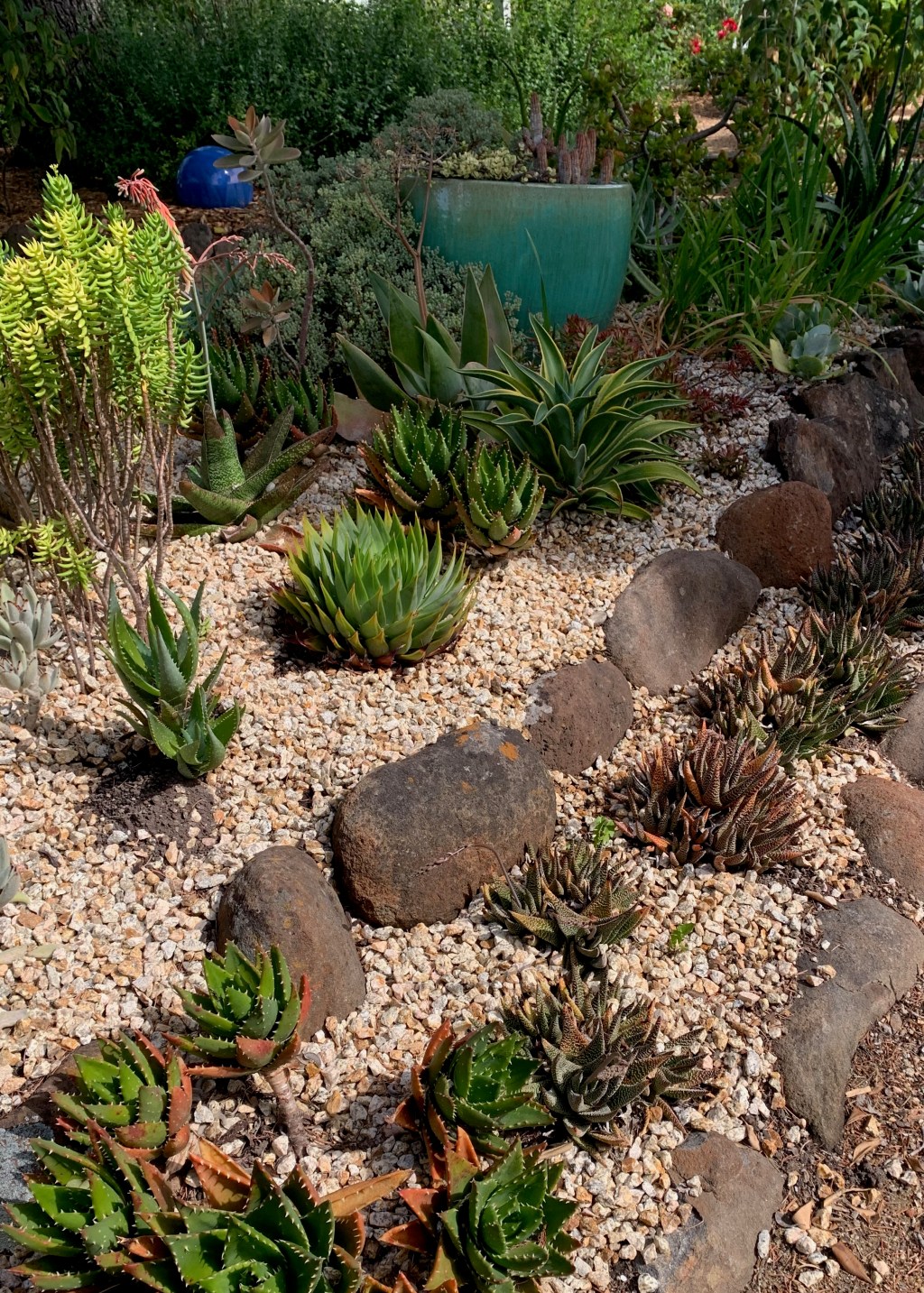

Agave applanata ‘Cream Spike,’ with offsets. These rosette-forming succulents grow to 1-foot-tall and wide, with olive-green leaves that have cream-colored margins and dark brown spines. The margins occasionally have a seasonal, slight flush of red at the leaf tip and base. At their bases,
they are producing multiple offsets that we can transplant to expand the grouping or share with other gardeners. (Courtesy Tom Karwin)
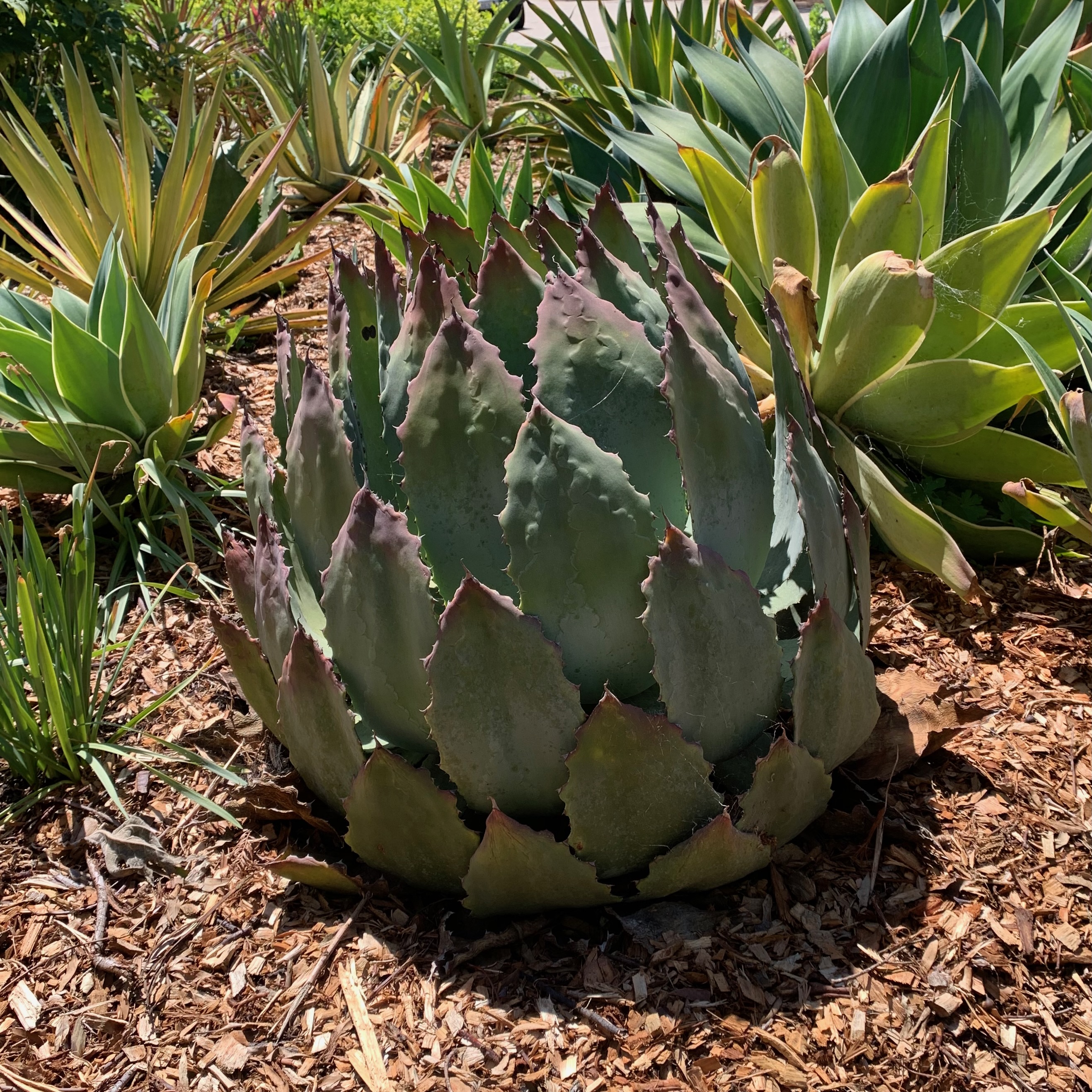
Agave parryi (Parry’s agave). This distinctive, medium-sized succulent has symmetrical silver
leaves with a “do not touch” warning of small, sharp teeth and prominent red-brown tips. This plant reproduces readily by producing offsets. When flowering, it attracts bats, moths and other
pollinators. It is native to Mexico’s Sonoran and Chihuahuan deserts. (Courtesy Tom Karwin)
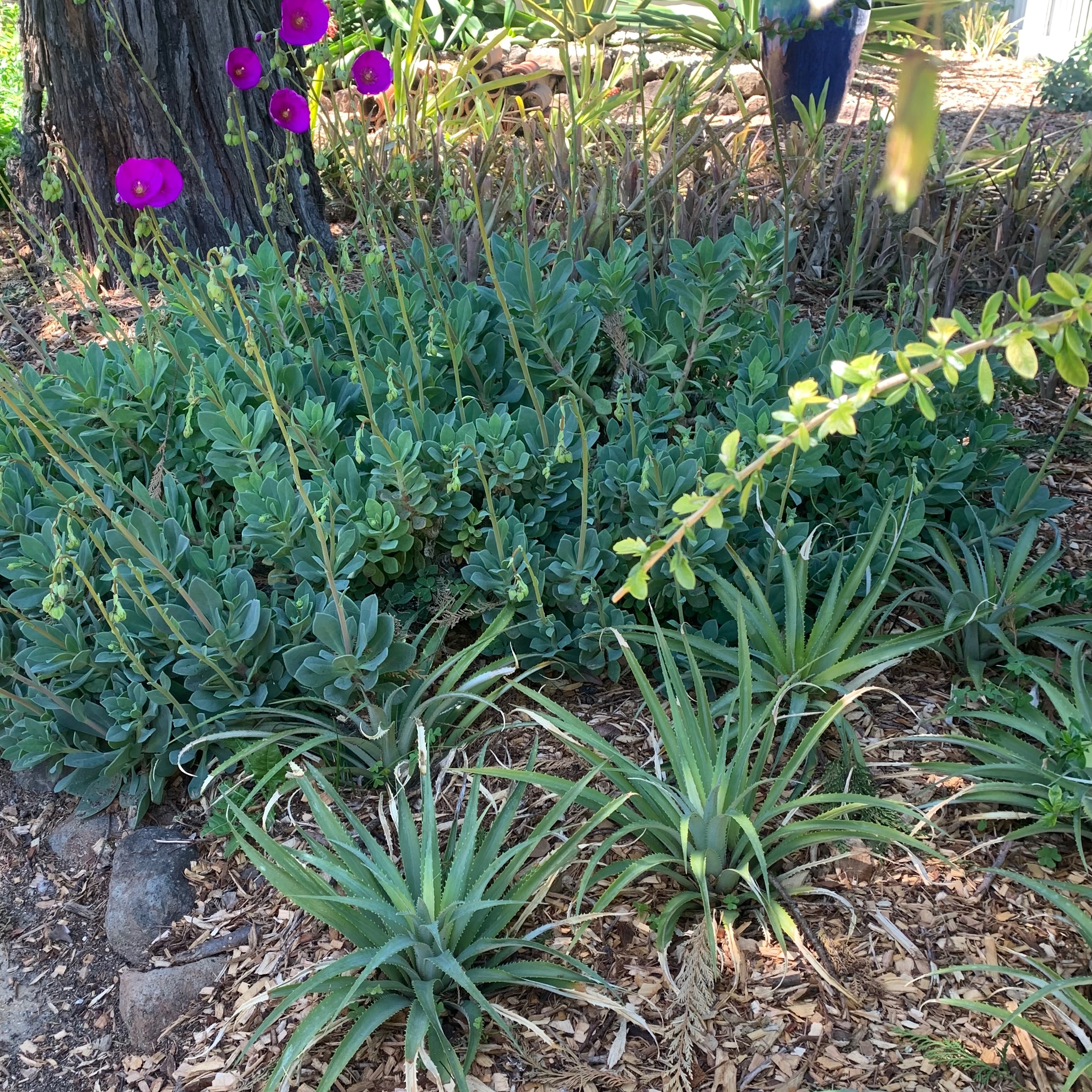
Shining pink rock purslane (Calandrinia spectabilis) and coastal ochagavia (Ochagavia
litoralis). These Chilean succulents might not share a common habitat, but they still represent a
small community of that region and contrast their leaf forms to provide garden interest. When the coastal ochagavia generates its striking inflorescences, this display will be appealing. For the record, C. spectabilis has a new name: Cistanthe grandiflora. (Courtesy Tom Karwin)
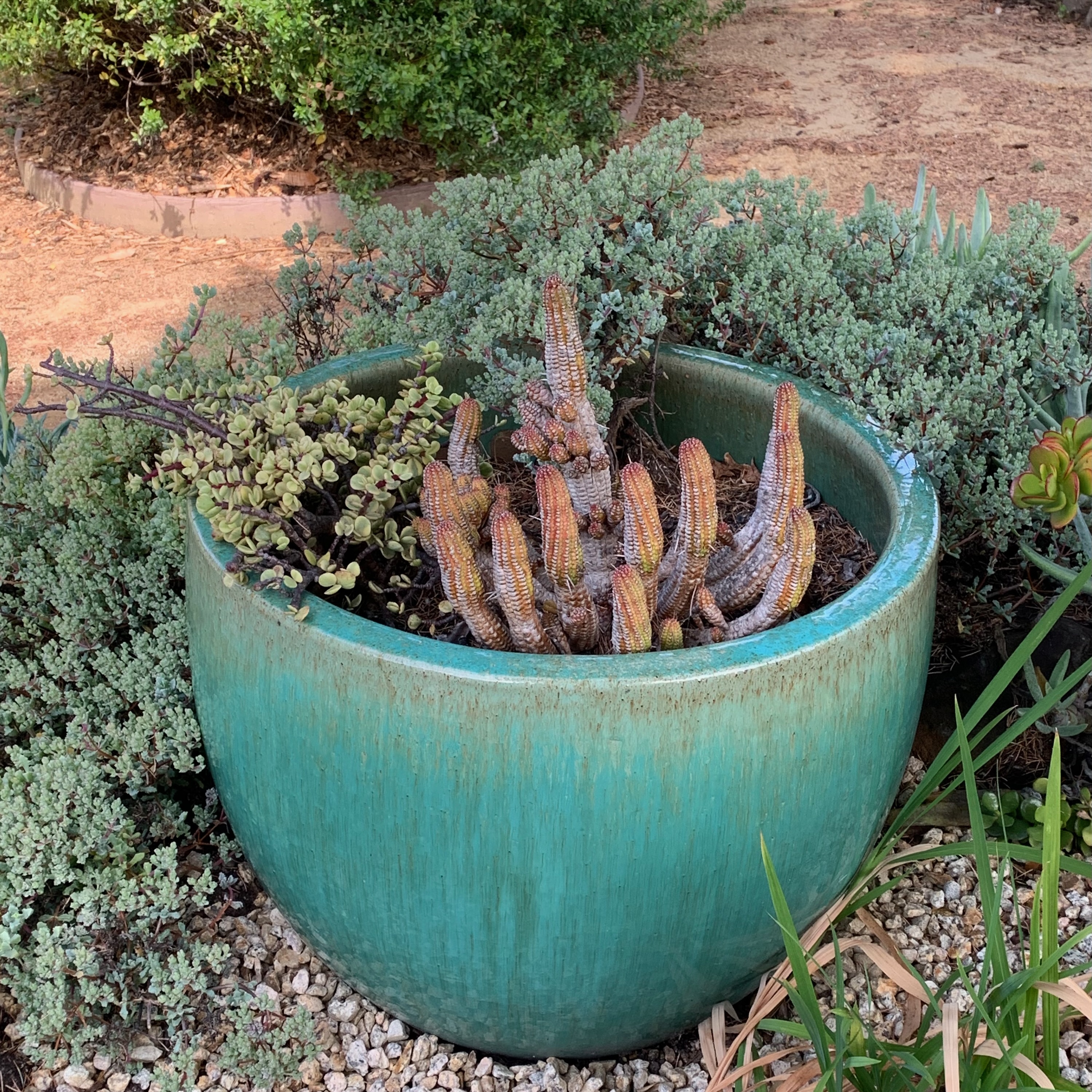
Container with South African succulents. This container could accommodate larger plants. At this time, it provides an environment for the corncob cactus (Euphorbia mammillaris) and a young specimen of elephant’s food (Portulacaria afra). Behind the container is a spreading pink ice plant (Lampranthus deltoides), which has triangular blue-green leaves and, in the summer, vibrant pink blooms. (Courtesy Tom Karwin)
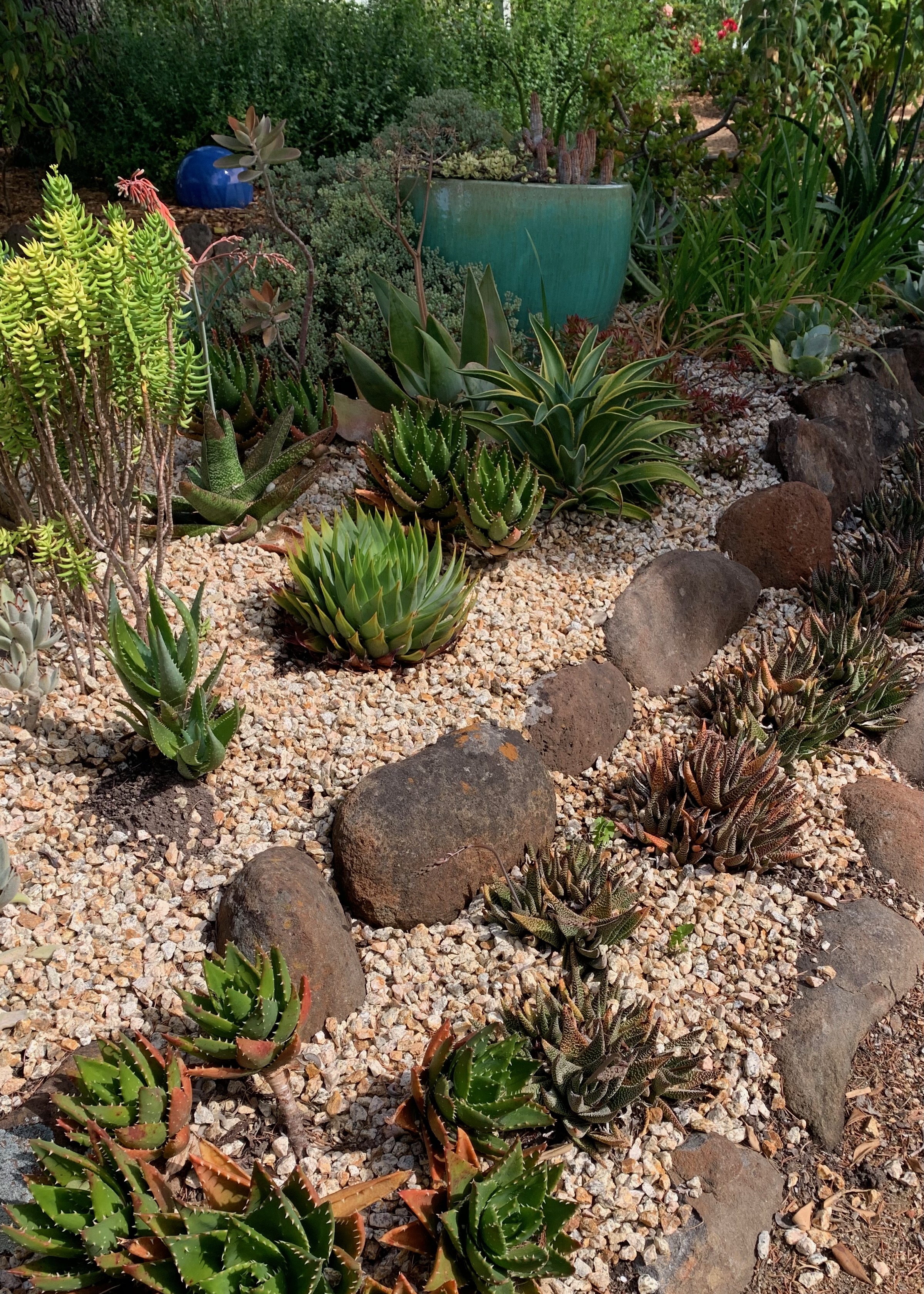
Mix of small South African succulents. These smaller succulent plants are grouped for
comparison. Several species have pointed leaves, while the miniature pine tree (Crassula tetragona) on the left edge of the photo has small, curved leaves, and the corncob cactus
(Euphorbia mammillaris) in the container has cactus-like spikes. (Courtesy Tom Karwin)
Show Caption
1 of 5
Agave applanata ‘Cream Spike,’ with offsets. These rosette-forming succulents grow to 1-foot-tall and wide, with olive-green leaves that have cream-colored margins and dark brown spines. The margins occasionally have a seasonal, slight flush of red at the leaf tip and base. At their bases,
they are producing multiple offsets that we can transplant to expand the grouping or share with other gardeners. (Courtesy Tom Karwin)
Expand
The Monterey Bay Area Cactus and Succulent Society and Santa Cruz Bonsai Kai will hold their shows and sales later this month. See “Mark your calendar” below for event details.
This column spotlights landscape designs focused on succulent plants. While choosing plants at the sale, gardeners can apply these concepts along with their own creativity. As we have regularly advised, gardeners planning to attend a plant sale should define their goals.
Today’s gallery of images
The featured photos highlight succulent-centric landscape designs in my garden. The chosen images display beds dedicated to plants from Chile, Mexico and South Africa — regions rich in plant diversity. Succulents from these areas thrive in the Monterey Bay region and other Mediterranean climate parts of California.
Cultivating succulent plants
To create a succulent garden bed, mimic their natural habitats: provide full sun, infrequent rainfall and excellent drainage. Achieve drainage with 30-50% pumice or gravel and slight mounding. Aeoniums and some genera prefer filtered sun.
When planting succulents, allow enough space for them to reach full size and, for certain genera, to accommodate offsets.
Organize plants for seasonal interest. Aloes and aeoniums peak in winter, ice plants and dudleyas in spring. In summer, structural foliage dominates with seedheads and transitional growth.
Plan to divide and replant every two to four years to establish swathes or share with other gardeners.
Landscape design concepts
Sculptural minimalism: Use bold, architectural succulents as garden focal points. Place large specimens in open areas or among smaller plants. Show off smaller succulents by separating them from background plants.
Succulent plant communities: Well-selected plant communities feature plants that grow together in their natural habitats, sharing growing conditions and similar care. I have arranged my garden beds to represent different Mediterranean regions. Although the plants in each bed may not have grown closely together in nature, they thrive in this climate.
Blending succulents with other perennial plants: Thoughtfully designed landscapes that combine succulents with other Mediterranean-climate perennials offer year-round structure and extended blooms. Grasses can add contrasting textures. This design strategy should pair plants with similar moisture needs — a principle called hydrozoning. Contrasting architectural succulents with leafy perennials or grasses is a matter of the designer’s eye.
Succulent rock gardens: Add boulders or vertical stones to create microclimates and highlight small plants. Install them in raised beds or berms to separate a sloped garden. Gravel mulch conserves moisture, reduces weed growth and enhances aesthetics by mimicking dry conditions.
Layer succulents by placing tall plants at the back or center, with medium and smaller plants in front. Combine other design ideas, such as featuring a large succulent as a centerpiece in a mixed bed.
Advance your gardening knowledge
Debra Lee Baldwin’s website has a wealth of ideas and advice on gardening with succulent plants. Gardeners interested in this topic should explore her site (debraleebaldwin.com). While at the site’s home page, pull down the Design menu and click on “Succulent Landscape Design” or “Succulent Container Design.”
Select “My Books” from the Resources menu to learn about Baldwin’s publications.
Mark your calendar
The Monterey Bay Area Cactus and Succulent Society and the Santa Cruz Bonsai Kai are co-hosting their respective shows and sales at the Capitola Mall’s former Sears building. These events will occur April 25 from 10 a.m. to 5 p.m., and April 26 from 10 a.m. to 4 p.m.
For online details of these respective events, visit mbsucculent.org and santacruzbonsaikai.com.
When attending to add succulents to your garden, have your design plan ready!
This week in the garden
The University of California Master Gardeners of Monterey & Santa Cruz Counties posted “What to Do in the Garden — April,” featuring tips on food gardening, fruit trees, native plants and evergreens, along with links for more details. Visit tinyurl.com/2knsxzjt.
Enjoy your garden!
Tom Karwin is a past president of Friends of the UC Santa Cruz Arboretum and the Monterey Bay Iris Society, a past president and Lifetime Member of the Monterey Bay Area Cactus & Succulent Society, a Lifetime UC Master Gardener (certified 1999-2009), past board member of the Santa Cruz Hostel Society and a current member of the Pacific Horticultural Society and other garden-related societies. To review the archive of recent On Gardening columns, visit santacruzsentinel.com and search “Karwin.” Visit ongardening.com to review columns from 2012-2020 (and eventually) from the following years. Please send comments or questions to gardening@karwin.com via email.
Comments are closed.