

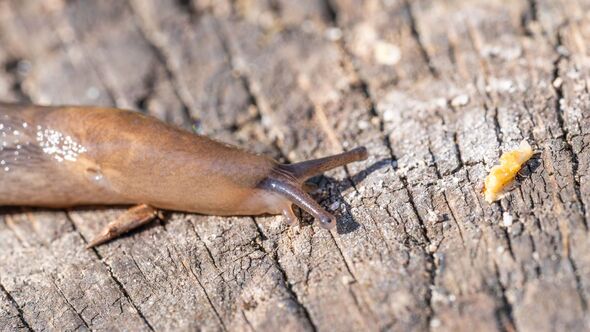
Slugs are a particular problem in spring (Image: Getty)
Every gardener’s pet peeve is pesky slugs getting in the way of their wonderful work and hindering the progress of their plants, and yet there is a simple way to prevent them.
What makes slugs so irritating is their desire to eat away at precious plants – they can eat food overnight and also create holes in leaves, stems, flowers, potatoes, and almost anything you grow. Not to mention, they often leave behind silvery slime trails
While people often think slug pellets are the go-to way to kill off these pests, there is a much safer and kinder way to slugs and your plants that can help save your garden.
In spring, the slimy things are rife, as it’s a key time of year for new growth and, in their minds, new food sources. Sometimes, they can be helpful in eating away at your dead and decaying plants, and so it’s good to differentiate between the 40 different species of slugs if you care to.
The easiest way to try and prevent slugs is down to what time of day you water your plants. According to Gardeners’ World experts, watering plants early in the morning means it will have likely dried out by the evening time and, in turn, deter slugs.
READ MORE: Monty Don shares how to deter rats from entering your garden with simple tip
READ MORE: Gardeners urged to scatter black pepper in garden in April

There are chemical-free ways to repel slugs (Image: Getty)
Slugs are most active at night, and wet soil can sometimes act as a highway for slugs between plants. So, by doing the job as early as you can, you can make your flowerbeds and plants less desirable and more difficult to get ahold of.
Another way is turning to watering with biological controls that contain microscopic nematodes and avoiding harsh chemicals altogether – this will infect slugs with bacteria and later kill them. Watering the soil in the evenings when the soil is warm and moist from spring onwards can be effective for up to six weeks.
Several applications will be needed throughout this season of growth to ensure it works. However, treating your whole garden with this isn’t going to work, so prioritising areas such as a vegetable patch is the best way to make use of this method.
Other methods for preventing slugs
According to readers of Gardeners’ World, the most popular way to deal with slugs is handling them yourself directly, picking them off plants with a bucket of salt water at the ready. The best time for this would be to do it after dusk; with those late nights in the height of summer, it is their prime time to shine.

There are over 40 types of slugs in the UK (Image: Getty)
To make this easier, some opt to create a deliberate ‘slug corner’, an area of their garden that is dark and shady, with something the slugs will be attracted to. Whether it be old veg, leaves, dried cat food, oats or bran, they will typically congregate for a feed at night, and that is the time to catch them out.
Inside your planters, copper can prove to be an effective deterrent to slugs, as they tend to receive some sort of an ‘electric shock’ when crossing one. Putting rings of copper around those plants more vulnerable to slugs and burying them deep, as slugs could even reach the plant from beneath.
Another way of preventing them from eating away at your plants is inforcing a barrier which will repel them using things they tend to find sharp or prickly to travel over. Materials used for this can range from grit, stones, cat litter, bark and sawdust, placed around the bed of a plant.
The downside to this is it will require a regular re-topping up, and some research has found that the majority of slugs live amongst the soil and not just on the surface.
Beer traps can also be a popular method, acting as a slug trap, as they are drawn in by the strong smell of the drink. Sinking a can of beer or filling a container with beer and digging it into the ground with the top half above soil level for the slugs to find is the best way to do this.
Gardeners’ World advises covering this with a loose lid, however, to prevent other small creatures from falling in.
It will require regular checking and emptying and replacing but is best placed on the edge or border of a veg patch or planter you’re trying to protect.
Comments are closed.