
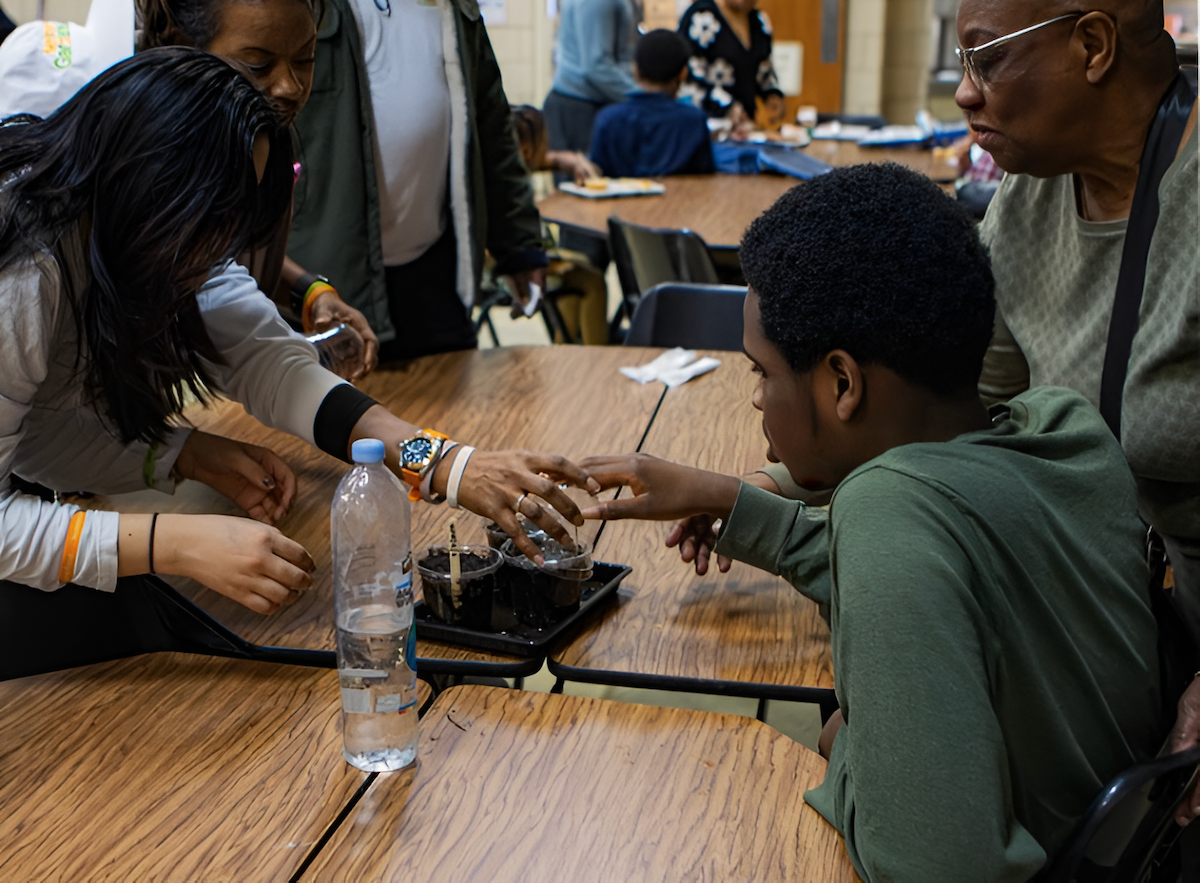
As communities across the country look for ways to live healthier and more sustainably this Earth Month, organizations like Nemas Gardens are planting seeds of change, literally.
Founded by urban gardening enthusiast Kevin Alsop, Nemas Gardens is helping schools and communities in the DMV learn about urban agriculture and self-sufficiency. Through hands-on programs, workshops and community engagement, the group is focused on teaching people not just how to grow food, but why it matters.
For team member Kevette Minor Kane, the mission connects to a larger conversation about control and access.
“Whoever controls your food source, in a sense controls you,” she told The Informer. “We have to understand that these major farming corporations really are in control of what’s going on with our food.”
Kane’s concerns reflect broader patterns in the U.S. food system, where fresh fruits and vegetables are heavily integrated into global supply chains. According to the USDA, about 60% of fruits and 35% of vegetables consumed domestically are imported, underscoring the country’s reliance on large-scale agribusiness and international production networks.
The Nemas Gardens employee emphasized that growing food is not just a hobby, but a form of independence, especially in underserved communities.
“We have to shift from a place where we’re looking for dependency for someone to take care of us,” she said. “Being able to grow your own food is critical for people [in the DMV] so that they can [regulate] what’s going into their bodies, especially in areas like Wards 7 and 8 where they’re considered food deserts.”
Nemas Gardens is working to empower residents through learning to grow their own food.
“What we do as a company is focus on self-sufficiency and helping people say, ‘You know what? We can do this for ourselves,’” Kane said.
Through community programs, the initiative is also reaching beginners, like Bernice Panga, a tech support specialist who found a new appreciation for gardening through the organization.
“With prices getting so high, learning how to grow your own food at home really helps with everything; health-wise, bill-wise, and it’s a fun, nice hobby,” Panga told The Informer.
While the learning curve can be steep, Panga emphasized that the persistence pays off.
“It takes a lot of patience [when you start out], it’s a lot of trying and trying and trying,” she said.
Despite having what she described as a “black thumb,” Panga said her experience has been transformative.
“Before joining Nemas Gardens, I had no garden experience,” she said, “[but now] I’ve grown cilantro at home by myself and I enjoy it a lot.”
Beyond the practical benefits, Panga said the work fosters a deeper appreciation for the planet.
“With this initiative, you just learn to cherish the earth that we have around us. There’s a lot going on right now but the one thing that’ll never change is that the earth will always take care of us.”
Comments are closed.