
By Charlie Pike
From our April 2026 Home & Garden Issue
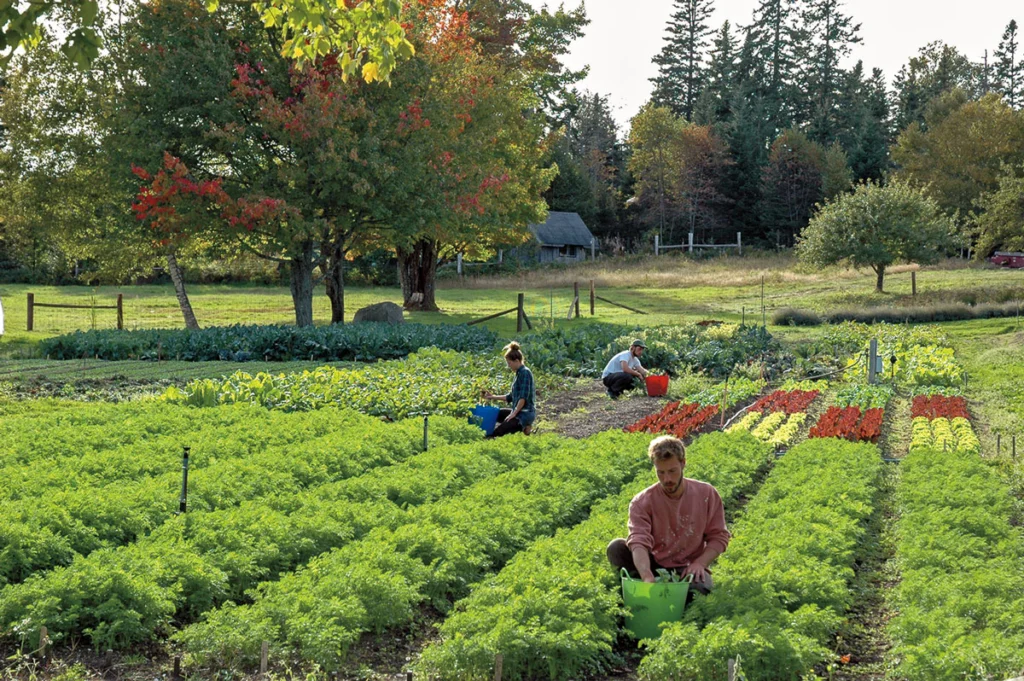
“A fertile soil is full of life,” begins Eliot Coleman’s latest book, The Self-Fed Farm and Garden: A Return to the Roots of the Organic Method (Chelsea Green Publishing; hardcover; $29.95). “A single handful of fertile soil is said to contain considerably more living creatures than the human population of planet Earth.” Coleman has been considering his own robust colony of microorganisms in Harborside, on the Blue Hill Peninsula, for more than half a century. In 1968, he purchased 60 acres of spruce-fir forest, which he cleared to start Four Season Farm. Since then, he has written extensively about organic growing, and this latest effort distills wisdom he has amassed over the course of a career in agriculture spent honing a self-sustaining system that uses certain cover crops and “green manures,” plants like cereal rye and hairy vetch, to bolster the soil. Equal parts science textbook, personal narrative, history lesson, and how-to guide, The Self-Fed Farm and Garden leaves no plot untilled.
Have you always been a farmer?
Prior to farming, I was a semipro adventurer. I used to run rivers in kayaks and ski race and climb mountains. At some point, I was looking for something more socially redeeming than the next mountain, and I read a book about small-scale farming, organic farming. It was Living the Good Life by [Blue Hill Peninsula back-to-the-landers] Scott and Helen Nearing, and that was what inspired me to say, “Okay, let’s see if we can do organic farming.” My first three years in Maine were about as backwoods and pioneering as they could be, because I was cutting down trees and grubbing out the stumps in order to create the farm I wanted.
Were you thinking about self-fed organic farming during those early years?
No, no. In fact, what helped this farm get into production quickly was a neighbor’s horse-manure pile, probably as big as his barn. I traded his mother vegetables for every load of horse manure I took out of there. If I hadn’t been in a hurry to try and put the farm in business, I could have gotten a lot of the benefit that I got from the horse manure by growing a whole bunch of different green manures. In fact, I’m running a trial on two newly cleared acres at the Four Season Farm to see how many years it takes, with just green-manure inputs, to bring that soil up to the level we need for a market garden.
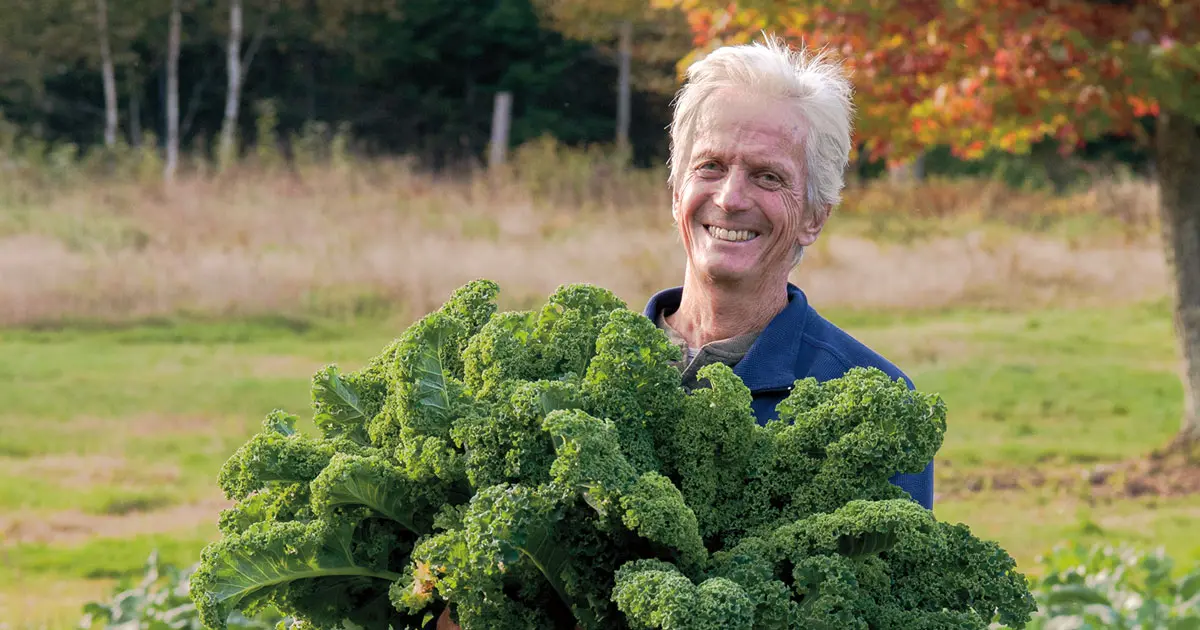
 Eliot Coleman was inspired to move to the Blue Hill Peninsula more than half a century ago by trailblazing organic farmers Scott and Helen Nearing, from whom he bought land to start his own farm. Photo courtesy of Chelsea Green Publishing
What happened when the manure ran out?
After five years, I had exhausted that manure pile, but we kept up fertility by making compost. I could cut all the waste hay I wanted from local abandoned fields. At one point, we were buying compost from an organic dairy farm at $75 a yard, delivered way out here in the wilderness. That was an awful expense. So, I started thinking, “Okay, could we grow all this organic matter ourselves?” I began experimenting with green manures and other cover crops. Next thing I knew, I had a system that was truly powered by what I was growing here, and it was making the soil more fertile. It didn’t make any difference what happened in the rest of the world—if some input I wanted wasn’t available, I no longer needed it; I was already growing it right there on the farm. This created a much more stable farm than I had back when I was thinking that I needed to import my fertility. I didn’t need to worry about locating fertilizer inputs or determining how pure the imported inputs were.
What can the home gardener take away from your book?
The easiest green manure for the home gardener to use is probably buckwheat. It grows quickly, it helps inhibit weeds, and if you mow it before it reaches full height, by setting your lawnmower high, you can keep it vegetative, inhabiting the soil and keeping down the weeds from the time you harvest your spinach in May until you need that soil again, to sow carrots in August. The soil can just sit there, increasing in fertility, and then you put it back into use.
Help Us Celebrate Maine
If you enjoyed this story, I hope you’ll consider supporting Down East. For more than 70 years, Down East has been a leading ambassador and advocate for Maine — spreading stories across the country about its talented characters, chefs, organizations, and towns and places that make it so special.
When you subscribe to Down East, you help ensure we can continue reporting on the people and places that make this state extraordinary. Additionally, when you join our community of readers throughout the country, you also support small businesses across the state, including all the artists and craftsmakers that help define the culture of Maine.
In exchange for your support, you get a year of stories, stunning photography, insider guides, and that unmistakable emotional connection to Maine. You can also sign up for our newsletters for weekly updates, or give a gift subscription to share Maine with someone special.
Maine is home to all our writers, editors, and photographers, and your support will help us continue to do what we do best. Together, we can ensure local Maine journalism stays strong.

Lawrence Hollins
Publisher, Down East magazine

Comments are closed.