
In our continuing series The Age of Work, “Marketplace” is exploring how labor force demographics are changing how the economy works.
The populations of the United States and many other wealthy nations are aging. As that happens, the global economy is becoming increasingly dependent on the younger workforces in some developing countries.
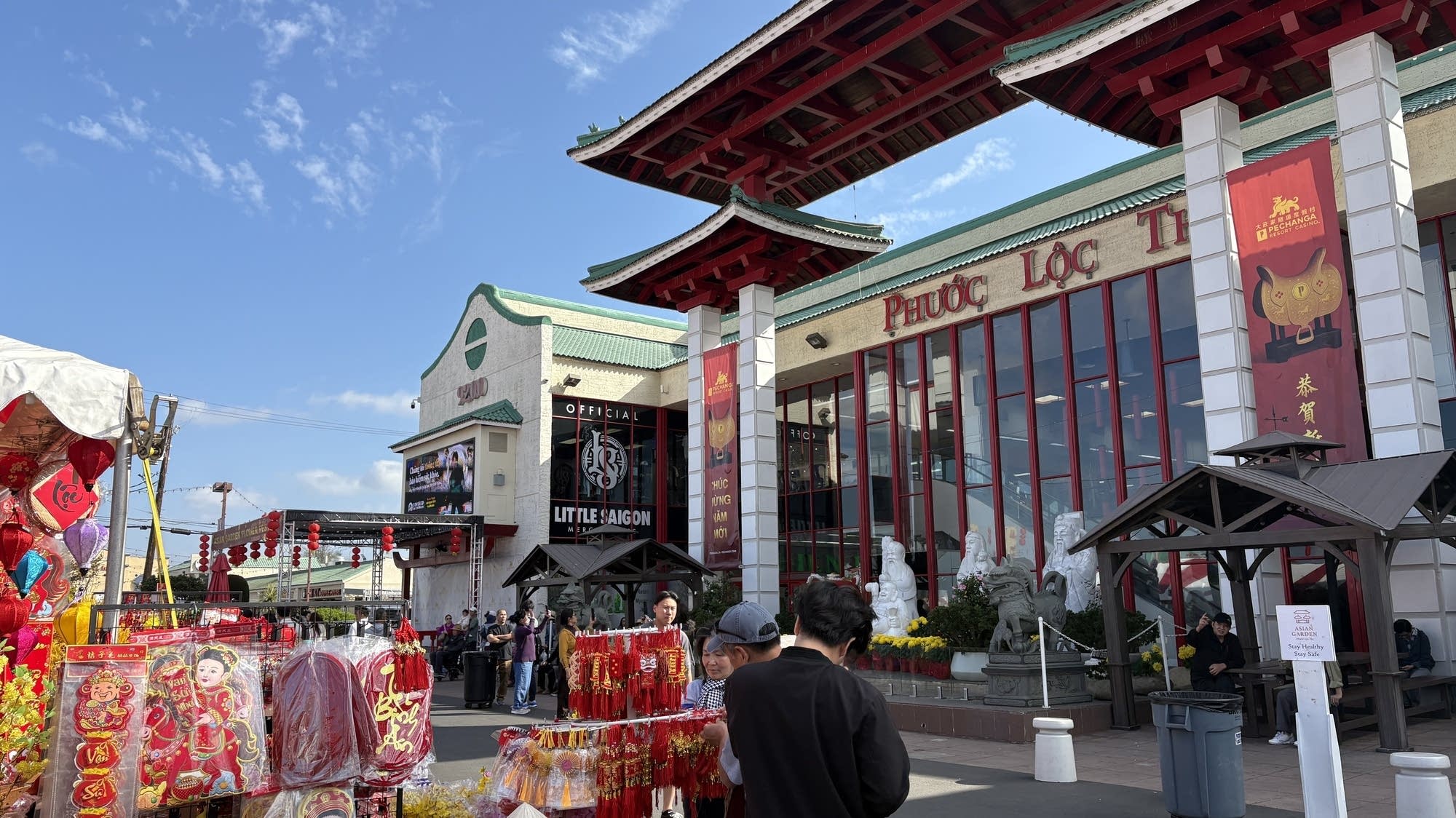
This week, we’ll bring you stories from Ho Chi Minh City, Vietnam, about the growing role that workers there are playing in the economy here. But first, to better understand the economic relationship between the two countries, “Marketplace” host Kai Ryssdal visited a part of Orange County, California that’s become a hub for Vietnamese immigrants over the years.
In the 1970s and ‘80s, thousands of Vietnamese refugees arrived in the United States. Many of them settled in a part of Orange County, California, that became known as Little Saigon.
Now, a generational change is underway. While many first-generation business owners have aged out of the labor force, their children are forging new ties with the country their parents fled.
The first-generation entrepreneurs
For decades, the beauty industry has provided a pathway to entrepreneurship for Vietnamese immigrants in the United States. Many began that journey at Advance Beauty College, one of Little Saigon’s family-owned businesses.
The school was started in 1987 by Minh Nguyen and his wife, Kien. They were Vietnam War refugees who came to the United States in 1975. With experience as salon owners themselves, the couple saw an opportunity to provide beauty school training to Southern California’s growing Vietnamese community.
Their children, Tam and Linh, eventually took over and expanded the business, which now offers bilingual courses in hair styling, manicuring, and more.
“We have seen 50,000 graduates come through here,” said Tam. “[They’re] able to come through a program that’s two and a half months, get out and start making money immediately with limited English-speaking skills,” said Linh.
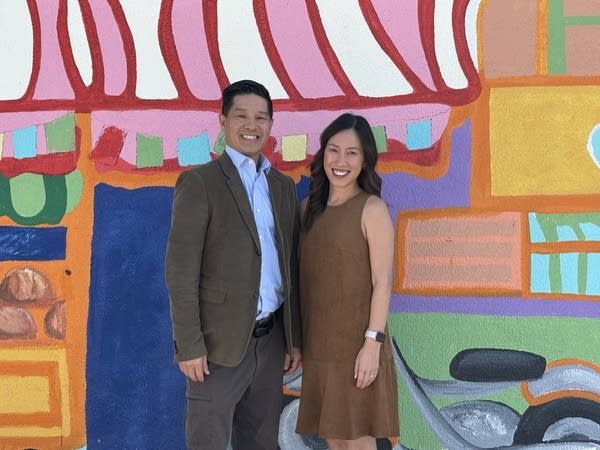
Siblings Tam and Linh Nguyen outside their family business, Advance Beauty College in Garden Grove, California.
Sean McHenry/Marketplace
While educating Vietnamese Americans in the U.S., Advance Beauty College is also employing a worker in Vietnam — an assistant they’ve hired for remote admin work. “She costs a fraction of the cost of the labor, but yet she’s able to deliver very high-quality work,” said Tam. “The company that we hire her through [works] with businesses all around the world that hire workers from Vietnam,” said Linh.
A member of the “1.5 generation” rediscovers his roots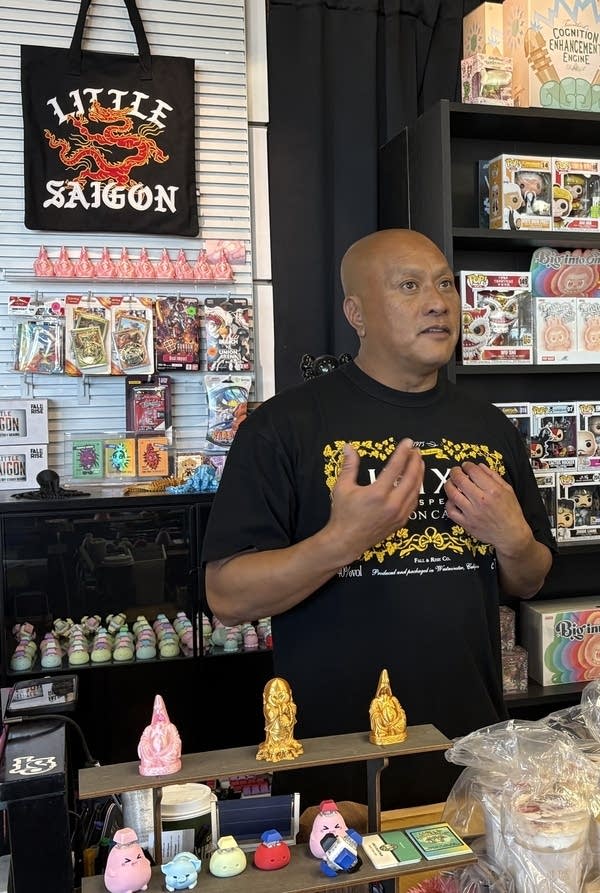
Chris Tran at “Little Saigon Official,” a store inside the Asian Garden Mall in Westminster, California.
Maria Hollenhorst/Marketplace
For Chris Tran, another one of Little Saigon’s business owners, entrepreneurship provided a pathway to self-acceptance.
He refers to himself as part of the “1.5 generation” of people who were born in Vietnam but raised in the United States. “At home, you’re full Vietnamese. Once you leave the doors, you have to be American,” he said.
During the pandemic, Tran began designing Little Saigon-branded hats, t-shirts, and other merchandise as part of an effort to generate pride in his community.
He uses traditional Vietnamese symbols in many of his designs, which he says he wants younger Vietnamese Americans to understand and celebrate. “I want people to be proud of where they came from,” he said.
The next generation
At 25 years old, Tommy Nguyen is firmly part of Little Saigon’s second generation. He was born in the United States to a family of Vietnamese immigrants who own a chain of bánh mì shops.
“This is my parents’ first child,” he said, gesturing to the restaurant. “I’m part of the second generation that’s hopefully helping my parents retire,” he said.
Joining the family business wasn’t always his plan. “But as I saw my parents age, I knew that now was the time to help them, to get to know them better, to learn the trade,” he said. “It was sort of a now and never moment.”
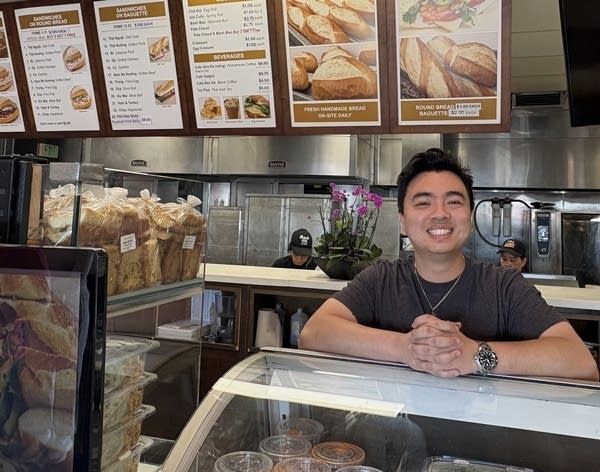
Tommy Nguyen at one of his family’s bánh mì restaurants in Little Saigon.
Maria Hollenhorst/Marketplace
Before that, Tommy taught English in Vietnam on a Fulbright scholarship. “All my life, I’ve only known Vietnam through someone else’s lens,” he said. “I [had] never gotten to see it through my own eyes, through my own experiences — the Vietnam that is right now.”
Today, Vietnam is among the fastest-growing economies in the world. A recent Harvard Kennedy School analysis projects it could lead the world in GDP growth per capita in the next decade.
“I think for a lot of people my age, I think the goal is to go to a country like Vietnam and invest and work,” said Tommy. “I see that as such an amazing opportunity for the country.”
To hear more from these conversations, use the audio player above.
Related Topics
Comments are closed.