
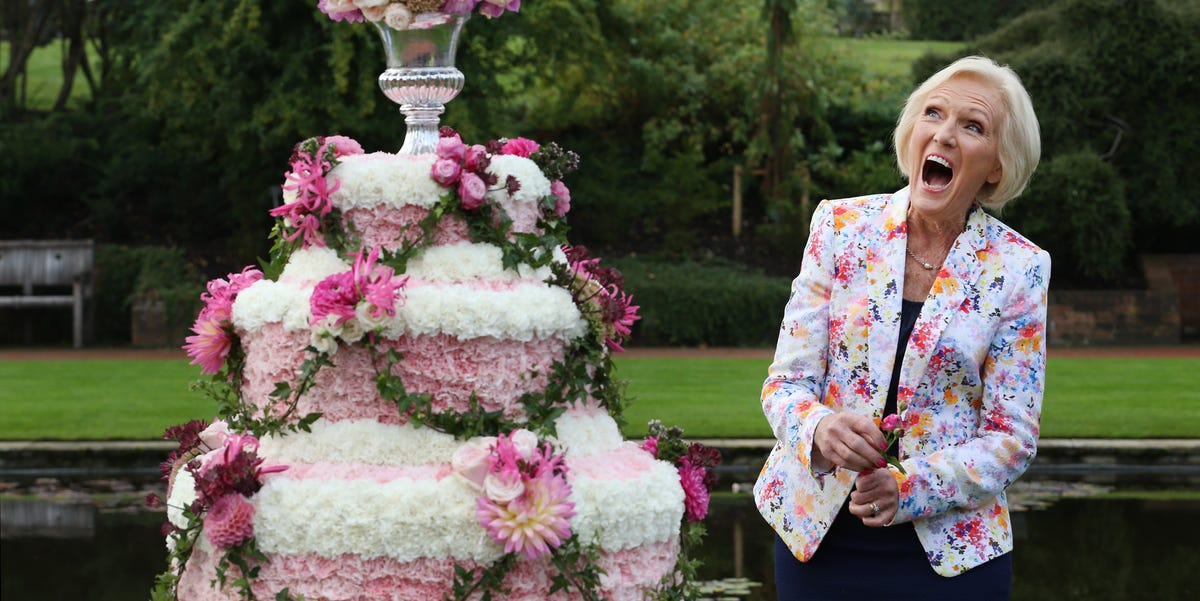
Think you know what Mary Berry’s passion in life might be? Well, think again. ‘I deadhead all the time and I’m brutal,’ she recently shared with GH. ‘As well as promoting more flowers, taking off fading and dead flowers makes the plant look neater.’
It’s a strategy that works especially well for the cook’s favourite flowers – sweet smelling, soft peach and delicate pink Chandos Beauty roses. But ‘I do it with my pelargoniums, too. I take off every single head and give them a good feed and water, and they’re lovely to come back to.’
Mary, whose new book is called My Gardening Life, shared her love of gardening in the April issue of GH and now also features in RHS Roots, a new podcast launched by the Royal Horticultural Society and presented by the radio DJ and keen gardener, Jo Whiley. Its second episode sees Jo touring Mary’s garden, helping out as she tends to it.
As the pair repot a pink and white Alstroemeria, Mary shares her enthusiasm for ‘all the soft colours… I love the soft pinks, whites, blues… A little bit of red.’ In fact, it seems, she has, just one rule when it comes to flowers: ‘No orange!’
Orange has long been a polarising subject for gardeners. Brighter shades can overwhelm softer colours, making it challenging to blend into beds, while some orange flowers such as orange daylilies (often called “ditch lilies”) or Fox and Cubs are notorious for self-seeding and spreading. Marigolds meanwhile, have a powerful smell that’s not everyone’s cup of tea. This doesn’t however, deter bees.
In fact, according to the experts at Kew Gardens: ‘the bright blooms of French marigolds are particularly good at attracting ladybirds, which eat aphids. French marigolds also attract bees, butterflies, parasitic wasps and hoverflies. These beneficial insects, in turn, prey on harmful pests like aphids, whiteflies and thrips, creating a natural pest control system in your garden.’
So maybe, just maybe, it’s time to bring orange back.
Related StoryRelated Story
Comments are closed.