
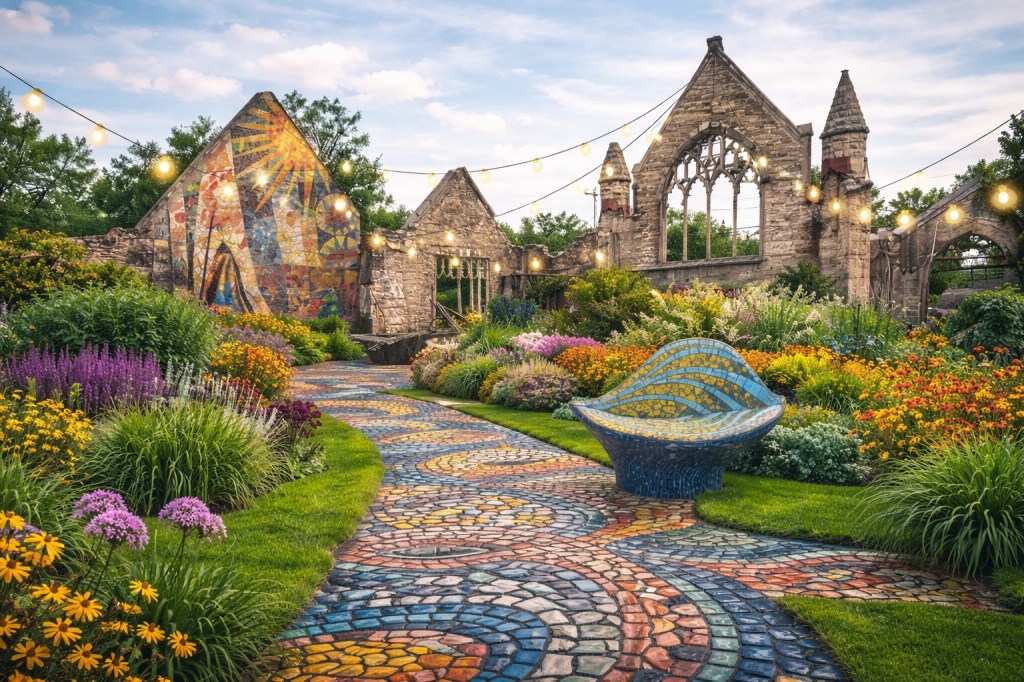
Chester arts and historical groups are reimagining the charred walls of the Third Presbyterian Church transforming into a magnificent public mosaic garden.
“We can’t rebuild but we can preserve what it is and transform the space into something that’s usable for the community,” Tucker Rodkey, executive director of Legacy Arts Chester, said.
Legacy Arts Chester, in conjunction with the Chester Historical Preservation Committee, are spearheading the Cathedral Gardens Project that would rebuild the remains of the church into an immersive outdoor experience with mosaic pathways, garden installations, sculptural seating and artistic storytelling elements created by artists and local youth.
In May 2020, the former Third Presbyterian Church at Ninth and Potter streets was obliterated by a raging early morning fire that brought 125 firefighters from 20 departments to battle.
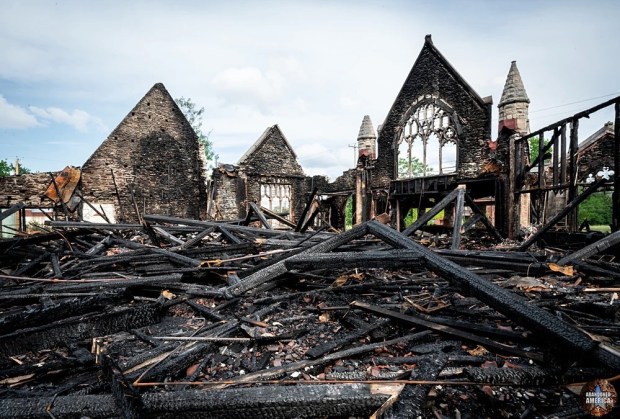 The former Third Presbyterian Church in Chester was destroyed by a fire six years ago and groups are planning to transform it into the Cathedral Arts Gardens. (COURTESY OF LEGACY ARTS CHESTER)
The Legacy Arts Chester, started in 2018, is a community-arts organization based in the city. It has focused primarily on youth-based programming and has recently launched into the public arts domain as well.
Rodkey, whose grandparents, Martha and Larry Wood, were congregants of the church, also has a connection to the preservation committee since his brother once served on it.
“When the church burned down, there was talks about rebuilding it,” he said. “To rebuild it as it was would be tens of millions of dollars, which is not feasible.”
So, he pitched the concept of the cathedral gardens late last fall.
That was met, he said with both emotion around letting go of the dream of rebuilding and also excitement for this idea.
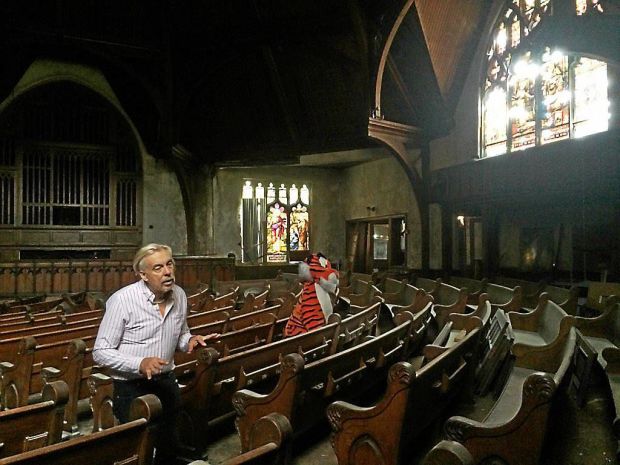 David Guleke of the Chester Historic Preservation Committee gives tours of the former Third Presbyterian Church during an October 2017 special event dedicated to the city’s history. (KATHLEEN E. CAREY – DAILY TIMES)
Rodkey explained that the sentiment was, “It’s better to do something with it than nothing … It’s a blight and it’s a danger right now.”
The first stage of the project, he explained, is they’re collecting bids from different contractors.
“The basement under that church has to get filled in before you do anything,” Rodkey said. “It’s a chicken-and-egg situation.”
Once the estimates are returned, then, he said, they would incorporate those bids into proposals for funding from foundations, corporations and grant-making organizations.
They also need the public’s help.
“On May 7, we’re hosting a Legacy Arts Chester benefit at the Tyler Arboretum,” Rodkey said, and while the main focus of this is operational costs, funds will also go towards the Cathedral Gardens Project. Tickets for the event can be purchased at www.legacyartschester.com/auction.
The director said that when it actually gets to the mosaic and landscape stage, one or two lead artists would be able to work on it full-time through a artist residency program.
There would also be community days when residents and program students would be able to come and put their mark on the gardens.
“The big hurdle right now is we have to fill that basement in right now,” Rodkey said. “Once that’s done, it’s not smooth sailing, it’s much easier.”
The gardens, he added, would cover a 14,000-square-foot area and feature education programs, and artists would be welcome to come and work there.
There are also ideas being generated on generating sustainable income while providing broader access to the community.
“The structure I like the best,” Rodkey said, “is it would be free to all Chester residents and low cost to any one else that’s visiting.”
For him, this project is more than doing something with a destroyed property.
“The way that I think about this and the way that I talk about it is this church almost serves as a metaphor for our entire city,” Rodkey said. “Chester used to be the golden child of the county.”
Then, he said, through the destructive acts of other people in previous generations, the city was slowly decimated.
“It doesn’t have to be that way,” Rodkey said. “We’re not going to give up on our city. We’re going to transform it into something that’s vibrant and gives life and is a source of hope for our community.”
The church at 420 E. Ninth St. opened on May 17, 1896, and was open for 90 years before closing in 1986. After that, it had been home to Chester Eastside Ministries until 2013, when the building was deemed structurally unsound and shuttered.
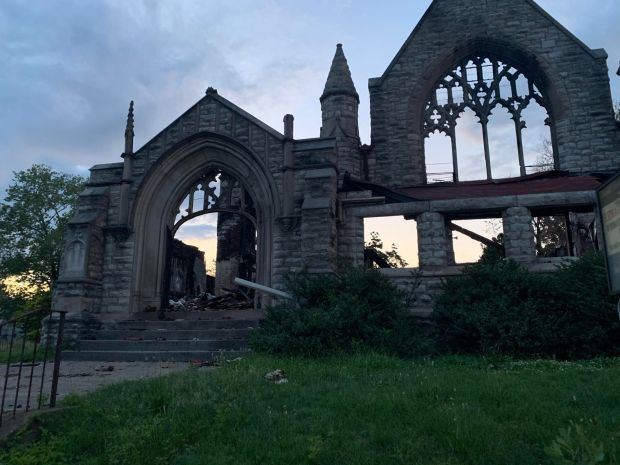 The former Third Presbyterian Church of Chester after the devastating fire on May 28, 2020. (DAILY TIMES)
The church was then slated for demolition but the Chester Historical Preservation Committee saved it in 2014 after purchasing it for $1. Committee members had then been working on restoration by removing debris and restoring the interior.
In June 2019, through the efforts of the committee and with the help of Partners for Sacred Places, the church was placed on the National Register of Historic Places. The goal had been to turn the sanctuary into a performing arts theater.
The building was noted for its Gothic Revival style and elaborate construction as designed by Philadelphia architect Isaac Pursell.
The cause of the fire has not yet been determined.
Daily Times reporter Alex Rose contributed to this report.
Comments are closed.