
 3 min read
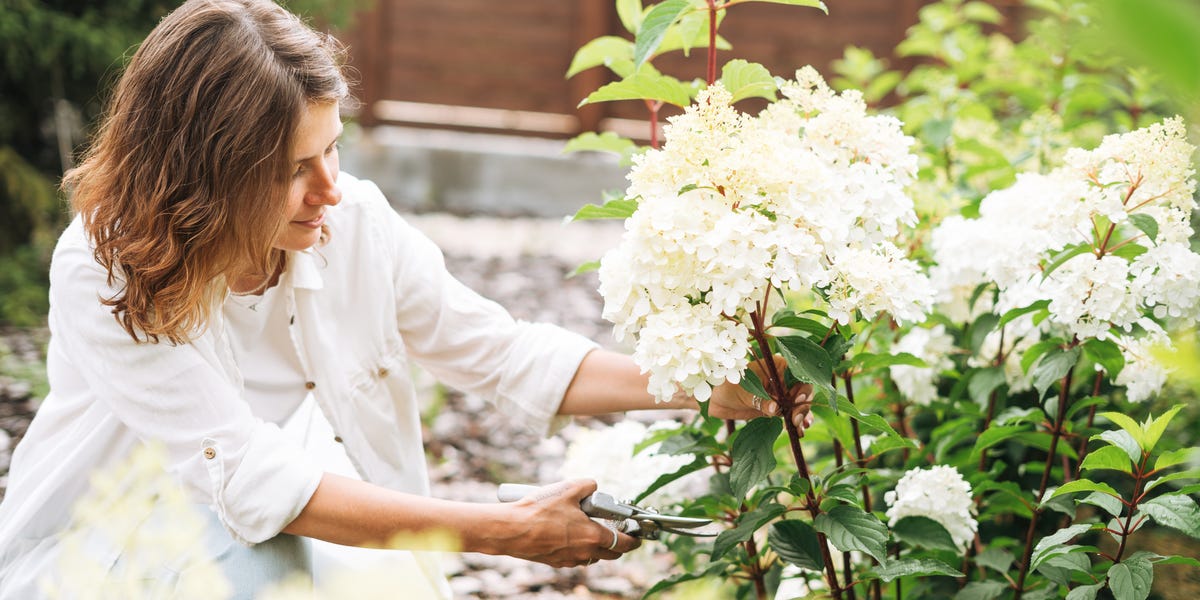
When hydrangeas burst open every year, it’s simply magical. Watching barren bushes come to life from late spring through early fall with clusters of blue, pink, purple, and white is one of the greatest perks of the warmer months. Whether these showstoppers dot your front lawn or simply demand your attention from afar, they have the ability to transform any outdoor space into a dreamy, cottage-style garden.
In order to reach their full potential, however, hydrangeas need a healthy cut. Pruning, which is the process of removing dead or diseased bits, promotes faster growth, fuller blooms, and a stronger structure. But before you grab a pair of shears and start snipping away at your growing hydrangeas, pay close attention to the technique and timing, which can make or break your bush. How you prune your plants is obviously important, but when you begin chopping plays a big part in shaping their health and appearance. The best time to prune hydrangeas depends on the type of flower and whether they bloom on new or old wood. Otherwise, if you freshen them up too early or too late, you’ll remove next year’s flowers, according to gardening expert C.L. Fornari, owner of The Garden Lady and bestselling author of Hydrangea Happiness.
To cultivate the most beautiful blooms possible, here’s when to prune hydrangeas—plus, how to properly prune these long-lasting buds for the best results.
Westend61//Getty Images
When to Prune Hydrangeas
Proper pruning starts with the type of species you’re growing. To figure out when to chop off the faded pieces, you’ll first need to identify the kind of flower you’re working with and whether they grow on old wood or new wood.
When to Prune Old Wood Hydrangeas
Old wood hydrangeas, which have stiffer, woodier stems than their new wood counterparts, produce buds in late summer or early fall for the following year, Fornari notes. For these hydrangea types, which include Bigleaf/Mophead, Mountain, and Oakleaf varieties, be sure to prune them right after they begin flowering, which is usually by late July or early August. “If you cut [them] down in fall, winter, or spring, you’ll be removing the flowers for the coming season,” Fornari warns. You’ll know it’s time to prune them when their stems or branches are dead.
When to Prune New Wood Hydrangeas
As for new wood hydrangeas like Panicle and Smooth varieties, they’re defined by greener, more flexible stems and buds that form in early spring on new growth, which blooms later that same year. For stronger stems, bigger blooms, and a more compact shape, the best time to prune them is in late winter or early spring, typically March or April, before new growth begins. Avoid pruning new wood hydrangeas in the fall, since they’ll need fully intact stems for proper protection come winter.
Galina Zhigalova//Getty Images
How to Prune Hydrangeas
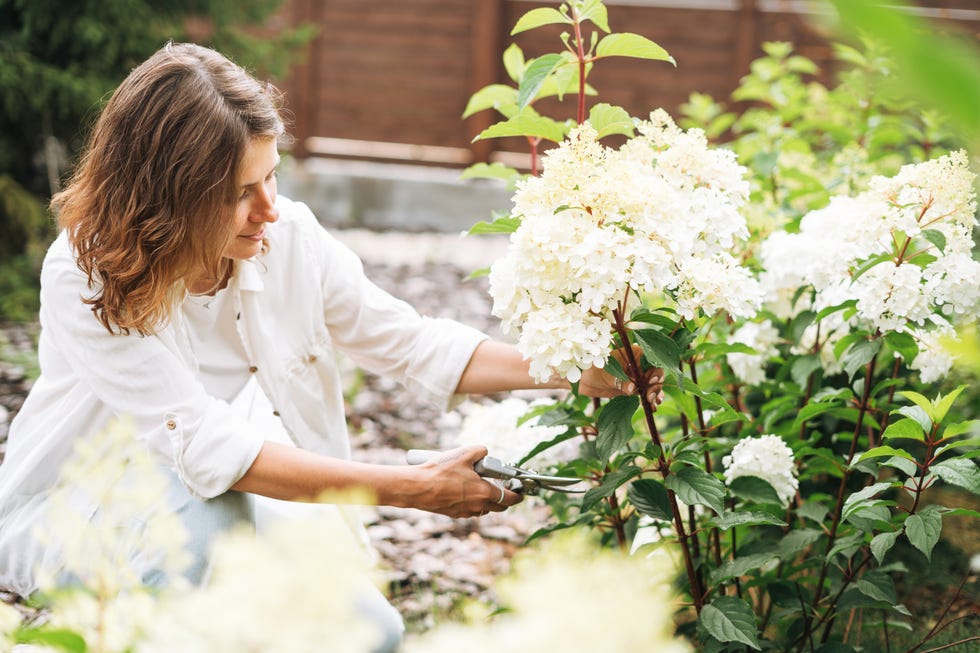
Once you know your hydrangea type, the pruning process should be pretty straightforward. That said, the way in which you prune them will make all the difference in their health and appearance. Here’s how to prune them the right way:
Sterilize Your Tools
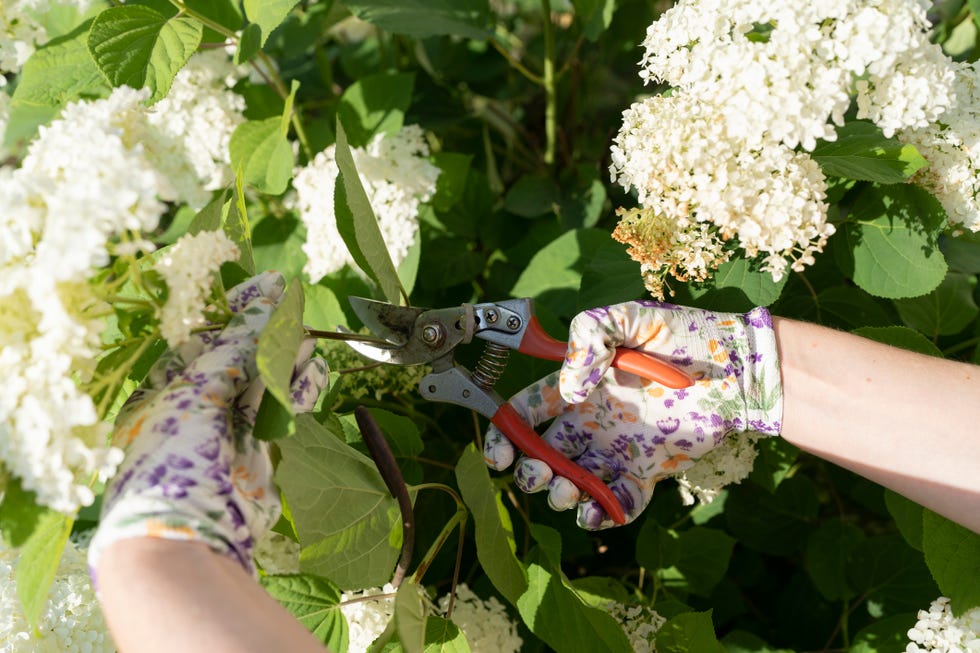
Before you start pruning, be sure to clean your tools to avoid the spread of diseases. Whether you use shears, secateurs, or loppers, clear any debris off the blades before wiping them down with 70-percent isopropyl alcohol for at least 30 seconds or soaking them in a bleach solution for at least 10 minutes.
Work on the Wood First
With your clean, sterilized shears, start removing dry, brittle stems or any dead or damaged branches. The best tactic is to cut them back to the base of the plant or to the nearest healthy bud. “If you leave partial stems they catch debris and aren’t as attractive,” Fornari points out.
Thin Out Crowded Growth
Next, cut back weak, spindly branches at the base and thin out crowded, crossing ones to let more light and air in. This prevents diseases and redirects its energy toward growing bigger and stronger.
Lightly Shape the Plant
To freshen up the overall shape, trim lightly, making sure to maintain its naturally round shape. As a general rule of thumb, don’t cut more than one-third of the plant. Since old wood varieties produce flowers for the following year, be conservative—otherwise, you might cut off next season’s blooms. With new wood types, you can be a bit more generous, but still, don’t overdo it.

Lilly Blomquist is the associate editor at The Pioneer Woman, where she writes lifestyle stories across a wide range of topics—including news, entertainment, holidays, food, and more.
Comments are closed.