
In the Phlox family Polemoniaceae
Written by Mike Adamovic via Facebook Native Plants of the Northeast (US and Canada)
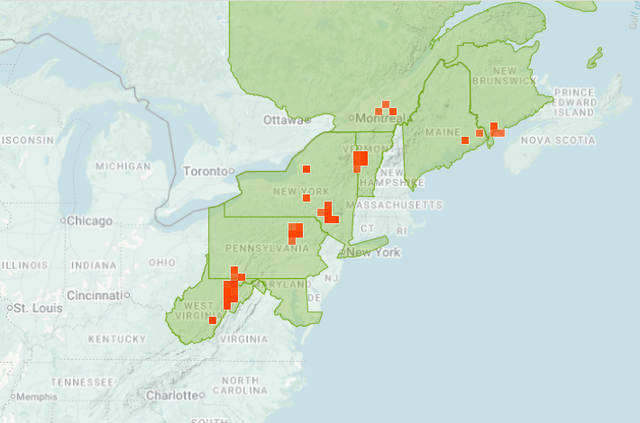
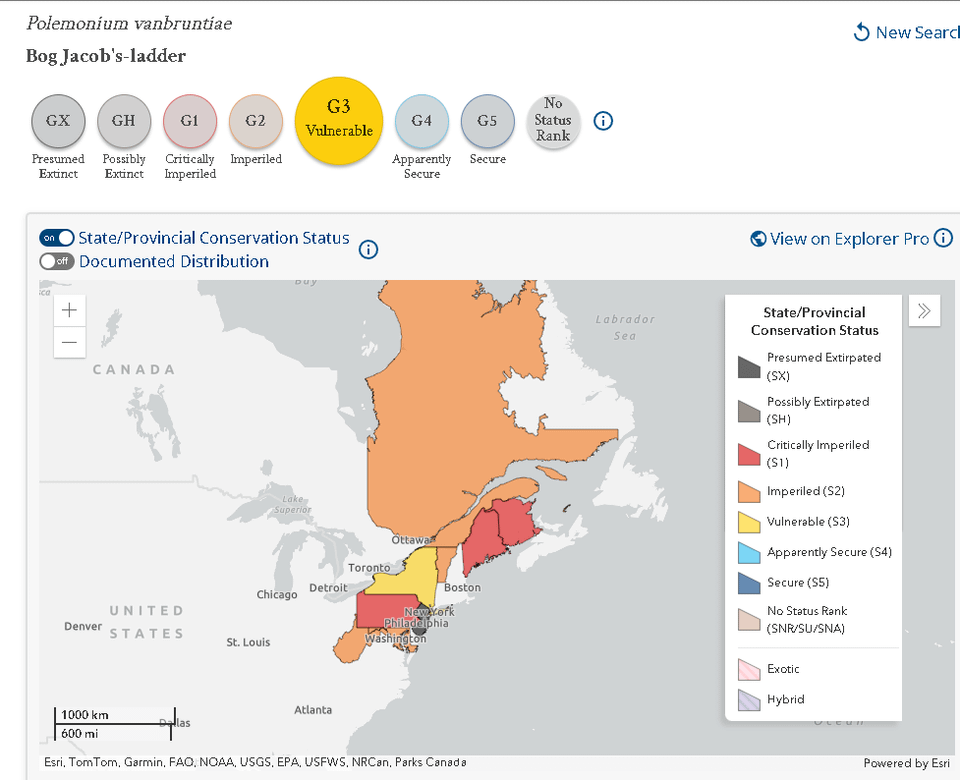
Appalachian Jacob’s ladder is confined mostly to the Northeast, naturally occurring only in Maine, Vermont, New York, New Jersey, Pennsylvania, Maryland, West Virginia, and parts of Canada. It’s rare throughout its range, with many states having added it to their protected plant lists. Less than 80 known sites exist. The largest number of populations occur in New York, where the species’ stronghold is within the rugged confines of the Catskill Mountains.
Plants are almost always found growing in areas of damp, neutral soils containing abundant to moderate light. Areas of seepage are preferred habitat, especially near the base of slopes. Appalachian Jacob’s ladder is most likely to occur in moist meadows, forest margins, roadside ditches, as well as along the banks of streams, rivers, and lakes.
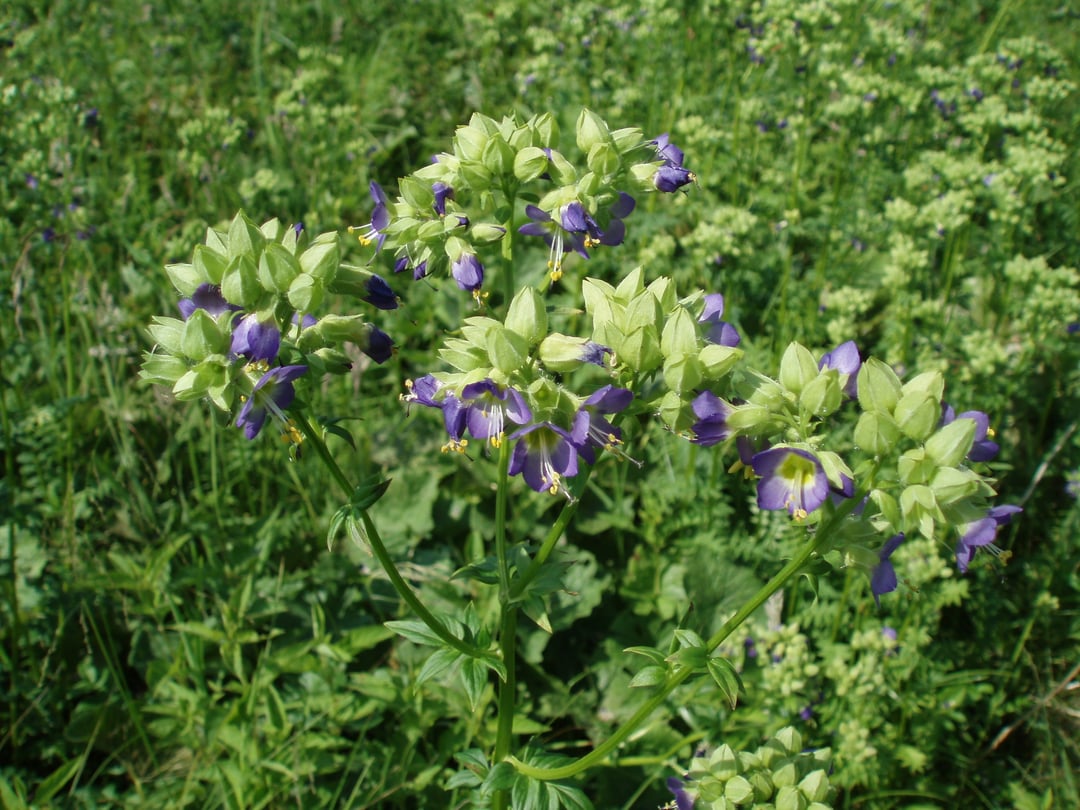
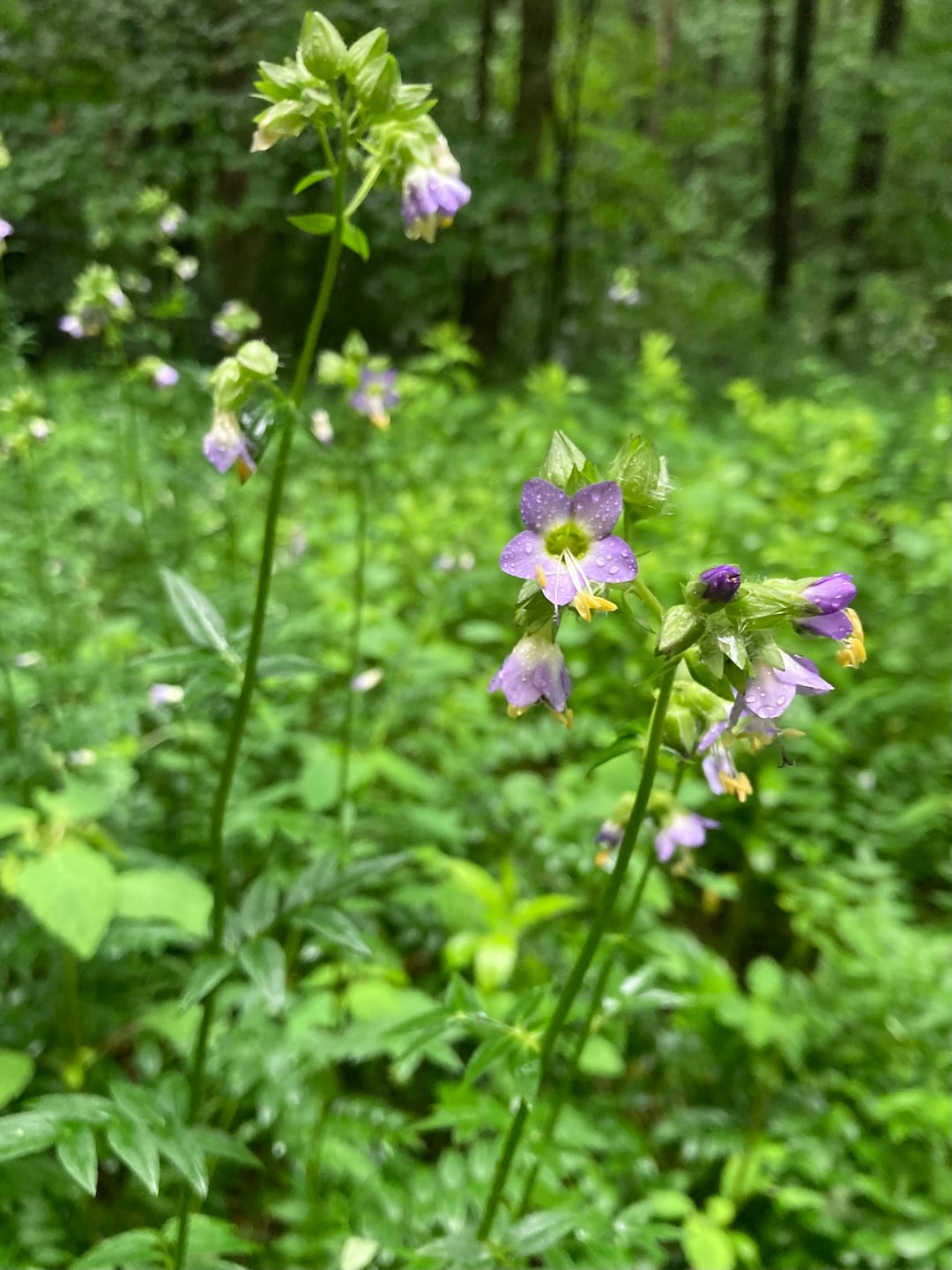
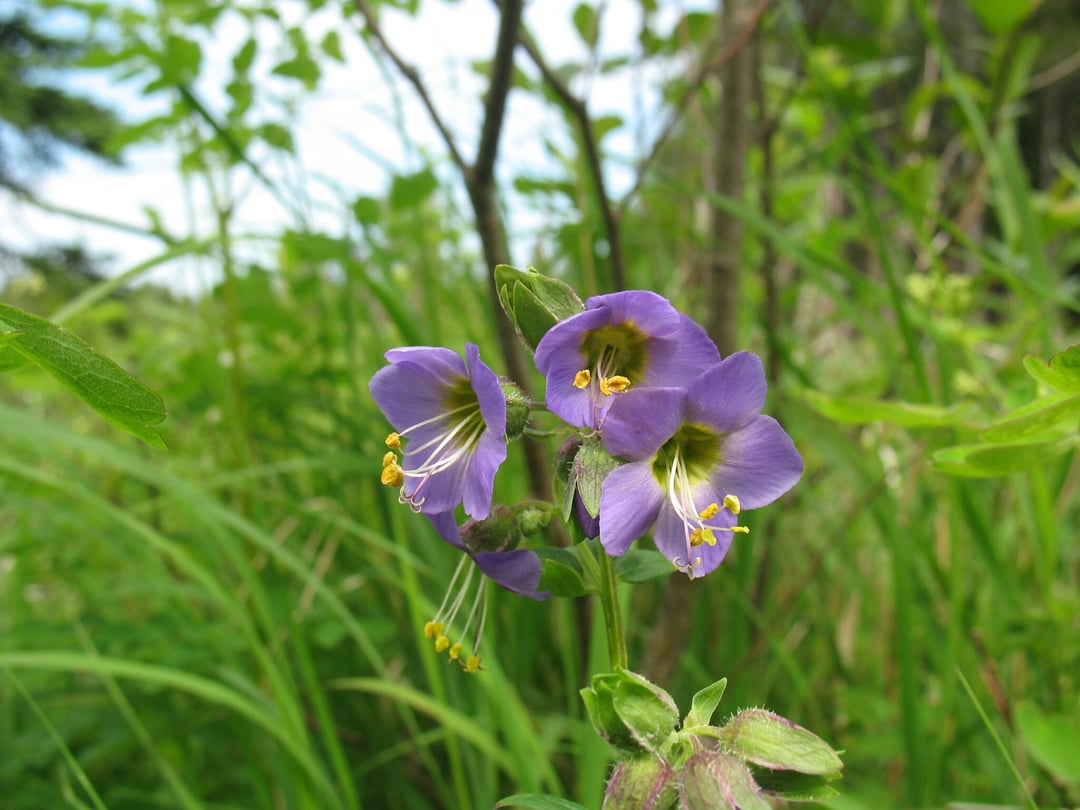
As this species spreads by both rhizomes and seeds, dense stands frequently emerge, giving the mistaken impression that this plant is more common than it actually is. Flowers are borne atop narrow and fragile stalks that usually rise in height from 1.5’-3.5.’ Flowers are a rich amethyst or royal purple with bright yellow anthers supported by rather lengthy white filaments that project far beyond the petals. Each plant can have dozens of flowers, each slightly larger than a half inch in diameter which are bunched up in congested terminal racemes. Plants bloom from June through July.
At home, as this species has pathetically brittle stems, it should be placed in close proximity to plants that attain a similar height in order to provide support during windstorms. Plants are best sited at the edge of a wetland or within a moist meadow. Companion plants include: Royal (Osmunda regalis), cinnamon (O. cinnamomea), and sensitive (Onoclea sensibilis) ferns, various sedges (Carex spp.), king-of-the-meadow (Thalictrum pubescens), flat-topped aster (Doellingeria umbellata), blue vervain (Verbena hastata), cattails (Typha spp.), white meadowsweet (Spirea alba), alders (Alnus spp.), and willows (Salix spp.).
This species is rarely confused with the far more common creeping Jacob’s ladder (Polemonium reptans). Aside from having a more southerly distribution, plants are significantly smaller in stature, have paler flowers, and are early to mid-spring bloomers. European Jacob’s ladder (Polemonium caeruleum) is sometimes mistaken for our native species, as it occasionally escapes cultivation. Compared to P. van-bruntiae, it has shorter stamens that don’t project much beyond the corolla. There are also differences in leaflet number and the width of space between them.
The epithet “Jacob’s ladder” is said to be derived from the unique morphology of the leaves. Leaflets are arranged in a pattern similar to the rungs of a ladder. “Jacob” is in reference to a passage in the bible where the biblical character dreamt of a ladder that connected heaven and earth.
Flowers attract a variety of bees, butterflies, and even the occasional hummingbird. It is not known what insects use Appalachian Jacob’s ladder as a larval host plant.
—————
My personal notes: In Canada this is restricted to a very small range around Trois-Rivieres, and Mace's Bay New Brunswick.
This plant has very small scattered populations and is listed as Vulnerable, but it is endangered to critically endangered in the states and provinces it does still exist. I think it would benefit from the seed trade and cultivation.
by dewitteillustration
Comments are closed.