
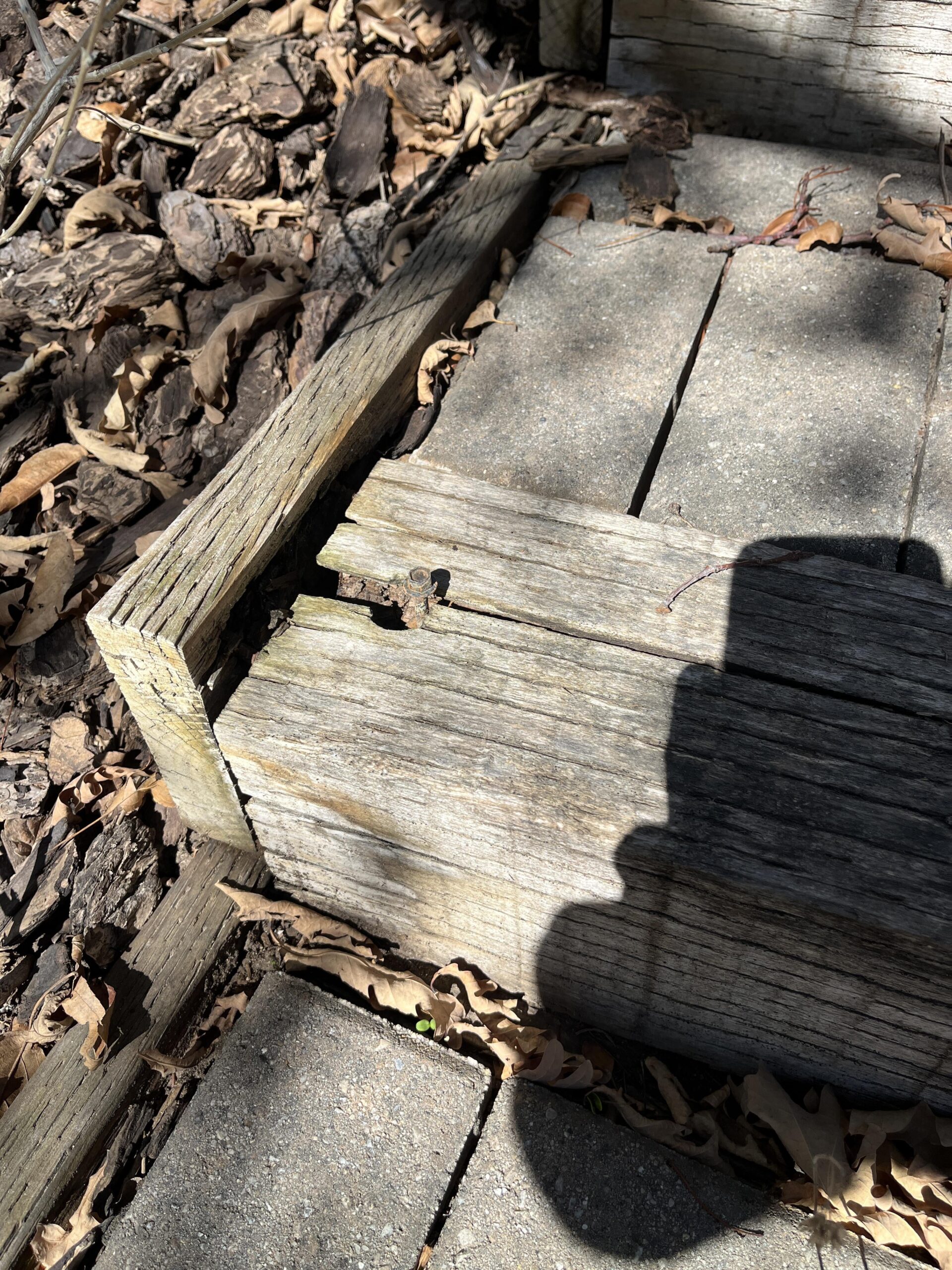

Hi. About 7 or 8 years ago, I built a nice looking and very functional set of stairs in my yard. I used pressure treated dimensional lumber from Lowes and didn't add any additional treatments. This Spring I noticed that the stairs have become structurally unsound due to rotting wood and rusted fasteners. This area receives spray irrigation water in the summer, so it gets a good drink three times a week. When I rebuild these stairs is there a strategy to extend the life of the wood, or am I getting the useful life out of the treated wood, given the irrigation levels? Thanks in advance for your help.
by Leonardish
2 Comments
I’ve seen a couple “wood treatments” that help keep things protected, but with heavy irrigation, I don’t know if there’s much you can do to prevent rot other than increasing drainage. If it drains well, it’ll be less wet, though it’ll still be wet. Is this lumber right on gravel, concrete or how is it set?
Getting eight years out of big box lumber getting blasted by sprinklers three days a week is honestly a pretty good run. The wood you buy off the rack is usually only rated for above ground use, and the copper compounds they use to treat it will aggressively eat standard steel fasteners. When that metal rusts out, water gets down into the bolt hole and rots the timber from the inside out just like you are seeing here.
When you rebuild, you have to buy wood specifically tagged for heavy duty ground contact. The factory treatment rarely penetrates all the way to the core, so every time you make a cut you need to brush copper naphthenate wood preservative onto the exposed ends. For your hardware, throw away the standard lags and only use hot dipped galvanized bolts or polymer coated structural exterior screws designed specifically for treated lumber.
You also need to fix your water situation because soaking your stairs is a structural death sentence. Swap out those spray heads throwing water everywhere and put your adjacent planting beds on a dedicated drip line. Keeping the steps dry and getting the moisture right to the plant roots will easily double the lifespan of your next build while creating a much healthier setup for your landscape.