
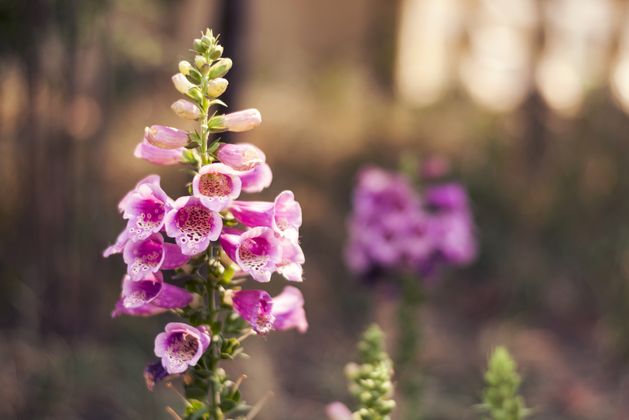
From early summer foxgloves to sedums in October, there are plenty of varieties to extend the flowering season
As soil and air temperatures warm up and there is a noticeable grand stretch in the evenings, it’s the perfect time to get planting perennials. There is still plenty of moisture in the ground so freshly planted specimens can immediately find the necessary hydration.
When you go the garden centre, there will be plenty of choice as perennials start to wake up. However, many of these will be of the late spring- and early summer-flowering varieties as this is what looks best on the benches now.
It is good to think ahead and plan for a garden that has colour not only over the next few months but right through summer and even to the beginning of autumn.
In early spring, much of the colour comes from spring bulbs in flower, and these can be complemented by the early flowering perennials. Pulmonaria is one of the earliest, and has pretty blue and sometimes pink flowers and is a good candidate for shady spots.
For an easy win, plant some Aubrieta ‘Purple Cascade’. This small ground-hugger with bright blue flowers is a great solution for dry spots – it will soften hard edges on pathways and patios and looks its best cascading down a dry stone wall.
Towards the end of spring and into early summer, growth is abundant. Foxgloves provide a good link into summer, and while the majority are biennial and will self-seed, you can also plant perennial varieties. For example, the strawberry foxglove, Digitalis mertonensis, will come back in the same spot each year and has delightful, copper-flushed, mauve-pink flowers.
For a cottage garden feel, Aquilegia or ‘granny’s bonnet’ has to be one of the prettiest perennials. ‘William Guinness’ has contrasting dark purple sepals surrounding white petals and will perform in most soils.
During the summer months is peak time, and there are stalwarts which are easy to grow and flower for long periods. Hardy geraniums are always a good bet – the variety ‘Rozanne’ is a good choice, with large violet blue flowers. Ornamental salvias such as ‘Caradonna’, which has spikes of vivid purple flowers, can take the garden into September. Achillea, astrantia, alchemilla, thalictrum and penstemon are also easy-to-grow, low-maintenance options.
September often provides the best weather, and the warm light complements the late-flowering perennials. Rudbeckias, with their golden daisy-like blooms, will last into autumn and combine well with other late-flowering perennials such as Verbena bonariensis and late-flowering grasses, many of which peak in September.
Pennisetum setaceum or Fountain Grass has fluffy panicles of soft pink flowers which are a great favourite with flower arrangers, fresh or dried. I have some miscanthus grasses in my front garden, and the golden blonde flower heads have remained intact over winter and even now remain decorative, though it’s time to chop them back.
By October, many perennials are finished, but it’s still possible to extend the season by planting Michaelmas daisies, sedums and Japanese anemones. Aster ‘Little Carlow’ is ideal for smaller gardens – compact, bushy and absolutely smothered in pale violet daisy flowers with a yellow eye. A sea of white and pink Japanese anemones will close the perennial season with aplomb.
Plant of the week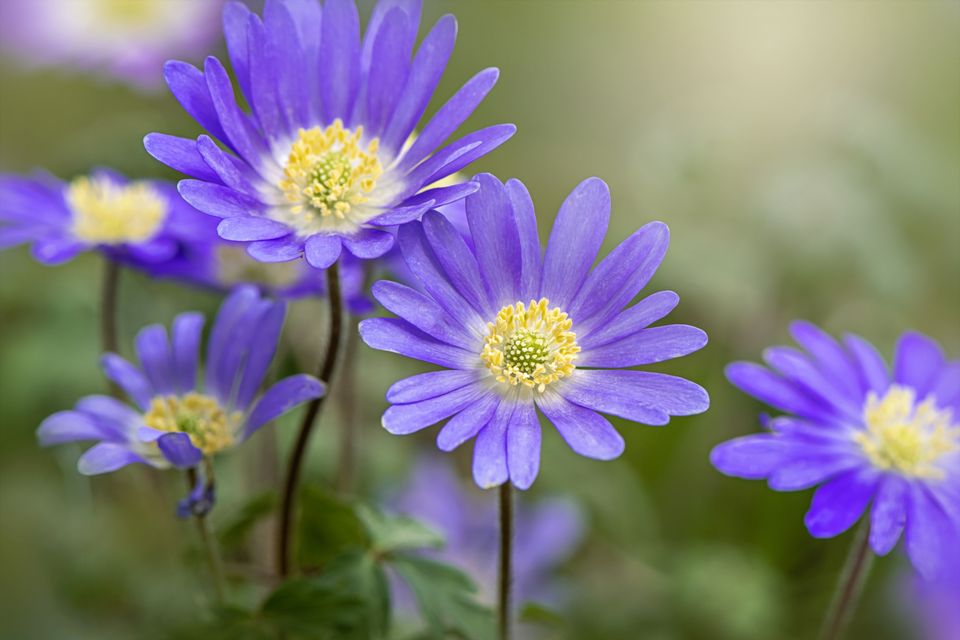
Anemone blanda
Anemone blanda
I love the sapphire blue of winter windflowers, those charming daisy-like perennials that appear around now, often under deciduous trees. Before the trees come into leaf, these little flowers expand their petals under a March sun, and carpet the area with attractive foliage. They are available in other colours as well, such as white and pink. Plant bulbs in autumn.
Reader Q&A
Q: I’m planting early spuds in raised beds, which are around 18 inches deep. Is it OK to plant spuds at the bottom?
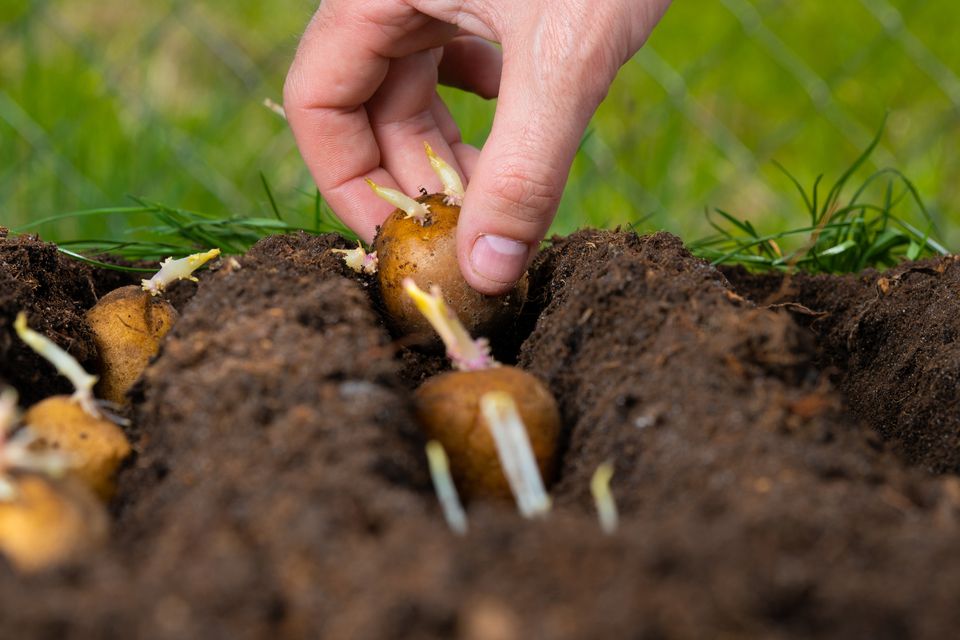
Planting potatoes
No, I wouldn’t advise that. Plant them just a couple of inches beneath the surface, and then earth them up as the shoots begin to grow. This encourages more tubers to grow along the buried stems and prevents the developing potatoes from being exposed to light, which turns them green.
Submit your gardening questions to Diarmuid via his Instagram @diarmuidgavin using the hashtag #weekendgarden
Comments are closed.