
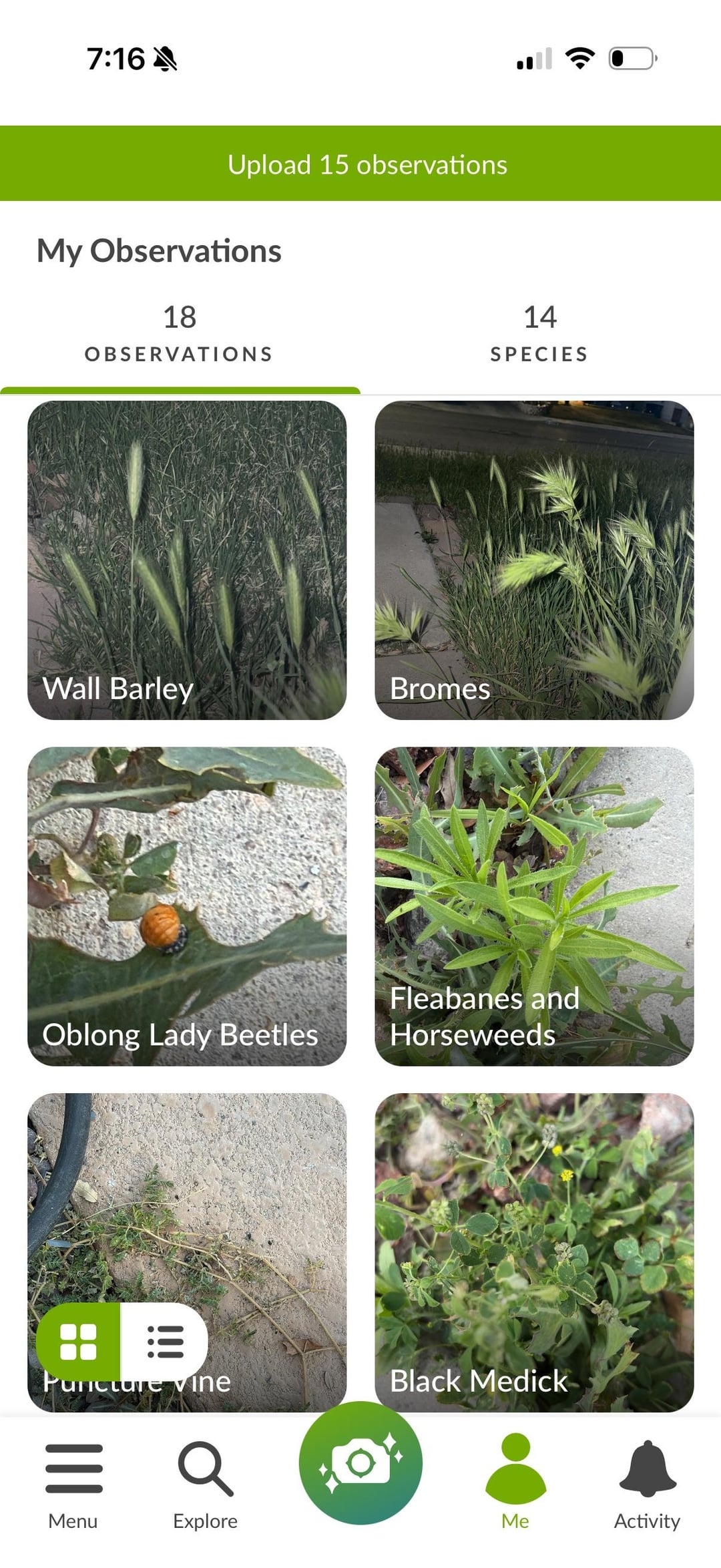
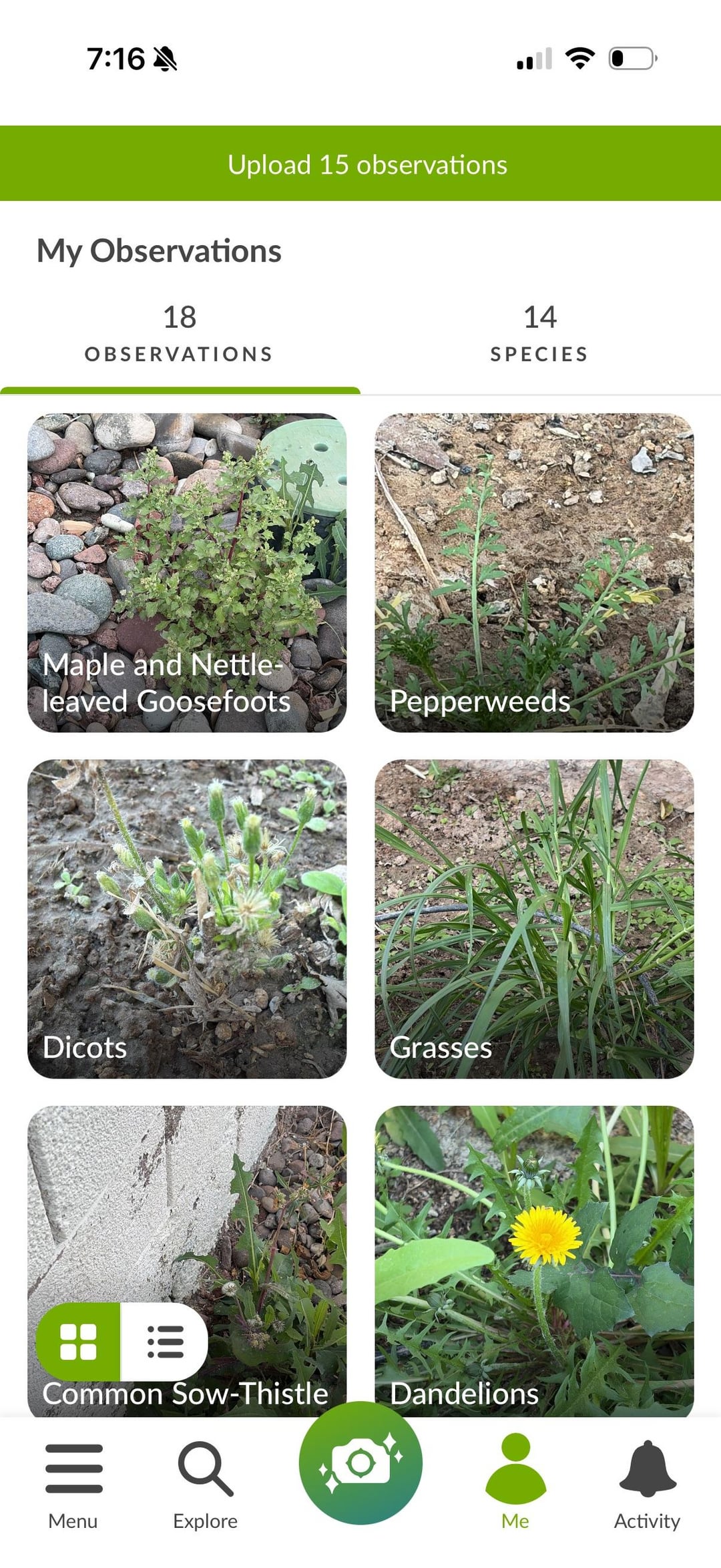
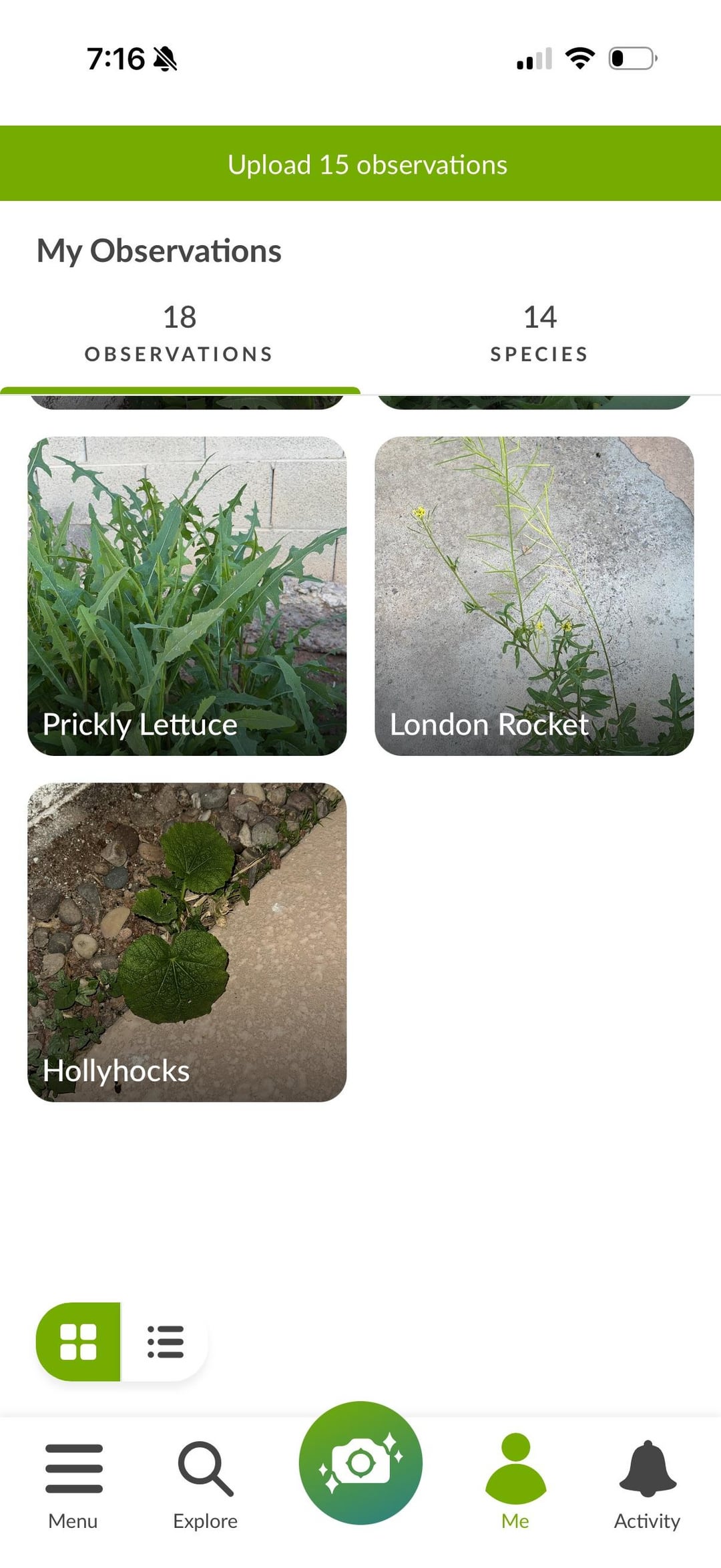
I am renting a house and this is our first spring here. The plants in the backyard have grown like crazy. It seems like 3 weeks ago there was nothing, and now there’s a ton of stuff growing. I used iNaturalist to ID as many as I could. I guess most of them are not native. Do they have any benefit to local pollinators? I see some lady beetle pupae on a few plants, although I can’t tell if it’s the invasive one or not since it’s not fully developed yet. Or should I yank them all? I bought and sprinkled a ton of native seeds in the garden like globe mallow, butterfly weed, desert marigolds, and brittle bush. But only these non native plants seem to be growing so far. Also, will they die with the heat? It’s going to get VERY hot here pretty soon.
I plan on pulling the puncture vine even if it has some benefits. My feet have been stabbed one too many times >:(
by meechis_n_buns
1 Comment
I live in a totally different ecosystem than you up in MN, but most non-native plant species provide basically no benefits to native pollinators (and are highly detrimental to the ecosystems they are existing in when they are invasive). I’m not sure about Nevada, but almost all native pollinators around here are not generalist pollinators (like honeybees which are also not native to North America) – they require a specific plant or group of native plants to collect pollen & nectar from (and sometimes oils and resins).
Bumblebees are some of the few true generalist pollinators (you will often see them visiting non-native plant species), but the non-native/invasive plant species take away space from native plant species that support an unknowingly larger number of native insects (and other critters). Letting these non-native & invasive plant species go to flower and produce seed also allows them spread to other areas you do not manage…
TLDR: almost all non-native (and especially invasive) plant species do more harm to the environment in almost every case and should be controlled whenever possible (and replaced with native plants if possible).