
Home » Alternative tourism » Tulip Garden In Srinagar, Kashmir: Spring Tourism Boom Set To Paint The Valley In A Million Colours!
Published on
March 16, 2026

Image generated with Ai
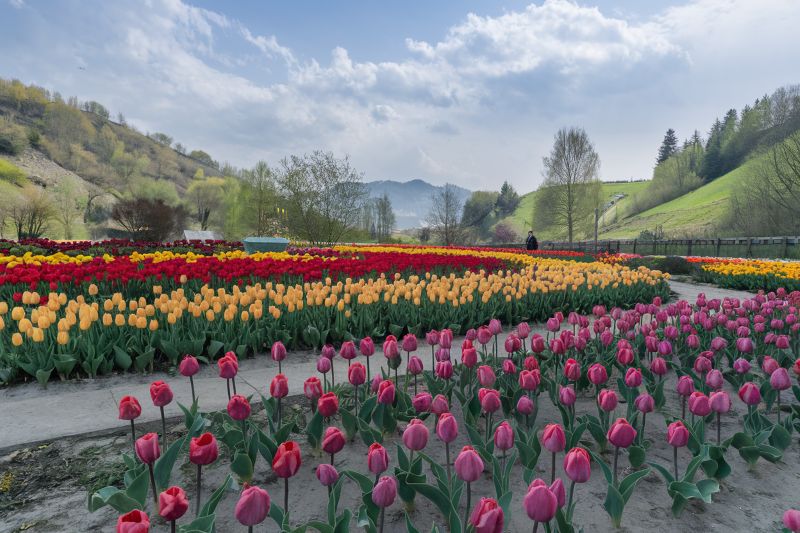
Srinagar, Kashmir is preparing for an emotional spring opening because the Indira Gandhi Memorial Tulip Garden will welcome visitors on March 16 2026, while local stakeholders already express their optimistic belief about a successful tourist season. The Zabarwan Range and Dal Lake area contains Asia’s largest tulip garden which will display approximately 1.7 to 1.8 million tulip bulbs across more than 70 to 75 tulip varieties to visitors this year. Officials from the Department of Floriculture have indicated that the 2026 opening will again act as the ceremonial launch of Kashmir’s spring tourism window after the garden drew about 4.25 lakh visitors in 2025.
Record blooms, new varieties and classic tulip types
Authorities have confirmed that around 18 lakh tulip bulbs have been planted for the 2026 season, with about one million to 1.7 million expected to be in bloom at peak, creating sweeping ribbons of colour across the terraced slopes. The garden will showcase over 70–75 varieties this year, including at least five new tulip types introduced to diversify the display and extend visitor interest throughout the blooming window.
Visitors can look forward to seeing several classic and speciality categories of tulips commonly highlighted in festival guides, including Darwin Hybrid Tulips known for their tall stems and large, robust flowers, Triumph Tulips that offer strong stems and a rich colour palette, and Parrot Tulips with their flamboyantly ruffled petals. The displays also typically feature Single Early Tulips, Double Late Tulips and elegantly fringed tulips, which together create layers of texture and height that work particularly well in photographs. Complementing the tulips, bands of daffodils, hyacinths and muscari are planned across the beds, softening the edges of the terraces and adding fragrance to the garden walks.
Tourism push: how the garden powers Srinagar’s visitor economy
For Srinagar’s tourism industry, the tulip garden has evolved into a crucial early‑season magnet that helps bring travellers to the valley weeks before the traditional summer crowds arrive. Officials and local businesses have suggested that the festival now acts as a powerful teaser for Kashmir, encouraging visitors to extend their stay and explore houseboats on Dal Lake, Mughal gardens, old Srinagar lanes and nearby hill destinations. In 2025, the garden reportedly welcomed around 4.25 lakh visitors, including a notable share of foreign tourists, and tourism authorities are said to be optimistic that the 2026 numbers will surpass this record, channelling fresh income into hotels, guesthouses, transport operators and handicraft markets.
The Jammu and Kashmir tourism promotion campaigns increasingly position the tulip festival as the opening chapter of a longer, year‑round narrative, nudging travellers to see Kashmir not just as a summer escape but as a multi‑season destination. Tour planners are already packaging short breaks around the garden’s three‑to‑four‑week operational window, often combining early morning garden visits with shikara rides on Dal Lake and sunset views from the Boulevard Road.
Visitor experience: online tickets, upgraded facilities and photo‑ready views
In line with Srinagar’s broader tourism modernisation drive, the administration has rolled out an online ticketing facility for the 2026 tulip season so that domestic and international travellers can secure entry in advance and avoid long queues at the main gates. Garden authorities have reportedly re‑worked pathways, expanded green spaces and set up dedicated selfie points and viewing terraces to make the experience smoother for families, elderly visitors and social‑media‑focused travellers.
Advertisement
Advertisement
Traffic and security plans along the Boulevard Road overlooking Dal Lake have been refined, with designated parking areas aimed at minimising gridlock and ensuring that tour buses, taxis and local commuters can move with relative ease during peak bloom days. Inside the garden, refreshed fountains, updated seating areas and wheelchair facilities are intended to make the short but intense opening window more comfortable for rising footfall.
Travel advisers often recommend morning visits to enjoy softer light and gentler crowds, while photographers tend to favour late afternoon sessions when the sun drops behind the mountains and bathes the tulip beds in warm tones.
Legacy, emotion and why 2026 matters for travellers to Srinagar
Srinagar, Kashmir has seen its Indira Gandhi Memorial Tulip Garden grow from a regional experiment in 2007 into a globally recognised spring spectacle, with the World Book of Records in London acknowledging it in 2023 as Asia’s largest tulip garden. Residents have been quoted as saying that the annual opening now feels like a shared ritual, signalling not only the arrival of spring but also a renewed confidence in the valley’s tourism‑led future. For 2026, many in the local travel trade are quietly hoping that the waves of colour rolling down towards Dal Lake will translate into fuller hotels, busier craft emporiums and more conversations between visitors and hosts along Srinagar’s lakeside promenades.
This season enables travelers to explore Srinagar which exists as more than a picturesque location because its tulips attract visitors to extend their stay and discover local craftsmanship and experience authentic dining and bring back enduring experiences that surpass simple visual documentation. The garden gates will open on 16 March which allows the first visitors to explore the garden through its colorful flower displays that include red and yellow and pink and purple petals while Srinagar’s tourism industry waits to see if shared photos and returning visitors will create a better springtime story for the valley.

Comments are closed.