

After prolonged wet winter weather, many gardeners have an unusually long list of things to get through this March. So what can be done to catch up?
With luck, spring sunshine and some drying winds will dry soil up fast in March and still more so in April. To speed drying and warm the soil, while ensuring rainy days don’t set the drying process back, consider covering the ground ahead of sowing and planting with cloches. These exclude rain and trap warmth, allowing water to evaporate from the soil.
New FeatureIn ShortQuick Stories. Same trusted journalism.
Laying clear plastic sheeting over the soil traps warmth but does not allow evaporation. It warms all but clay soils. Clay soils drain very slowly and won’t dry or warm without surface evaporation, unlike better-drained lighter soils.
Early warming promotes a flush of weed seedlings. Eliminating these by shallow hoeing greatly reduces further weeds. Weed seeds germinate in response to light, and once the surface ones have grown, there will be fewer subsequent seedlings.
Deep digging is unnecessary, as well as slow work, unless the soil has become compacted by trampling when wet. Loosen any compaction by inserting your fork and levering it back without inverting the soil. Add fertiliser, then shallowly hoe the soil once it is dry to kill any weeds and leave the soil finely divided, ready to sow and plant. If there is no compaction, just hoe and fertilise.
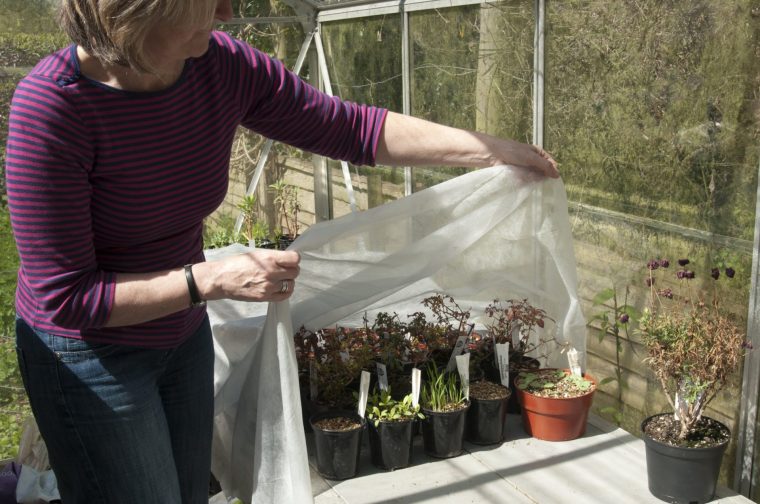 Before a cold night, cover young plants inside greenhouses with a fleece (Photo: Tim Sandall/RHS)
If you have plenty of compost, smother weeds with a layer of cardboard, then add 75mm of compost and sow or plant into this. The cardboard will prevent weeds and rot away quickly in contact with the soil.
Hiring a rotovator is an effective option for those who prefer to cultivate, but unless the soil is light and sandy, it is hazardous: the blades mash up sticky soils, wrecking their structure. Although all soils should be dry enough to rotovate by mid-April, cultivation in April loses soil water, and extra watering may be needed.
With the mild weather, many lawns need cutting, but are too wet underfoot for the mower. At least the plentiful leaves are transpiring water quickly, helping to dry out the soil, while also suppressing moss and unwanted plants. When the time comes for mowing, gradually reducing the amount of leaves present rather than heavy mowing is better for the grass, and the grass box can be omitted, with the light fall of clipping being absorbed by the sward.
Even when mowing is not possible until the soil is drier, edges can be cut by working from wooden planks to spread the weight.
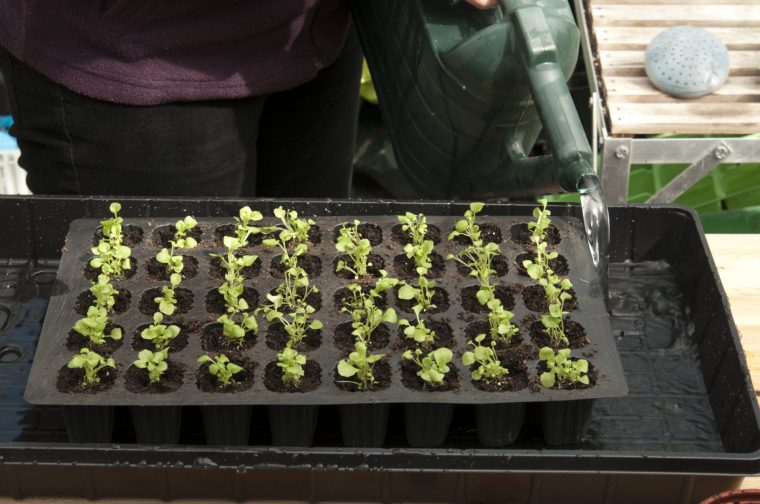 Lobelia plug plants need to be grown in a bright and warm frost free place like a greenhouse (Photo: Tim Sandall/RHS)
Planks can also be used where the soil is dry on the top but still soggy further down. Working from a plank while planting is possible – of onion sets, say, or sowing seeds of hardy crops such as carrots, lettuce and peas – without compressing the soil and damaging its structure. Planting and sowing into wet surface soil, even from a plank, is unwise.
This is where the greenhouse comes in, or even a coldframe or sunny patio. Sow seeds and sets in cell trays or small pots to get them going even though the garden soil remains soggy.
Transplants sown now take six weeks to become big enough to plant out and will be ready in May, when the soil will be warm, drier, weed-free and slugs less active. By May, transplants will be big enough to tolerate a little slug damage.
Carrots and parsnips, unfortunately, don’t transplant well, so these will have to be April-sown, when they will still grow into very acceptable crops.
Comments are closed.