
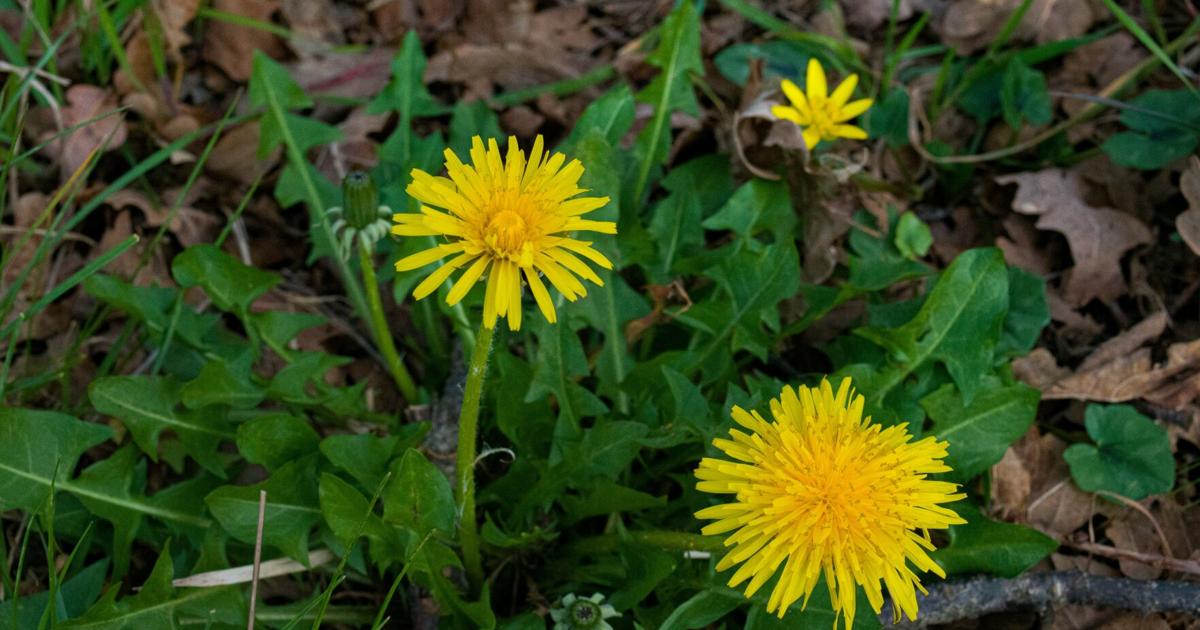
I saw my first dandelions last week. When the weather really warms up, bindweed will emerge, stronger than ever and ready to stage a garden takeover.
Who isn’t looking for a permanent solution to eliminating weeds? Many of us are searching for nonchemical alternatives to weed control. Let me warn you about using landscape fabric.
While landscape fabrics have legitimate uses in commercial agriculture, research has proved they are far from permanent solutions for weed control in the home garden.
The idea is appealing. Spreading a layer of landscape fabric over bare soil and then covering it with attractive mulch seems like the perfect weed barrier. Or does it?
The good news is that landscape fabric does help suppress weeds. The bad news is that it only works for a couple of years and, over time, can do more harm than good.
In blazing Yakima sunshine, it does not take long for the fabric to degrade, becoming brittle and torn and creating a visual hot mess in your landscape.
Dark landscape fabric can absorb and hold excessive heat, which may damage or kill tender roots and newly planted seedlings.
Moving plants or adding new ones requires cutting holes in the fabric, opening the door to more weeds.
Many landscape fabrics are made from nonbiodegradable plastics.
Landscape fabric creates a barrier between the soil and the air, limiting oxygen and moisture exchange and harming beneficial earthworms and microbes. Over time, sediment and decomposing mulch can clog the fabric’s pores, restricting the amount of oxygen and water that reaches plant roots.
Sign up for our Daily Headlines newsletter — delivered to your inbox every morning at 7 a.m.
Thanks! You’re all set.
Watch your inbox for Daily Headlines.
Research in 2019 by Washington State University’s Dr. Linda Chalker-Scott found that landscape fabric reduces carbon dioxide movement between the soil and atmosphere about 1,000 times more than wood chip mulches do. Plastic mulches were even worse. Oxygen movement was also affected. While gaps and holes in the barrier cloth can lessen the impact, Chalker-Scott asks, “Why would you use any mulch that reduces gas movement?”
As organic matter and dust collect on top of the fabric, windblown seeds can germinate above the barrier. Particularly tenacious weeds like bindweed laugh at landscape fabric and easily grow right through it. These weeds are often even harder to remove because their roots become tangled in the fabric.
When the organic mulch you carefully spread on top of the fabric cannot decompose into the soil below, an unhealthy, nutrient-deficient and compacted soil environment is created. Earthworms and other beneficial soil-mixing organisms are prevented from moving between soil layers, reducing natural aeration and contributing to soil compaction.
There is no known way to prevent weed growth forever. That does not mean you have to give up.
Mat-forming plants, or “living mulch,” are dense, low-growing groundcovers that naturally suppress weeds, retain soil moisture and control erosion. A variety of sedums, vinca, pachysandra and Geranium “Biokova” cover hundreds of square feet of what was once bare soil in my yard. Mostly evergreen and once established, these groundcovers provide a dense mat of foliage that is largely impervious to weeds. Check your nursery for more possibilities.
Natural mulches, such as wood chips or leaves, are better for long-term soil health and weed control than landscape fabric. Up to six inches on new landscape beds can help suppress that first flush of weeds while eventually breaking down to improve soil structure.
Chalker-Scott points out that “not all wood mulch is created equal.” Finely shredded mulch fibers tend to knit together over time and create a shell that needs to be broken up at least yearly. Large or coarse wood chips tend not to create a mulch shell and allow water and air to move into the soil. Her favorite mulch is arborist wood chips, the sustainable byproduct of tree and landscape maintenance. Containing a mix of bark, branches and leaves, they are excellent for moisture retention, weed suppression and reducing soil compaction. They are often provided free by local tree services looking for a way to dispose of them.
Avoid tilling wood chips into the soil, which can cause significant nitrogen tie-up. Simply layer them on top. As they break down on the soil surface, they cause only minor nitrogen reduction where the chips touch the soil, not in the plant root zone. Because microbes consume this nitrogen at the surface rather than at the root zone, nutrients are not pulled from deeper in the soil.
ChipDrop is a resource to help Yakima gardeners find free local wood chip mulch at getchipdrop.com. Or the next time you see an arborist in your neighborhood, ask about getting a load of their bounty.
Comments are closed.