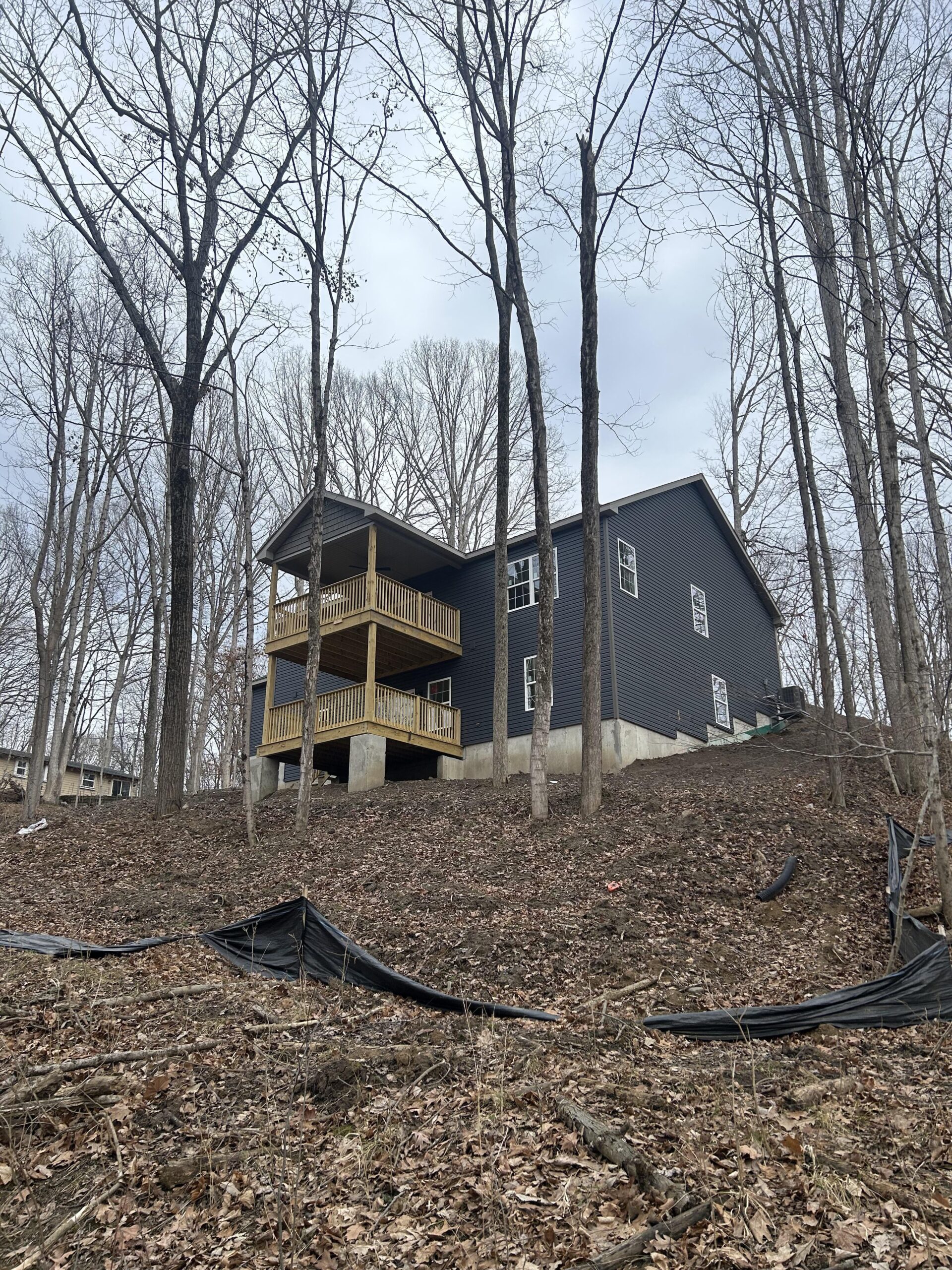
It’s extremely sloped and wooded. I fear everything would just wash out.
by batman805
42 Comments
jeepsk8
Yup
TruthOf42
With enough money you can do anything. What’s your budget?
iridescent_polliwog
Cherry laurel and holly. And… ferns. But just… soso much holly.
According-Taro4835
That bare dirt is a ticking time bomb for the next heavy rain and your silt fence is already giving up. You need to stabilize that grade immediately before your topsoil and eventually your foundation wash down the hill. Forget about planting a traditional turf lawn because grass roots are way too shallow to hold a slope that steep and the grass will just die in the shade of those mature trees anyway. You have to rely on soft engineering here by breaking up the water flow. Cut into the hill and build a few staggered retaining walls using large natural boulders. This forces the runoff to slow down and creates flat pockets where you can establish real root systems.
Once you break the slope you need deep aggressive roots in the ground fast. Plant sweeping continuous masses of shade tolerant native understory shrubs and groundcovers like fragrant sumac, native ferns, and woodland sedges. Do not scatter random individual plants around like polka dots, you want them tightly woven together into a single dense mat that locks the soil in place and looks like it belongs in the woods. Hauling boulders and buying hundreds of landscape plugs gets expensive fast, so run these photos through the GardenDream web app first. It is a solid safety net that lets you overlay different terracing ideas and plant massings right on top of your mud hill to see exactly what is constructible before you spend a dime. Get some heavy erosion control jute netting pegged over that loose dirt right away while you finalize the design.
FormerFastCat
Native plants to your region. Especially native forest undergrowth.
Constant-Original
Lots can be done. What can be done with what you’re willing to spend is a different question
Zame012
From another comment you said 10k-15k I would try planting a lot of native plants to stabilize that hill. It’s just eroding away like there’s no tomorrow and eventually it will come up to your house. There isn’t a ton to do with your budget except plant a lot of plants and natives only. Less watering requirements and good for animals and insects around you. If you can get more money later, could do a cool like balcony type of things with stairs leading to it but you need to stabilize that hillside before you do anything else
Soft-Discount1776
You appear to be standing in it
Competitive-Roof-168
You can make a nice seating area/fire pit. Maybe multi level. The larger the area the more ridiculous the price will be.
DefeatFear
This will erode like crazy unless you plant more on this hill
PhysicalProperty3277
Sled
went_with_the_flow
Paintball course
Bandag5150
Nice house.
Charming_CiscoNerd
Kick someone you hate down there
Odd-Discipline5201
Mountain climbing. Maybe a zip line
voltus_v
Yes, build a luge track.
jmbrjr
Terraces. Big natural look stonework. Logs? They will eventually rot but can hold things together for few years. Railroad ties have chemicals in them. Flagstone paths and large flat stone stairways. Native woodland plants from your state/locality. Azaleas and rhododendrons. Hollies. Hydrangea. Native ground covers and lots of ephemeral wildflowers in the nooks and crannies. Embrace the wild forest mountainside woodland look with rocks, natural features, boulders, wandering paths that you will have to blow clear after leaf fall. Plenty of sun in late fall, winter, early spring; but pretty shady once the tall trees leaf out and then on into the fall. Leaving the leaves will help prevent erosion of the sloped soil. Roots grow in it, and that will help reduce erosion.
MarleysGhost2024
Ski?
MarleysGhost2024
Ski?
Jazzlike_Strength561
There’s tons you could do. What do you want?
Comfortable-Walrus-7
Plant native plants!
EYRONHYDE
Berms to redirect the flow laterally along the slope and a shallower angle. How often a berm is required and the desired slope would require an engineer to be scoped correctly. Doing so would limit the water speed and path, keeping it away from your foundations.
No_Impression5858
How much work are you planning to do your self for 10 to 15 k isnt alot… ive spent more then that on rocks alone for my terraces.. I am talking just the rocks… not including sand, gravel for backfill, I mean I do have about 100 ft of yard thats stone terraces. It was not a cheap by anymeans an I have been doing the work by hand[ no way to get equipment in my back yard.] But materials alone can cost more then 10 k.
HeisenbergAnon
Just roll….
colbykh
I’d terrace with stepdown levels coming down the slope & use Permaculture zones for planting planning (which would also end up with some future bigger plants near the bottom flat areas that will create a visual barrier)
PlantsNCaterpillars
Might take a little bit of work doing some clearing but have you considered a bad ass slip n’ slide?
crevasse2
I had major washouts on a steep bare yard. I built swales and loaded them with gravel encapsulated by landscape fabric to both direct and slow down the water. Covered them with mulch so they’re not actually visible. In other areas I built decorative retaining walls of rocks gathered and collected to flatten the terrain to again slow down water but also to make the land usable. Shit load of work but it’s all working. Mulch and gravel is cheap and my time is cheaper. Get yourself a small trailer to acquire the materials yourself vs paying Jonny dump truck driver to deliver to the wrong target and you still have to move it. I also bought a cheap mini excavator to do most of the digging. If you pay someone you’re looking at high tens of thousands. F that.
Ok_Muffin_925
Plant big trees that will grow fast and protect them.
Dangerous-Piano-2049
Togbogging?
thedamnationofFaust
Infinity pool?
MsEllaSimone
Dry ski slope
Possible-Yak-4876
Those trees were buried during construction. You need to dig out to the root flare or close to it, otherwise these trees will slowly die
Hydr0philic
You can make things as expensive as you want to.
I have some similar shade areas I stabilized with a couple bags of shade appropriate grass seed for not much more than a hundred bucks. It is performing great. Does not have to be native, there are non natives with deep roots that can perform better.
If you are going to use native ferns or shrubs you can do it for free, minus the cost of your time. Many Ferns can be easily divided at the right time of year which will leave the mother plant alive and give you free ones to plant, many native shrubs can be propagated with live stakes – cuttings you take and plant in the ground which will turn into new shrubs or trees. Just look up these methods before you do them so they are done correctly. I have done this for free many times.
PublicWolf7234
Better off buying a small excavator and making a three year plan on paper. Drainage is key. Small interconnected people areas and lots of shrubs for the rest. Cut bank behind, fill forward. Semi circle walls are best for banks. Keep wall heights under four feet. Looks like you could use bank close to house for garden planters.
traypo
There’s lots to be done. Cultures have applied creative approaches to terracing for thousands of years.
Puzzlehead_Gen
Yes. You could make a really nice terraced garden. There was a lovely one at a rental house I stayed in a few years ago. It would take some time and money, and there are things you should do in the meantime for erosion control. Others have already commented on some of them.


42 Comments
Yup
With enough money you can do anything. What’s your budget?
Cherry laurel and holly. And… ferns. But just… soso much holly.
That bare dirt is a ticking time bomb for the next heavy rain and your silt fence is already giving up. You need to stabilize that grade immediately before your topsoil and eventually your foundation wash down the hill. Forget about planting a traditional turf lawn because grass roots are way too shallow to hold a slope that steep and the grass will just die in the shade of those mature trees anyway. You have to rely on soft engineering here by breaking up the water flow. Cut into the hill and build a few staggered retaining walls using large natural boulders. This forces the runoff to slow down and creates flat pockets where you can establish real root systems.
Once you break the slope you need deep aggressive roots in the ground fast. Plant sweeping continuous masses of shade tolerant native understory shrubs and groundcovers like fragrant sumac, native ferns, and woodland sedges. Do not scatter random individual plants around like polka dots, you want them tightly woven together into a single dense mat that locks the soil in place and looks like it belongs in the woods. Hauling boulders and buying hundreds of landscape plugs gets expensive fast, so run these photos through the GardenDream web app first. It is a solid safety net that lets you overlay different terracing ideas and plant massings right on top of your mud hill to see exactly what is constructible before you spend a dime. Get some heavy erosion control jute netting pegged over that loose dirt right away while you finalize the design.
Native plants to your region. Especially native forest undergrowth.
Lots can be done. What can be done with what you’re willing to spend is a different question
From another comment you said 10k-15k I would try planting a lot of native plants to stabilize that hill. It’s just eroding away like there’s no tomorrow and eventually it will come up to your house. There isn’t a ton to do with your budget except plant a lot of plants and natives only. Less watering requirements and good for animals and insects around you. If you can get more money later, could do a cool like balcony type of things with stairs leading to it but you need to stabilize that hillside before you do anything else
You appear to be standing in it
You can make a nice seating area/fire pit. Maybe multi level. The larger the area the more ridiculous the price will be.
This will erode like crazy unless you plant more on this hill
Sled
Paintball course
Nice house.
Kick someone you hate down there
Mountain climbing. Maybe a zip line
Yes, build a luge track.
Terraces. Big natural look stonework. Logs? They will eventually rot but can hold things together for few years. Railroad ties have chemicals in them. Flagstone paths and large flat stone stairways. Native woodland plants from your state/locality. Azaleas and rhododendrons. Hollies. Hydrangea. Native ground covers and lots of ephemeral wildflowers in the nooks and crannies. Embrace the wild forest mountainside woodland look with rocks, natural features, boulders, wandering paths that you will have to blow clear after leaf fall. Plenty of sun in late fall, winter, early spring; but pretty shady once the tall trees leaf out and then on into the fall. Leaving the leaves will help prevent erosion of the sloped soil. Roots grow in it, and that will help reduce erosion.
Ski?
Ski?
There’s tons you could do. What do you want?
Plant native plants!
Berms to redirect the flow laterally along the slope and a shallower angle. How often a berm is required and the desired slope would require an engineer to be scoped correctly. Doing so would limit the water speed and path, keeping it away from your foundations.
How much work are you planning to do your self for 10 to 15 k isnt alot… ive spent more then that on rocks alone for my terraces.. I am talking just the rocks… not including sand, gravel for backfill, I mean I do have about 100 ft of yard thats stone terraces. It was not a cheap by anymeans an I have been doing the work by hand[ no way to get equipment in my back yard.] But materials alone can cost more then 10 k.
Just roll….
I’d terrace with stepdown levels coming down the slope & use Permaculture zones for planting planning (which would also end up with some future bigger plants near the bottom flat areas that will create a visual barrier)
Might take a little bit of work doing some clearing but have you considered a bad ass slip n’ slide?
I had major washouts on a steep bare yard. I built swales and loaded them with gravel encapsulated by landscape fabric to both direct and slow down the water. Covered them with mulch so they’re not actually visible. In other areas I built decorative retaining walls of rocks gathered and collected to flatten the terrain to again slow down water but also to make the land usable. Shit load of work but it’s all working. Mulch and gravel is cheap and my time is cheaper. Get yourself a small trailer to acquire the materials yourself vs paying Jonny dump truck driver to deliver to the wrong target and you still have to move it. I also bought a cheap mini excavator to do most of the digging. If you pay someone you’re looking at high tens of thousands. F that.
Plant big trees that will grow fast and protect them.
Togbogging?
Infinity pool?
Dry ski slope
Those trees were buried during construction. You need to dig out to the root flare or close to it, otherwise these trees will slowly die
You can make things as expensive as you want to.
I have some similar shade areas I stabilized with a couple bags of shade appropriate grass seed for not much more than a hundred bucks. It is performing great. Does not have to be native, there are non natives with deep roots that can perform better.
If you are going to use native ferns or shrubs you can do it for free, minus the cost of your time. Many Ferns can be easily divided at the right time of year which will leave the mother plant alive and give you free ones to plant, many native shrubs can be propagated with live stakes – cuttings you take and plant in the ground which will turn into new shrubs or trees. Just look up these methods before you do them so they are done correctly. I have done this for free many times.
Better off buying a small excavator and making a three year plan on paper. Drainage is key. Small interconnected people areas and lots of shrubs for the rest. Cut bank behind, fill forward. Semi circle walls are best for banks. Keep wall heights under four feet. Looks like you could use bank close to house for garden planters.
There’s lots to be done. Cultures have applied creative approaches to terracing for thousands of years.
Yes. You could make a really nice terraced garden. There was a lovely one at a rental house I stayed in a few years ago. It would take some time and money, and there are things you should do in the meantime for erosion control. Others have already commented on some of them.
Build a slide going upwards
How much money ya got?
Go with deep root native plants 🙌
The cover of your new movie
https://imgur.com/a/3QcomQg
Ski slope
You need some grass to grow.