
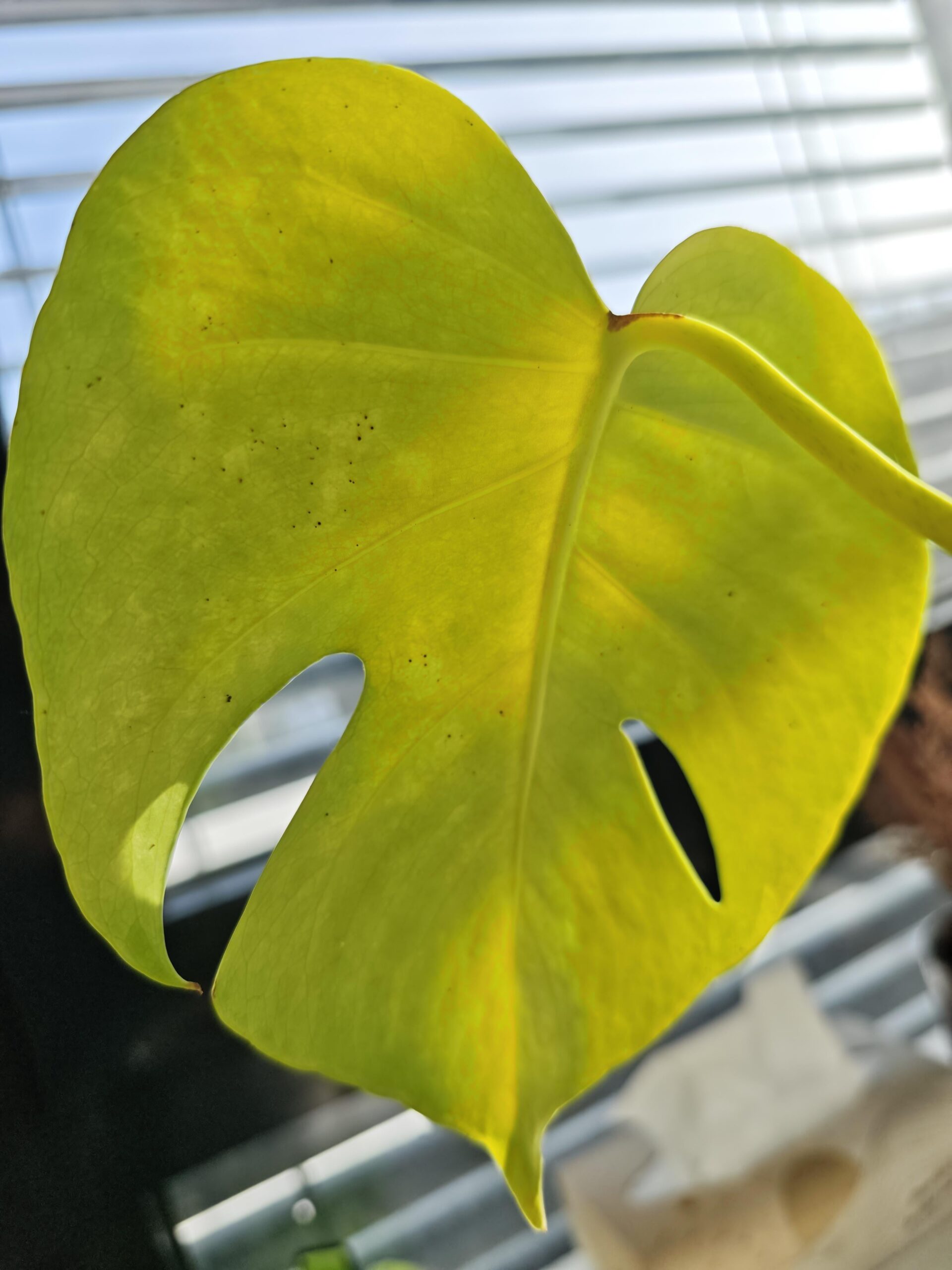
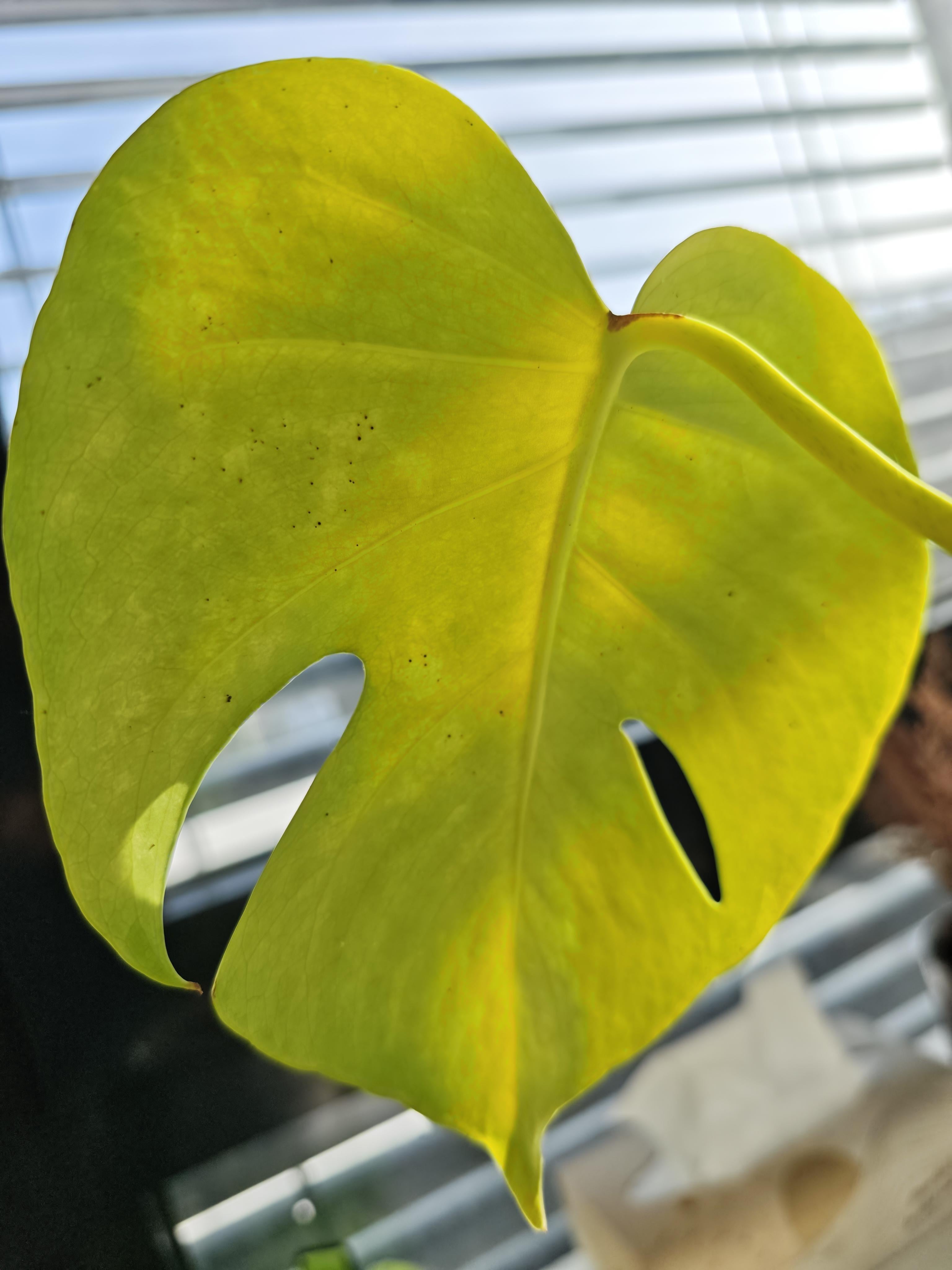
my two monsteras have a lot of flying insects in their soil, and one started with this yellowing, I also have them on a shelf with plants I bought two weeks ago, how do I treat this? Do I just treat the monsteras or all the plants? the other ones seem fine
by MarsAlien111
2 Comments
Black dots usually point towards thrips, but I don’t see any of the other thrips damage signs, which would be squiggly lines inside the leaf tissue and grey dry damage spots.
Detailed Plant Health Report: Monstera Deliciosa
Primary Diagnosis: Fungus Gnat Infestation (Sciaridae)
Based on the yellowing leaves and the presence of “flying insects” in the soil, your Monstera is suffering from a Fungus Gnat infestation. While the adult flies are mostly a nuisance, their larvae live in the top 2-3 inches of the soil and feed on organic matter and, more dangerously, the delicate root hairs of your plant. This root damage inhibits the plant’s ability to take up water and nutrients, leading to the chlorosis (yellowing) you see on the leaf.
Secondary Issue: Overwatering and Root Stress
Fungus gnats are an “indicator pest.” They only thrive in consistently wet soil. The yellowing of the leaf, combined with the presence of these pests, suggests that the soil is staying damp for too long. This creates an environment for root rot (fungal pathogens) which the gnat larvae then feed on, creating a destructive cycle.
Recommended Treatment Plan
Systemic Treatment: You should treat all plants on the shelf. If you only treat the Monstera, the gnats will simply migrate back from the neighboring pots.
Drying Out: Allow the top 50-75% of the soil to dry out completely. Adult gnats cannot lay eggs in dry soil, and larvae will die off.
Hydrogen Peroxide Flush: Mix 1 part 3% Hydrogen Peroxide with 4 parts water and water your plants with it. This kills larvae on contact and releases oxygen to the roots.
Yellow Sticky Traps: Use these to catch the flying adults and break the breeding cycle.
Cinnamon or Diatomaceous Earth: Sprinkling these on the topsoil acts as a natural fungicide and physical barrier against the insects.
Summary
The new plants you bought two weeks ago likely introduced the pest. Moving forward, ensure your Monstera has well-draining soil (mixed with perlite or orchid bark) and only water when the soil feels dry to the touch.
Taken from PlantWise App 🌱
https://apps.apple.com/tr/app/plantwise-ai-plant-identifier/id6755405550