
On the days I commute into the office, it’s dark when I leave the house and dark when I get home. Nevertheless, whether it’s the emerging drifts of golden and purple crocuses on the lawn or the buds on the flowering currants, there’s an occasional hint that spring is just around the corner.
Within a matter of weeks we’ll be entering what is arguably the most important period in the gardener’s calender. It’s a time of deadlines – some arbitrary or self-imposed but most dictated by nature to a lesser or greater degree.
Chores such as pruning, lawn care and potato sowing all need to be carried out at various times throughout the spring. Fail to adhere to this timetable and you risk killing your prized shrubs, decimating your carpet-like sward, or ending up spud-less come summer.
But perhaps most pressing of them all is seed sowing, the task that sorts the real gardeners from the pretenders. Miss this deadline – usually late February through to the end of April – and your entire growing season will be a mix of disappointment and regret. It happened to me last year with chillis, tomatoes and some perennial Achillea ‘Gold Plate’, all sown late.


They weren’t a complete disaster and I’m quietly confident the achillea will prosper in the months ahead. As for the chillis and toms, there was a harvest of sorts, just a late, underwhelming one.
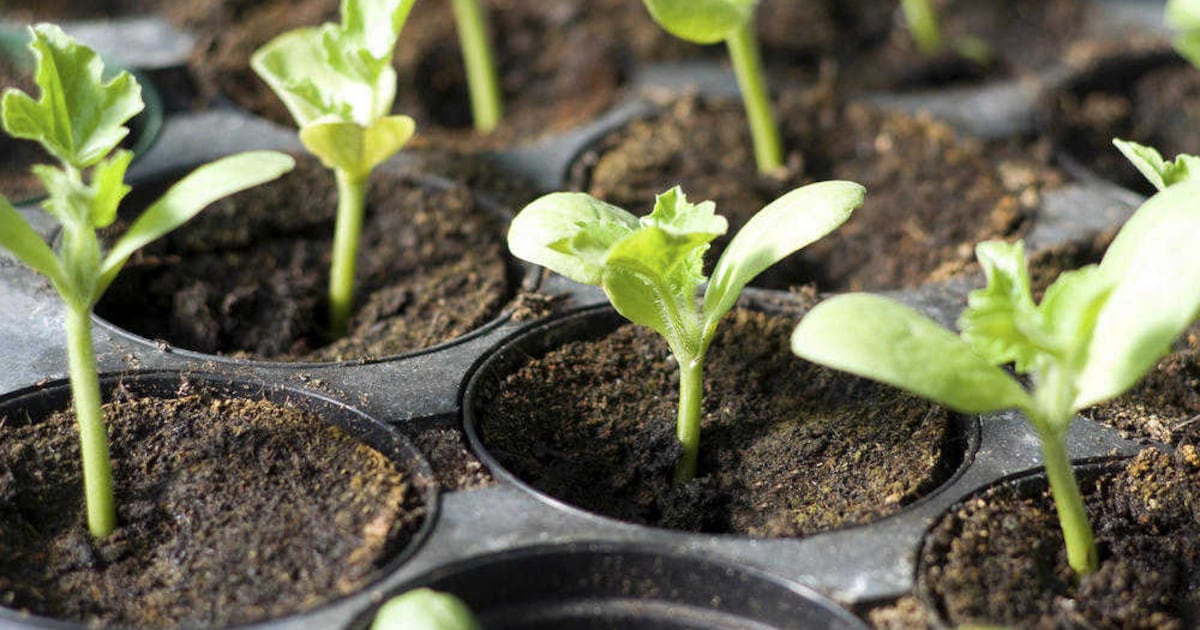
There are many elements to raising seeds successfully – light (though sometimes darkness), warmth (though sometimes cold), and compost.
Compost in this instance means a growing medium, most likely purchased, rather than what you have slowly breaking down in a bin or heap at the bottom of the garden.
Composts are generally sold as ‘seed’, ’potting’ and ‘multi-purpose’. You can make your own but requires a bit of skill and planning.
As their name indicates, seed and potting compost are for the two initial stages of a plant’s life. They are supposed to be specially formulated to have the right balance of nutrients. Seedlings with delicate roots don’t require any nutrition, whereas once potted on, they’ll become hungrier. Seed and potting compost can also include other ingredients, such as sand and grit, to improve drainage, hence they’re often a few pound more expensive than ‘multi-purpose’.
The latter is supposed to support a plant at all stages of growth and may well be suitable for seed sowing but multi-purpose composts can be hit and miss.
The texture of the compost is crucial, with good structure and aeration the favoured properties, as this encourages strong root growth. A medium crumbly texture is the ideal, as too fine is prone to waterlogging, while too coarse drains too quickly.
Peat is prized because it is free-draining and moisture retentive, and also low in nutrients. Yet its continued harvest is unsustainable, as this not only destroys important habitats but also releases carbon into the atmosphere.
Peat substitutes have come a long way in the past 20 years but their quality can still be inconsistent. The nutrient levels are difficult to control due to the varying ingredients and the structure is often coarse.
Nonetheless, I’d encourage all gardeners to go peat free, checking the latest ‘best buys’ online if unsure about quality.
Comments are closed.