
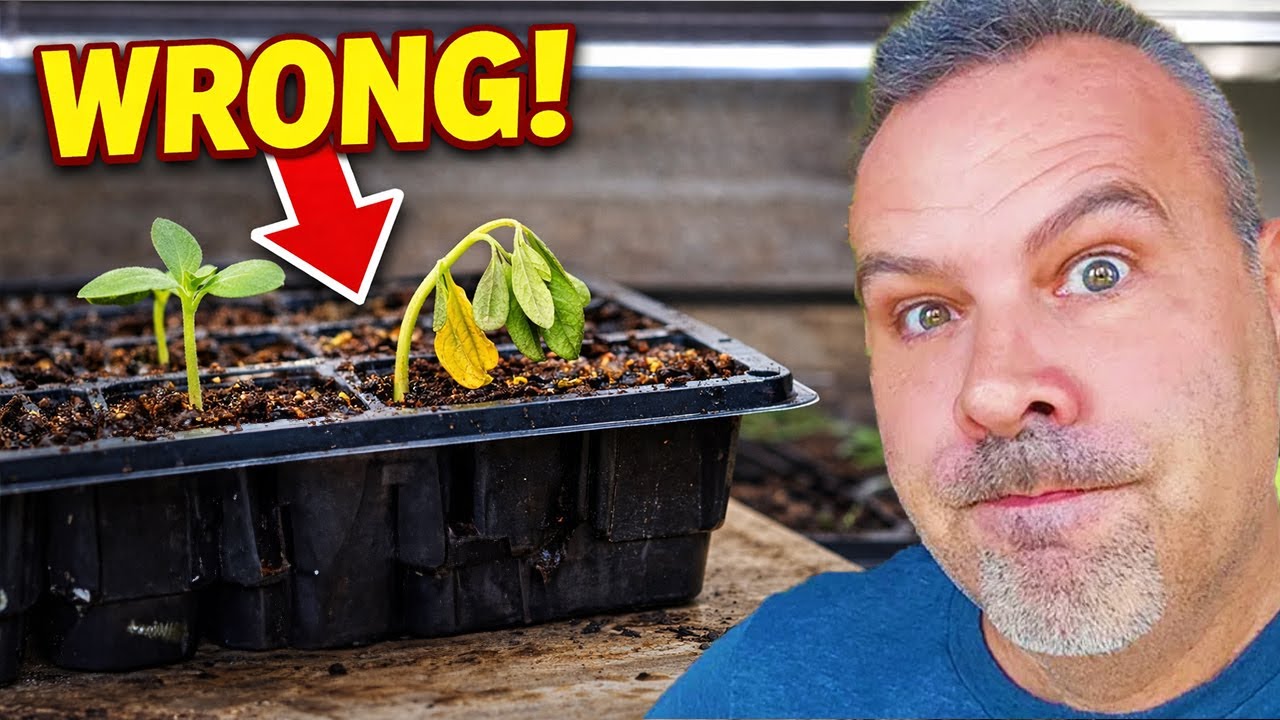
Your seeds sprout. Your trays look healthy. Nothing seems obviously wrong.
And yet… growth slows, stems stretch, and plants never really take off.
In this video, I break down why indoor seed starting quietly fails — not because you’re missing something obvious, but because light, temperature, moisture, and timing aren’t synced. When those factors drift even slightly out of balance, seedlings keep growing… just not at the pace they need to stay strong.
This is the part most seed-starting guides never explain.
You’ll learn:
– Why seedlings can look “fine” and still be failing
– How light distance affects growth more than wattage
– The quiet signs of stress most gardeners miss
– Why timing matters more than most techniques
– How to fix weak growth without buying new equipment
If your seedlings look right but don’t act right later — this video will explain why.
Blog Post/Free PDF
I put together a simple seed-starting diagnostic PDF that goes with this video — something you can reference while your trays are growing.
Get it here:
https://nextlevelgardening.tv/blog/why-indoor-seed-starting-fails-why-indoor-seed-starting-fails
📅 Want Planting Dates That Actually Match Your Setup?
One of the biggest reasons indoor seed starting fails is starting at the wrong time for your location and transplant window.
That’s exactly what GardenGuide is built for.
With GardenGuide, you can:
– Get planting dates based on your location
– Adjust for indoor vs outdoor starts
– Know when seedlings should be growing fast — not stalling
– Avoid starting too early (the #1 silent failure)
– And much more!!
👉 Try GardenGuide here:
http://www.gardenguide.com
🎥 Chapters
0:00 – Why Indoor Seed Starting Fails When Nothing Looks Wrong
Why people blame seeds, soil, and lights — and why that misses the real problem
0:46 – The First Failure Happens Underground (Root Stall)
How small cells quietly stop growth before you see any symptoms
1:27 – Rule #1: If Roots Stall, the Plant Stalls
Why early root restriction affects the entire season
1:44 – Fixing Root Stall (Container Size Matters)
Why bigger seed-starting cells outperform small trays
2:14 – Why “Enough Light” Isn’t Enough
The difference between survival light and growth light
2:45 – Distance Matters More Than Light Brand
How moving seedlings closer fixes slow growth without new gear
3:17 – Rule #2: Slow Growth Means Energy Conservation
How to tell when seedlings aren’t actually thriving
3:32 – Warm Leaves, Cool Roots (The Hidden Temperature Problem)
Why soil temperature matters even when your house feels warm
4:06 – Fixing Cool Roots With Targeted Heat
How and when to use bottom heat correctly
4:42 – The Airflow Problem Nobody Checks
Why still indoor air creates weak seedlings
5:30 – Rule #3: No Movement = No Strength
How gentle airflow prepares plants for outdoor conditions
5:43 – Timing Mistakes That Ruin Perfect Setups
Why starting “on time” can still be wrong
6:02 – Why Stalled Seedlings Rarely Fully Recover
How indoor delays change plant development long-term
6:43 – Planning Backward From Your Transplant Window
Why timing matters more than equipment (GardenGuide)
7:04 – Why Seedlings That Look Fine Don’t Perform Later
How multiple small constraints compound into failure
7:38 – Stop Changing Products — Change Constraints
The real fix for invisible seed-starting failures
8:04 – How to Carry Momentum From Indoors to the Garden
Final takeaway and next-step video
21 Comments
Great summary 👍
I wish I knew this 7 years ago. I've learned it the hard way. Thank you.
It seems that gardening in your own vegetable garden has become more difficult than rocket science and, above all, an expensive hobby. Most of us have more than just a few onions, leeks, and tomato plants. If everything can only survive under lamps, on heat mats, and in tunnels, then you won't be eating a cheap tomato until after five seasons. And then nothing unpleasant can happen once the plants are in the ground, such as strong winds, a week and a half of rain, a pest or disease, or worse. How did people do it 50 years ago? Back then, everything just grew without all that fuss… and without YouTube. I love your channel, but videos like this make me feel discouraged and wonder what I'm doing and whether I should even bother. I'm sure it's a well-intentioned warning and shows that gardening isn't as cheap as it used to be when all you needed was water, wind, cow manure, compost, and sunshine.
Your garden guide is great! Thank you.
Oh, when my seedlings fail (not if) it is 100% my fault, not my tools or materials. For all the reasons you talk about. One I think you missed is fertilizing the seedlings after they sprout as the seed contains very little food to fuel the seedling growth. Thanks for the blog post reference. I don't fully agree that seed packets contain adequate seed info; some respected seed companies don't even include days to maturity or if tomatoes are determinate or indeterminate! Each year, I've addressed more failure points and my seedling do pretty well now. I still struggle with the timing because, as we all know, last frost date is an "estimate"; so sometimes it's not intentional that we keep the seeds inside too long. My plan for this year is to have large pots available and up-pot the seedlings as needed if weather isn't cooperating. I have heard before that only plants that like hot weather (tomatoes, peppers) should be put on heat mats; cool loving plant seedings will bolt if on a heat mat.
My seeds never work. 100% germination, just start real leaves then stall for 5 weeks then die
I have been looking for a video like this. My seedlings get to certain point and stop. My house is about 56 degrees so I use a heat mat to start the seeds then take the off of the heat mat. I will use your rules this year so I can do better this year.Thank you so much Brian for making this video
I just started some brassicas and other cool weather seeds outdoors yesterday. Our night time temperatures range between 60 to 65 degrees, daytime 65 – 80 this time of year, with about 11 hours of daylight. I have a good indoor seed starting set up with everything you mentioned, but haven’t noticed that big of a difference, at least not that I am remembering, by starting them indoors. Should I move those seed starts to my indoor setup and put them on a heat mat to get them germinate? If so,when should I move them outdoors?
I have two 10k lumens/4000k.. how far above my seedlings should they be?
This is soooo helpful for me right now. I made my own seed start soil this year so am hoping to really get it right this time.
It totally feels like Im watching you in Hawaii in the video, I love it🌸🌸🌸
I've noticed my seedlings are taking longer to grow this year and I think it's because my garage ambient temp hovers around 57-61 degrees. I use heat mats to keep the soil warmer but I've noticed it's like all my peppers are a week or two behind where they should be
Thank you👍💖👵🏻
Thank you, this is the best info. I’ve seen on seed starting. Thank you😊
You're such a good teacher Brian. Thank you.
Thanks! This is sensible gardening 👍
And of course, certain seeds like to be planted outside from the get-go. I love those, lol. Beans, pumpkins, squash, cucumbers, melons, carrots, radish. Actually, not much that I grow needs to be started inside. Tomatoes, peppers, brassicas, certain flowers.
Really solid video! Thanks
Thanks for this, I'm almost right on track, just the heat mat, I put my seedlings outside if temperature are above 50 so they get outside light.
Thanks Brian. This is a good video for everyone. Even those growing from seed for years. It's a good refresher of what to do and what not to do.
Great stuff!! Thanks
Only thing that is off to me is most market growers transplant out of cell trays. Most market growers transplant using either a water wheel transplanter pulled by tractor or 1 of the standing mechanical transplanters. Both of those can only handle cell tray plugs and not pots. So even with tomatoes it is 5 to 6 weeks in a 50 or 72 or even 128 cell trays and transplanted out at 6 weeks.
Most market growers do not put plants in solo cups or pots because again the machine can't handle it.
For reference check out Neversink Farms winstrip trays and videos.
As a market grower this whole idea of solo cups and pots is so far off of even my college degree teachings.
I suppose sure if you have to hold your plants longer but just be better at time management on start and transplant dates