
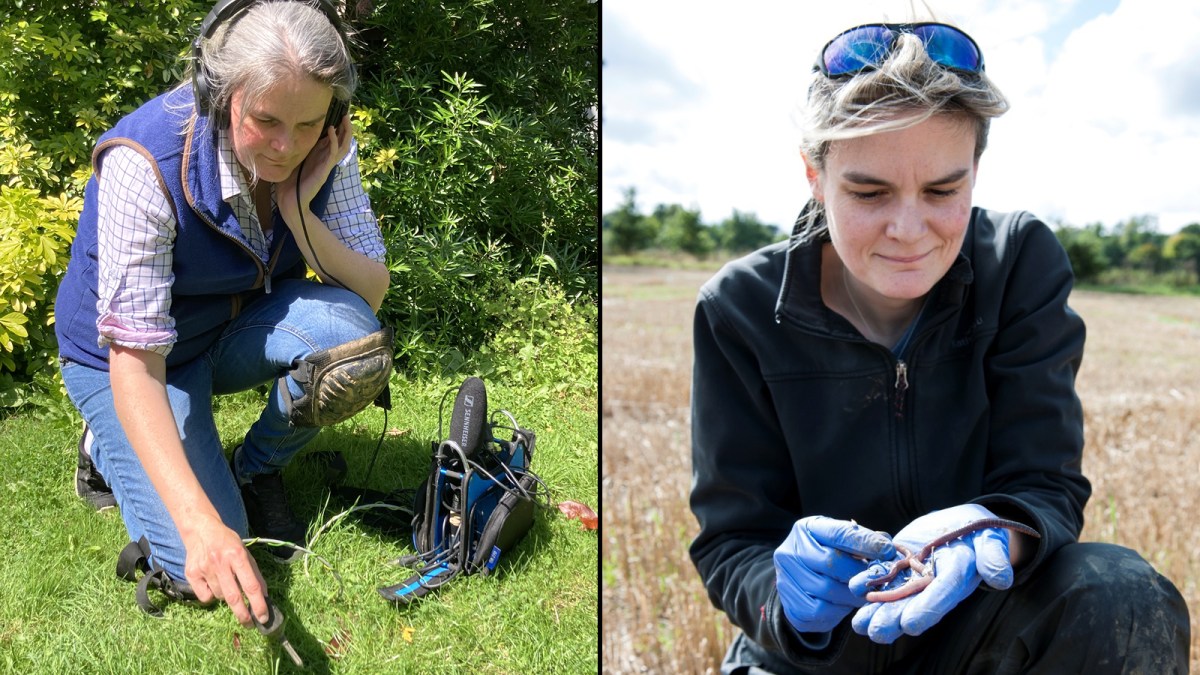
Jackie Stroud is known as the “worm whisperer”. Every week between autumn and spring, when the country is at its wettest, the 40-year-old takes a finely tuned listening device to a field, pops it into the soil and puts on her headphones.
It is something she has been doing for the past three years but she remains “amazed” by what she hears. “Worms sort of scrape through the soil in a rhythmic, kind of pulsing way,” she says. “You can hear the differences between different insects and species. It’s just this constant cacophony of clicks and pops and rasps. It’s really quite exciting.”
Listen for yourself:
As an assistant professor of soil science at the University of Warwick, Stroud is at the forefront of an emerging body of research called ecoacoustics, in which scientists listen to the sounds of soil — most notably those made by earthworms — to determine its health. Noisy soil is healthy soil, says Stroud, whose latest research paper on the topic was published in November in the European Journal of Soil Science.
It is hoped the research will one day enable farmers to better monitor and manage their soil quality, boost growth productivity and even inform the public about the emergence of invasive worm species in their own back gardens. From ants to insect larvae, every living creature generates a “sound signature” that can be identified and analysed, Stroud says. “The more we’ve looked into it, the more we’ve found that soil organisms communicate using these vibrations and sounds through the soil,” she says. “They’re tapping the soil. They’re rubbing their body parts together.”
It opens up the possibility of being able to “tap into these communication networks”, Stroud adds.
Worms are a good starting point. Earthworms act as “ecosystem engineers” by burrowing through the ground and creating space for water drainage and roots to grow. They also feed on fallen leaves, removing the threat of disease and generating plant food. “The more there are, that’s a sign the soil is high quality and is being well-managed. If it’s overworked, you have fewer,” says Stroud.
Farmers measure earthworm populations in their fields by digging up large amounts of soil and counting the bugs by hand, which can take hours. “It also doesn’t tell you very much as you kind of destroyed what you were measuring anyway, because you’ve dug it up,” says Stroud. She hopes her research will change how farmers do this.
Instead of digging up the ground, they would place a listening probe into the soil to record the different sounds, which are then analysed by computers, offering data on the health of their fields.
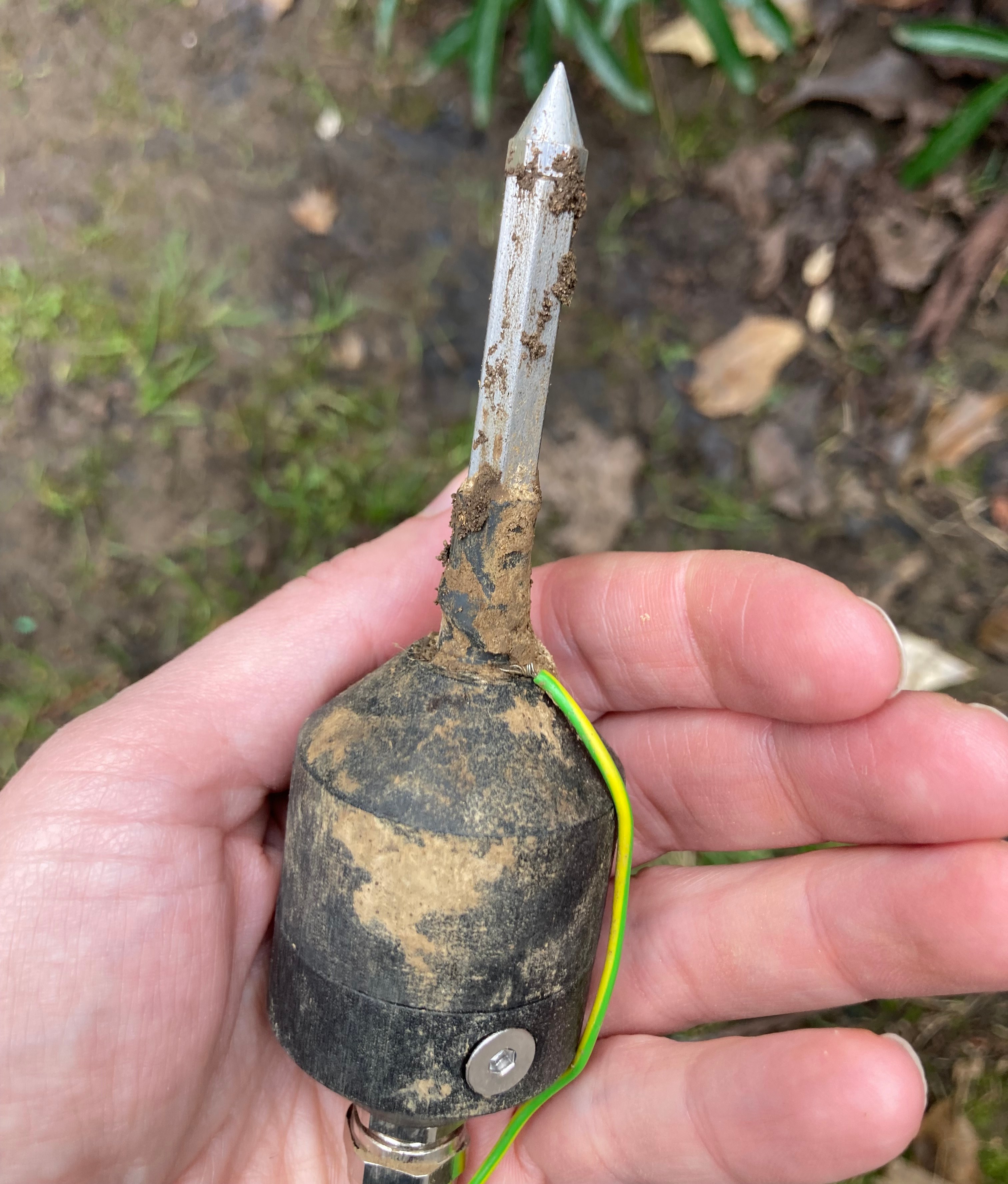
The process would take a matter of minutes. As part of the research, probes and recorders have already been sent out to farmers across the country to sample the technology. Stroud believes it could be made available “within three years”, adding that her “research group has doubled in size during 2025 so we have the capacity to quickly make progress”. AI is being used to “accelerate results interpretation”, she adds.
The British farming industry needs all the help it can get. A report published in November by McCain Foods found that a third of farmers are making a loss or only breaking even amid tough industry conditions. In recent years the rising costs of production, volatile weather, post-Brexit restrictions on migrant labour and new trade agreements exposing UK producers to cheaper imports have combined to bring down profits.
• Clarkson: Our farming system doesn’t make sense. We must save it
Stroud says ecoacoustics could be “transformative” for farmers. She points to the example of “leaf litter”, in which general plant debris sits on the surface of the soil. Earthworms break this down, preventing new crops and plants from being “smothered”. Ecoacoustics could therefore let a farmer know that the field they’re planning to grow their crop in has a low earthworm population, increasing the risk of disruptive leaf litter and a low yield. “It’s helpful to know where your worms are,” says Stroud.
The technology is not yet able to differentiate between different species of worms, but Stroud hopes this will change, especially in light of the growing threat posed by invasive flatworm species in Britain. “We’re hoping to start looking at some of the more invasive species,” she says. Buglife, a British conservation charity, has verified 524 records of invasive flatworms in Britain since 2021. More than half of these reports were made in 2024.
The New Zealand flatworm, Arthurdendyus triangulatus, has been identified by Buglife as one of the country’s top 50 invasive invertebrate species. In evidence submitted to the environment, food and rural affairs committee in January last year, the charity warned: “Non-native flatworms can reduce local earthworm populations by 20 per cent — this could have a huge impact on soil health and agriculture, as well as our native soil wildlife.”
Non-native flatworms, which typically live on the soil surface, are often introduced to the UK in imported pot plants. They can reproduce rapidly and cannot be eradicated. “They voraciously feed on the earthworm, which aren’t exactly good at defending themselves,” says Stroud. “If we can help detect predator species we might be able to help manage this issue because no-one’s going to be able to examine each pot plant coming into the UK. There are just so many applications to this technology.”
Comments are closed.